
In 2026, decor trends inspired by nature focus on using organic materials like reclaimed wood, bamboo, and natural fibers to create calming, eco-friendly spaces. You’ll see a strong emphasis on sustainable sourcing, biophilic design elements, and textures that mimic outdoor landscapes. These choices not only bring a sense of tranquility but also promote eco-conscious living. Stick around to discover how these natural materials transform your space into a serene, nature-connected sanctuary.
Key Takeaways
- Natural and eco-friendly aesthetics dominate 2026 decor, emphasizing organic materials that evoke serenity and connect indoor spaces with nature.
- Sustainable sourcing of materials like reclaimed wood, bamboo, and cork ensures environmentally responsible interior design.
- Biophilic design elements such as large windows and indoor plants create harmonious, nature-inspired environments.
- Organic textures and patterns, including natural fibers and earthy tones, enhance visual appeal while supporting sustainability.
- AI-powered tools help select eco-conscious materials, fostering spaces that promote well-being and environmental responsibility.

In recent years, interior decor has increasingly embraced the beauty and serenity of the natural world. This shift isn’t just about aesthetics; it’s about creating spaces that connect you to nature while also supporting eco-friendly practices. One of the most prominent trends in 2026 is the use of organic materials, which are chosen not only for their visual appeal but for their sustainability. When selecting these materials, you’ll want to prioritize sustainable sourcing—this means opting for products harvested or produced with minimal environmental impact. From reclaimed wood and bamboo to natural wool and cork, these choices reflect a commitment to reducing ecological footprints. By doing so, you help promote responsible forestry, reduce waste, and lower your home’s overall carbon footprint.
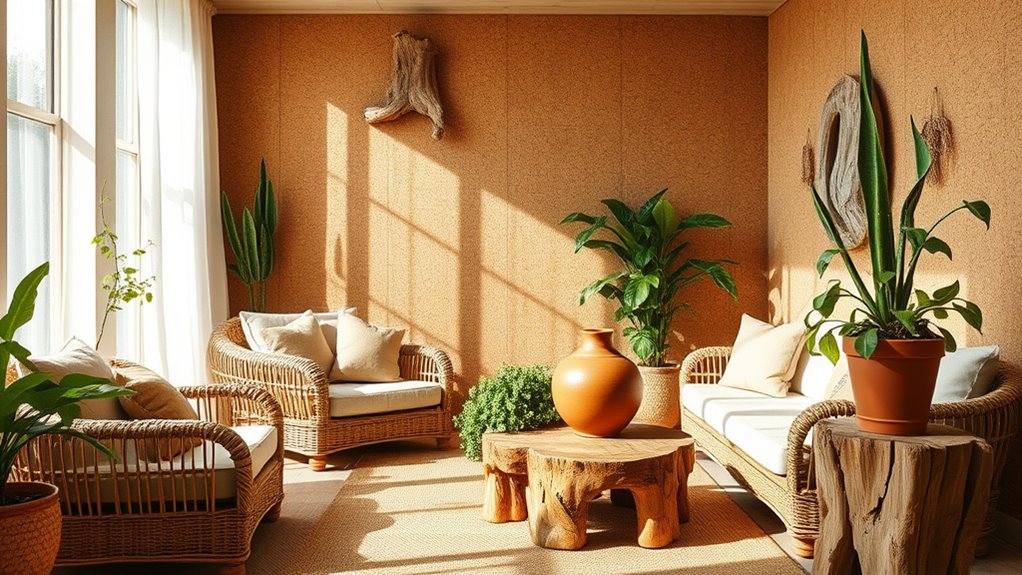
Alongside sustainable sourcing, biophilic design continues to shape how you incorporate natural elements into your living spaces. This approach is all about creating harmony between your indoors and the outdoor environment. Think about integrating large windows that flood your rooms with natural light, or adding indoor plants that not only purify the air but also introduce organic textures and colors. Using materials like stone, rattan, and clay helps mimic natural landscapes and fosters a calming atmosphere. These elements make your space feel more alive and inviting, reinforcing your bond with the environment. Incorporating organic materials also encourages you to choose textures and patterns inspired by nature. For example, furniture with rough-hewn finishes or textiles with earthy tones evoke the organic feel of the outdoors. You might select a side table made from recycled driftwood or a rug woven from natural fibers like jute or sisal. These choices aren’t just visually appealing—they also support a sustainable lifestyle. When you prioritize natural, organic materials, you’re not only enhancing the beauty of your home but also contributing to the broader movement towards eco-conscious living. Additionally, integrating AI-assisted design tools can help you select environmentally friendly materials more efficiently and accurately. Ultimately, the trend of using organic materials in interior decor for 2026 is about more than aesthetics; it’s a way for you to live more consciously. By focusing on sustainable sourcing and embracing biophilic design principles, you create spaces that are both beautiful and environmentally responsible. This connection to nature can boost your well-being, reduce your ecological impact, and inspire a more mindful approach to decorating. As these trends grow, they remind you that your home can be a sanctuary—grounded in nature, sustainable, and truly reflective of your values.

Coaster Home Furnishings – Harper – 3-Door Solid Reclaimed Wood Accent Cabinet with Drawers, Shelves – Farmhouse Style – Living Room, Entryway & Home Kitchen – 60-Inch – Brown – 950367
- Includes: One cabinet included
- Size: 60-inch wide accent cabinet
- Storage: Three doors with two shelves
As an affiliate, we earn on qualifying purchases.
As an affiliate, we earn on qualifying purchases.
Frequently Asked Questions
How Sustainable Are These Organic Materials for Long-Term Use?
You’ll find that organic materials are generally quite sustainable for long-term use, but it’s important to take into account biodegradability concerns and sourcing transparency. Opt for materials that decompose naturally without harming the environment and ensure they’re sourced responsibly. By choosing goods with clear supply chains, you support eco-friendly practices and help reduce environmental impact, making your decor both beautiful and sustainable for years to come.
Which Organic Materials Are Most Durable for High-Traffic Areas?
Did you know that bamboo can withstand 50% more wear and tear than traditional hardwood? You’ll find bamboo offers exceptional durability for high-traffic areas, thanks to its resilience. Cork also impresses with its shock absorption and resilience, making it a smart choice for busy spaces. Both materials are eco-friendly, long-lasting, and stylish, so you can enjoy their durability while supporting sustainable design.
Can Eco-Friendly Decor Trends Be Cost-Effective?
Yes, eco-friendly decor trends can be cost-effective if you use cost-saving tips like choosing certified sustainable materials with eco-friendly certifications. You can find affordable options by shopping during sales or sourcing locally, reducing transportation costs. Additionally, repurposing or upcycling existing furniture helps save money and supports sustainability. By prioritizing certified materials, you guarantee quality and eco-consciousness, making your decor both budget-friendly and environmentally responsible.
How Do Natural Materials Improve Indoor Air Quality?
Imagine you’re living in a Jane Austen novel—natural materials do more than look lovely; they improve indoor air quality. By enhancing air purification and material breathability, they help reduce indoor pollutants and excess humidity. You’ll notice fresher air and a healthier space. Using organic materials like bamboo, wool, or cork allows air to circulate freely, creating a naturally cleaner environment. It’s a simple, elegant way to breathe easier every day.
Are There Specific Maintenance Tips for Organic Decor Items?
You should clean your organic decor items regularly, ideally once a month, to keep them looking their best. Use a soft, damp cloth to wipe surfaces gently and avoid harsh chemicals that can damage natural finishes. Applying protective finishes like beeswax or natural oils helps preserve the material and ward off stains or moisture. Proper maintenance guarantees your organic decor stays beautiful and lasts longer.

3 Stalks Lucky Bamboo Plants Indoor Live – Multi-Height Set (2×4 & 1×6) for Good Luck & Prosperity – Easy Care Houseplant, Home Office Decor Gift Ready
- Set Includes Three Stalks: Two 4-inch and one 6-inch plants
- Easy to Care: Requires weekly watering with distilled water
- Feng Shui Good Luck: Attracts positive energy and prosperity
As an affiliate, we earn on qualifying purchases.
As an affiliate, we earn on qualifying purchases.
Conclusion
As you embrace these organic trends, let nature nurture your space with its soothing serenity. Feel the fresh fervor of flora, the gentle glow of wooden wonders, and the calming charm of earthy elements. By blending bold botanicals with beautiful, biodegradable materials, you create a cozy, enchanting haven. So, step into a sustainable sanctuary where natural nuances nurture your soul, and your decor delights in delightful, divine details inspired by the beauty of the earth.
As an affiliate, we earn on qualifying purchases.

Foindtower Pack of 2, 20 x 20 Inch, Decorative Textured Boucle Throw Pillow Covers Accent Solid Pillow Cases Cozy Soft Couch Cushion Case for Chair Sofa Bedroom Living Room Home Decor, Beige
- Design: Textured boucle loop detail
- Color: Organic natural dye-inspired hues
- Material: Soft plush polyester fabric
As an affiliate, we earn on qualifying purchases.
As an affiliate, we earn on qualifying purchases.