For most solo podcasters, the Aokeo Foldable Microphone Isolation Shield with Desktop Stand is my best overall pick because its foldable, desk-mounted design balances simple setup with focused microphone coverage. The TroyStudio Large Foldable Microphone Isolation Shield is a better fit when a wider shield matters, while the Portable Vocal Recording Booth with Travel Bag suits buyers who want a more enclosed setup they can carry between recording spots. These products are portable acoustic treatment, not full soundproofing: they can help reduce room reflections near a microphone, but they will not block traffic, neighbors, or other loud outside noise. The main tradeoff is between compactness and coverage, with stand stability and microphone compatibility also shaping the choice. Read on for a comparison of all eight options and a guide to choosing the right format for your recording space.

Get everyday essentials delivered free with Prime
- Fast, free delivery on millions of items
- Prime Video, Amazon Music and more included
- Member-only deals all year
Complete the kit

Key Takeaways
- The Aokeo Foldable Microphone Isolation Shield with Desktop Stand leads for balanced solo use: its desktop format prioritizes a straightforward recording station over a full-room solution.
- The TroyStudio Large Foldable Shield puts coverage ahead of compact storage: its larger format better suits buyers who can spare more desk or storage space.
- Enclosed vocal booths and microphone shields solve different problems: a booth surrounds more of the recording position, while a shield focuses treatment around the mic.
- Included stands and pop filters can simplify setup, but they do not guarantee fit: check microphone size, mounting method, and available desk or floor space before choosing.
- None of these products replaces sound isolation: they are intended to manage nearby reflections, not keep external noise out of a room.
| Aokeo Foldable Microphone Isolation Shield with Desktop Stand |  | Best Overall Desktop Shield | Dimensions: 23.2 × 11 × 2 inches | Weight: 1.3 kg | Materials: Metal alloy and sound-absorbing foam | VIEW LATEST PRICE | See Our Full Breakdown |
| Portable Vocal Recording Booth with Travel Bag, Black |  | Best for Travel Recording | Brand: iyrany | Model number: HS75YIY-US-5141 | Color: Black | VIEW LATEST PRICE | See Our Full Breakdown |
| Aokeo Studio Recording Microphone Isolation Shield with Pop Filter |  | Best for Flexible Placement | Brand: Aokeo | Model: A0-504 | Material: Metal | VIEW LATEST PRICE | See Our Full Breakdown |
| Foldable Portable Vocal Booth for Recording |  | Best for Larger Solo Booth Coverage | Materials: Oxford fabric and high-density acoustic foam | Dimensions: 31.5 × 31.5 × 76.8 inches | Weight: 22.7 pounds | VIEW LATEST PRICE | See Our Full Breakdown |
| XTUGA MIS02 Microphone Isolation Shield, 5 Panels |  | Best for Adjustable Shield Coverage | Brand: XTUGA | Model: MIS02 | Product type: Microphone isolation shield | VIEW LATEST PRICE | See Our Full Breakdown |
| Dmsky Microphone Isolation Shield with Pop Filter and Tripod Stand |  | Best for Seated or Standing Setups | Brand: Dmsky | Model: Isolation shield | Panels: 5 foldable panels | VIEW LATEST PRICE | See Our Full Breakdown |
| TroyStudio Large Foldable Microphone Isolation Shield |  | Best for Flexible Desktop Setups | Folded size: 23 x 20 x 5 in | Foam thickness: 2 in | Material: High-density acoustic foam | VIEW LATEST PRICE | See Our Full Breakdown |
| TroyStudio Portable Vocal Booth with Acoustic Foam |  | Best Compact Booth for Travel | Model: TS-AcstxPnl | Interior dimensions: 8 x 10 x 12 in | Exterior dimensions: 12 x 12 x 16 in | VIEW LATEST PRICE | See Our Full Breakdown |
| portable podcast soundproofing panel | Model | Weight | Brand |
|---|---|---|---|
| Aokeo Foldable Microphone Isol | AO-505 | 1.3 kg | — |
| Portable Vocal Recording Booth | — | — | iyrany |
| Aokeo Studio Recording Microph | A0-504 | 1.5 kg | Aokeo |
| Foldable Portable Vocal Booth | — | 22.7 pounds | — |
| XTUGA MIS02 Microphone Isolati | MIS02 | — | XTUGA |
| Dmsky Microphone Isolation Shi | Isolation shield | — | Dmsky |
| TroyStudio Large Foldable Micr | — | — | — |
| TroyStudio Portable Vocal Boot | TS-AcstxPnl | 2.02 lbs | — |
More Details on Our Top Picks
Aokeo Foldable Microphone Isolation Shield with Desktop Stand
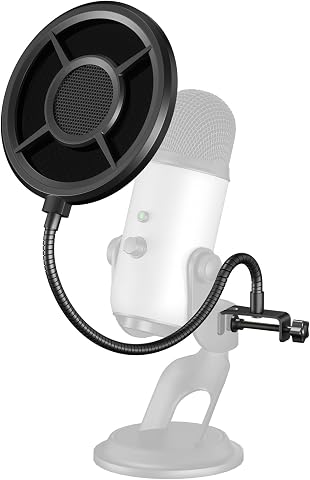
The Aokeo AO-505 is my most balanced pick for a podcast setup that needs portable, close-mic reflection control without dedicating floor space to a booth. Its included desktop stand means you can position the shield on a desk without sourcing a separate floor stand, while the 3/8-inch mount and 5/8-inch adapter expand microphone-mount compatibility. At 23.2 inches wide, it offers more coverage than the smaller-format approach of the Aokeo A0-504, and it folds for storage between sessions.
The tradeoff is that a desktop shield treats sound around the microphone; it does not isolate the whole room or eliminate all background noise. Pick the portable floor booth instead if you need an enclosed recording area and can spare the floor footprint. This Aokeo also depends on a compatible microphone or mount.
Pros:- Desktop stand is included, so a separate stand is not needed for tabletop placement.
- Foldable design makes it easier to store or transport than a fixed booth.
- 3/8-inch thread and 5/8-inch adapter support a range of microphone mounting setups.
- 23.2-inch width provides generous coverage around the recording microphone.
Cons:- Does not eliminate all room noise or replace acoustic treatment for the whole space.
- Requires a compatible microphone, clip, or shock mount.
- The larger shield can take up meaningful desk space during recording.
Best for: Home podcasters who record at a desk, need a stand included, and want a foldable shield with broad microphone-mount compatibility.
Not ideal for: Recordists who need room-wide noise isolation, or buyers whose microphone cannot attach to the included mounting setup.
- Dimensions:23.2 × 11 × 2 inches
- Weight:1.3 kg
- Materials:Metal alloy and sound-absorbing foam
- Mount:3/8-inch thread with 5/8-inch adapter
- Included:Desktop stand
- Compatibility:Blue Yeti, Blue Snowball iCE, microphone clips, and shock mounts
- Model:AO-505
- Warranty:1-year manufacturer warranty
Our verdict“Choose the AO-505 for a flexible desk-based podcast setup with an included stand, but choose a floor booth if you need coverage beyond the microphone area.”
Portable Vocal Recording Booth with Travel Bag, Black
For podcasters who need a recording area they can set up away from their usual desk, the iyrany floor-standing booth brings more of the recording space into its design than a desktop shield does. Its tool-free setup, travel bag, and phone or tablet holder suit solo voice recording in a temporary room, while the fabric and multi-layer acoustic pads are intended to reduce reverberation and room noise. Compared with the compact Aokeo AO-505, it gives the speaker an enclosed working area rather than focusing treatment immediately around a microphone.
That wider coverage comes with a clear cost in space: the booth occupies a 31.5 × 31.5-inch floor footprint and is designed for one person. It also does not promise silence, so it is a poor fix for loud external noise. Choose the AO-505 for a permanent desk setup or when floor space is limited.
Pros:- Floor-standing format provides a more enclosed recording area than a desktop shield.
- Tool-free setup suits temporary recording locations.
- Travel bag supports transport between home, studio, and other recording spaces.
- Phone or tablet holder can keep scripts or recording controls within reach.
Cons:- Requires a 31.5 × 31.5-inch floor area.
- Designed for one person rather than interviews with multiple speakers.
- Acoustic pads are intended to reduce room effects, not block all external noise.
Best for: Solo podcasters, voiceover artists, and musicians who record in changing locations and want a tool-free booth with a travel bag.
Not ideal for: Desk-only podcasters, shared recording setups, or anyone with too little floor space for a one-person booth.
- Brand:iyrany
- Model number:HS75YIY-US-5141
- Color:Black
- Dimensions:31.5 × 31.5 × 73 inches
- Mounting type:Floor standing
- Compatible devices:Guitar, smartphone, and tablet
- Included components:Portable recording booth, phone/tablet holder, and travel bag
- Unit count:1
Our verdict“Pick this booth for solo recording on the move when you can accommodate its floor footprint; choose a desktop shield for a smaller, desk-bound setup.”
Aokeo Studio Recording Microphone Isolation Shield with Pop Filter
The Aokeo A0-504 is the most placement-flexible choice here: its foldable shield can sit on a flat surface or attach to a compatible microphone stand. That makes it a useful fit for podcasters who switch between a compact tabletop setup and a stand-mounted mic, without moving up to a floor booth like the iyrany portable recording booth. Its acoustic foam front and vented metal back are designed to reduce reflections around the microphone, and the included parts package provides mounting accessories.
Unlike the AO-505, this version does not include a desktop stand, so tabletop use still depends on a suitable flat surface and stand-mounted use requires separate hardware. The product data lists a pop filter in the title, but the included-components list names only the shield and parts package; buyers should verify the package contents before relying on one being included. It is a focused, modular option, not room treatment.
Pros:- Foldable panels allow angle adjustment and easier storage.
- Can be used on a flat surface or mounted to a compatible microphone stand.
- Foam and vented metal construction targets reflections close to the microphone.
- Parts package is included for setup.
Cons:- Microphone and stand are not included.
- Stand-mounted use requires separate compatible hardware.
- Included-components data does not clearly confirm that a pop filter is supplied.
Best for: Podcasters who already own a microphone stand and want a foldable shield they can position on a desk or mount around the mic.
Not ideal for: First-time buyers seeking a complete stand-included kit, or anyone expecting a shield to soundproof an entire room.
- Brand:Aokeo
- Model:A0-504
- Material:Metal
- Weight:1.5 kg
- Included components:Microphone isolation shield and parts package
- Recommended uses:Recording, singing, and playing games
- Placement:Flat surface or microphone stand
- Warranty:2 years
Our verdict“Choose the A0-504 if you already have mounting gear and want flexible shield placement; the AO-505 is a better fit if an included desktop stand matters.”
Foldable Portable Vocal Booth for Recording
This foldable vocal booth is aimed at solo creators who want more room around themselves than a microphone shield can provide. The 31.5-inch-square footprint and 76.8-inch height form a standing recording enclosure, while Oxford fabric and high-density acoustic foam are intended to reduce echo and reflections for podcasts, voiceovers, and streams. A phone or tablet holder and carrying bag make it more ready for mobile use than a fixed booth. Compared with the iyrany booth, it is slightly taller, but the supplied information does not establish a comparable acoustic advantage.
The 22.7-pound weight is a real portability limit: the bag helps with carrying, but this is not as easy to move around as the foldable Aokeo shields. Its claimed echo reduction of up to 90% is not independently verified, and neither booth should be treated as a barrier against all outside noise. Choose it for a dedicated solo recording enclosure, not quick desk sessions.
Pros:- Standing booth provides more space around the speaker than a microphone shield.
- Foldable frame and carrying bag support storage and transport.
- High-density acoustic foam is intended to reduce echo and sound reflections.
- Phone and tablet holder can keep scripts or controls accessible.
Cons:- At 22.7 pounds, it is heavier to move than a desktop shield.
- The 31.5 × 31.5-inch footprint takes up floor space.
- The stated echo-reduction figure is not independently verified.
Best for: Solo voiceover artists and podcasters who want a foldable, standing enclosure and have space to store and set it up.
Not ideal for: Frequent commuters, desk-only creators, or buyers who need verified soundproofing against loud outside noise.
- Materials:Oxford fabric and high-density acoustic foam
- Dimensions:31.5 × 31.5 × 76.8 inches
- Weight:22.7 pounds
- Package dimensions:44.6 × 11.2 × 9.4 inches
- Design:Foldable portable booth
- Included accessories:Phone and tablet holder, carrying bag
- Claimed echo reduction:Up to 90%; not independently verified
- Intended uses:Vocals, podcasts, voiceovers, and streaming
Our verdict“Choose this booth for a foldable solo recording enclosure with generous height, but favor a desktop shield if low weight and quick setup matter more.”
XTUGA MIS02 Microphone Isolation Shield, 5 Panels
The XTUGA MIS02 gives podcasters more control over the shape of a microphone shield than a fixed-format panel. Its foldable reflectors can be arranged in three- or five-panel configurations, with adjustable angle and height, so you can adapt the coverage to the mic position and available desk space. That makes it more configurable than the Aokeo AO-505, which is a straightforward desktop-shield pick with a stand included. The XTUGA can also mount on a desk or a compatible microphone stand.
Its versatility has a setup caveat: no compatible stand is specified, so buyers should check their hardware before planning a stand-mounted arrangement. The layered reflectors and high-density foam are intended to reduce surrounding noise, but results depend on the room and placement; this is still a microphone-area treatment, not a substitute for a floor booth like the iyrany. Choose it for adjustable coverage, not guaranteed isolation.
Pros:- Three- and five-panel configurations offer more layout flexibility than a fixed shield.
- Foldable panels support storage and transport.
- Adjustable angle and height help tailor placement around different microphones.
- Can be used on a desk or with a compatible microphone stand.
Cons:- A compatible stand is not specified in the product data.
- Noise reduction depends on the recording environment and shield placement.
- Does not create an enclosed recording area like a floor-standing booth.
Best for: Podcasters with an existing desk or compatible stand who want to adjust shield shape and coverage for different recording positions.
Not ideal for: Buyers who need a complete stand-included kit or room-wide sound isolation rather than treatment around a microphone.
- Brand:XTUGA
- Model:MIS02
- Product type:Microphone isolation shield
- Panel configurations:3-panel or 5-panel
- Materials:High-density foam and reflectors
- Mounting options:Desktop or compatible microphone stand
- Adjustability:Foldable panels with adjustable angle and height
Our verdict“Choose the MIS02 if adjustable panel coverage is your priority and you already have suitable mounting hardware; pick the AO-505 for a simpler kit with a desktop stand included.”
Dmsky Microphone Isolation Shield with Pop Filter and Tripod Stand
The Dmsky stands out among these options for its full-height tripod: its adjustable shield can suit a seated desk recording or a standing vocal session, unlike the TroyStudio Large Foldable Microphone Isolation Shield, which is designed around desktop and other compatible mic stands. Five panels fold and adjust up to 180 degrees, letting you change how much of the mic is surrounded as the room or recording position changes. Its listed reflective, filtering, and sound-absorbing layers aim to limit room reflections and ambient noise near the microphone; this is localized treatment, not room soundproofing. The included pop filter, adapter, and storage tray make it a more self-contained kit than the TroyStudio shield. The tradeoff is footprint: a tall tripod needs more floor space, and the supplied details conflict on the stand’s total height, so check dimensions before planning a tight setup.
Pros:- Adjustable tripod and shield support seated and standing recording positions.
- Five foldable panels can open up to 180 degrees to change the recording enclosure.
- Includes a pop filter, 3/8-inch to 5/8-inch adapter, and storage tray.
- Layered construction is designed to reduce nearby ambient noise and reflections.
Cons:- The tripod occupies more floor space than the desktop-focused TroyStudio Large Foldable Microphone Isolation Shield.
- Product details give conflicting measurements for the stand’s total height.
- The shield treats sound around the microphone rather than sound throughout the room.
Best for: Podcasters who alternate between seated and standing recording and have floor space for a tripod-mounted shield.
Not ideal for: Desk-only creators with a compact recording area, or buyers who need confirmed stand dimensions before choosing a fit.
- Brand:Dmsky
- Model:Isolation shield
- Panels:5 foldable panels
- Panel adjustment:Up to 180 degrees
- Shield height adjustment:42–71.5 in
- Listed stand height:78.7 in (2 m); product details also contain conflicting stand-height measurements
- Included accessories:Pop filter, 3/8 in to 5/8 in adapter, storage tray
Our verdict“Choose the Dmsky if you want an adjustable, accessory-rich shield for seated or standing sessions and can accommodate its tripod.”
TroyStudio Large Foldable Microphone Isolation Shield
For a portable podcast setup built around an existing mic stand, this TroyStudio shield offers a useful middle ground between a freestanding rig and the smaller, enclosed TroyStudio Portable Vocal Booth with Acoustic Foam. Its adjustable, foldable design can accommodate different desktop, boom-arm, or ceiling-holder arrangements, while the 2-inch high-density foam is intended to curb reflections and echoes close to the microphone. Tool-free installation and an approximately two-minute setup make it easier to move between workspaces than a dedicated booth. The limitation is that this is still a sizable accessory when folded—23 by 20 by 5 inches—so it is less convenient to pack than the lightweight Portable Vocal Booth. The recommended 4–8-inch microphone-to-mouth distance also calls for a fairly close-mic recording style. It can improve the sound reaching a mic, but it does not soundproof the whole room.
Pros:- Works with desktop mic stands, boom arms, and ceiling-holder stands.
- Two-inch high-density foam is designed to reduce nearby echoes and reflections.
- Folds for storage or travel and installs without tools.
- Adjustable layout can accommodate different microphone arrangements.
Cons:- Folded dimensions of 23 x 20 x 5 inches take up appreciable storage space.
- The recommended microphone-to-mouth distance of 4–8 inches may not suit every recording style.
- Requires a compatible stand and provides localized treatment rather than whole-room soundproofing.
Best for: Home podcasters and voice-over creators who already own a compatible mic stand and want a foldable shield they can reposition.
Not ideal for: Traveling creators seeking the smallest kit, or speakers who need to record farther than 4–8 inches from the microphone.
- Folded size:23 x 20 x 5 in
- Foam thickness:2 in
- Material:High-density acoustic foam
- Design:Adjustable and foldable
- Setup time:About 2 minutes
- Compatibility:Desktop mic stands, boom arm stands, and ceiling holder stands
- Recommended microphone-to-mouth distance:4–8 in
Our verdict“Pick this TroyStudio shield if you want a flexible, stand-compatible panel for close-mic recording and can manage its folded size.”
TroyStudio Portable Vocal Booth with Acoustic Foam
The Portable Vocal Booth is the compact choice here: at 2.02 pounds and 12 x 12 x 6 inches folded, it is easier to carry between recording spots than the larger TroyStudio Large Foldable Microphone Isolation Shield. Its enclosed shape and 2-inch acoustic foam focus treatment around the microphone, which can help reduce close reflections for podcasts, voice-overs, vocals, or instruments. Setup is listed at about one minute, and the booth can sit on a desk or mount to a compatible stand. That portability comes with a narrower working space: the interior measures 8 x 10 x 12 inches, making it less accommodating than an open, adjustable shield for larger microphones or varied mic positions. Stand fit is also restricted to diameters under 0.86 inches, and incorrect installation can leave it unstable. Like the other shields here, it manages sound near the mic rather than isolating an entire room.
Pros:- Lightweight at 2.02 pounds and folds to 12 x 12 x 6 inches for transport.
- Two-inch foam is designed to reduce microphone-area echoes and reflections.
- Can be used on a desk or mounted on a compatible microphone stand.
- Listed setup time is about one minute.
Cons:- The 8 x 10 x 12-inch interior offers less room to position a microphone than the larger TroyStudio shield.
- Stand mounting is limited to diameters under 0.86 inches.
- Incorrect installation can make the booth unstable.
Best for: Mobile podcasters and voice-over creators who need a lightweight, enclosed microphone treatment for desk or compatible-stand recording.
Not ideal for: Users with larger microphones, wider recording setups, or stands measuring 0.86 inches or more at the mounting point.
- Model:TS-AcstxPnl
- Interior dimensions:8 x 10 x 12 in
- Exterior dimensions:12 x 12 x 16 in
- Folded dimensions:12 x 12 x 6 in
- Weight:2.02 lbs
- Acoustic foam thickness:2 in
- Stand mount diameter limit:Less than 0.86 in
- Setup time:About 1 minute
- Color:Small Size
Our verdict“Choose this booth for portable, close-mic recording in a compact enclosure, provided your microphone and stand fit its dimensions.”
How We Picked
I compared the eight products as portable recording treatments, not as room soundproofing systems. The main factors were how much of the microphone or recording position each design appears to cover, how practical it is to fold or carry, what setup hardware is included, and how easily the form factor could fit a typical podcast workspace. I also weighed the tradeoff between a focused shield and a more enclosed booth: more coverage can take up more space and may be less convenient to move or store.
The order favors a useful balance of coverage, setup simplicity, and portability for common solo podcast recording. The Aokeo desktop shield takes the lead for that balance; the TroyStudio Large Foldable Shield ranks higher for buyers who value broader coverage over a smaller footprint. Booth-style picks are aimed at people who want a more enclosed recording area, while options with built-in stands or pop filters may suit a simpler setup. These rankings reflect product design and stated features, not a claim that any panel can block outside noise or deliver identical results in every room.
| portable podcast soundproofing panel | Model | Brand |
|---|---|---|
| Aokeo Foldable Microphone Isol | AO-505 | — |
| Portable Vocal Recording Booth | — | iyrany |
| Aokeo Studio Recording Microph | A0-504 | Aokeo |
| Foldable Portable Vocal Booth | — | — |
| XTUGA MIS02 Microphone Isolati | MIS02 | XTUGA |
| Dmsky Microphone Isolation Shi | Isolation shield | Dmsky |
| TroyStudio Large Foldable Micr | — | — |
| TroyStudio Portable Vocal Boot | TS-AcstxPnl | — |
Factors to Consider When Choosing Portable Podcast Soundproofing Panels
Before choosing a panel, I would match its shape to the sound problem and recording routine. A compact shield can be easier to position and store, while a larger shield or booth may cover more of the nearby recording area. The factors below can help you avoid paying for coverage you cannot use or expecting acoustic treatment to do the work of sound isolation.
H3: Choose a Shield or Booth Based on Your Recording Setup
A microphone isolation shield sits close to the mic, so it makes most sense when you record at a desk and want to manage reflections near the capsule. A vocal booth surrounds more of the mic or recording position, which can suit a compact recording corner or frequent location changes. Neither format seals a room against sound coming from outside it. A common mistake is buying an enclosure to solve a neighbor, appliance, or street-noise problem; the sound can still reach the microphone through open space and room surfaces. Match the product shape to the sound you want to reduce, and address persistent outside noise with recording timing, mic placement, or room isolation measures.
H3: Judge Coverage Against Your Mic and Voice Position
Coverage depends on the relationship between the shield, microphone, and the surfaces around them, not just the panel’s overall size. A narrow setup may be enough for a close-mic solo voice, while a larger shield can make more sense if the mic is near a reflective wall or you need room to adjust your position. Bigger panels also claim more desk or floor area and can be awkward to store. Before buying, measure the space where you record and check where the microphone stand, boom arm, and speaker or laptop will sit. Do not assume a large shield automatically produces a better recording; a poorly positioned panel can be less useful than a smaller one placed near the main reflection path.
H3: Check Stability and Mounting Before Portability
A panel is only portable in practice if its stand or mounting method works in the places you record. Desktop stands can keep a setup compact, but they need a stable surface and enough room around the mic. Tripod-style supports may offer more placement flexibility while adding another item to carry and position. Check whether the product’s mounting approach works with your microphone and whether your desk, boom arm, or floor layout can support it. For a home studio that stays set up, a secure fit may matter more than a fast fold. For travel, consider the packed shape and the time needed to set up, not just whether the panels fold.
H3: Treat Portability as Storage and Transport, Not a Label
Foldable panels can be convenient, but portability varies with their size, weight, included stand, and any carry bag. A larger format may be manageable between rooms yet inconvenient for regular travel or a small apartment closet. Booths with bags can make transport easier, though the bag does not make the booth compact or quick to assemble by itself. Measure your storage space and think about how often you will move the setup before choosing a bigger design. If the panel will stay in one recording spot, favor a form that fits that space well. If it will travel, make sure the folded unit and hardware can be carried together without leaving essential parts behind.
H3: Separate Acoustic Treatment from Soundproofing
Portable microphone panels are best understood as acoustic treatment near the recording position, where they may help reduce some reflected sound reaching the mic. They do not add the sealed mass, construction, or room-wide coverage needed to block most sound passing through walls, doors, or windows. This distinction matters if your main complaint is a noisy room rather than a boxy or echoing vocal recording. A common buying error is expecting foam or a shield to stop voices from carrying between rooms. If noise from outside is the priority, first look at the source and the building envelope; use a portable panel as a focused recording aid, not a substitute for sound isolation.
H3: Pay for Useful Coverage and Hardware, Not Extra Bulk
Spending more makes sense when a larger or more enclosed design solves a specific coverage problem, or when the included stand and accessories fit your existing workflow. It is less useful to pay for extra size that crowds your desk or goes unused. Built-in pop filters can reduce the need for a separate accessory, but they do not replace careful mic technique or guarantee compatibility with every microphone. Beginners may benefit most from a simple setup they can position consistently, rather than the most elaborate enclosure. Compare the full setup—panel, support, mic, and available space—before deciding which features add value for your sessions.
Frequently Asked Questions
Will a portable podcast isolation shield block traffic or neighbors?
No. These shields and booths are forms of nearby acoustic treatment, not sealed soundproofing systems. They may reduce some room reflections around the microphone, but outside noise can still enter through walls, windows, doors, and open space. If traffic or neighbors are the main issue, try recording at quieter times, move the microphone farther from the noise source, or investigate room-level isolation. Choose a portable panel for vocal reflections, not as a promise of silence.
Should I pick a microphone shield or a portable vocal booth?
A shield is usually the more natural fit for a desk-based solo podcast setup because it focuses treatment near the microphone and can be simpler to position. A booth surrounds more of the recording area, which may suit a compact or temporary recording station where a more enclosed format is useful. The booth can take up more space and may involve more setup, while a shield can leave the rest of the room exposed. Decide based on where the microphone and your voice sit, rather than treating the two product types as interchangeable. Neither one blocks room noise like a sealed recording room.
How large should a portable panel be for a single-speaker podcast?
There is no single size that works for every room, since the useful coverage depends on microphone placement, nearby reflective surfaces, and how much space you have. A compact shield may work for a close-mic setup with limited desk room, while a larger model can give more coverage near a reflective wall. Larger panels also occupy more space and can be harder to store or move. Measure your desk or recording corner and leave room for the stand, microphone, and normal speaking position. Avoid choosing by size alone; placement and fit matter just as much.
Do I need a separate stand or pop filter?
That depends on the exact kit and the microphone you plan to use. Some options list a desktop or tripod stand, or include a pop filter, which can simplify a first setup. Included hardware may still not match your preferred mic position, stand type, or microphone dimensions, so check how each part mounts before buying. A pop filter addresses plosive bursts from speech; it does not reduce room echo or outside noise. If you already own compatible gear, a panel without bundled accessories may be a cleaner fit for your setup.
Is a larger foldable shield a better choice than a compact desktop model?
A larger shield can provide broader coverage, which may help when the microphone is near reflective surfaces or you want more room around the mic. A compact desktop model is easier to fit into a small workspace and may be more convenient to store between sessions. The broader panel can bring extra bulk and may demand a sturdier or larger support surface. For a permanent studio corner, coverage may matter more than packing size; for a shared desk or frequent travel, compactness may be the better trade. Choose the largest model your setup can use comfortably, not simply the largest one available.
Conclusion
For most solo podcasters, I recommend the Aokeo Foldable Microphone Isolation Shield with Desktop Stand as the best overall choice for a focused desk setup. The XTUGA MIS02 Microphone Isolation Shield, 5 Panels is my best value-style pick for buyers drawn to a multi-panel shield format, while the TroyStudio Large Foldable Microphone Isolation Shield is the best premium-style choice for those who want more coverage and have room for a larger panel. Beginners should start with the Aokeo desktop model if a simple mic-side arrangement suits their space; buyers who prioritize a more enclosed recording area can compare the Portable Vocal Recording Booth with Travel Bag and TroyStudio Portable Vocal Booth with Acoustic Foam. For a setup centered on included support or pop-filter features, look at the Dmsky or Aokeo Studio Recording Isolation Shield, and choose the compact foldable booth if its form better matches your storage needs. My main advice is to buy for the room reflections and workflow you actually have, not for soundproofing these portable panels cannot provide.
Halloween Picks
halloween
As an affiliate, we earn on qualifying purchases.