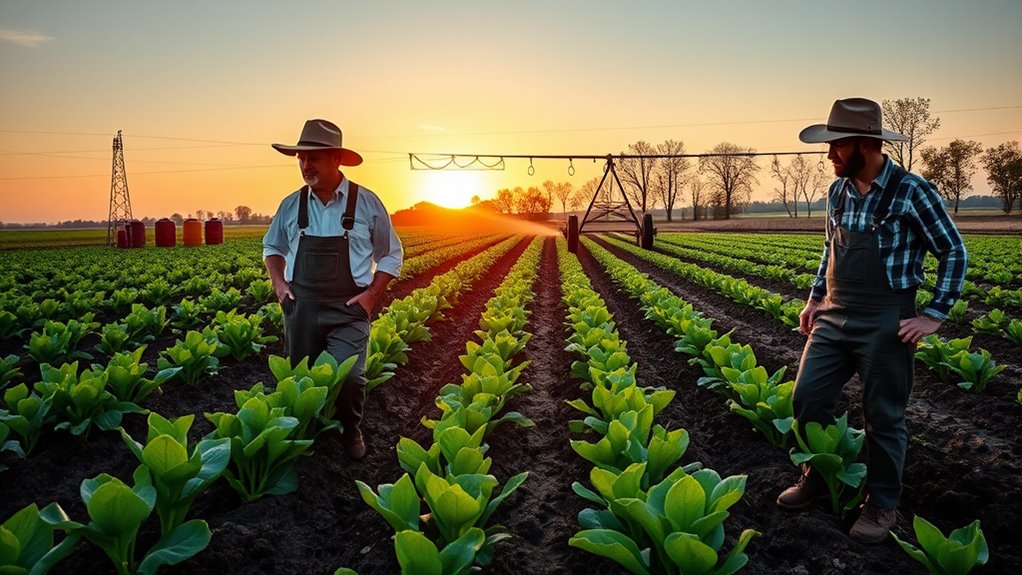

Missouri farmers are adapting to climate change by adopting soil health practices like cover cropping and reduced tillage, which boost resilience and conserve water. They diversify crops to reduce risks from droughts and heavy rains and monitor weather and soil conditions to make smarter decisions. Collaborating with extension services and using precision agriculture helps optimize resources. These strategies build stronger, more sustainable farms, and you’ll discover even more ways they’re coping as you continue exploring.

Get everyday essentials delivered free — and shop member deals
- Fast, free delivery on millions of items
- Access to Prime Big Deal Days deals on October 6–7
- Prime Video, Amazon Music and more included
Key Takeaways
- Missouri farmers are adopting cover cropping to reduce soil erosion and improve moisture retention amid changing rainfall patterns.
- Implementing no-till and reduced tillage practices helps preserve soil health and microbial activity against climate stresses.
- Diversifying crops and selecting drought-resistant varieties increase resilience to droughts and heavy rainfall events.
- Farmers utilize weather forecasts and soil moisture monitoring to optimize irrigation and planting schedules.
- Collaboration with extension services and climate experts provides valuable strategies for sustainable, adaptive farming practices.
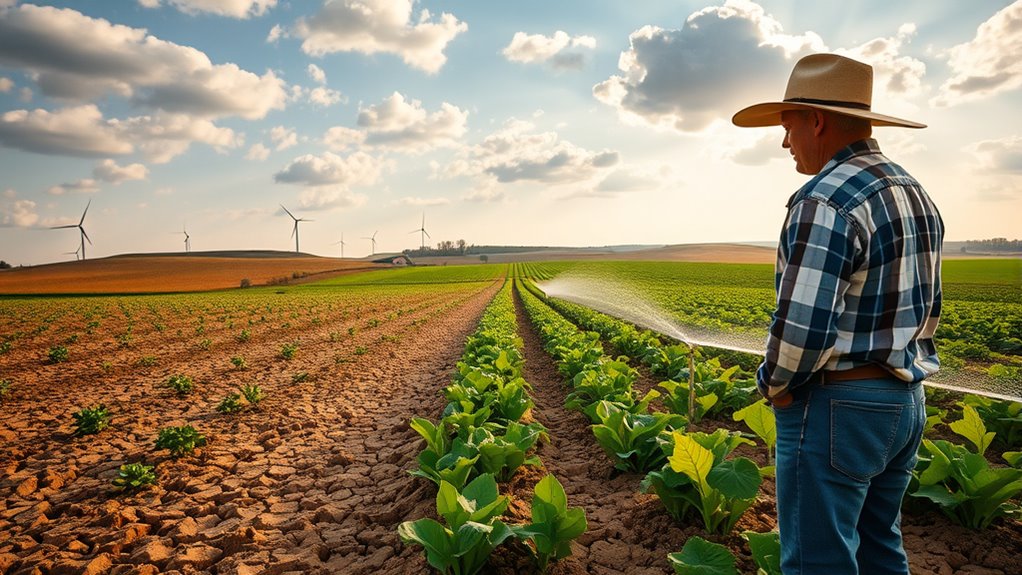
How can communities effectively adapt to the rapidly changing climate? As a farmer in Missouri, you face unpredictable weather patterns, more intense storms, and longer droughts. To navigate these challenges, you need strategies that strengthen your land and crops against the stresses brought on by climate change. One of the most essential steps is focusing on soil health. Healthy soil acts as the foundation for resilient crops by improving water retention, nutrient availability, and microbial activity. When your soil is rich in organic matter and properly managed, it can better withstand droughts and heavy rains, reducing erosion and maintaining productivity. This resilience in your soil directly translates to crop resilience, meaning your plants are more likely to survive extreme conditions and yield consistently.
Healthy soil boosts crop resilience against droughts, storms, and heavy rains.
Implementing cover cropping is a practical approach that benefits both soil health and crop resilience. Cover crops like clover or rye protect the soil surface from erosion, suppress weeds, and add organic matter back into the soil. They also help retain moisture during dry spells, making your crops less vulnerable to drought stress. Additionally, practicing no-till or reduced tillage helps maintain soil structure, preserves organic matter, and encourages beneficial microorganisms. These practices boost soil health, which in turn enhances your crops’ ability to resist pests, diseases, and weather extremes. Soil health is a crucial factor that can be improved through sustainable farming practices, making your land more adaptable to climate variations.
Diversifying your crop selections is another effective way to adapt. Relying on a variety of crops reduces the risk of total failure if one species suffers from adverse weather or pests. Some crops may be more tolerant of drought or heavy rainfall, giving you a buffer against unpredictable conditions. Incorporating drought-resistant varieties and adjusting planting dates can also help your crops better match changing seasonal patterns. The goal is to create a flexible, resilient farming system that can absorb shocks and keep productivity stable.
Furthermore, monitoring soil moisture and weather forecasts allows you to make informed decisions about irrigation and planting schedules. Precision agriculture tools can help optimize water use, ensuring your crops get what they need without wasting resources. Building a network with other farmers, local extension services, and climate experts can provide valuable insights and shared strategies. Education and proactive planning are crucial components in adapting effectively.
cover crop seeds for soil health
As an affiliate, we earn on qualifying purchases.
As an affiliate, we earn on qualifying purchases.
Frequently Asked Questions
What Specific Climate Patterns Are Most Impacting Missouri Agriculture?
You’re noticing more intense droughts and unpredictable floods impacting Missouri agriculture. These changing climate patterns challenge your drought resilience and flood management strategies. Drought conditions reduce water availability for crops, while floods damage fields and wash away nutrients. To adapt, you implement water conservation techniques, improve drainage systems, and diversify crops. Staying proactive helps you protect your farm’s productivity and sustainability amidst these shifting weather patterns.
How Are Local Policies Supporting Farmers’ Adaptation Efforts?
Local policies support your adaptation efforts through targeted policy support and fostering community engagement. You’ll find programs offering financial assistance, technical advice, and training to help you implement sustainable practices. Community engagement initiatives encourage collaboration among farmers, local governments, and organizations, creating a strong network for sharing resources and knowledge. This combined approach empowers you to adapt effectively to climate challenges, ensuring the resilience and productivity of your farm now and in the future.
What New Crop Varieties Are Being Introduced to Withstand Climate Stresses?
You notice new crop varieties emerging that could change everything—drought resistant crops and heat tolerant varieties. These innovations are game-changers for Missouri farmers, offering hope amid unpredictable weather. By introducing these resilient plants, farmers can better withstand prolonged droughts and soaring temperatures. You realize that adopting such crops isn’t just smart; it’s essential for staying productive and secure in a changing climate, shaping the future of agriculture.
How Do Farmers Share Successful Adaptation Techniques?
You share successful adaptation techniques through farmer testimonials and Extension workshops. By participating in these events, you can openly discuss what’s worked on your farm, learn from others’ experiences, and gain practical advice. Extension agents facilitate these exchanges, ensuring your insights reach a broader audience. This collaborative approach helps you stay informed, implement effective practices, and build resilience against climate stresses, ultimately strengthening the entire farming community.
What Financial Assistance Programs Are Available for Climate Adaptation?
Imagine your fields thriving despite unpredictable weather—that’s possible with financial help. You can access government grants to fund innovative adaptation projects and insurance programs to protect your crops from climate-related risks. These resources act like a safety net, giving you peace of mind and the confidence to implement new techniques. By utilizing these programs, you’re better equipped to face the changing climate and keep your farm resilient and productive.
As an affiliate, we earn on qualifying purchases.
Conclusion
So, as you see, Missouri’s farmers face fierce, fluctuating weather, but they fight back with flexibility and foresight. By embracing innovative ideas and implementing inspiring changes, they’re not just surviving but thriving amid climate chaos. Your role is to recognize their resilience and remember that with resourcefulness and resolve, you can support sustainable solutions. Together, you and these farmers can forge a future where farming flourishes despite the fierce forces of climate change.
As an affiliate, we earn on qualifying purchases.
soil moisture monitoring sensors
As an affiliate, we earn on qualifying purchases.
As an affiliate, we earn on qualifying purchases.
Evergreen bestsellers Picks
bestsellers
As an affiliate, we earn on qualifying purchases.