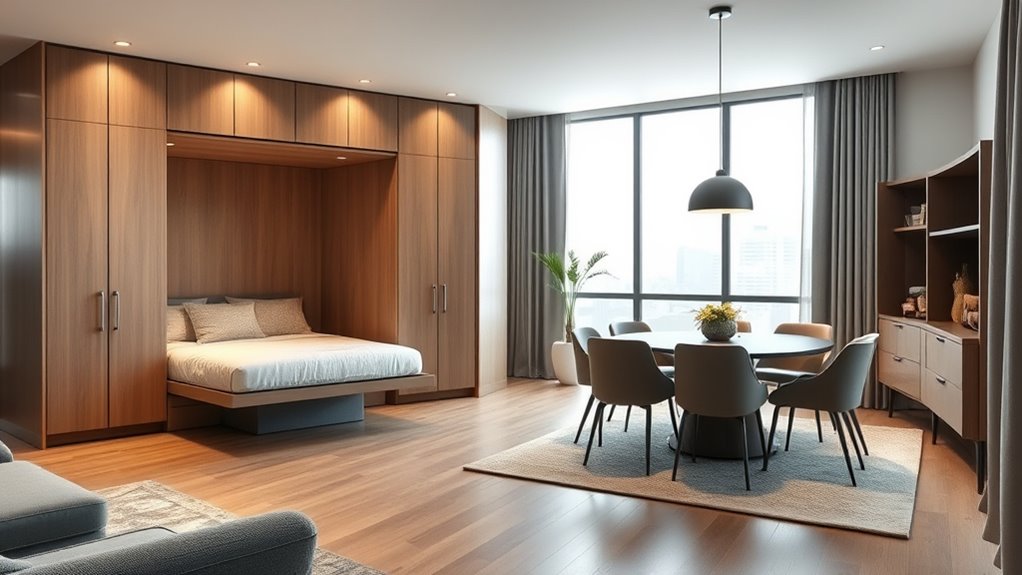

To design flexible living spaces, focus on defining zones with rugs, furniture placement, and lighting to create visual separation. Invest in multi-purpose furniture like fold-out beds, extendable tables, and storage ottomans to maximize functionality without clutter. Use vertical storage and hidden compartments to keep surfaces clear. Combining style with practicality guarantees your space remains adaptable, comfortable, and organized. Keep exploring to discover more tips for transforming your room into a versatile haven.
Key Takeaways
- Use space-saving furniture like fold-out beds and extendable tables to maximize versatility.
- Create distinct zones within the room using rugs, furniture placement, and lighting for clear separation.
- Incorporate storage solutions such as wall-mounted shelves and hidden compartments to reduce clutter.
- Employ design principles that match aesthetic preferences while enhancing functionality and visual appeal.
- Plan for flexibility by choosing multi-purpose furniture and adaptable layouts to easily reconfigure the space.

Have you ever struggled to make the most of limited space in your home? If so, creating multi-functional rooms might be just what you need. These versatile spaces allow you to maximize every square inch, blending comfort and practicality seamlessly. The key is incorporating space saving furniture that can serve multiple purposes, like fold-out beds, extendable dining tables, or storage ottomans. These pieces help you free up space when they’re not in use, making your room more adaptable. But furniture alone isn’t enough—you also need to think about zoning techniques. By dividing a room into distinct zones, you can designate areas for work, relaxation, or sleeping without sacrificing functionality or creating clutter.
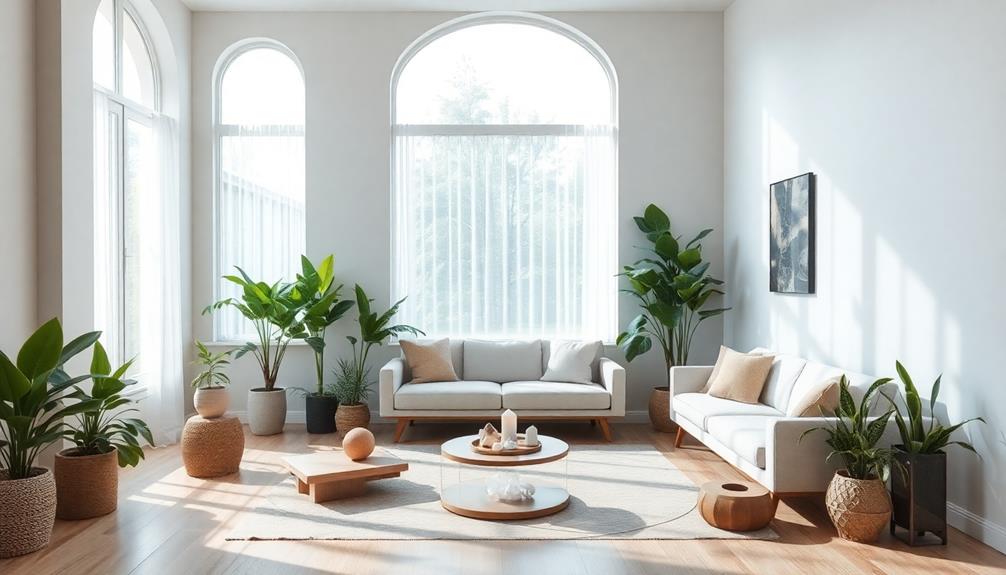
Start by clearly defining your zones. Use rugs, furniture placement, or shelving to visually separate the space. For example, position a bookshelf to act as a room divider between your workspace and living area. This not only creates a sense of separation but also offers additional storage. When you’re selecting furniture, look for items that can do double duty. A sofa bed works as both a comfortable seating option and a bed for guests, while a fold-down desk can function as a workspace during the day and fold away when not in use. Multi-purpose furniture is essential because it reduces clutter and makes your room more flexible.
Zoning techniques help you maintain a sense of order and purpose in a small space. They prevent different activities from interfering with each other and make it easier to switch between functions. For instance, if you set up a corner with a desk and a task light, it becomes a dedicated home office, separate from your relaxation zone. Using different lighting, colors, or decor elements for each zone further enhances the distinction, making the space feel larger and more organized. Incorporating design principles that resonate with your aesthetic can also enhance the overall functionality and appeal of each zone.
Designing a multi-functional room also involves smart storage solutions. Incorporate vertical storage, such as wall-mounted shelves, to keep surfaces clear. Hidden storage compartments in furniture pieces are another excellent way to keep clutter out of sight. Keep in mind that simplicity is key—avoid overcrowding the space with too many pieces, which can make it feel cramped instead of functional. With thoughtful planning, strategic zoning, and furniture that serves multiple purposes, you turn a small room into an adaptable, efficient living area that suits your needs. Whether it’s a studio apartment or a corner of your house, these techniques help you create a space that’s flexible, stylish, and comfortable.

COMAX Futon Sofa Bed, 4‑in‑1 Convertible Sofa Bed, Folding Boneless Couches for Living Room, Fold Out Small Foldable Loveseat Floor Sleeper Comfy Mattress Lounge Space‑Saving, Beige
Versatile 4-in-1 Functionality: Ingeniously designed with two connected foam seats that easily unfold into a spacious sofa bed;…
As an affiliate, we earn on qualifying purchases.
As an affiliate, we earn on qualifying purchases.
Frequently Asked Questions
How Can I Maximize Small Multi-Functional Spaces Effectively?
To maximize your small multi-functional space, choose space-saving furniture like fold-away beds or extendable tables that adapt to your needs. Incorporate multi-use storage solutions such as built-in shelves or hidden compartments to keep clutter at bay. Use versatile pieces that serve multiple functions, like a sofa bed or a desk that doubles as a dining area. This approach creates an efficient, flexible environment perfect for your lifestyle.
What Are the Best Materials for Adaptable Furniture?
You should choose adaptable furniture made from sustainable materials like bamboo, reclaimed wood, or recycled metals. These materials are durable, eco-friendly, and perfect for space-saving solutions. Look for pieces that fold, slide, or convert easily to maximize functionality. By selecting sustainable, versatile materials, you create a flexible, eco-conscious living space that adapts to your needs without sacrificing style or environmental responsibility.
How to Maintain Privacy in Shared Multi-Purpose Rooms?
To maintain privacy in shared multi-purpose rooms, address your privacy concerns by using soundproofing solutions like acoustic panels, rugs, or curtains to absorb noise. You can also implement room dividers or foldable screens to create visual separation when needed. By combining soundproofing and flexible partitions, you guarantee each space feels private and functional, making your shared living area more comfortable and adaptable for everyone.
What Lighting Options Enhance Flexible Living Areas?
Imagine your space bathed in a warm, inviting glow that shifts with your needs. You should incorporate ambient lighting to create a cozy atmosphere and task lighting for focused activities like reading or working. Adjustable fixtures, dimmer switches, and layered lighting options add versatility, allowing you to transform your living area from bright and energetic to calm and relaxed in an instant. This flexibility makes your space truly adaptable.
How Do I Choose Color Schemes for Versatile Rooms?
You should select color schemes based on color psychology to evoke the mood you want, like calming blues or energizing yellows. Incorporate accent palettes with complementary or contrasting colors to add depth and flexibility. Keep it neutral for main walls, making it easier to change accessories or accents later. This approach allows your versatile room to adapt seamlessly for different activities while maintaining a cohesive, stylish look.

DONGMUWUJEE Solid Wood Small Dining Table, 23.6"L-47.2"L Expandable Kitchen Table for 2-6, Designed for Small Spaces, Easy Assembly, Suitable for Kitchen, Dining Room, Living Room, Apartment (Walnut)
【IMPORTANT NOTICE】This item includes only the small kicthen table, dining chairs are not included. The chairs shown in…
As an affiliate, we earn on qualifying purchases.
As an affiliate, we earn on qualifying purchases.
Conclusion
Imagine your living space as a Swiss Army knife—versatile and ready for anything. By designing multi-functional rooms, you create a space that adapts to your changing needs, much like a chameleon blending into its environment. Studies show that flexible layouts can increase home value and improve daily living. So, embrace the art of transformation; with thoughtful design, your home becomes a dynamic haven that evolves with you, turning every square foot into a masterpiece of functionality.
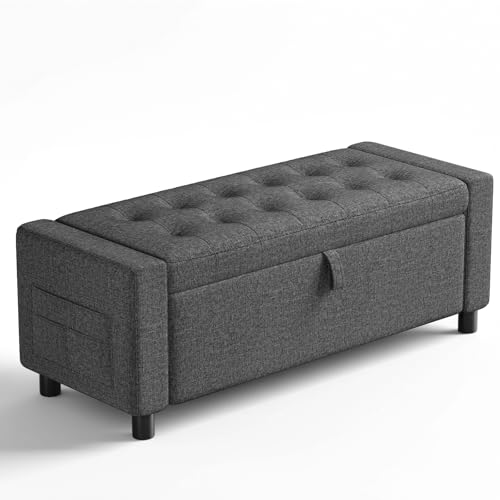
Amada 46" Ottoman with Storage,Storage Ottoman Bench with Safety Hinge, Hidden Compartment & Side Pocket, 400 lbs Weight Capacity, end of Bed/Entryway Bench for Bedroom/Living Room, Dark Gray
Hidden Compartment & Side Pocket:This ottoman (45.3″L×18.1″D×18.3″H) is a storage ottoman—its 30-gallon hidden compartment makes it a practical…
As an affiliate, we earn on qualifying purchases.
As an affiliate, we earn on qualifying purchases.

VEVOR 3-Tier Heavy Duty Wall Garage Shelving, 1 x 3 ft Steel Wall Mounted Shelving Unit, 11 x 36 Inch Per Shelf Floating Storage Metal Rack for Garage with 450 lbs Total Weight Capacity, Black
Heavy-Duty Storage Power: This garage wall shelving set features strong steel construction. Each 1 x 3 ft shelf…
As an affiliate, we earn on qualifying purchases.
As an affiliate, we earn on qualifying purchases.