Pergolas and gazebos differ greatly when it comes to shade and wind protection. Pergolas offer light, adjustable shade with open slats, while gazebos provide solid roofs that block out more sun and wind, making them more suitable for stormier conditions. If you want a cozy, enclosed retreat or better wind resistance, a gazebo may fit better. Still, there’s more to think about—exploring these options can help you find the best fit for your outdoor space.
Key Takeaways
- Pergolas offer lighter, open slats that provide partial shade and are more vulnerable to wind, requiring secure anchoring.
- Gazebos have solid roofs that deliver complete shade and better wind resistance due to their robust, enclosed design.
- Pergolas are customizable and easier to maintain but offer less protection against harsh weather conditions.
- Gazebos are more durable with sturdy framing and solid roofing, making them better suited for storm-prone areas.
- The choice depends on whether you prioritize open aesthetic and ventilation (pergola) or full protection and privacy (gazebo).
What Are Pergolas and Gazebos?

Have you ever wondered what distinguishes a pergola from a gazebo? Both add charm to your outdoor space, but they serve different purposes in enhancing garden aesthetics. A pergola is an open structure with vertical posts and a lattice roof, perfect for supporting climbing plants and defining walkways or seating areas. It creates a sense of openness, blending seamlessly with your outdoor furniture. In contrast, a gazebo is a freestanding, enclosed or semi-enclosed pavilion with a solid roof, offering a cozy retreat for relaxing or entertaining. While pergolas emphasize light and airiness, gazebos provide shelter and privacy. Understanding these differences helps you choose the right structure to optimize outdoor space and meet your outdoor needs. Additionally, considering shade and wind protection can influence which structure best suits your outdoor environment. For example, wind resistance factors are important when selecting a structure for areas prone to strong breezes or storms.
How Are Pergolas and Gazebos Built Differently?
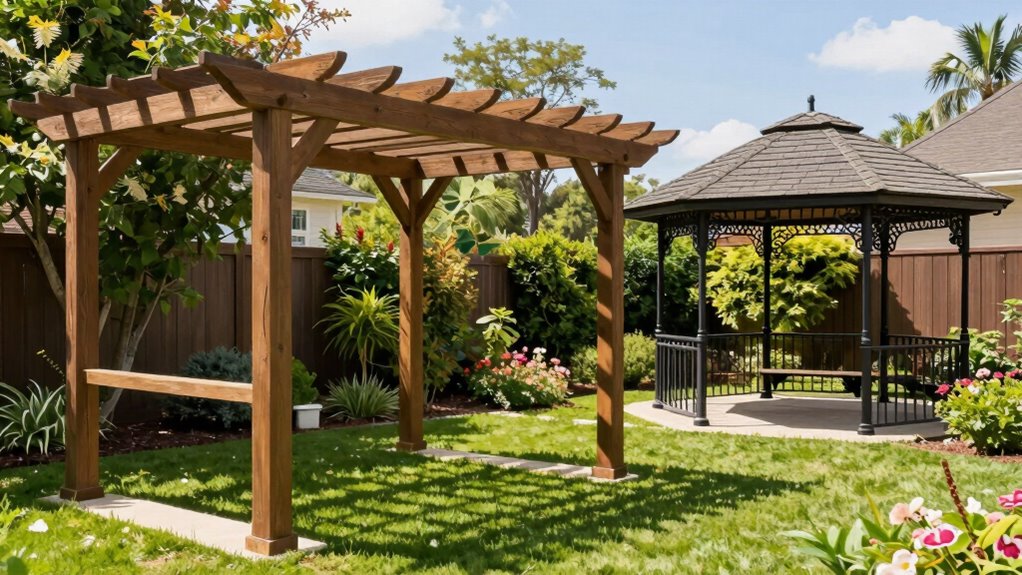
Pergolas and gazebos are built using different techniques that reflect their distinct designs and functions. You’ll notice that pergolas usually have an open foundation, often anchored with posts directly into the ground, relying on framing techniques that emphasize horizontal beams and open sides. Gazebos, however, often feature a more substantial foundation, such as a concrete slab or footings, providing stability and support for their often four or more sturdy columns. Their framing techniques include reinforced structures with roof supports, like trusses or rafters, creating a more enclosed framework. This difference in foundation and framing methods impacts their overall structural stability and durability, especially in areas prone to harsh weather. Here’s a quick comparison: Floating on Water
Which Structure Offers Better Shade for Your Backyard?

When it comes to providing shade in your backyard, the structure you choose makes a big difference. Pergolas typically offer lighter shade options, with open slats that you can customize to control sunlight. They create dappled shade that’s ideal for relaxing without feeling enclosed. Gazebos, on the other hand, usually provide more complete coverage, offering better wind protection and a more shaded retreat. Their solid roofs block out more sun, making them perfect if you want a cooler, more sheltered space. If shade is your main priority, gazebos tend to outperform pergolas because of their solid roofs and greater sun-blocking ability. Properly straining paint during installation can also enhance durability and appearance over time. Additionally, choosing the right shade structure materials can impact how well the shade performs and how long it lasts. For maximum effectiveness, consider the design and placement of your structure to optimize shade coverage throughout the day. Proper construction techniques are essential to ensure stability and longevity of the structure, especially in windy conditions. Selecting the appropriate environmentally friendly materials can also reduce the ecological footprint of your backyard upgrade. Ultimately, your choice depends on how much shade you need and whether you prefer openness or full enclosure.
Are Pergolas or Gazebos More Wind-Resistant?

When considering wind resistance, the structural integrity of your pergola or gazebo plays a vital role. You’ll want to look at how sturdy the frame is and whether it can withstand strong gusts. Material durability also impacts how well each structure holds up during windy conditions. Additionally, incorporating smart home safety features like wind sensors can help automatically retract or secure outdoor structures during storms. Ensuring the construction quality is high can significantly improve resilience against harsh weather. Regular inspections and maintenance of the foundation and joints can further enhance durability during storms. Paying attention to regional climate factors can guide you in selecting the most wind-resistant design and materials for your outdoor space.
Structural Integrity Factors
Although both pergolas and gazebos are designed to enhance outdoor spaces, their wind resistance depends heavily on their structural features. You’ll find that foundation stability is essential; a solid, well-anchored base helps withstand strong gusts. Gazebos typically have a more robust framework with thicker posts and a roof, which improves load bearing capacity and overall durability against wind forces. Pergolas, on the other hand, often feature lighter materials and open designs, making them more vulnerable during high winds. The way each structure is anchored and supported directly impacts how well it resists wind. If you want better wind resistance, focus on ensuring secure foundation stability and sturdy load bearing capacity, especially if you live in a windy area. Additionally, weather-resistant materials can significantly enhance a structure’s ability to withstand harsh weather conditions. Proper anchoring techniques are also crucial to improve wind resistance and ensure safety during storms. Reinforcing structural support elements can further help structures resist wind damage and prolong their lifespan.
Material Durability Aspects
The durability of materials directly influences how well pergolas and gazebos can withstand wind. Different material types offer varying levels of weather resistance, which impacts their wind resistance. For example, metal frames, such as aluminum or steel, tend to be more wind-resistant than wood, as they resist warping and cracking over time. Concrete or stone structures also provide excellent durability against strong gusts. In contrast, softer woods or lightweight materials may be more vulnerable during storms. When choosing between a pergola or gazebo, consider how weather-resistant the materials are; sturdy, weather-resistant options will better withstand high winds. Additionally, material strength plays a crucial role in overall wind resistance. Ultimately, selecting materials designed for durability ensures your structure remains stable and safe during windier conditions.
What Are the Main Benefits of Choosing a Pergola?

Choosing a pergola offers several key benefits that enhance your outdoor space. It boosts outdoor aesthetics, creating a charming focal point that complements your home’s style. Pergolas also provide a semi-open structure, allowing sunlight to filter through while offering partial shade. Additionally, they usually have lower maintenance requirements compared to gazebos, making upkeep easier and less time-consuming. To visualize, here’s a quick comparison:
| Benefit | Description |
|---|---|
| Outdoor aesthetics | Adds elegance and visual appeal to your yard |
| Maintenance requirements | Generally easier to maintain |
| Flexibility in design | Customizable to fit your outdoor decor |
A pergola’s design flexibility and minimal upkeep make it an attractive choice for transforming your outdoor living space, especially considering low maintenance requirements. Furthermore, choosing a pergola can be a cost-effective option when compared to other structures like gazebos, making it an appealing investment in outdoor improvements. Additionally, pergolas offer design versatility, allowing you to personalize the structure to suit your specific outdoor environment and preferences. Incorporating outdoor living enhancements can further maximize the benefits a pergola provides, especially when paired with energy-efficient features that can extend its usability throughout different seasons.
When Should You Install a Gazebo Instead?

If you need an enclosed space for comfort or protection from the weather, a gazebo might be your best choice. When privacy and shelter are priorities, installing a gazebo provides a more secluded and protected area. If you prefer a decorative structure that stands out, a gazebo offers aesthetic appeal along with function. Additionally, consider how the design details like door swings and stair proportions can enhance the overall structure and usability. Incorporating features such as weather resistance can also extend the longevity and usability of your gazebo in various seasons. For added durability, paying attention to proper materials and construction methods can ensure your gazebo remains a functional and attractive feature for years to come.
Need Enclosed Space
When you need a fully enclosed space to shield against weather or provide privacy, a gazebo is often the better choice. Its design naturally lends itself to creating an enclosed space that offers protection from wind, rain, and harsh sunlight. A gazebo can serve as a privacy enclosure, giving you a secluded spot to relax without outside disturbances. If you want to enjoy outdoor activities while staying protected from the elements or need a space that feels more private, a gazebo is ideal. Its walls or curtains can be added for extra enclosure, making it versatile for different weather conditions and privacy needs. When enclosure is your priority, choosing a gazebo ensures you get a cozy, protected environment.
Seeking Privacy and Shelter
A gazebo is the perfect choice when you want a space that offers both privacy and shelter from the elements. If you’re concerned about privacy, a gazebo’s enclosed or semi-enclosed design helps block sightlines and reduce noise from neighbors, addressing privacy concerns and enhancing sound insulation. You should consider installing a gazebo when you desire a cozy retreat that shields you from wind and prying eyes.
| Feature | Benefits |
|---|---|
| Privacy concerns | Enclosed design reduces visibility |
| Sound insulation | Blocks noise from surroundings |
| Shelter from weather | Provides protection against rain and sun |
| Customizable | Add curtains or walls for more privacy |
| Versatile placement | Fits in gardens, patios, or yards |
Prefer Decorative Structure
Choose to install a gazebo when you want a decorative focal point that enhances your outdoor space’s aesthetic appeal. Gazebos offer an ornamental appeal that can transform your garden into a charming retreat. Their intricate design and structure serve as a striking feature, adding visual interest and elegance. If you’re seeking a garden enhancement that draws attention and creates a picturesque setting, a gazebo is an ideal choice. It functions as both a beautiful centerpiece and a functional space for relaxing or entertaining. Unlike pergolas, which are more subtle, gazebos provide a more defined decorative element that elevates your landscape’s overall appearance. When aesthetics are your priority, installing a gazebo guarantees your outdoor area becomes more inviting and visually appealing.
Pergola vs Gazebo Cost: Which Fits Your Budget?

Determining whether a pergola or a gazebo fits your budget depends largely on their initial costs and long-term expenses. Generally, pergolas are more affordable upfront, especially if you opt for simpler designs and materials. Gazebos tend to be pricier due to their often elaborate structure and more extensive materials. Here’s a quick budget comparison:
| Feature | Pergola | Gazebo |
|---|---|---|
| Initial Cost | Lower | Higher |
| Design Aesthetics | Sleek, minimal | Ornate, decorative |
| Long-term Expenses | Moderate maintenance | Higher upkeep |
Choosing between the two depends on your budget and preferred style, but consider both initial and ongoing costs to make the best decision.
How Do You Decide Between a Pergola and a Gazebo?

When deciding between a pergola and a gazebo, you should consider how you plan to use the space, your style preferences, and your budget. If you want a structure with high design flexibility, a pergola allows you to customize with different materials, plants, and lighting options. It’s ideal if you prefer an open, airy feel and want to blend seamlessly with your landscape. On the other hand, gazebos offer a more enclosed, traditional look with typically lower maintenance requirements, since they often come with built-in roofs and durable materials. Think about how much time you want to spend on upkeep—pergolas may need more regular care, while gazebos tend to be more maintenance-free. Your choice ultimately depends on your desired aesthetic, functionality, and willingness to maintain the structure.
Frequently Asked Questions
Can Pergolas and Gazebos Be Customized to Match Outdoor Decor?
Yes, you can customize pergolas and gazebos to match your outdoor decor. You can choose materials, colors, and finishes that complement your style, ensuring a seamless look. Additionally, you can add decor matching elements like curtains, lighting, or decorative accents. This allows you to coordinate your pergola or gazebo with your existing outdoor space, creating a cohesive and personalized environment that reflects your unique style.
Which Structure Requires More Maintenance Over Time?
You’ll find pergolas generally require more maintenance over time because their material durability varies, especially with wood, which needs regular sealing and painting. Gazebos, often made from more pest-resistant materials like vinyl or metal, demand less upkeep. If pest resistance and longevity matter most, a gazebo might be the better choice, as it’s designed to withstand weather and pests with less ongoing maintenance.
Are There Specific Climate Conditions Suited Better for Pergolas or Gazebos?
Think of your outdoor space as a stage—your choice of pergola or gazebo depends on the weather’s mood. Pergolas excel in mild climates, offering flexible shade and good air flow, thanks to their open design. Gazebos are better suited for areas with unpredictable weather, providing better weather resistance and wind resistance. Consider your climate adaptability when selecting, so your structure can stand strong through all seasons.
How Do Installation Times Compare for Pergolas Versus Gazebos?
Installation duration for pergolas is generally shorter because of their simpler construction complexity, often taking a day or two. Gazebos usually require more time due to their elaborate design and additional features, sometimes spanning several days. Your choice depends on how quickly you want the structure up. If you prefer a quick setup, pergolas are your best bet, while gazebos may need more planning and patience.
Can You Add Heating or Lighting to Pergolas and Gazebos?
Yes, you can add lighting options and heating capabilities to both pergolas and gazebos. You might install string lights or built-in LED fixtures for illumination, and choose heaters like electric or propane units for warmth. These additions enhance comfort, allowing you to enjoy your outdoor space day or night. Customizing with lighting and heating makes your pergola or gazebo a cozy, inviting retreat regardless of the weather or time.
Conclusion
Think of choosing between a pergola and a gazebo as selecting the perfect umbrella for your outdoor oasis. Whether you prefer the open, airy feel of a pergola or the cozy shelter of a gazebo, each offers its unique shade and protection. By understanding their differences, you can craft a backyard retreat that feels like your personal sanctuary—where every moment under your structure becomes a treasured escape from the world.