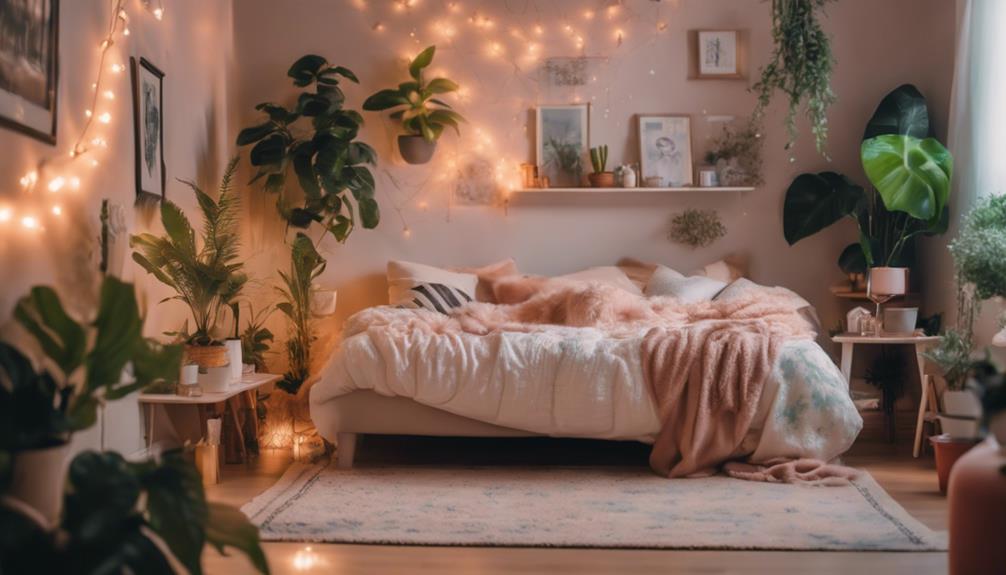
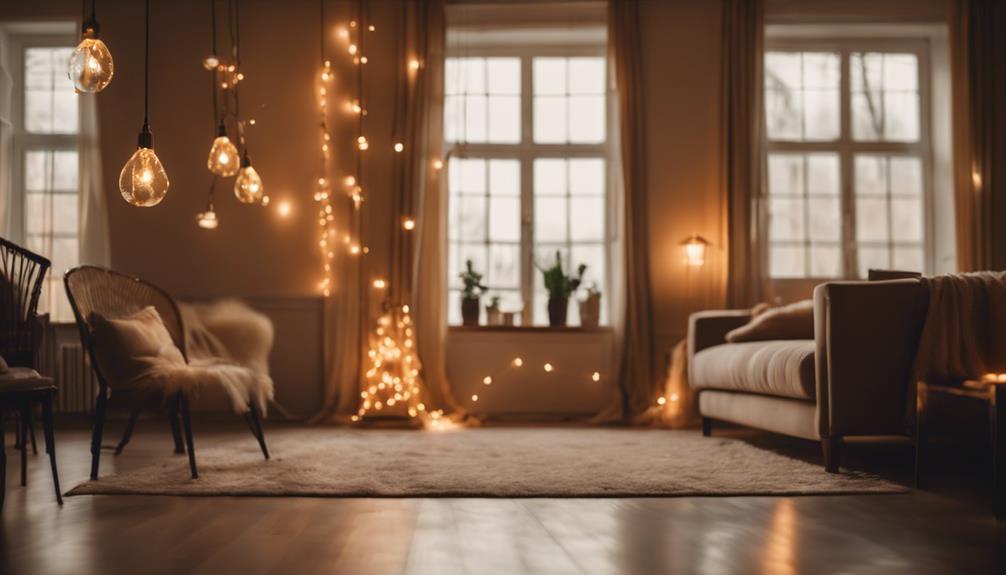
Your environment’s layout directly impacts your mood and stress levels. Cluttered or cramped spaces can make you feel anxious or overwhelmed, while open, organized areas promote calmness and control. Personal touches like colors, artwork, or plants boost your overall happiness. Proper lighting and room design also influence your energy and relaxation. When your space is thoughtfully arranged, it supports your mental well-being. Stay with us to discover how specific layouts can transform your emotional state.
Key Takeaways
- An organized, clutter-free room promotes calmness and reduces stress, positively impacting mood.
- Personalization elements like artwork or plants enhance emotional comfort and foster a sense of control.
- Open layouts with sufficient space create feelings of safety and relaxation, improving overall mental well-being.
- Proper lighting placement and color choices influence alertness or relaxation, affecting emotional states.
- Designing environments that balance functionality and aesthetics supports mental resilience and mood stability.
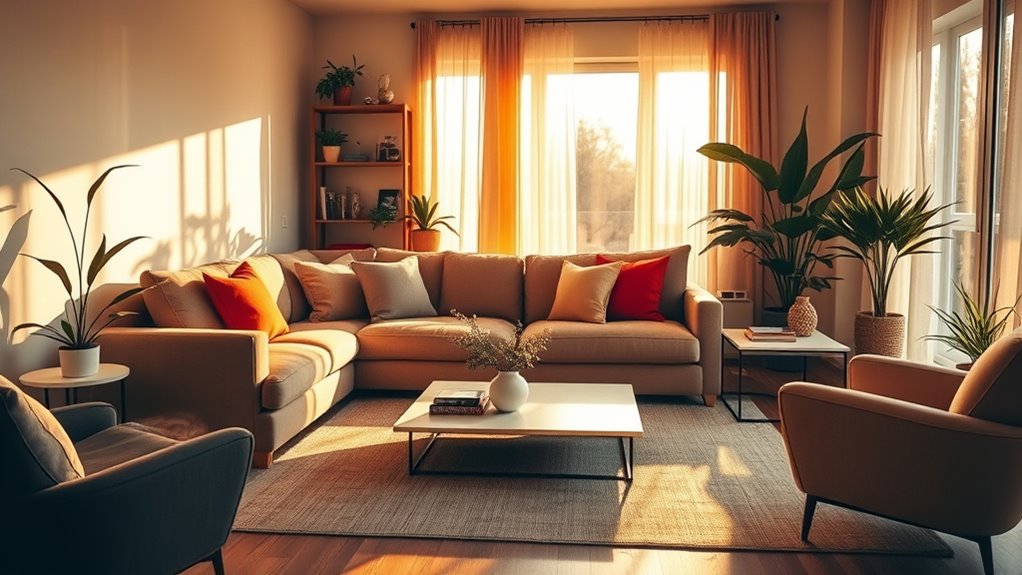
Have you ever wondered how spending extended periods in space affects your mind? The environment you’re in plays a vital role in shaping your mental state, and room layout is a key part of that. When you think about space habitats or even small living areas on Earth, the way they’re designed can considerably influence your mood. Central to this is lighting psychology, which explores how lighting impacts your emotions and behavior. Bright, natural-like light can boost your mood and energy levels, making you feel more alert and positive, while poor or inadequate lighting can lead to feelings of depression or fatigue. In space, where natural sunlight might be limited or inconsistent, artificial lighting systems are intentionally designed to mimic natural light patterns. These lighting choices help regulate your circadian rhythms, reducing the risk of sleep disturbances and mood swings. The color influence of lighting is equally impactful. Cooler tones like blue or white light are often used to promote alertness during the day, but overexposure can cause irritability or restlessness. Conversely, warmer hues like amber or soft yellow create a calming atmosphere, essential for winding down and relaxing after a long day. When designing a space environment, you want to think about how these different lighting colors and intensities interact with your psychological needs. For example, a workspace with bright, cool lighting can keep you focused and motivated, but it shouldn’t be so harsh that it causes discomfort. Similarly, bedrooms or rest areas benefit from softer, warmer lighting to encourage relaxation and prepare your mind for sleep. Beyond lighting, the room layout itself influences your emotional well-being. Cluttered or cramped spaces can increase stress and anxiety, while open, well-organized environments foster a sense of control and calm. Personalization also plays a role; incorporating elements that resonate with you—such as favorite colors, artwork, or plants—can improve your overall mood. In space habitats, designers often use color psychology to influence how you feel in confined environments. Bright, lively colors can energize you, while muted, neutral tones might help you relax. The key is balancing these elements to create an environment that supports your mental health, especially when external stimuli are limited. Additionally, understanding the benefits of glycolic acid exfoliating toner can help you choose skincare that enhances your confidence and comfort in any environment. Ultimately, understanding how room layout, lighting psychology, and color influence your mood allows you to craft spaces that keep you grounded, focused, and emotionally resilient, whether on Earth or in the vast expanse of space.

Galnolt LED Desk Lamp for Home Office with Base, 28.2" Adjustable Gooseneck Swing Arm Ultra Bright Desk Light, Dimmable Architect Table lamp for Desktop Computer Light, Reading, Study, Workbench
Wide, Super-Bright Illumination for Any Workspace: This 28.2-inch office desk lamp features three light bars that fully brighten…
As an affiliate, we earn on qualifying purchases.
As an affiliate, we earn on qualifying purchases.
Frequently Asked Questions
How Does Lighting Influence Emotional Well-Being in a Room?
Lighting substantially influences your emotional well-being in a room. Natural light boosts your mood, making you feel more energized and positive, while ample ambient lighting creates a cozy, calming atmosphere. When you maximize natural light and incorporate soft ambient lighting, you help reduce stress and increase feelings of comfort. Proper lighting design can transform your space into a place that promotes happiness, relaxation, and mental clarity.
Can Color Schemes Impact Stress Levels and Productivity?
Bright, calming blues can make you feel like you’re floating in a peaceful sky, reducing stress and boosting productivity through color psychology. Conversely, fiery reds might turn your workspace into a battleground of energy or frustration. Your color choices dramatically influence mood enhancement, shaping how you feel and perform. So, selecting the right color schemes isn’t just aesthetic—it’s a powerful tool to control stress levels and enhance your overall productivity.
What Role Does Furniture Arrangement Play in Social Interactions?
Furniture arrangement directly influences your social interactions by promoting openness or intimacy. Using furniture symmetry creates balanced spaces that encourage equality and ease, while strategic seating arrangements foster conversation and connection. Position chairs and sofas to face each other or in a circle to enhance engagement. You can make gatherings more comfortable and inviting by thoughtfully arranging furniture, making it easier to connect and communicate naturally.
How Does Clutter Affect Mental Health and Focus?
Clutter can feel like an overwhelming storm of organized chaos, making it hard to focus and increasing stress levels. When your space is cluttered, sensory overload kicks in, distracting you from important tasks and dragging down your mental health. Clearing clutter helps create a calm environment, allowing your mind to breathe freely. A tidy space boosts your focus, reduces anxiety, and promotes overall well-being—so keep your surroundings clean and your mind clear.
Do Outdoor Views From a Room Improve Mood?
Yes, outdoor views from a room can boost your mood. When you position windows thoughtfully, maximizing window placement and natural light, you create a connection to nature that reduces stress and enhances happiness. Seeing greenery or open skies through your windows helps you feel calmer and more energized. Incorporating these elements into your space invites positive feelings and improves your overall mental well-being.

Create Your Serene Moss Sanctuary with The Unique Gardener Moss Bowl Terrarium Kit with LED Light – Complete Terrarium Supplies, Indoor Plants for Stress Relief & Air Purification!
Craft Your Tranquil Oasis: Grow lush moss gardens in a 4” glass terrarium with cork stopper for minimal-care…
As an affiliate, we earn on qualifying purchases.
As an affiliate, we earn on qualifying purchases.
Conclusion
Understanding how room layout impacts your mood can truly transform your space. Did you know that a cluttered environment can increase stress levels by up to 30%? By arranging your space thoughtfully, you can boost your happiness and productivity. So, next time you feel overwhelmed, consider rearranging your room. Small changes can make a big difference—your mental well-being depends on it. Take control of your environment and feel the positive shift firsthand.

Govee Smart Light Bulbs, Color Changing Light Bulb, Work with Alexa and Google Assistant, 16 Million Colors RGBWW, WiFi & Bluetooth LED Light Bulbs, Music Sync, A19, 800 Lumens, 4 Pack
16 Million DIY Colors: Govee smart light bulbs own millions of color and 54 preset scene modes, you…
As an affiliate, we earn on qualifying purchases.
As an affiliate, we earn on qualifying purchases.
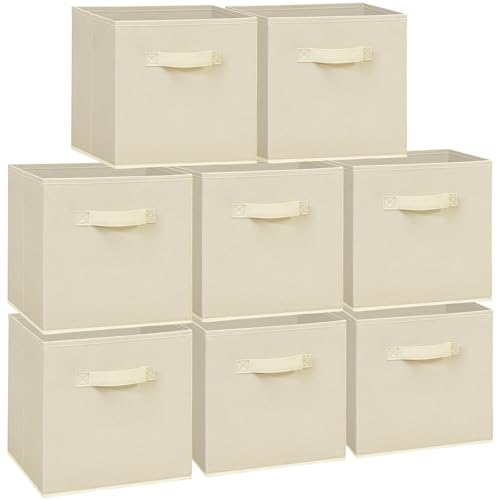
STORAGEIDEAS 11 Inch Fabric Storage Cubes, Sturdy Foldable Storage Bins, Heavy Duty Cube Organizer for Clothes, Blankets, Shelves, Closets, Bedroom, Living Room, Beige, 8 Pack
Multipurpose Foldable storage cube: These 11 inch cube storage bins can be placed in the living room or…
As an affiliate, we earn on qualifying purchases.
As an affiliate, we earn on qualifying purchases.