
In your backyard, you can confidently spot 15 constellations without a telescope by focusing on bright stars and familiar patterns. Start by allowing your eyes 15-20 minutes to adjust to darkness, then identify well-known shapes like Orion’s belt or the Big Dipper. Use star maps or apps for guidance and practice regularly to recognize subtle patterns. Keep exploring, and you’ll find that your night sky understanding continues to grow naturally.
Key Takeaways
- Allow 15-20 minutes for your eyes to fully adjust to darkness, enhancing star visibility and constellation recognition.
- Use star maps or stargazing apps to locate and identify key constellations like Orion, Taurus, and Canis Major.
- Focus on bright stars and distinctive patterns, such as Orion’s belt, to navigate the night sky without equipment.
- Learn the myths and cultural stories behind constellations to deepen your understanding and appreciation of the stars.
- Practice regularly to improve your ability to recognize 15 or more constellations confidently from your backyard.
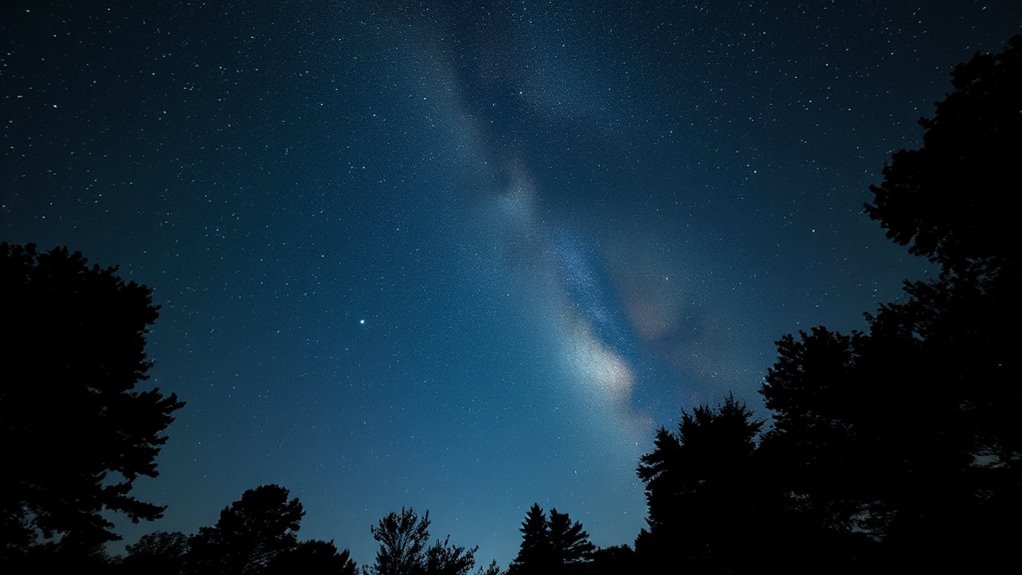
There’s no better way to connect with the night sky than by stepping into your backyard for some stargazing. You don’t need a telescope—just your eyes and a little patience—to enjoy naked eye astronomy and spot familiar constellations. As darkness settles in, look up and notice the brightest stars forming patterns that have fascinated humans for centuries. These patterns, known as constellations, aren’t just random arrangements; they often come with rich constellation myths that can add depth to your experience. Learning to identify these shapes can transform a simple night outdoors into an enthralling journey through ancient stories and stellar configurations.
Start by giving your eyes about 15-20 minutes to adjust to the darkness. This enhances your ability to see dimmer stars and makes spotting constellations easier. Focus on the brightest stars first; they’re usually part of well-known patterns. For instance, the constellation Orion, with its distinctive belt of three aligned stars, is often the easiest to find. Once you locate Orion, you can start exploring nearby constellations like Taurus or Canis Major. Recognizing these patterns is largely a matter of familiarization through repeated observation and using star maps or stargazing apps for guidance. Additionally, understanding the cultural significance of constellations enriches your stargazing experience by connecting you to the stories of ancient civilizations. Recognizing these patterns is largely a matter of familiarization through repeated observation and using star maps or stargazing apps for guidance.
As you identify stars and connect the dots, it’s worthwhile to learn the stories behind the constellations. These constellation myths date back to ancient civilizations—Greeks, Romans, and even earlier cultures—who saw images and stories in the star patterns. For example, Orion is linked to a legendary hunter, while the Big Dipper is part of Ursa Major, the Great Bear, in many mythologies. Knowing these stories makes the process more engaging and memorable. It’s as if the night sky becomes a giant storybook, with each constellation representing a character or a myth.
Practicing naked eye astronomy helps you develop a keen eye for subtle patterns and improves your ability to navigate the night sky without technological aid. It also deepens your appreciation for the cultural history embedded in the stars. Over time, you’ll start recognizing more constellations, even those that are less prominent, and begin to understand their significance in different cultural contexts. Remember, the key is patience, consistent practice, and curiosity. With each clear night, your understanding grows, and you’ll find yourself more confident in identifying constellations and connecting with the stories they tell. Stargazing from your backyard becomes not just a hobby, but a timeless experience that links you to the universe and its ancient tales.
Frequently Asked Questions
What Are the Best Months for Constellation Viewing?
The best viewing seasons depend on the constellations you want to see. Typically, the ideal months for constellation viewing are during the fall and winter, from September to February, when the sky is clearer and darker. During these months, you get longer nights and less atmospheric interference. These ideal months allow you to easily spot many prominent constellations with the naked eye, making your stargazing experience more enjoyable.
How Do Moon Phases Affect Stargazing Visibility?
Think of moon phases as a dimmer switch on the night sky’s spotlight. When the moon has a full moon, its bright moon glow washes out fainter stars, making constellations harder to see. During new moons or lunar eclipses, darkness returns, revealing more stars. You get better stargazing chances when the moon is less luminous, so plan your nights around these phases for clearer views and breathtaking constellations.
Can I See Planets Without a Telescope?
You can definitely see some planets without a telescope, especially during planetary oppositions when they’re brightest. Bright planets like Jupiter, Venus, Mars, and Saturn are visible to the naked eye and don’t require a telescope for viewing. While a telescope enhances planet visibility by revealing more detail, it’s not necessary for spotting these planets in the night sky. Just look for bright, steady points of light.
What Safety Precautions Should I Take Outdoors at Night?
When heading outdoors at night, you should prioritize safety by wearing appropriate safety gear like sturdy shoes and reflective clothing. Stay aware of the weather, checking forecasts to avoid unexpected rain or cold. Keep a flashlight handy, and let someone know your plans. Being prepared helps you enjoy your stargazing safely, ensuring you stay comfortable and alert while exploring the night sky confidently.
Are There Apps to Help Identify Constellations Easily?
You’ll find star chart apps and constellation finders incredibly helpful for identifying constellations easily. These apps use your phone’s GPS and compass to show real-time star maps, making navigation simple even on the darkest nights. With features like augmented reality, you can point your phone at the sky and instantly see constellation names and patterns. They’re perfect tools for beginner stargazers wanting to explore the night sky confidently and accurately.
Conclusion
Now that you’ve mastered these 15 constellations, you’ll be the undisputed ruler of the night sky, turning your backyard into an astronomical kingdom. No telescope needed—just your keen eyes and newfound confidence. Soon, you’ll spot these celestial giants from miles away, impressing everyone with your cosmic expertise. The universe is practically at your fingertips, waiting for you to reveal its secrets. Get ready to redefine stargazing and make the night sky your personal playground of wonders.