
TL;DR

Get everyday essentials delivered free with Prime
- Fast, free delivery on millions of items
- Prime Video, Amazon Music and more included
- Member-only deals all year
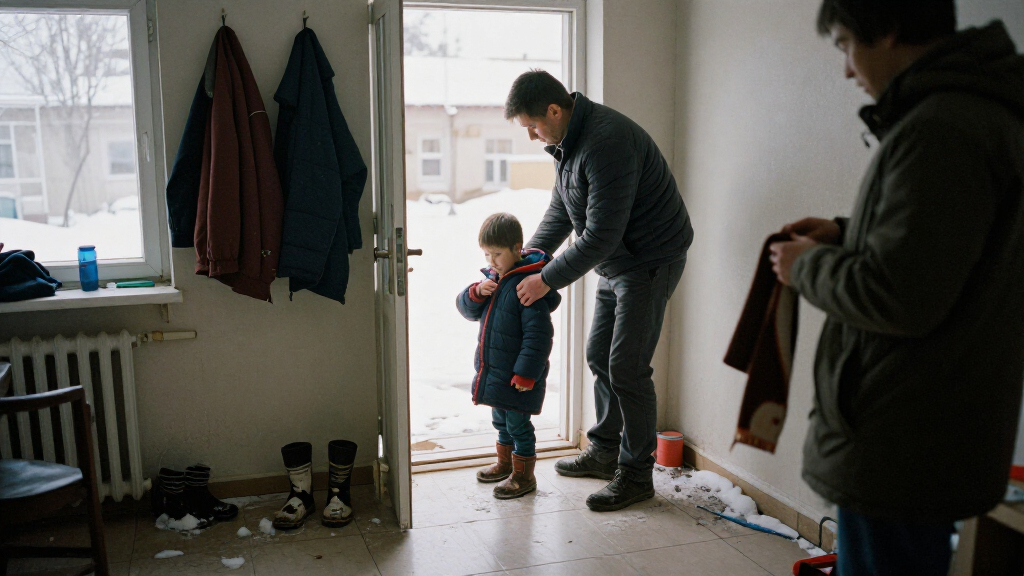
Canadian farmer Arend Feenstra says his family no longer recommends moving to Russia after he learned that obtaining permanent residency would require him to sign a contract with the Defense Ministry. Feenstra, who moved with his wife and eight children under a simplified immigration program, says he will consider applying again for temporary residency when his current permit expires.
Canadian farmer Arend Feenstra, who moved with his wife and eight children to Russia under a program for foreigners who support “traditional values,” says he no longer recommends that other foreigners move there. In a video reported by the Russian outlet Nizhny Novgorod Onlain, Feenstra said he learned he would have to sign a Defense Ministry contract to obtain permanent residency.
Feenstra received a three-year temporary residence permit in the Nizhny Novgorod region in early 2025. He later brought his family to Russia and began farming. The difficulty arose as he sought to replace the temporary permit with a permanent one: under a rule that has applied since November 2025, foreign men aged 18 to 65 who are deemed fit for military service must sign a Defense Ministry contract to qualify for permanent residency.
In remarks quoted in the report, Feenstra said he and his family had grown attached to where they live, but that he had not moved to Russia to sign a military contract. He pointed to his eight young children and farm as reasons he was unwilling to do so. He said he would rather take his chances in Canada, while adding that he also considers life there risky.
Feenstra said that when his current temporary permit expires, he expects he can apply for temporary residency again without signing a contract. He also said the changing rules left his family seeing “no way forward.” The report does not state that Feenstra has left Russia or that his current permit has expired.
A Residency Path Tied to Military Service
The case highlights a gap between the promise of a simplified route into Russia and the conditions that can apply later when a migrant seeks a more secure status. The traditional-values program may ease access to temporary residency, but it does not exempt eligible foreign men from the separate contract requirement for permanent residency.
For Feenstra’s family, the distinction affects a practical decision about whether they can build a long-term life in Russia without accepting a military obligation. His account may also matter to prospective applicants weighing the program: the terms for an initial permit and for permanent status are not the same, and the later requirement could alter their plans.
Feenstra’s experience is one reported case; the available account does not establish how many other participants face the same choice or whether the requirement has led others to leave. Still, his public change in recommendation offers a direct example of how a residency rule can shape the choices of a family that moved under the program.
As an affiliate, we earn on qualifying purchases.
How Russia’s Values Program Works
Russia launched the program in August 2024 to encourage people from countries its government classifies as “unfriendly” to move to Russia if they share what it calls “traditional Russian spiritual and moral values.” According to the report, participants can apply for temporary residence through a simplified process that, among other things, does not require a Russian-language exam.
That streamlined route concerns temporary residency. The Defense Ministry contract condition for permanent residency was introduced later: since November 2025, it has applied to foreign men aged 18 to 65 considered fit for military service. The report says people who arrived through the traditional-values program are not exempt. Feenstra received his temporary permit before that rule took effect, but the requirement became relevant when he sought permanent status.
“I didn’t come here to sign a contract.”
— Arend Feenstra, as quoted in the report
military service contract for foreigners Russia
As an affiliate, we earn on qualifying purchases.
As an affiliate, we earn on qualifying purchases.
Feenstra’s Long-Term Plans Remain Open
It is not clear whether Feenstra will remain in Russia, return to Canada, or pursue another immigration option. He said he could apply for temporary residency again after his current permit expires, but the report does not provide details about the application process, whether approval is assured, or how many times he could renew.
The account also does not specify whether authorities have issued a formal decision on his permanent-residency application, how the military-contract rule was applied to his individual case, or whether he has taken any steps to challenge it. No response from Russian officials is included in the source material. Feenstra’s comments are his account of the requirements and his family’s position, rather than a broader survey of other program participants.
As an affiliate, we earn on qualifying purchases.
Permit Expiry Is the Next Decision Point
The next reported milestone is the expiry of Feenstra’s current temporary residence permit. He says he plans to apply for temporary residency again rather than sign a Defense Ministry contract for permanent status. The source does not give an expiry date or confirm that a new application has been filed.
Until more information emerges, it remains uncertain whether the family will stay in Russia on temporary permits or choose to leave. Any update on a renewal application, a formal decision on permanent residency, or a change in the applicable rules could clarify whether Feenstra has a viable route to remain without signing the contract.
As an affiliate, we earn on qualifying purchases.
Key Questions
Why does Arend Feenstra say he no longer recommends moving to Russia?
He says that obtaining permanent residency would require him to sign a Defense Ministry contract, which he does not want to do. He also cited changing rules and said his family saw “no way forward.”
When did Feenstra move to Russia?
He received a three-year temporary residence permit in the Nizhny Novgorod region in early 2025, then brought his wife and eight children to Russia and began farming.
Who is covered by the contract requirement?
The report says that since November 2025, foreign men aged 18 to 65 who are considered fit for military service must sign a Defense Ministry contract to obtain permanent residency. Participants in the traditional-values program are not exempt.
Will Feenstra and his family leave Russia?
That is not known. Feenstra said he could apply for temporary residency again when his current permit expires, but the report does not confirm whether he has applied, whether it would be approved, or whether the family plans to leave.
Source: rss
Fall Picks
fall essentials
As an affiliate, we earn on qualifying purchases.


