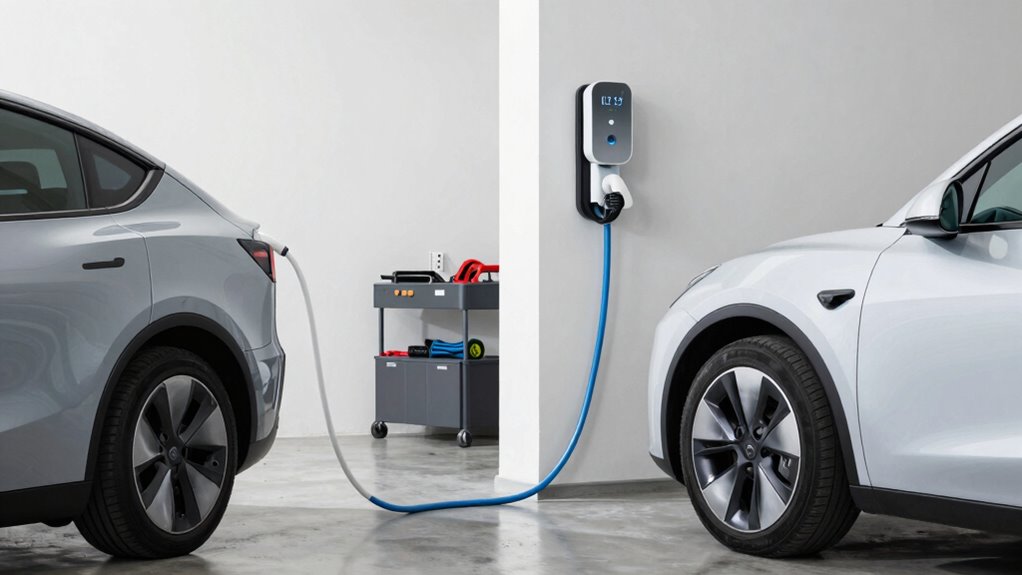

If you’re charging your EV at home, Level 1 uses a standard household outlet and is easy to set up, but it charges slowly—adding just 3-5 miles of range per hour. Level 2 requires a dedicated 240V outlet, costs more upfront, but charges much faster—up to 30 miles per hour. Considering your driving habits and budget helps determine the right choice. Keep exploring to find out which option is best suited for your needs.
Open a free Amazon Business account
Business pricing, bulk buying and tax-exempt orders.
As an affiliate, we earn on qualifying purchases.
Key Takeaways
- Level 1 chargers connect to standard 120V outlets, are inexpensive, and suitable for short daily drives.
- Level 2 chargers require a 240V outlet, are more costly upfront, but charge faster, typically in 4-8 hours.
- Level 1 adds 3-5 miles of range per hour; Level 2 adds 25-30 miles per hour.
- Choose Level 1 for limited budgets and infrequent use; Level 2 for faster charging and regular driving.
- Upgrading electrical systems may be necessary for Level 2 installation, increasing initial costs.
As an affiliate, we earn on qualifying purchases.
What Are Level 1 and Level 2 EV Chargers and How Do They Work?
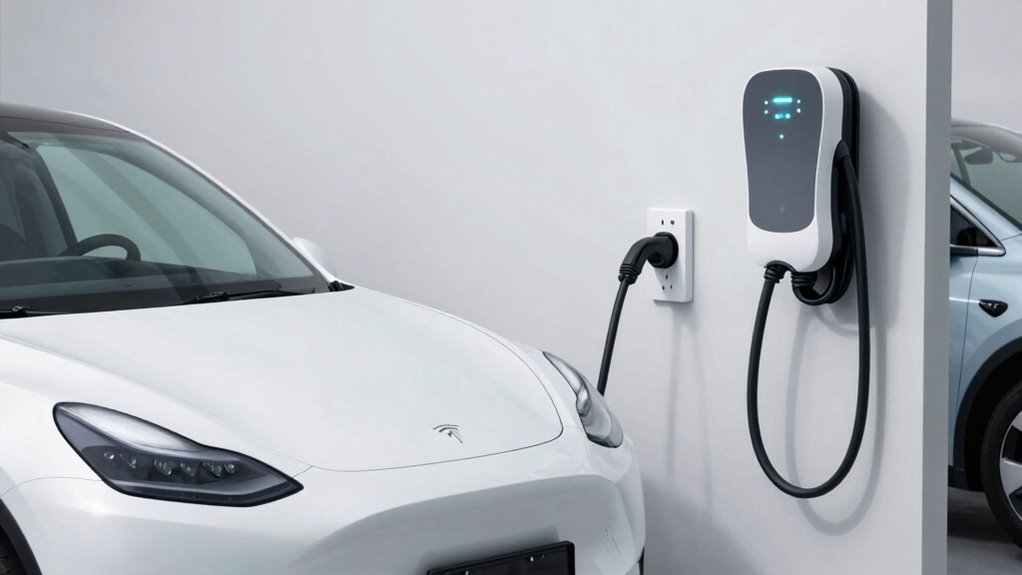
Level 1 and Level 2 EV chargers are the two main types of home charging options for electric vehicles. A charging station refers to the device you use to recharge your EV, and each type has different electrical requirements. Level 1 chargers connect to a standard household outlet, usually 120 volts, making them easy to install but slower. These chargers are suitable if you drive short distances daily. Level 2 chargers require a dedicated 240-volt outlet, similar to what you use for large appliances. They deliver faster charging times and may need electrical upgrades to meet safety standards. Understanding these electrical requirements helps you decide which charging station best fits your home and driving habits.
Level 2 electric vehicle charger
As an affiliate, we earn on qualifying purchases.
As an affiliate, we earn on qualifying purchases.
How Long Do Charging Times Take for Level 1 and Level 2 Chargers?
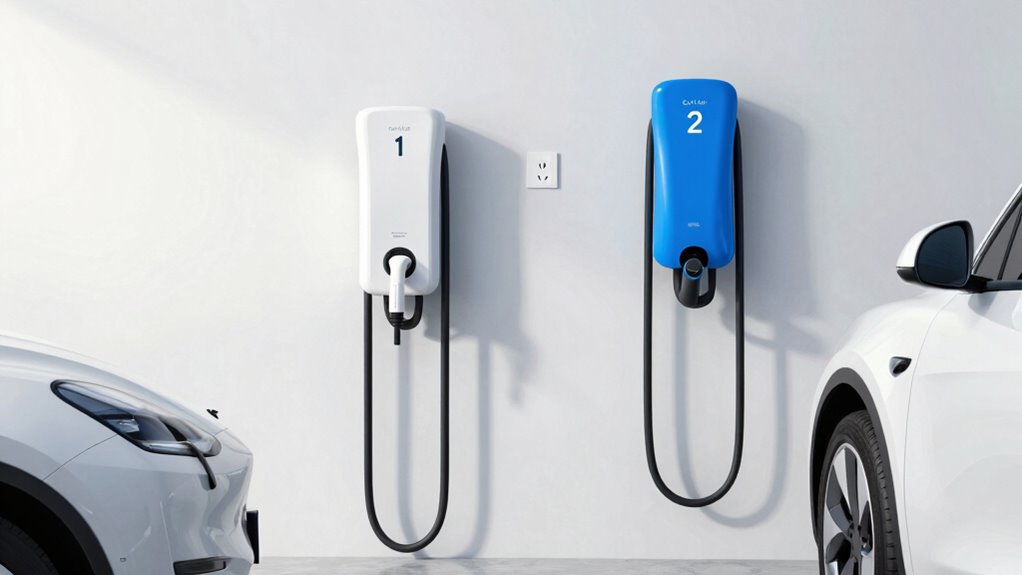
Charging times vary considerably between the two main home options, so it’s important to understand how long each takes to replenish your EV’s battery. With a Level 1 charger, your charging speed is slower, typically adding about 3-5 miles of range per hour. This means it could take 20-40 hours to fully charge a battery with a high capacity. In contrast, a Level 2 charger offers a faster charging speed, often providing 25-30 miles of range per hour. For an average battery capacity, it might take only 4-8 hours to fully charge. Your actual charging time depends on your EV’s battery capacity and the charger’s power output. Overall, Level 2 chargers considerably cut down your charging times compared to Level 1 options.
As an affiliate, we earn on qualifying purchases.
What Are the Costs to Install and Use Level 1 and Level 2 Chargers?
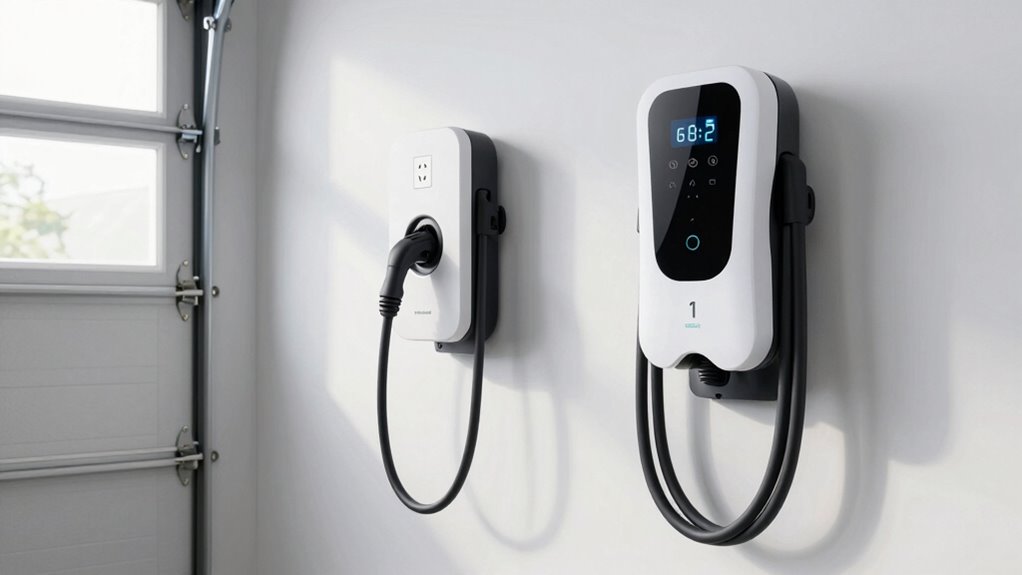
How much should you expect to spend on installing and using home EV chargers? The cost comparison between Level 1 and Level 2 chargers shows significant differences. Level 1 chargers are generally cheaper to install, often just requiring a standard outlet, with installation expenses minimal or nonexistent if you already have the outlet. You might pay around $300 to $500 for the charger itself. In contrast, Level 2 chargers cost between $500 to $2,500, plus installation expenses that can range from $500 to $2,000 depending on electrical work needed. While Level 2 chargers have higher upfront costs, they can save you time and electricity over time. Additionally, high refresh rates in projectors can enhance visual clarity, which is useful if you use your home charging station for multiple purposes like viewing instructional videos or monitoring charging progress. When considering overall costs, it’s also important to evaluate the installation complexity, which can influence both time and expense. Evaluating energy efficiency can help you determine potential long-term savings, as the efficiency gains of Level 2 chargers may offset their higher initial investment. Usage costs are similar for both, primarily based on electricity rates, but the initial investment varies considerably.
home EV charging station installation
As an affiliate, we earn on qualifying purchases.
As an affiliate, we earn on qualifying purchases.
Which EV Charger Is Better for Your Home and Budget?
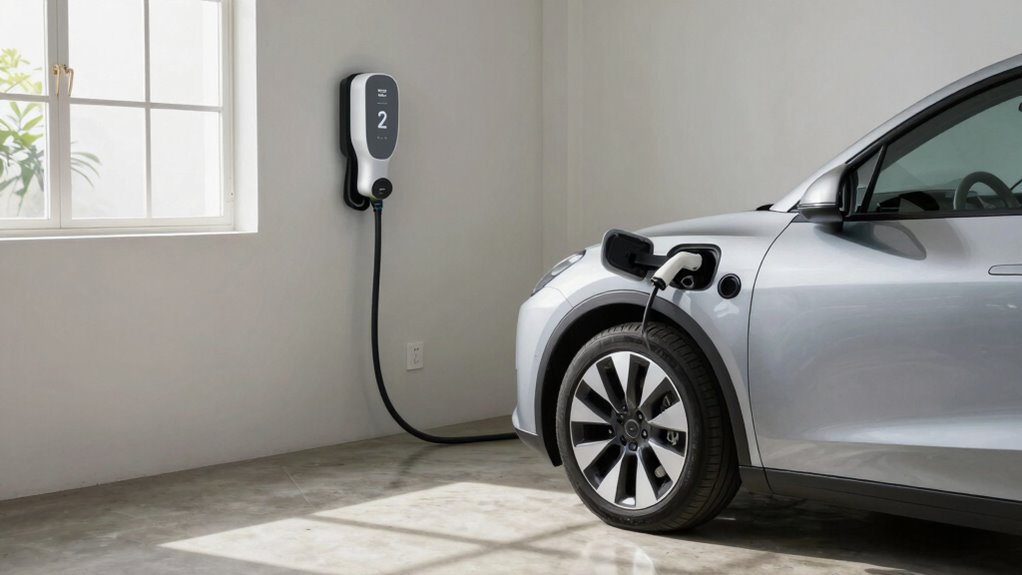
Choosing the right EV charger for your home depends on your budget, driving habits, and electrical setup. If you want faster charging speed and can handle a more complex installation, a Level 2 charger is usually better. It charges your vehicle considerably quicker, making it ideal for frequent drivers or those who want convenience. However, it tends to be more expensive upfront and involves a more complex installation process that may require upgrades to your electrical system. On the other hand, if you have a limited budget or prefer a simpler setup, a Level 1 charger might suffice, especially if you drive less often. Consider your daily driving needs and how much you’re willing to invest in installation to determine which charger best fits your home and financial situation. Exploring digital concepts can also help you understand the technological features and connectivity options available with different charger types. Additionally, understanding sound healing science can provide insights into how technological innovations influence user experience and health benefits when choosing home equipment. Being aware of cost factors related to installation and operation can further assist in making an informed decision. Moreover, evaluating power supply requirements is crucial to ensure your home’s electrical system can support the chosen charger safely and effectively, especially given the growing integration of smart home technology which can optimize energy use.
How Do You Decide Between Level 1 and Level 2 Charging for Your EV?

Deciding between Level 1 and Level 2 charging largely depends on how often you drive and your daily schedule. If you have a short commute and can leave your car plugged in overnight, a Level 1 charger might be enough. However, if you drive frequently or need quicker charging, a Level 2 station is more practical. Consider where you’ll place your charging station; Level 2 chargers require a dedicated outlet and more space but offer faster energy transfer. Energy efficiency also plays a role—Level 2 chargers typically deliver power more efficiently for longer or quicker charges. Additionally, understanding smart charging protocols can help optimize your energy use and save on costs. Think about your daily routines and parking setup to choose the right option that balances convenience, placement, and energy use. Incorporating charging station installation considerations into your planning can ensure safety and compliance with local electrical codes. Properly selecting charger capacity is essential to match your vehicle’s charging needs and avoid unnecessary upgrades.
Frequently Asked Questions
Can I Upgrade My Existing Home Outlet to Support Level 2 Charging?
Yes, you can upgrade your existing home outlet to support Level 2 charging, but you’ll need to take into account home outlet upgrades and your electrical panel capacity. A dedicated 240-volt outlet requires a professional assessment to ensure your electrical panel can handle the extra load. If not, you might need an electrical panel upgrade. Consult a licensed electrician to evaluate your system and safely install the appropriate Level 2 charger.
Are There Safety Concerns With Using Level 1 or Level 2 Chargers?
You might think safety isn’t a big deal, but neglecting it could turn your home into a danger zone. Level 1 and Level 2 chargers can pose serious risks if misused, like charger fire risks or electrical shock hazards. Always guarantee proper installation, use certified equipment, and follow safety guidelines. Ignoring these precautions can lead to dangerous accidents, so prioritize safety to keep your home and loved ones protected.
How Do Climate Conditions Affect Charging Speed and Equipment Durability?
Climate impact can critically affect your charging speed and equipment longevity. Extreme cold may slow down charging and cause wear on connectors, while intense heat can overheat components, reducing their lifespan. To guarantee ideal performance, you should protect your charger from harsh weather and choose equipment rated for your climate. Proper installation and maintenance help extend your charger’s durability, ensuring consistent, safe charging regardless of weather conditions.
What Maintenance Is Required for Home EV Chargers Over Time?
You need to regularly check your home EV charger’s calibration to guarantee it charges your vehicle accurately. Schedule electrical inspections annually to spot any wiring issues or wear that could affect safety and performance. Keep the charger clean and dry, and replace any damaged cords or parts promptly. Proper maintenance extends your charger’s lifespan and guarantees safe, efficient charging, saving you money and preventing potential hazards.
Can I Use a Portable Charger for My EV Instead of Fixed Home Chargers?
Like a Swiss Army knife, portable chargers offer great charging portability, but they aren’t always the best option for daily EV use. You can use a portable charger for your EV, but it’s less convenient and slower than fixed home chargers. Plus, not all vehicles are compatible. For regular charging, investing in a dedicated, fixed charger guarantees faster, more reliable power without the hassle of lugging around a bulky, temporary solution.
Conclusion
Choosing between Level 1 and Level 2 chargers depends on your needs and budget. If you’re in a hurry, a Level 2 charger can save you a lot of time, but it might be more of an investment. On the other hand, a Level 1 charger is simple and inexpensive, perfect if you’re patient. Either way, understanding your options helps you hit the ground running—making your EV charging experience smoother and more enjoyable.
Flea & tick season Picks
flea and tick prevention
As an affiliate, we earn on qualifying purchases.