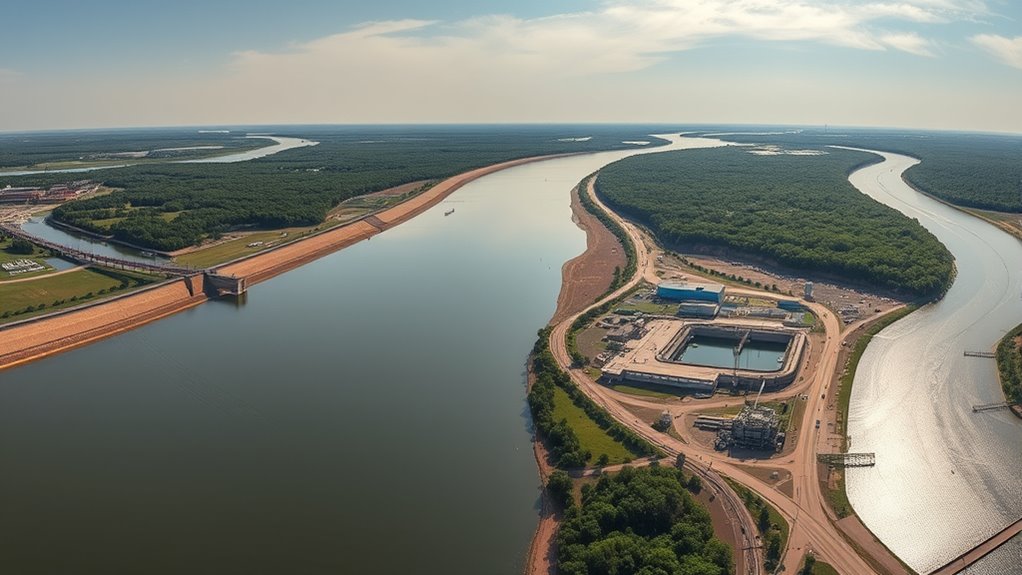

Missouri’s post-2025 flood control and water management plans focus on modernizing stormwater systems by expanding detention basins, installing green infrastructure like rain gardens and permeable pavements, and upgrading pipe capacities. These efforts aim to prevent flooding, improve water quality, and enhance community resilience against severe weather caused by climate change. Community involvement through education and water conservation is also key. To discover how these strategies work together, keep exploring these innovative approaches.
Key Takeaways
- Missouri plans to modernize stormwater infrastructure by expanding detention basins and installing green infrastructure like rain gardens.
- Post-2025 initiatives include upgrading pipe capacity and integrating permeable pavements to enhance flood resilience.
- Community engagement and water conservation efforts will be prioritized to reduce stormwater runoff and flood risks.
- Investments will focus on improving water quality, filtering pollutants before reaching lakes and streams.
- Reliable backup power systems and climate-resilient designs will ensure continuous infrastructure operation during severe weather events.
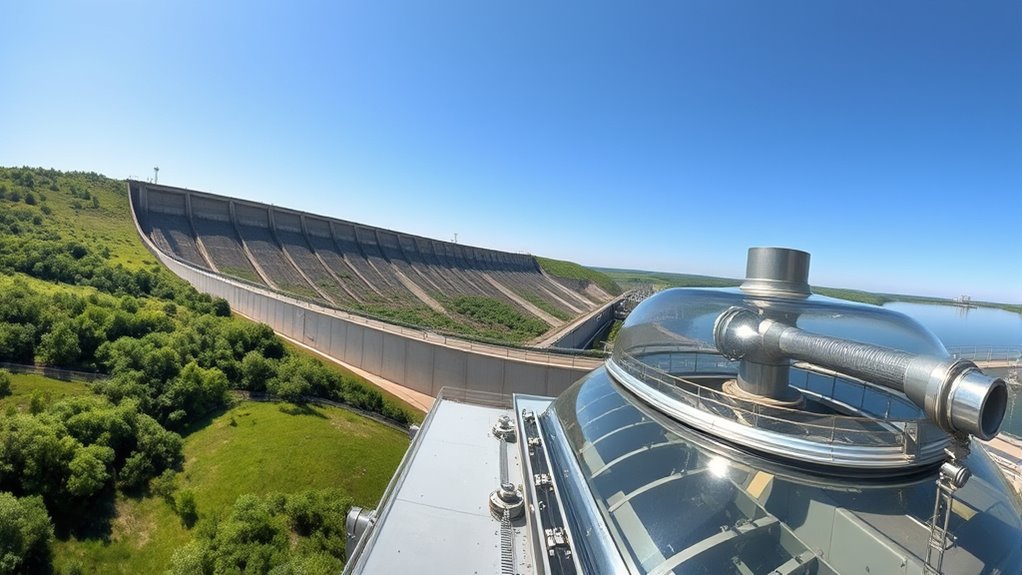
Have you ever wondered how communities protect themselves from devastating floods? It all starts with effective stormwater infrastructure. This system includes a network of pipes, channels, and detention basins designed to quickly and efficiently move excess rainwater away from homes, roads, and businesses. Proper stormwater management is essential because it prevents water from pooling on streets, overwhelming drainage systems, and causing flooding. When well-maintained, stormwater infrastructure reduces the risk of flood damage and helps keep communities safe. But infrastructure alone isn’t enough; water conservation plays an important role in flood control strategies. By encouraging residents and industries to use water wisely, communities can reduce the volume of runoff during heavy storms. Simple practices like fixing leaks, using drought-tolerant plants, and installing rain barrels help decrease the amount of water entering storm drains, easing the burden on infrastructure during peak rainfall events.
In Missouri’s plans post-2025, you’ll see a focus on upgrading existing stormwater infrastructure to handle increasingly severe weather patterns. Climate change has led to more intense storms, so investing in modern, resilient systems is essential. These upgrades include expanding detention basins, installing green infrastructure like rain gardens and permeable pavements, and enhancing pipe capacity. These measures not only prevent floods but also improve water quality by filtering pollutants before they reach lakes and streams. Alongside infrastructure improvements, water conservation initiatives will be emphasized to manage water resources sustainably. Education programs will teach residents how their water use impacts flood risk, encouraging habits that reduce runoff, such as rainwater harvesting and proper landscaping techniques. Additionally, adopting reliable backup power systems ensures that critical stormwater infrastructure remains operational during power outages caused by severe weather events.
Community involvement is a key part of Missouri’s flood management strategy. When you participate in water conservation efforts, you help reduce the pressure on stormwater systems during heavy rains. Local governments will promote awareness campaigns and provide incentives for installing water-saving devices. These combined efforts aim to create a more resilient environment, capable of withstanding future climate challenges. By investing in smarter stormwater infrastructure and fostering responsible water use, Missouri plans to minimize flood damage, protect ecosystems, and ensure that water resources are preserved for future generations. You play a critical role in this vision—every action you take towards water conservation contributes to the community’s overall flood resilience. Together, through integrated planning and community engagement, Missouri is working to build a safer, more sustainable future for everyone.

RTS Home Accents 50-Gallon ECO Rain Barrel Made with 100% Recycled Plastic, Flat Back Rain Water Collection Barrel, Black
50-Gallon Capacity: Provides ample storage for harvested rainwater, ideal for watering gardens, lawns, and plants.
As an affiliate, we earn on qualifying purchases.
As an affiliate, we earn on qualifying purchases.
Frequently Asked Questions
How Will Climate Change Impact Missouri’s Flood Management Strategies?
Climate change will considerably impact Missouri’s flood management strategies by forcing you to focus on climate adaptation and flood resilience. As extreme weather events increase, you’ll need to update infrastructure, improve early warning systems, and implement sustainable land use practices. These efforts will help you better prepare for and respond to floods, ensuring communities remain protected and resilient despite the changing climate conditions.
What Funding Sources Are Allocated for Future Flood Control Projects?
You’ll find that federal grants play a significant role in funding Missouri’s flood control projects, providing essential financial support. Additionally, public-private partnerships are increasingly being employed to supplement these funds, leveraging private sector investments for infrastructure improvements. These combined sources help guarantee that Missouri can implement effective flood management strategies, adapt to climate change impacts, and protect communities from future flood risks.
How Does Community Involvement Influence Water Management Planning?
Your community engagement plays a crucial role in water management planning by allowing you to share local knowledge and concerns through public participation. When you get involved, you help shape priorities and guarantee solutions reflect community needs. Public participation fosters transparency, builds trust, and encourages collaborative decision-making, making flood control efforts more effective and sustainable. Your active involvement directly influences how water management strategies are developed and implemented.
Are There Innovative Technologies Being Implemented in Flood Prevention?
You’ll find innovative flood prevention tech shaping the future, like smart barriers that act like vigilant guards, adjusting to rising waters. Sensor networks serve as the brain, constantly monitoring water levels and sending real-time data. This seamless blend of technology helps communities act swiftly before floods take hold. These advancements turn traditional defenses into dynamic systems, making flood control smarter, faster, and more effective—protecting your home and environment with cutting-edge precision.
What Are the Long-Term Ecological Effects of Missouri’s Flood Control Measures?
You might notice that Missouri’s flood control measures could impact ecosystems long-term. Wetland restoration efforts help maintain biodiversity, but invasive species may thrive in altered habitats, disrupting native plants and animals. These changes can affect water quality, fish populations, and overall ecological balance. While designed to protect communities, you should consider how these strategies might unintentionally shift ecological dynamics, emphasizing the need for ongoing monitoring and adaptive management.

Vodaland Permeable HexPave System – Grass & Gravel Pavers – 100% Recycled PPE Plastic, Handles 27,000 lbs, 1" Depth, 65 s.f / 22 Units
DURABLE AND ECO-FRIENDLY: Crafted from 100% recycled PPE plastic, our gravel paver system delivers exceptional strength and longevity;…
As an affiliate, we earn on qualifying purchases.
As an affiliate, we earn on qualifying purchases.
Conclusion
As Missouri moves forward with its flood control and water management plans, remember that prevention is better than cure. By investing in smarter infrastructure and sustainable practices, you can help protect communities and natural resources. Don’t wait until the waters rise; take action now. As the saying goes, “An ounce of prevention is worth a pound of cure.” Your efforts today can safeguard tomorrow’s future, ensuring resilience for generations to come.

Stormwater Management for Land Development: Methods and Calculations for Quantity Control
As an affiliate, we earn on qualifying purchases.
As an affiliate, we earn on qualifying purchases.

DeepRoot ArborTie Heavy-Duty Ground Anchoring Kit for Tree Support, Includes Three 10’ ArborTie Green and Three 15” Steel Eye Earth Anchors, Versatile Tree Stake Kit, Landscaping Stakes (AT HD15)
EASY INSTALLATION AND HIGH STRENGTH – The easy-to-install ArborTie tree stake kit is perfect for securing trees in…
As an affiliate, we earn on qualifying purchases.
As an affiliate, we earn on qualifying purchases.