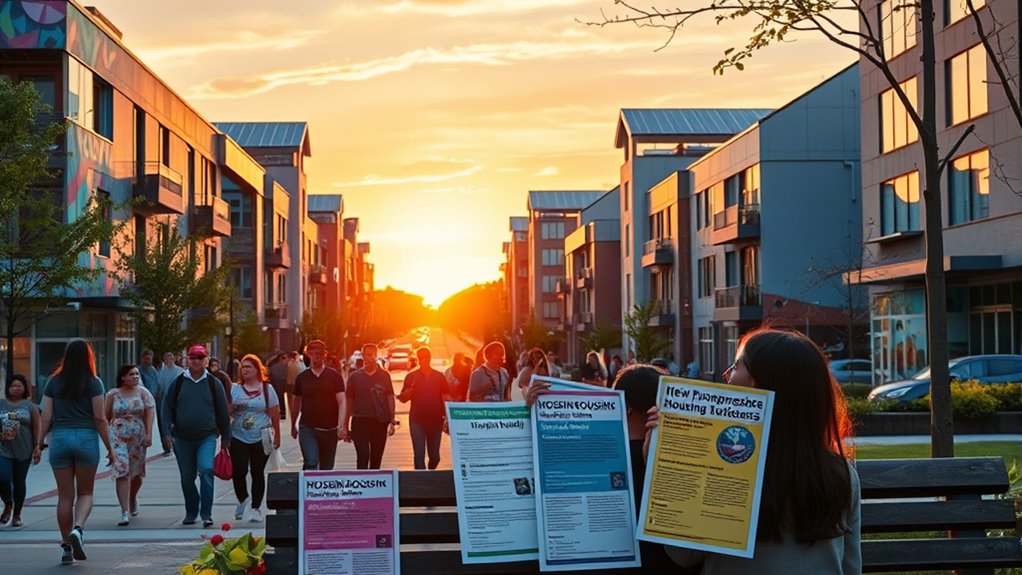

To tackle Missouri’s housing affordability crisis, policymakers propose a mix of solutions. They suggest easing zoning restrictions to promote affordable housing development and expanding rental assistance programs to support vulnerable tenants. Combining these strategies encourages more diverse housing options and stabilizes communities. Community involvement is also essential to guarantee policies meet local needs. To discover how these solutions work together and the potential impact on your area, keep exploring further.
Key Takeaways
- Implement affordable zoning reforms to allow higher-density and diverse housing types.
- Expand rental assistance programs to provide immediate relief for low-income households.
- Combine zoning changes with incentives for developers to include affordable units.
- Engage communities and stakeholders to ensure policies meet local affordability needs.
- Promote integrated strategies that address both short-term relief and long-term housing sustainability.
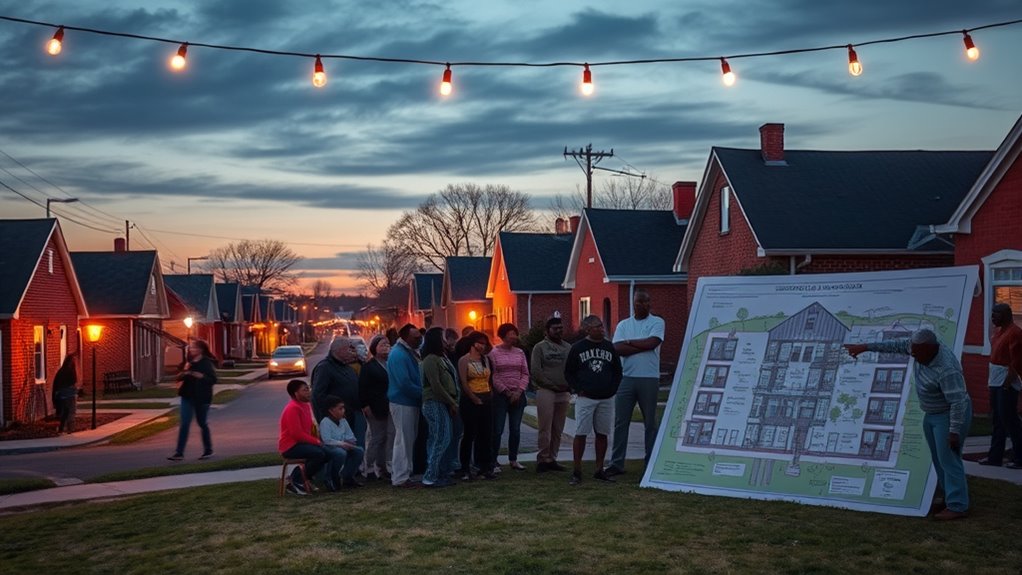
Have you noticed how housing prices in Missouri are soaring while affordable options shrink? It’s a trend that’s making it harder for many residents to find homes they can afford. As property values climb, the gap between what people earn and what they need to pay for housing widens, leaving families and individuals scrambling for solutions. One promising approach gaining attention is the implementation of affordable zoning policies. These policies aim to increase the number of affordable housing units by relaxing restrictions on density and building types. When local governments adopt affordable zoning, they make it easier for developers to build smaller, more affordable homes or multi-family units, increasing the housing supply in areas where demand is high. This not only helps lower-income families find homes but also prevents urban sprawl by encouraging more efficient land use. However, zoning reforms alone can’t address the immediate needs of those already struggling. That’s where rental assistance programs come into play. Offering rental assistance helps bridge the gap between income and housing costs, providing immediate relief for tenants facing eviction or housing insecurity. With rental vouchers or subsidies, residents can afford to stay in their homes even as prices rise, stabilizing communities and preventing homelessness. These programs are especially vital in Missouri, where the housing market’s tightness puts low-income households at risk. Combining affordable zoning policies with robust rental assistance creates a thorough strategy that tackles both long-term affordability and urgent needs. Local governments can incentivize developers to include affordable units in new projects, while social services can expand rental assistance programs to reach more vulnerable populations. This dual approach ensures that housing isn’t just available but accessible and sustainable for everyone. It’s also important to involve community stakeholders in shaping these policies, ensuring they reflect local needs and priorities. When residents have a say, the solutions become more targeted and effective. Additionally, leveraging smart housing strategies can further optimize land use and cost efficiency. Ultimately, addressing Missouri’s housing crisis requires coordinated efforts—balancing zoning reforms that promote affordable development with safety nets like rental assistance that support those already affected. As a resident, you can advocate for these policies by engaging with local officials and supporting organizations working on housing issues. Together, these strategies can help turn the tide on rising housing costs and create a more equitable housing landscape across Missouri. The goal is to make homeownership and rental options attainable for all, fostering vibrant communities where everyone has a fair shot at stable, affordable housing.
Frequently Asked Questions
How Will Proposed Solutions Impact Local Property Taxes?
Proposed solutions could raise local property taxes due to increased development costs and community investments, impacting your property tax bills. The tax implications might lead to higher assessments or levies to fund infrastructure and affordable housing projects. While these changes aim to benefit the community by improving housing options, they could also shift the financial burden onto property owners, influencing the overall community impact and your personal expenses.
What Role Do Private Developers Play in Addressing Affordability?
Private developers are like architects shaping the future of affordable housing. They play a crucial role by working within zoning regulations and forming public-private partnerships that speed up project completion. Your involvement can influence how these collaborations prioritize affordability, ensuring developments meet community needs. By actively engaging with developers, you help create sustainable, accessible neighborhoods where everyone has a chance to thrive, making housing more affordable for all.
Are There Specific Programs for First-Time Homebuyers?
Yes, there are specific programs for first-time homebuyers. These programs often include rent assistance and credit counseling to help you prepare financially. Rent assistance can lower your monthly costs, making saving easier, while credit counseling guides you through improving your credit score. By participating in these initiatives, you can build a solid foundation for purchasing your first home, increasing your chances of success in Missouri’s housing market.
How Will Affordable Housing Affect Neighborhood Demographics?
Affordable housing can diversify neighborhood demographics, fostering community integration. However, you should be aware of gentrification concerns, as new affordable units might attract higher-income residents, potentially displacing long-term residents. To balance growth and diversity, you can support policies that promote equitable development, ensuring that affordable housing benefits all community members without leading to displacement or eroding the neighborhood’s cultural fabric.
What Timeline Is Expected for Implementing These Solutions?
Think of implementing these solutions like planting a tree; it takes time to grow strong. Usually, housing policy changes start taking shape within 6 to 12 months, with some projects taking up to two years. During this period, community engagement is crucial to guarantee everyone’s voice is heard. Patience and collaboration will help these efforts bear fruit, creating lasting change in Missouri’s housing landscape.
Conclusion
You can’t afford to ignore Missouri’s housing crisis any longer—it’s shaping up to be the biggest challenge the state has faced in decades. By supporting affordable housing initiatives and advocating for sensible policies, you hold the power to turn things around. Imagine a future where everyone has a roof over their head; it’s not just a dream, it’s a future within reach. Act now, because waiting could make this crisis even worse than a tornado tearing through town.