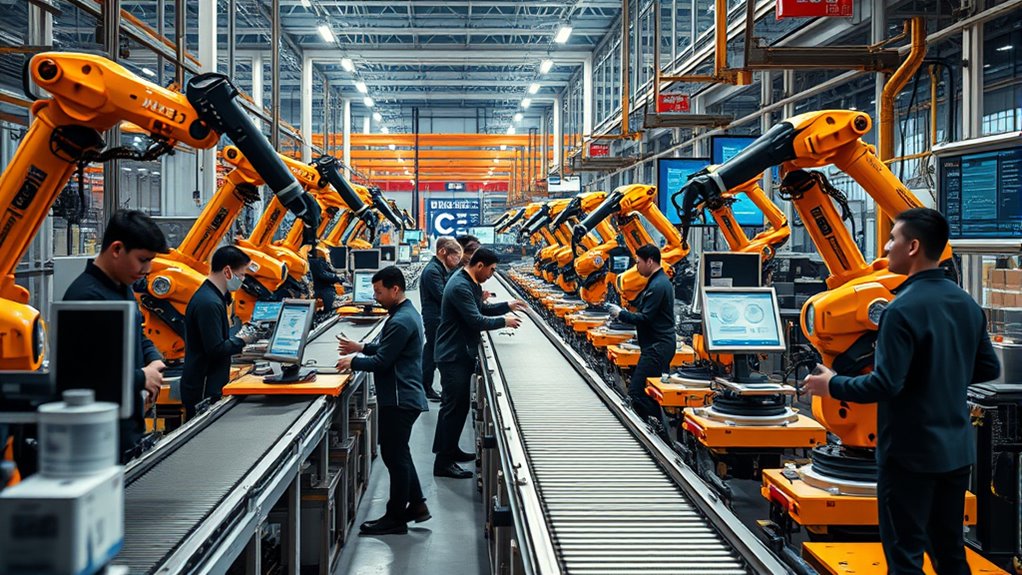

By 2026, Missouri’s labor market will see strong growth driven by technological advances like automation and artificial intelligence. These changes will create new jobs, especially in healthcare, manufacturing, and tech-focused roles, but will also require you to upgrade your skills regularly. Staying adaptable and gaining digital, data analysis, and manufacturing skills will be key to staying competitive. If you want to understand how these shifts could impact you and what steps to take, keep exploring the opportunities ahead.
Key Takeaways
- Missouri’s labor market is projected to experience growth in advanced manufacturing, healthcare, and technology sectors by 2026.
- Automation and AI may displace some jobs but will also create new roles requiring digital and technical skills.
- Workforce development initiatives focus on upskilling workers through training, certifications, and lifelong learning programs.
- An aging population will lead to labor shortages, emphasizing the need for younger, tech-savvy workers.
- Continuous adaptation and skill acquisition are essential for workers to remain competitive amid rapid technological change.

As Missouri approaches 2026, its labor market is set to undergo significant changes driven by technological advancements, shifting industry demands, and demographic trends. You’ll need to stay alert to these shifts, especially as technological innovation accelerates across sectors. New tools, automation, and digital platforms are transforming how work gets done, creating both opportunities and challenges. To thrive, you’ll want to understand how these innovations impact job availability and skill requirements, as well as how the state’s workforce development efforts adapt to these rapid changes.
Technological innovation is reshaping Missouri’s industries, from manufacturing to healthcare. Automation and artificial intelligence are automating routine tasks, which means some jobs might disappear while others evolve. For example, manufacturing plants might see robots handling repetitive assembly lines, but this also opens up roles for technicians and engineers who manage and maintain these systems. In healthcare, new medical technologies are expanding the scope of practice for many professionals, requiring you to acquire new skills to stay relevant. As these changes unfold, workforce development initiatives will be essential. These programs aim to equip you with the skills needed for emerging roles, providing training and education that align with industry needs. Whether through community colleges, apprenticeship programs, or online courses, Missouri is investing in building a resilient workforce capable of adapting to technological shifts.
Automation and new medical technologies are expanding roles, requiring ongoing skill development and workforce training initiatives in Missouri.
However, the pace of technological change also means that some jobs may become obsolete faster than you expect. This reality underscores the importance of continuous learning and upskilling. If you’re currently employed, you might need to pursue additional certifications or training to keep your position or transition into a new field. For job seekers, understanding which skills are in high demand can help you target your efforts more effectively. For instance, proficiency in digital literacy, data analysis, or advanced manufacturing techniques can give you a competitive edge in the evolving labor market. Moreover, the increasing use of high-tech equipment and advanced manufacturing techniques requires workers to develop specialized skills, emphasizing the importance of ongoing education.
Missouri’s demographic trends, such as an aging population, will influence workforce development strategies further. As older workers retire, there will be a demand for younger workers who are tech-savvy and adaptable. This creates an opportunity for you to leverage new training programs and educational pathways. The state’s focus on workforce development aims to ensure that you’re prepared for the future economy, emphasizing lifelong learning and skill mastery. By engaging with these initiatives, you can better position yourself to navigate the automation challenges and capitalize on the job growth opportunities that lie ahead.
Frequently Asked Questions
How Will Automation Impact Rural Missouri Communities Differently?
Automation will impact your rural Missouri community differently by potentially improving rural infrastructure through advanced technology, making farming and local businesses more efficient. However, it could also challenge community resilience if job losses occur without proper support. You’ll need to adapt by investing in skills training and strengthening local networks to verify your community benefits from automation while maintaining economic stability and a strong sense of togetherness.
What New Job Sectors Are Expected to Emerge by 2026?
Think of the job market as a garden blooming with new opportunities. By 2026, emerging sectors like green technologies will flourish, creating roles in renewable energy, sustainable manufacturing, and environmental tech. These sectors are expected to grow rapidly, offering fresh career paths for those willing to adapt. You’ll find chances to work on innovative projects that help the planet, making your skills essential in shaping Missouri’s eco-friendly future.
How Can Workers Adapt to Changing Skill Requirements?
To adapt to changing skill requirements, you should actively participate in reskilling initiatives and prioritize lifelong learning. Stay updated on industry trends, take advantage of training programs, and develop new skills relevant to emerging sectors. By continuously learning and embracing new technologies, you’ll remain competitive and prepared for evolving job opportunities, ensuring your career stays resilient in a shifting labor market.
What Policies Are in Place to Support Displaced Workers?
You’ll find support through policies that strengthen social safety nets and promote workforce retraining. These programs aim to cushion economic shocks and help you re-skill for new roles. While safety nets provide temporary relief, retraining initiatives empower you to regain employment and adapt to automation’s impact. Together, these policies create a safety net and a ladder, ensuring you’re prepared for a changing job landscape.
How Will Education Systems Prepare Students for Future Job Markets?
You’ll find education systems are focusing on curriculum reform to include skills like critical thinking, adaptability, and tech literacy, preparing you for evolving job markets. Career counseling becomes more personalized, guiding you toward emerging industries and opportunities. Schools aim to foster lifelong learning, ensuring you’re ready for automation’s impact. By embracing these changes, you’ll gain the flexibility and knowledge needed to thrive in the future workforce.
Conclusion
As you navigate Missouri’s evolving labor landscape, remember it’s like a river—flowing with opportunities yet shaped by unseen currents of automation. Embrace change as your vessel, steering through uncertainties with resilience and adaptability. The state’s growth is your horizon, glowing like a lighthouse guiding you forward. Your skills are the compass, helping you chart a course through the waves of transformation toward a future where human ingenuity and technology sail side by side.