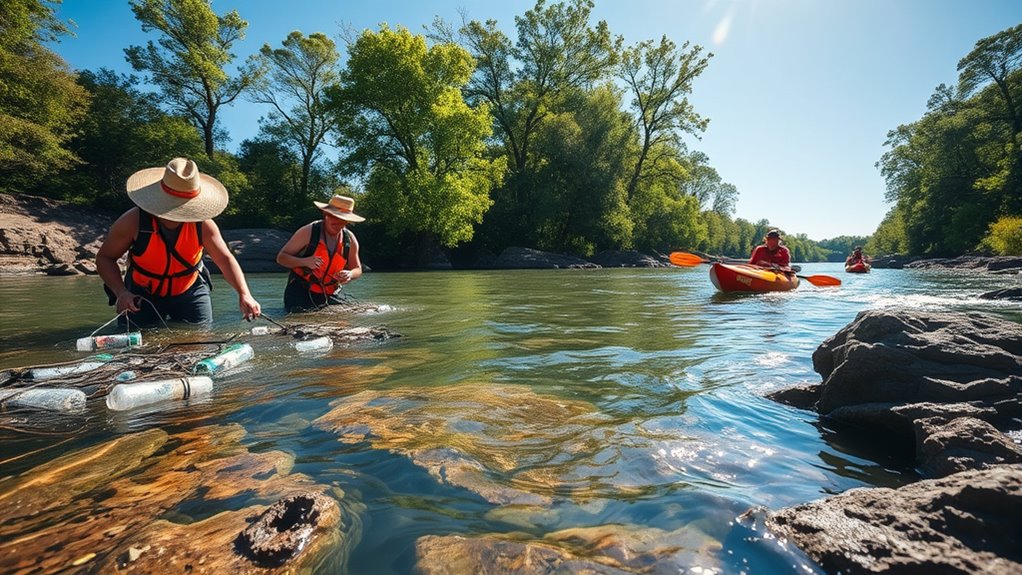

To protect Missouri’s waterways, you can join river cleanup events and support conservation efforts. Removing trash, plastics, and debris helps prevent pollution and microplastics from harming aquatic life. Supporting native plants and sustainable land practices stabilize riverbanks and restore habitats. Engaging with community groups and spreading awareness also makes a difference. By taking these actions, you contribute to healthier rivers and vibrant ecosystems — there’s so much more to discover about making a real impact.
Key Takeaways
- Participating in river cleanups removes debris and prevents pollutants from harming aquatic ecosystems.
- Restoring native plants stabilizes riverbanks, reducing erosion and filtering pollutants before they reach waterways.
- Community involvement and education raise awareness about pollution sources and promote sustainable practices.
- Conservation efforts focus on protecting habitats to support diverse wildlife and maintain healthy river ecosystems.
- Addressing pollution sources like runoff and waste disposal is essential for improving water quality and ecosystem health.
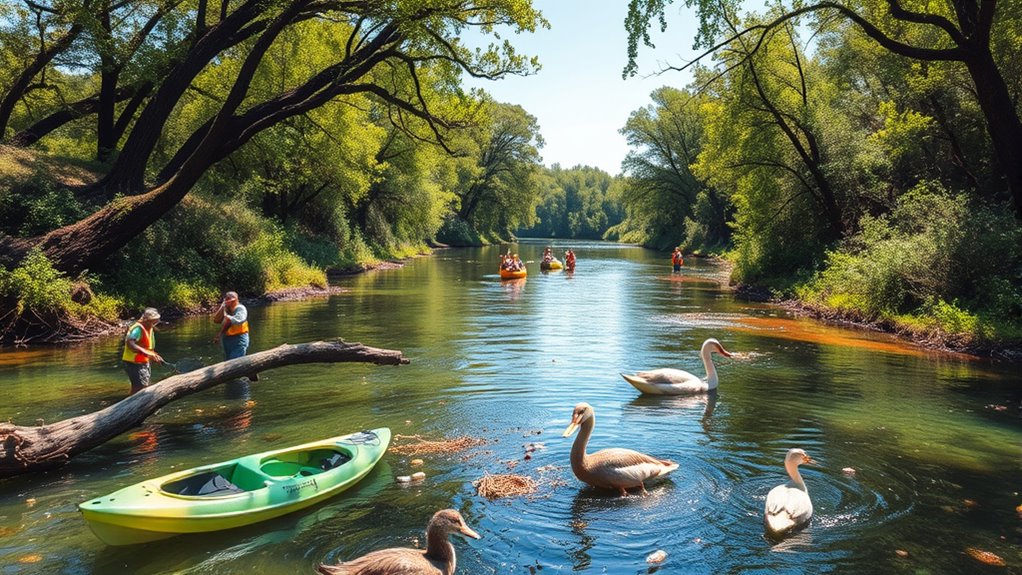
Rivers face increasing threats from pollution and neglect, but you can make a difference through cleanups and conservation efforts. Every year, many pollution sources pour harmful substances into Missouri’s waterways, including agricultural runoff, industrial waste, and improper disposal of trash. These pollutants not only diminish water quality but also threaten the delicate balance of wildlife habitats along the riverbanks. When pollutants enter the water, they can poison fish, amphibians, and other aquatic creatures, disrupting ecosystems and reducing biodiversity. By understanding the impact of pollution sources, you can better target your efforts to protect these crucial waterways.
Participating in river cleanups is one of the most direct ways you can help reduce pollution and restore habitat health. When you gather volunteers to pick up trash along the banks, you’re removing plastics, bottles, and other debris that would otherwise drift into the water. This prevents these materials from breaking down into microplastics, which are especially hazardous to aquatic life. Cleanups also help prevent pollutants from leaching into the water, which could contaminate drinking supplies or harm wildlife. Your active involvement not only clears the river of visible trash but also raises awareness about the importance of keeping these ecosystems pristine. Additionally, engaging in native plant restoration projects further supports habitat stability and water quality.
Beyond cleanup efforts, conservation initiatives focus on protecting and restoring wildlife habitats along Missouri’s rivers. Healthy habitats provide shelter, breeding grounds, and food sources for countless species. By supporting native plant restoration projects, you help stabilize riverbanks, reduce erosion, and filter pollutants before they reach the water. This creates a more resilient environment for fish, birds, and other animals. Additionally, advocating for sustainable land use practices and stricter pollution controls can help reduce the amount of contaminants reaching the waterways in the first place. Your voice and actions can influence policymakers to prioritize environmental protections that benefit Missouri’s rivers and their ecosystems.
Educating yourself and others about the importance of clean water and habitat conservation can multiply your impact. Share information about pollution sources and how they harm wildlife habitats with friends and community members. Attend local meetings or join conservation groups to stay informed about ongoing efforts and opportunities to get involved. Small actions, like properly disposing of waste, reducing pesticide use, or planting native vegetation, collectively make a significant difference over time. Protecting Missouri’s waterways isn’t just about maintaining scenic views—it’s about safeguarding the health of the entire ecosystem and ensuring clean water for future generations. Your commitment to river conservation helps keep these crucial arteries of life flowing strong and healthy.

ArcMate Qwik-Pik Economy Trash Pick Up Tool, Outdoor Reacher Grabber Litter Picker, Jaws Open 3.5", Rotates 360 Degrees, for Volunteers, 1 lb. Pick Up Capacity, Orange, 31", 6-Pack (15615)
As an affiliate, we earn on qualifying purchases.
As an affiliate, we earn on qualifying purchases.
Frequently Asked Questions
How Can I Start My Own River Cleanup Initiative?
You can start your own river cleanup initiative by first gathering a group of volunteers and setting clear goals. Use volunteer coordination to organize cleanup days, assign roles, and promote teamwork. Develop fundraising strategies like online campaigns or local events to cover supplies and permits. Reach out to community organizations and local government for support, and spread the word through social media to attract more participants and raise awareness about your cause.
What Are the Best Tools for River Conservation?
You should use tools like river monitoring devices, such as water quality testers and sensors, to track pollution levels and identify problem areas. For trash removal, consider nets, grabbers, and biodegradable bags to efficiently collect debris without harming wildlife. Combining these tools helps you maintain a healthy river ecosystem, making your conservation efforts more effective and sustainable. Regular monitoring and proper trash removal techniques are key to long-term river health.
How Do Pollution Levels Affect Local Wildlife?
Ever wondered how pollution impacts local wildlife? High pollution levels introduce marine debris that can entangle or poison animals, leading to injuries or death. They also cause habitat loss, making it hard for aquatic creatures to find shelter or reproduce. When pollution rises, you risk disrupting entire ecosystems, endangering species that depend on clean waterways. Protecting water quality isn’t just about cleanliness — it’s about preserving the essential habitats for wildlife survival.
Are There Legal Protections for Missouri Waterways?
Yes, Missouri waterways are protected by legal frameworks that safeguard water quality and manage water rights. You should know that federal and state laws, like the Clean Water Act, set standards to prevent pollution and guarantee safe water. These laws give you the power to advocate for conservation, hold polluters accountable, and support policies that protect Missouri’s rivers and streams for future generations.
How Can Schools Get Involved in Conservation Efforts?
You can get involved by starting eco-friendly school projects focused on conservation, like organizing river cleanups or creating awareness campaigns. Engage your classmates and staff to build community involvement, making these efforts more impactful. Partner with local organizations or conservation groups to gain resources and support. Your active participation not only helps protect Missouri’s waterways but also inspires others to join in, creating lasting change through teamwork and dedication.

Kurmntregon Native Plant Restoration In Progress Yard Sign With Stake Caution Security Sign 8x12inch Aluminum Warning Sign Wildflowers Lawn Grass Garden Farmhouse Ranch Farm Outdoor Decor
✅ Sturdy and Durable Metal Material: Native Plant Restoration In Progress Yard Sign With Stake caution security sign…
As an affiliate, we earn on qualifying purchases.
As an affiliate, we earn on qualifying purchases.
Conclusion
By taking action now, you become a essential part of protecting Missouri’s waterways, ensuring they stay vibrant and healthy for generations to come. Your efforts are like a drop of water that helps fill a mighty river—powerful enough to create change. Every cleanup and conservation step you take adds to the momentum, proving that even small actions can ripple outward and make a big impact. Together, you can keep Missouri’s rivers flowing strong and clear.

Varify 17in1 Complete Drinking Water Test Kit – 100 Strips + 2 Bacteria Tester Kits – Well, Tap, Home, City Water Testing Strip for Lead, Alkaline, Chlorine, Hardness, Iron, Fluoride, Copper & More
17 IMPORTANT PARAMETERS: The Varify Premium Drinking Water Test Kit offers an unrivaled, complete analysis of your drinking…
As an affiliate, we earn on qualifying purchases.
As an affiliate, we earn on qualifying purchases.

Copco Hydra Water Bottle with Spill-Resistant Lid, 16.9 oz – Reusable Tritan Non-Slip Sleeve, Twist-Open Body – BPA-Free, Leak-Proof, Durable & Portable for Gym, Office, School (Gray)
Durable BPA-Free Tritan: Crafted from reliable Tritan material, this reusable water bottle is 100% BPA-free and built to…
As an affiliate, we earn on qualifying purchases.
As an affiliate, we earn on qualifying purchases.