
TL;DR

Get everyday essentials delivered free — and shop member deals
- Fast, free delivery on millions of items
- Access to Prime Big Deal Days deals on October 6–7
- Prime Video, Amazon Music and more included
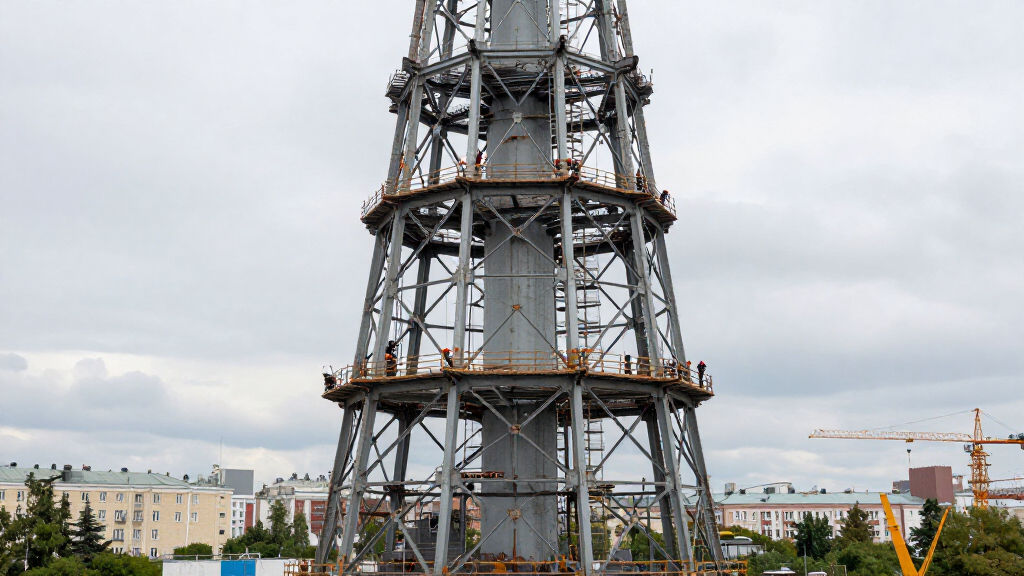
The Russian Television and Radio Broadcasting Network plans to dismantle nearly all of Moscow’s 1922 Shabolovka (Shukhov) radio tower and replace it with a replica by 2028. Specialists say replacing almost all original steel would amount to destroying engineer Vladimir Shukhov’s work, since the historic metal matters as much as the tower’s shape.
The owner of Moscow’s landmark Shabolovka Tower, the Russian Television and Radio Broadcasting Network (RTRS), plans to dismantle almost all of the 1922 structure and replace it with a replica by 2028, according to a report by the architecture journalist Asya Zolnikova published by Meduza on September 30, 2026. Specialists cited in the report say the overhaul would be tantamount to destroying the work of engineer Vladimir Shukhov, because preserving the original metal matters as much as preserving the tower’s shape.
The Shabolovka Tower, a 144-meter (about 470-foot) lattice hyperboloid completed in 1922, was once the Soviet Union’s main radio and television transmitter and remains a defining feature of Moscow’s Shabolovka neighborhood. According to Meduza’s report, RTRS intends to begin dismantling nearly all of the structure this fall and to rebuild it as a replica over roughly the next two years.
Critics of the plan focus on the replacement of the original steel. Specialists told Meduza that a rebuild using new metal would destroy the authenticity of Shukhov’s engineering, arguing that the historic material itself — not merely the tower’s silhouette — carries cultural and technical value.
The tower was built between 1919 and 1922 with the personal backing of Vladimir Lenin, who signed a 1919 decree ordering a powerful Moscow radio station built “with extraordinary urgency.” Originally designed to rise 350 meters with nine sections, it was completed with six sections because of metal shortages during the Civil War, and used far less steel than comparable structures of its era.
Why the Original Steel Matters
The dispute over the Shabolovka Tower turns on a principle familiar from heritage debates worldwide: a structure rebuilt with modern materials may look identical but loses its status as an artifact. Specialists quoted by Meduza argue that Shukhov’s engineering achievement is embodied in the original riveted steel — the thin rods, the shallow foundations, the hyperboloid geometry — and that replacing nearly all of it would leave a replica rather than a monument.
The tower is also one of the few surviving large-scale structures of the early Soviet New Economic Policy era and a landmark of engineering admired internationally. Its loss as an authentic object would remove a primary physical record of both Shukhov’s inventive methods and the early Soviet state’s investment in radio as a propaganda tool.
From Lenin’s Decree to Landmark Status
: “Shukhov patented lattice hyperboloid structures in the late 19th century and built the first such tower for the 1896 All-Russian Industrial and Art Exhibition in Nizhny Novgorod. The design used straight rods set at angles and secured by rings at top and bottom, producing towers that were strong, light, and wind-resistant with minimal foundations — the Shabolovka supports extend only about three meters into the ground.
When it opened in 1922 as the Comintern Radio Tower, the structure became the country’s first and main radio transmitter, later carrying its first television signal in 1937 and regular broadcasts from March 10, 1939. It served as the Soviet Union’s main television tower until the Ostankino Tower was built. The tower was photographed by Alexander Rodchenko and appeared on the cover of Vladimir Mayakovsky’s book “The Flying Proletarian.”
Construction was not without human cost. According to Airat Bagautdinov, founder of the educational project Glazami Inzhenera, a winch cable broke during assembly, though official sources indicate no one died in that incident; two workers died under other circumstances. The claim that Shukhov received a “suspended death sentence” appears only in Shukhov’s own diary and has not been verified in security-service archives.
“a newspaper without paper and without distance”
— Lenin, in 1920
Unanswered Questions About the Overhaul
It is not yet clear from the reported plan how much of the original steel, if any, will be retained, how the dismantled sections will be documented or stored, or whether heritage bodies were consulted before the decision. Meduza’s report describes the project as “disputed” but does not state what alternatives — such as in-place reinforcement or partial replacement — were considered or rejected by RTRS.
The scope of public opposition and any possible legal challenge to the works also remains unknown, as does whether the replica will reproduce the tower’s original engineering details or only its external appearance. RTRS’s own detailed justification for full dismantling has not been reported.
Timeline for Dismantling and Rebuild
According to Meduza’s report, dismantling work is expected to begin this fall, with the replica targeted for completion by 2028. Watchers of Moscow’s architectural heritage are likely to monitor whether preservation advocates mount a challenge to the works before they begin, and whether RTRS publishes technical details of the reconstruction plan in the meantime.
Key Questions
What is the Shukhov Tower?
The Shabolovka Tower is a 144-meter lattice hyperboloid radio tower in Moscow, designed by engineer Vladimir Shukhov and completed in 1922. It served as the Soviet Union’s main radio and television transmitter for decades.
What does RTRS plan to do with the tower?
According to Meduza, the Russian Television and Radio Broadcasting Network plans to dismantle almost all of the structure starting this fall and replace it with a replica by 2028.
Why do specialists object to the plan?
They argue that replacing nearly all the original steel amounts to destroying Shukhov’s work, since the historic metal and construction methods carry cultural and engineering value beyond the tower’s shape alone.
Why was the tower built smaller than designed?
It was originally planned at 350 meters, but metal shortages during the Civil War forced a reduction to 144 meters with six sections instead of nine.
Is it true Shukhov was sentenced to death after an accident during construction?
That claim appears only in Shukhov’s diary and has not been verified. Engineer Airat Bagautdinov says a winch cable did break, but official sources indicate no one died in that incident, and security-service archives have not been searched for supporting documents.
Source: rss
Fall Picks
fall essentials
As an affiliate, we earn on qualifying purchases.