
TL;DR

Get everyday essentials delivered free with Prime
- Fast, free delivery on millions of items
- Prime Video, Amazon Music and more included
- Member-only deals all year
EU Commissioner Hoekstra officially launched Europe’s largest carbon capture and storage project at Yara Sluiskil in the Netherlands. The project aims to significantly reduce industrial emissions and advance EU climate goals. Details about project scope and future plans remain to be clarified.
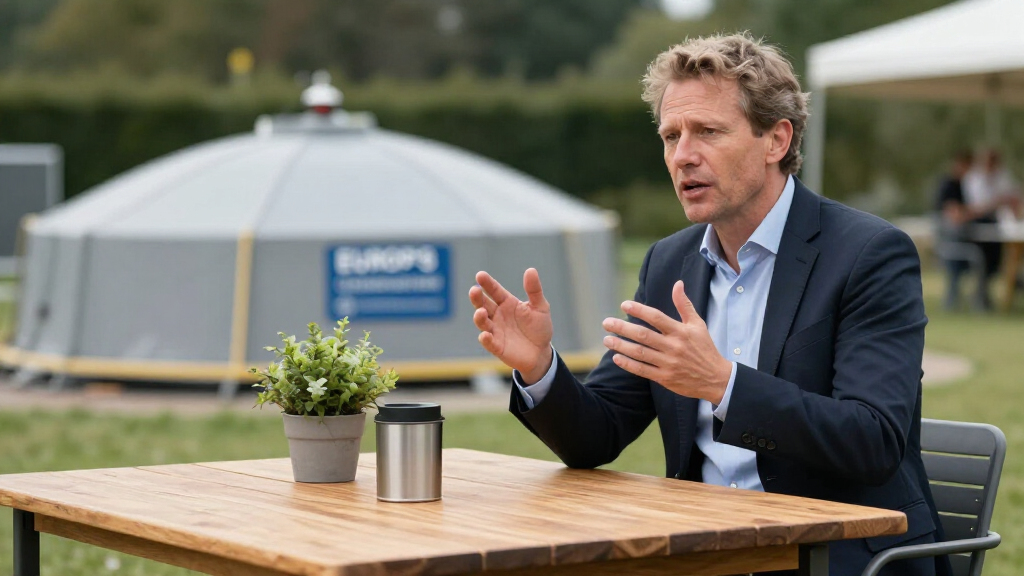
EU Commissioner for Climate Action, Hans Hoekstra, announced the official launch of Europe’s largest carbon capture and storage (CCS) project at Yara Sluiskil in the Netherlands. The project is designed to capture up to 1 million tons of carbon dioxide annually, marking a significant milestone in the EU’s efforts to reduce industrial emissions and meet climate targets.
The project, led by Yara International, involves the installation of advanced CCS infrastructure at the Sluiskil fertilizer plant, with the capacity to capture and store substantial amounts of CO2 underground. Commissioner Hoekstra emphasized that this initiative represents a key step towards achieving the EU’s goal of net-zero emissions by 2050, aligning with the bloc’s broader climate strategy. The launch event included a speech by Hoekstra, who highlighted the importance of technological innovation in climate mitigation efforts.
While the project’s capacity and scope have been publicly announced, specific technical details such as the exact storage sites and the long-term monitoring plans have not yet been disclosed. The European Commission states that the project will be operational within the next two years, but precise timelines and funding structures are still being finalized.
Impact on EU Climate Goals and Industry Decarbonization
This project is significant because it demonstrates the EU’s commitment to deploying large-scale CCS technology as part of its climate strategy. By capturing up to 1 million tons of CO2 annually, it aims to substantially reduce emissions from one of Europe’s major industrial sectors. The initiative also signals a broader shift towards integrating CCS into the EU’s climate policy framework, potentially influencing future regulations and investments in clean technology.
However, critics and industry observers note that CCS remains controversial and costly, and its long-term effectiveness in achieving climate targets is still debated. The success of this project could serve as a model for similar initiatives across Europe, but questions about its scalability and economic viability remain unresolved.
carbon capture and storage equipment
As an affiliate, we earn on qualifying purchases.
As an affiliate, we earn on qualifying purchases.
Background on Europe’s CCS Initiatives and Policy Landscape
Europe has been increasingly investing in carbon capture and storage technology as part of its climate action plans. The EU’s Fit for 55 package aims to reduce greenhouse gas emissions by at least 55% by 2030, with CCS playing a key role in decarbonizing heavy industries like cement, steel, and chemicals. Several pilot projects and smaller-scale CCS operations have been launched over the past decade, but this project at Yara Sluiskil is now the largest in the continent.
Prior to this launch, the EU had set ambitious targets for CCS deployment, but progress has been slow due to technical, regulatory, and financial challenges. The project’s announcement aligns with recent policy signals encouraging more investment in CCS, including potential funding under the EU Innovation Fund and other financial instruments.
Details about the specific location of underground storage sites and the regulatory framework governing long-term CO2 storage in the Netherlands remain under discussion, with some environmental groups raising concerns about potential risks and site safety.
As an affiliate, we earn on qualifying purchases.
Details on Storage Sites and Long-term Monitoring Still Unclear
While the project’s capacity and launch date have been announced, specific details about the underground storage sites, safety measures, and long-term monitoring protocols have not been disclosed. It is also unclear how the project will be financed beyond initial funding announcements, and what regulatory approvals are still pending.
Environmental groups have expressed concerns about potential risks, but official statements have emphasized safety and environmental safeguards are in place. The long-term effectiveness and scalability of the project remain uncertain as it progresses toward operational status.
As an affiliate, we earn on qualifying purchases.
Next Steps Include Construction, Regulatory Approvals, and Monitoring
The project is expected to move into the construction phase within the next 6-12 months, with operational status targeted for 2026. Regulatory agencies in the Netherlands are reviewing safety and environmental impact assessments, with final approvals anticipated soon. The European Commission has indicated ongoing support and possible additional funding for similar projects.
Further updates are expected as technical details are finalized, and early operational data becomes available. The project’s success will likely influence future CCS investments and policy decisions across Europe.
As an affiliate, we earn on qualifying purchases.
Key Questions
What is the capacity of Europe’s largest carbon capture project?
The project is designed to capture up to 1 million tons of CO2 annually.
When will the project become operational?
The European Commission estimates the project will be operational within the next two years, around 2026.
Where will the captured CO2 be stored?
Specific storage sites have not yet been disclosed; they are under review and regulatory approval processes.
What are the main concerns about the project?
Environmental groups have raised concerns about potential risks associated with underground storage and long-term safety, though official safeguards are claimed to be in place.
How does this project fit into EU climate goals?
It represents a significant step toward decarbonizing heavy industry and achieving the EU’s net-zero target by 2050, demonstrating the bloc’s commitment to technological solutions.
Source: primary
Fall Picks
fall essentials
As an affiliate, we earn on qualifying purchases.