
TL;DR

Get everyday essentials delivered free with Prime
- Fast, free delivery on millions of items
- Prime Video, Amazon Music and more included
- Member-only deals all year
Researchers found DNA from the plague bacterium in the teeth of 18 people buried at four sites near Lake Baikal about 5,500 years ago. The pattern of deaths and genetic evidence led the study authors to identify an outbreak among small hunter-gatherer communities, though DNA alone cannot establish the cause of death for every person.
An international research team has found Yersinia pestis, the bacterium that causes plague, in the teeth of 18 people buried near Lake Baikal about 5,500 years ago. The team’s study, published in Nature, concludes that the evidence points to an outbreak among hunter-gatherer communities in what is now Russia, extending the documented history of plague-associated mass mortality.
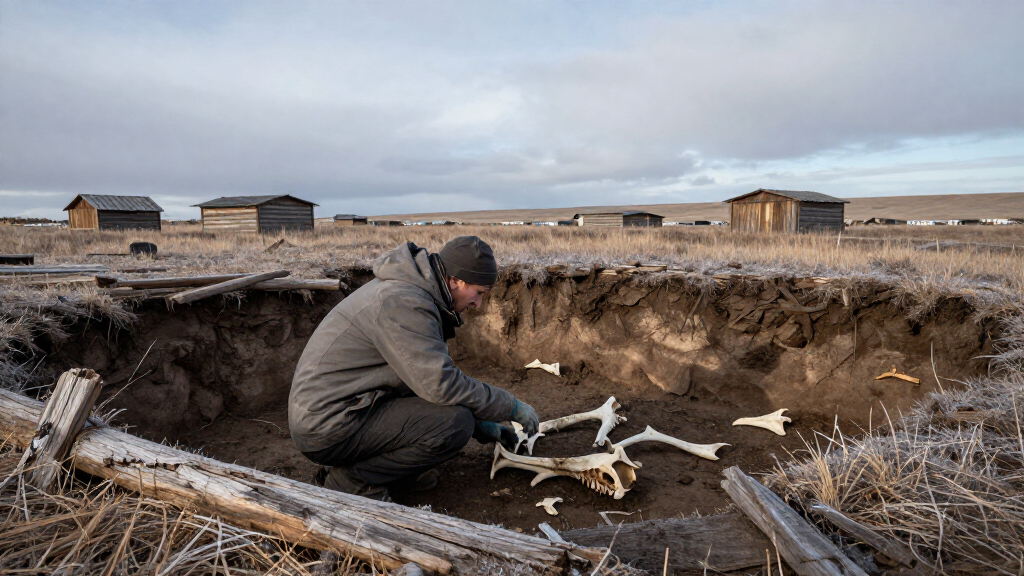
The researchers examined remains from 46 people at four burial sites: Ust-Ida-1, Shumilikha, Bratsky Kamen and Serovo. At Ust-Ida-1, the largest site, plague DNA was found in 11 of 31 people. The team also recovered a well-preserved plague genome from Shumilikha, along with less complete bacterial genomes from the other two sites.
DNA in a person’s remains shows that they were infected; on its own, it does not prove the infection caused their death. The study authors point to several lines of evidence together: burials dated close together, relatives among the dead, high mortality among children and adolescents, and no apparent injuries that could account for the deaths. They concluded that these were outbreak cases rather than isolated infections.
The recovered bacterial genomes were very similar, which the researchers say is consistent with infections during a single phase. They estimate that deaths in the outbreak’s first phase may have occurred within a few decades, and possibly much sooner. The archaeological record at Ust-Ida-1 also includes numerous shared graves without signs that they were reopened to add bodies later.
Evidence of an Ancient Outbreak
The findings extend the evidence for plague-associated mass mortality among people living in small communities long before cities and large-scale farming. The people in the study were hunter-gatherers in the Lake Baikal region, where burial evidence indicates they used bows and arrows and made pottery. The study links their deaths to a pathogen that has had a major place in human history, while placing the evidence in a specific setting and period.
The results also show how ancient DNA and burial evidence can be used together to investigate deaths that left no written account. Genetic traces identify infection in some individuals; grave arrangements, dates and family relationships help researchers assess whether cases were connected. This approach supports the outbreak interpretation, but does not resolve the cause of death for every person buried at the sites.
Products Worth Considering

Roborock RockNeo Q110H Wire-Free Robot Lawn Mower

Dyson Car+Boat Cordless Handheld Vacuum

Philips Hue Festavia Globe Outdoor String Lights, 32 Bulbs, 91 ft
As an affiliate, we earn on qualifying purchases.
Four Burial Sites Near Baikal
The burial grounds studied lie along the Angara River in the Lake Baikal region. Some were separated by as much as 340 kilometers, yet genomic evidence indicates that people buried at the sites shared recent ancestors. Travel along the riverbanks or by water may have helped maintain contact between groups, according to the source report.
Archaeologists from Irkutsk State University and the Russian Academy of Sciences’ Institute of Ethnology and Anthropology contributed to research on the region’s burials. The Nature paper, led by Eske Willerslev and involving an international team that included Russian researchers, examined bones, grave arrangements, radiocarbon dates and ancient DNA to investigate the deaths.
At Bratsky Kamen, one grave contained three girls estimated to have been about four to nine years old. All three tested positive for plague DNA, and two were likely related. At Ust-Ida-1, an aunt and nephew buried together also tested positive. These cases support the authors’ view that infection spread among relatives, although the genetic relationships and infection status were not established for every person.
“We have found the earliest evidence of mass mortality caused by plague.”
— Eske Willerslev, lead researcher
Limits of the Ancient DNA
The evidence does not prove that plague caused every death in the burials. A person could have carried the bacterium and died from another illness, and a negative ancient-DNA result does not rule out infection because genetic material may not survive or be detected. The researchers found traces of brucellosis in one individual but did not consider it a likely fatal cause.
The precise death toll and duration of the outbreak remain unknown. The study examined 46 people from four sites, not every person who lived in the region at the time. Similarity among the recovered genomes supports a concentrated outbreak phase, but the authors’ estimate of a few decades or less is not an exact timeline.
Further Work on Plague’s Past
The reported next step is continued study of ancient remains and bacterial genomes to clarify how plague circulated among prehistoric communities. The current findings do not establish how the pathogen reached the Lake Baikal region or how widely the outbreak spread beyond the sampled burial grounds.
As researchers compare more sites and genomes, they may be able to refine the outbreak’s timing and relationships among infections. For now, the Nature study’s conclusion rests on the evidence from these four burial grounds and the combination of genetic results with burial dates, grave patterns and family links.
Key Questions
Where was the ancient plague evidence found?
Researchers found plague DNA in remains from four burial sites near Lake Baikal, in what is now Russia.
How old are the burials?
The people lived and died about 5,500 years ago, according to the study’s dating.
How many people tested positive for plague DNA?
18 of the 46 people examined had Yersinia pestis DNA detected in their teeth. At Ust-Ida-1, 11 of 31 people tested positive.
Does the DNA prove plague killed all 18 people?
No. DNA indicates infection, but does not by itself establish the cause of death. The authors infer an outbreak from the combined evidence, including closely dated burials, family links and unusually high child mortality.
What is still unknown about the outbreak?
The exact death toll, duration and geographic reach are not established. It is also unclear how the bacterium reached the region.
Source: rss