
Choosing the right portable podcast headphones depends heavily on whether you prioritize sound isolation for recording or wireless freedom for editing. The Sony MDR-7506 stands out as the industry standard for studio-grade accuracy and durability, making it the ideal choice for hosts who need reliable monitoring. For those requiring mobility, the Soundcore Q20i offers impressive active noise cancellation and battery life, though it lacks the flat frequency response of wired counterparts. The core tradeoff in this category is between the neutral sound profile needed for mixing and the portability required for on-the-go content creation. Continue reading to see how these twelve models stack up against each other in build quality, comfort, and audio fidelity.

Get everyday essentials delivered free with Prime
- Fast, free delivery on millions of items
- Prime Video, Amazon Music and more included
- Member-only deals all year
Complete the kit


Key Takeaways
- Wired headphones consistently outperform wireless models in audio latency and frequency neutrality, which is critical for editing voice tracks without phase issues.
- The Sony MDR-7506 and Audio-Technica ATH-M50x remain the benchmarks for closed-back isolation, despite being older models, due to their proven durability.
- Budget-friendly options like the TASCAM TH-02 and FIFINE H8 offer surprisingly decent isolation but often suffer from plastic headband fatigue over long sessions.
- Wireless models such as the OneOdio A70 and Soundcore Q20i are better suited for listening and rough editing rather than precise audio mixing due to Bluetooth compression.
- Comfort and clamping force vary drastically between entry-level and professional tiers, with the latter prioritizing long-session wearability over lightweight design.
| TASCAM TH-02 Closed-Back Wired Over-Ear Headphones |  | Best Foldable Studio Pick | Type: Closed-back, wired, over-ear | Driver type and size: Dynamic, 50 mm | Frequency response: 18 Hz–22 kHz | VIEW LATEST PRICE | See Our Full Breakdown |
| Soundcore by Anker Q20i Hybrid Active Noise Cancelling Headphones |  | Best for Wireless Travel Recording | Style: Folding over-ear | Connectivity: Bluetooth 5.0 and AUX cable | Drivers: 40 mm dynamic | VIEW LATEST PRICE | See Our Full Breakdown |
| LORELEI X6 Wired On-Ear Headphones with Microphone, Foldable, Space Black |  | Best for Calls and Casual Podcasting | Type: Wired on-ear headphones | Driver size: 40 mm | Cable length: 1.5 m | VIEW LATEST PRICE | See Our Full Breakdown |
| Sony MDR-7506 Professional Large Diaphragm Headphones | 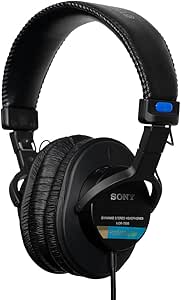 | Best for Detailed Studio Monitoring on the Go | Design: Closed-ear, foldable | Driver size: 40 mm | Frequency response: 10 Hz–20 kHz | VIEW LATEST PRICE | See Our Full Breakdown |
| Audio-Technica ATH-M20x Professional Studio Monitor Headphones, Black |  | Best for Isolated Home-Studio Tracking | Driver size: 40 mm | Impedance: 47 ohms | Sensitivity: 96 dB | VIEW LATEST PRICE | See Our Full Breakdown |
| Audio-Technica ATH-M50x Professional Studio Monitor Headphones | 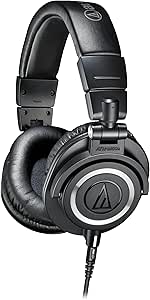 | Best Overall for Accuracy | Driver Size: 45 mm | Impedance: 38 Ω | Frequency Response: 20 Hz – 28,000 Hz | VIEW LATEST PRICE | See Our Full Breakdown |
| KVIDIO Wired Over-Ear Headphones with Microphone |  | Best All-in-One for Beginners | Driver Size: 40 mm | Connection: Wired 3.5 mm | Microphone: Built-in | VIEW LATEST PRICE | See Our Full Breakdown |
| OneOdio Wired DJ Hi-Res Over-Ear Headphones |  | Best for Bass-Heavy Monitoring | Driver Size: 50 mm | Impedance: 32 Ω | Sensitivity: 110 dB | VIEW LATEST PRICE | See Our Full Breakdown |
| Philips Over-Ear Wired Headphones with 6.3 mm Adapter |  | Best Budget Studio Entry | Driver Size: 40 mm | Impedance: 16 ohm | Connector: 3.5 mm / 6.3 mm | VIEW LATEST PRICE | See Our Full Breakdown |
| FIFINE H8 Wired Studio Monitor Headphones |  | Best Value for Studio Use | Driver Size: 50 mm | Frequency Response: 20 Hz–20 kHz | Weight: 265 g | VIEW LATEST PRICE | See Our Full Breakdown |
| OneOdio Pro-10 Wired Over-Ear Studio Monitor and DJ Headphones |  | Best Budget Wired Option | Driver Size: 50 mm | Impedance: 32 Ω | Frequency Response: 20 Hz – 40 kHz | VIEW LATEST PRICE | See Our Full Breakdown |
| OneOdio A70 Bluetooth Over‑Ear Headphones |  | Best Wireless Battery Life | Brand: OneOdio | Model: A70 | Color: Black | VIEW LATEST PRICE | See Our Full Breakdown |
| portable podcast headphone | Driver size | Frequency response | Impedance | Weight |
|---|---|---|---|---|
| TASCAM TH-02 Closed-Back Wired | — | 18 Hz–22 kHz | 32 ohms | 0.3 kg |
| Soundcore by Anker Q20i Hybrid | — | — | — | 9.12 ounces |
| LORELEI X6 Wired On-Ear Headph | 40 mm | 20 kHz | — | — |
| Sony MDR-7506 Professional Lar | 40 mm | 10 Hz–20 kHz | — | 8 oz |
| Audio-Technica ATH-M20x Profes | 40 mm | 15 Hz–20,000 Hz | 47 ohms | — |
| Audio-Technica ATH-M50x Profes | 45 mm | 20 Hz – 28,000 Hz | 38 Ω | — |
| KVIDIO Wired Over-Ear Headphon | 40 mm | — | — | — |
| OneOdio Wired DJ Hi-Res Over-E | 50 mm | Up to 40 kHz | 32 Ω | 415 g |
| Philips Over-Ear Wired Headpho | 40 mm | — | 16 ohm | — |
| FIFINE H8 Wired Studio Monitor | 50 mm | 20 Hz–20 kHz | — | 265 g |
| OneOdio Pro-10 Wired Over-Ear | 50 mm | 20 Hz – 40 kHz | 32 Ω | — |
| OneOdio A70 Bluetooth Over‑Ear | — | — | — | 8.96 ounces |
More Details on Our Top Picks
TASCAM TH-02 Closed-Back Wired Over-Ear Headphones
For podcasters who want a simple wired pair that packs down between recording sessions, the TASCAM TH-02 earns its place with a foldable frame and closed-back design. Its 50 mm drivers and passive isolation suit monitoring in a shared room, while the included 6.3 mm adapter makes it easier to connect to studio gear as well as a standard headphone jack. Compared with the Sony MDR-7506, the TH-02 has a shorter, more portable setup, but Sony supplies a carrying case and detailed studio-focused specifications. The TASCAM’s tradeoff is a basic wired connection with no microphone or wireless option, so it is best for listening to a recording feed rather than handling calls. I’d choose it for compact storage and flexible plug compatibility, not hands-free mobility.
Pros:- Folds for easier storage in a podcast bag
- Closed-back design helps limit sound leakage while monitoring
- Includes a 3.5 mm to 6.3 mm adapter for different audio connections
- Padded ear pads and headband support longer listening sessions
Cons:- Wired-only connection restricts movement
- No built-in microphone or active noise cancellation
- Not water resistant
Best for: Podcast hosts who record at home, monitor through a wired interface, and need headphones that fold for occasional travel.
Not ideal for: Mobile interviewers who need a built-in microphone or wireless freedom, and listeners who want active noise cancellation.
- Type:Closed-back, wired, over-ear
- Driver type and size:Dynamic, 50 mm
- Frequency response:18 Hz–22 kHz
- Impedance:32 ohms
- Sensitivity:98 dB
- Connectivity:3.5 mm headphone jack
- Included adapter:3.5 mm to 6.3 mm
- Weight:0.3 kg
- Portability:Foldable design
Our verdict“Choose the TH-02 if you want foldable, closed-back wired headphones with both standard and studio-size plug compatibility.”
Soundcore by Anker Q20i Hybrid Active Noise Cancelling Headphones
The Soundcore Q20i is the most travel-oriented choice here: Bluetooth, folding earcups, and hybrid ANC make it easier to monitor or listen in noisy spaces without carrying a studio-style wired pair. Its stated battery life reaches up to 40 hours with ANC on, and dual-device connections help when switching between a laptop and phone. The app’s EQ options also let buyers tailor playback, though that flexibility is less relevant than a dependable wired feed during critical recording. Compared with the TASCAM TH-02, the Q20i offers wireless convenience and noise reduction, but the TASCAM keeps the connection straightforward and includes a studio-size adapter. The Q20i’s main compromise is that its richer wireless feature set depends on charging; Hi-Res audio compatibility requires the AUX cable. I’d pick it for travel and casual remote sessions, not as the only monitoring pair in a fixed studio.
Pros:- Hybrid ANC and Transparency modes suit changing travel environments
- Up to 40 hours of playback with ANC on
- Can connect to two devices simultaneously
- App provides EQ presets and adjustable listening modes
Cons:- Wireless use depends on keeping the headphones charged
- Hi-Res audio compatibility requires the AUX cable
- ANC is designed to reduce outside noise, not replace closed-back studio monitoring
Best for: Podcast creators who travel, work from laptops and phones, and want ANC for listening or remote sessions away from a quiet studio.
Not ideal for: Hosts who need a permanently wired, no-battery monitoring setup or want a dedicated studio headphone connection without relying on Bluetooth.
- Style:Folding over-ear
- Connectivity:Bluetooth 5.0 and AUX cable
- Drivers:40 mm dynamic
- Noise cancellation:Hybrid ANC; stated reduction of up to 90% of external noise
- Playback time:Up to 40 hours with ANC on; up to 60 hours in normal mode
- Device connections:Two devices simultaneously
- Fast charging:5 minutes provides up to 4 hours of playback
- Weight:9.12 ounces
- Listening modes:ANC, Normal, and Transparency
Our verdict“Pick the Q20i if portability, wireless listening, and noise reduction matter more than an always-ready wired studio connection.”
LORELEI X6 Wired On-Ear Headphones with Microphone, Foldable, Space Black
The LORELEI X6 is the practical pick for someone who records informal interviews or joins podcast calls on a device with a 3.5 mm jack. Its inline microphone and media controls add call handling that the TASCAM TH-02 and Sony MDR-7506 do not list, and the foldable on-ear design is easy to carry. That convenience comes with a different fit and purpose: on-ear cushions sit against the ears rather than surrounding them, so buyers seeking a more isolating monitoring feel may prefer the closed-back TASCAM or Sony. The 1.5 m cable keeps the setup compact, but it also limits movement, and there is no active noise control for busy rooms. I’d choose the X6 for lightweight everyday listening and calls, while podcasters who prioritize isolation or a more studio-oriented connection should look elsewhere.
Pros:- Inline microphone supports calls on compatible devices
- Media controls are built into the cable
- Folds and uses a lightweight on-ear form
- 1.5 m cable suits compact device setups
Cons:- Wired cable limits movement during recording
- On-ear design may provide less isolation than the closed-back TASCAM TH-02
- No active noise control
Best for: Beginner podcasters and remote interview guests who need a portable wired headset with an inline mic for compatible 3.5 mm devices.
Not ideal for: Studio hosts who need strong isolation, over-ear coverage, or freedom from a short wired connection.
- Type:Wired on-ear headphones
- Driver size:40 mm
- Cable length:1.5 m
- Connector:3.5 mm audio jack
- Microphone:Inline
- Controls:Inline media controls
- Foldable:Yes
- Frequency response:20 kHz
Our verdict“Choose the X6 for portable calls and casual podcast use when an inline microphone matters more than studio isolation.”
Sony MDR-7506 Professional Large Diaphragm Headphones
When portability means taking a dependable monitoring pair between recording spaces, the Sony MDR-7506 balances a foldable design with a detailed, closed-ear presentation and a supplied soft case. Its long 9.8-foot cord gives a host room to move around a desk, though the fixed cable can become awkward in a travel bag and cannot be replaced separately. Compared with the TASCAM TH-02, Sony includes a case and lists a wider frequency range, while the TASCAM’s shorter, simpler setup may be easier to pack and manage. The MDR-7506 is also more focused on studio monitoring than the wireless Soundcore Q20i, but it offers none of that model’s ANC or Bluetooth convenience. I’d choose Sony for wired recording and detailed listening across locations; buyers who want a detachable cable or untethered use should choose another option.
Pros:- Foldable construction and included soft case support transport
- Closed-ear design helps isolate the listening feed
- 40 mm drivers and a stated 10 Hz–20 kHz range suit monitoring use
- Gold-plated 1/4-inch and 1/8-inch unimatch plug supports different connections
Cons:- Fixed 9.8-foot cord can be cumbersome when packing
- Cable is not detachable, limiting replacement options
- No wireless connectivity or active noise cancellation
Best for: Podcast producers who need a foldable closed-ear monitoring pair, a long cord for studio setups, and a case for transport.
Not ideal for: Travelers who want a short or detachable cable, wireless listening, or active noise cancellation.
- Design:Closed-ear, foldable
- Driver size:40 mm
- Frequency response:10 Hz–20 kHz
- Weight:8 oz
- Cord length:9.8 ft
- Connector:Gold-plated 1/4-inch and 1/8-inch unimatch plug
- Cable material:Oxygen-free copper
- Included accessory:Soft carrying case
Our verdict“Choose the MDR-7506 if you want a transportable, wired studio monitor and can work around its long, fixed cable.”
Audio-Technica ATH-M20x Professional Studio Monitor Headphones, Black
The Audio-Technica ATH-M20x suits podcast hosts who need closed-back monitoring that keeps outside distractions and headphone sound leakage in check during tracking. Its circumaural fit surrounds the ears, and the 40 mm drivers with copper-clad aluminum voice coils are described as supporting clear low-frequency response. Compared with the Sony MDR-7506, the ATH-M20x is a straightforward entry-level studio option, but Sony folds and comes with a carrying case—useful advantages for a headphone meant to travel. The Audio-Technica instead has a non-detachable 3 m cable and no listed folding feature, making it less convenient to stow or replace a damaged lead. It is a sensible choice for a home recording setup that stays mostly in one place, but not for creators who pack light or want a flexible cable arrangement.
Pros:- Circumaural closed-back construction supports isolation during tracking
- 40 mm drivers and specified low-frequency design suit monitoring
- 3 m cable allows connection to gear without sitting directly beside it
- Two-year parts-and-labor warranty is specified
Cons:- Non-detachable cable cannot be swapped if damaged
- No folding feature is listed, unlike the Sony MDR-7506
- Long fixed cable can be awkward for portable use
Best for: Home-studio podcasters who record near their interface and want circumaural closed-back headphones for isolated tracking.
Not ideal for: Frequent travelers who need a folding design, a carrying case, or a detachable cable for easier packing and replacement.
- Driver size:40 mm
- Impedance:47 ohms
- Sensitivity:96 dB
- Frequency response:15 Hz–20,000 Hz
- Cable length:3 m (9.8 ft)
- Design:Circumaural, closed-back
- Voice coil:Copper-clad aluminum
- Warranty:2 years on parts and labor
Our verdict“Choose the ATH-M20x for stationary home-studio tracking and isolation, but favor a folding model for regular travel.”
Audio-Technica ATH-M50x Professional Studio Monitor Headphones
The Audio-Technica ATH-M50x stands out for its neutral sound signature, making it the benchmark for podcasters who need to hear exactly what is recorded without coloration. Unlike the bass-heavy OneOdio Pro-10, these headphones prioritize clarity over punch, ensuring your voice sounds natural to your audience. The detachable cable system is a practical feature for professionals who travel, allowing easy replacement if a cord frays. However, the clamping force can feel tight during long editing sessions, and the lack of a built-in microphone means you must carry a separate mic for recording interviews. This model is ideal for those who value studio-grade accuracy in a portable form factor.
Pros:- Neutral, accurate sound reproduction ideal for editing
- Durable detachable cables for easy maintenance
- Excellent passive isolation for noisy environments
- Industry-standard build quality and comfort
Cons:- No built-in microphone for recording
- Can feel heavy and warm during extended use
- Higher price point than budget alternatives
Best for: Podcasters who edit audio critically and need flat frequency response to catch subtle errors.
Not ideal for: Users who want an all-in-one solution with a built-in mic for quick mobile recording.
- Driver Size:45 mm
- Impedance:38 Ω
- Frequency Response:20 Hz – 28,000 Hz
- Cable Type:Detachable
- Warranty:2 years
- Design:Circumaural
- Sensitivity:99 dB
Our verdict“Choose this if you prioritize audio fidelity and need a reliable workhorse for critical listening.”
KVIDIO Wired Over-Ear Headphones with Microphone
For newcomers who want to record and listen with a single device, the KVIDIO INFLOW offers a convenient built-in microphone and inline controls. This sets it apart from the Audio-Technica ATH-M50x, which requires separate equipment to capture audio. The foldable design makes it exceptionally portable for students or commuters recording on the go. While the 40 mm drivers provide balanced sound, they lack the detailed separation found in higher-end monitors. Some users may find the plastic construction less durable than metal alternatives, but for the price, it removes the barrier to entry for creating your first podcast episode.
Pros:- Built-in microphone for easy recording
- Foldable design enhances portability
- Inline controls for volume and playback
- Lightweight and comfortable for casual use
Cons:- Plastic build feels less premium
- Sound quality lacks detail for critical editing
- Controls may not work with all desktop computers
Best for: Beginners who want a simple, affordable setup for recording and monitoring without extra gear.
Not ideal for: Audio engineers who need precise frequency response for professional mixing.
- Driver Size:40 mm
- Connection:Wired 3.5 mm
- Microphone:Built-in
- Cable Length:4.9 ft
- Ear Cup Rotation:90°
- Warranty:6 months
- Design:Over-ear
Our verdict“This is the most accessible starting point for anyone wanting to record podcasts immediately.”
OneOdio Wired DJ Hi-Res Over-Ear Headphones
The OneOdio Pro-10 delivers a powerful bass response that appeals to creators who want their audio to feel energetic and immersive. Compared to the flat profile of the Audio-Technica ATH-M50x, these headphones color the sound to make low frequencies more prominent. The swiveling ear cups allow for single-ear monitoring, which is useful for DJs or podcasters who need to check their microphone levels while listening to music beds. However, the 415 g weight is significant and may cause fatigue during long sessions. If you prefer a neutral sound for editing, this bass-heavy tuning might lead to over-correcting your mix.
Pros:- Strong bass response with neodymium drivers
- Swivel ear cups for single-ear monitoring
- Shared audio port for two listeners
- Comfortable padding for moderate sessions
Cons:- Heavy weight may cause fatigue
- Sound signature is not neutral
- Wired-only connectivity limits mobility
Best for: Podcasters who produce music-heavy content or prefer a bass-boosted listening experience.
Not ideal for: Editors who need a flat frequency response to make accurate mixing decisions.
- Driver Size:50 mm
- Impedance:32 Ω
- Sensitivity:110 dB
- Weight:415 g
- Connectivity:Wired 3.5/6.35 mm
- Frequency Response:Up to 40 kHz
- Feature:Shared Audio Port
Our verdict“Pick this if you want a fun, bass-rich sound and the utility of single-ear monitoring.”
Philips Over-Ear Wired Headphones with 6.3 mm Adapter
The Philips P2000 offers a no-frills approach to portable monitoring with a low 16-ohm impedance, making it easy to drive from smartphones and laptops without an amplifier. While it lacks the detailed soundstage of the FIFINE H8, it provides a reliable, comfortable listening experience for casual podcasters. The inclusion of a snap-on 6.3 mm adapter is a thoughtful touch for connecting to larger audio interfaces or mixers. The passive noise isolation is adequate for quiet home studios but won’t block out loud street noise. It is a solid choice for those who want a dependable, inexpensive pair of headphones for basic tracking and playback.
Pros:- Low impedance works well with mobile devices
- Includes 6.3 mm adapter for studio gear
- Lightweight and comfortable fit
- Affordable entry into over-ear monitoring
Cons:- Limited sound detail compared to studio monitors
- Basic plastic construction
- Cable length may be restrictive for some setups
Best for: Casual podcasters who need affordable, easy-to-drive headphones for home use.
Not ideal for: Professionals who require high-fidelity accuracy or robust build quality.
- Driver Size:40 mm
- Impedance:16 ohm
- Connector:3.5 mm / 6.3 mm
- Cable Length:2 m
- Ear Cup Rotation:90 degrees
- Noise Control:Passive
- Fit:Over-ear
Our verdict“A dependable, low-cost option for beginners who need simple connectivity options.”
FIFINE H8 Wired Studio Monitor Headphones
The FIFINE H8 bridges the gap between budget consumer headphones and professional studio gear. With 50 mm drivers, it offers a wider soundstage than the Philips P2000, providing better separation of vocals and background music. The two detachable coiled cables (3.5 mm and 6.3 mm) add versatility for different studio setups. While the passive noise isolation is decent, it does not match the sealing quality of the Audio-Technica ATH-M50x. The 265 g weight is manageable, but the padding may compress over time. This model is a strong contender for hobbyists who want better audio quality than entry-level kits without breaking the bank.
Pros:- Large 50 mm drivers for broad soundstage
- Includes two detachable cables
- Balanced sound profile for its price
- Comfortable for moderate listening sessions
Cons:- Passive isolation is average
- Wired connection restricts movement
- Build materials feel less durable than premium models
Best for: Hobbyist podcasters upgrading from basic headphones who want better sound separation.
Not ideal for: Users who need maximum noise isolation for recording in loud environments.
- Driver Size:50 mm
- Frequency Response:20 Hz–20 kHz
- Weight:265 g
- Cable Length:9.8 ft
- Design:Closed-back
- Cables:Detachable coiled
- Warranty:1 year
Our verdict“This offers the best balance of price and performance for home studio beginners.”
OneOdio Pro-10 Wired Over-Ear Studio Monitor and DJ Headphones
This model stands out for its robust wired connectivity and powerful bass response, making it a solid entry-level choice for podcast monitoring on a budget. The 50 mm neodymium drivers deliver a punchier low-end than the neutral tuning found in the Audio-Technica ATH-M20x, which some podcasters might prefer for voice clarity, but others will appreciate for music-heavy segments. Unlike wireless competitors, the detachable dual-plug cable ensures compatibility with studio interfaces and consumer devices alike without adapters. However, the bulkier over-ear design lacks the portability of the LORELEI X6, meaning it takes up more space in a travel bag. It is a reliable workhorse for home setups where cable management is not a primary concern.
Pros:- Large 50 mm drivers provide strong bass and detailed audio reproduction.
- Detachable cables with both 1/4-inch and 3.5 mm plugs offer versatile connectivity.
- Comfortable padded ear cushions support long editing sessions.
- Long coiled cable provides ample reach from source to listener.
Cons:- Lacks wireless Bluetooth capability, limiting mobility.
- Bulkier design reduces portability compared to on-ear or compact models.
- No water resistance makes it unsuitable for humid outdoor environments.
Best for: Budget-conscious podcasters who need reliable wired monitoring and prefer a bass-forward sound signature for editing music segments.
Not ideal for: Travel podcasters or commuters who prioritize compact, lightweight gear for on-the-go recording.
- Driver Size:50 mm
- Impedance:32 Ω
- Frequency Response:20 Hz – 40 kHz
- Sensitivity:110 dB
- Cable Length:9.8 ft (coiled)
- Connectors:6.35 mm and 3.5 mm detachable plugs
- Color:Dark Blue
- Materials:Leather, Metal, Plastic
Our verdict“This pick makes the most sense for home studio users who want affordable, high-output wired monitoring without the complexity of wireless pairing.”
OneOdio A70 Bluetooth Over‑Ear Headphones
The 72-hour wireless battery life is the defining feature here, far outlasting typical Bluetooth headphones and even surpassing the endurance of many active noise cancelling models like the Soundcore Q20i. This makes it an excellent choice for long-haul editing sessions where charging breaks are disruptive. The audio sharing feature allows multiple listeners to connect simultaneously, a unique advantage for collaborative podcast reviews that wired options like the Sony MDR-7506 cannot offer. While the foldable design improves portability over the OneOdio Pro-10, the absence of active noise cancellation means it performs poorly in noisy environments. It is best suited for quiet studios or libraries where wireless freedom is valued over isolation.
Pros:- 72-hour wireless battery life supports extended use without charging.
- Audio sharing feature enables multiple listeners to connect at once.
- Foldable design enhances portability and storage convenience.
- Wired mode allows unlimited usage when battery is depleted.
Cons:- Lacks active noise cancellation, limiting utility in noisy settings.
- Over-ear fit may feel bulky for users preferring lightweight on-ear designs.
Best for: Podcast editors who need extreme battery life and wireless freedom for long editing sessions in quiet environments.
Not ideal for: Field recorders or commuters who require active noise cancellation to block out ambient city noise.
- Brand:OneOdio
- Model:A70
- Color:Black
- Weight:8.96 ounces
- Battery Life:72 hours (wireless)
- Drivers:40mm neodymium
- Connectivity:Bluetooth, 3.5mm and 6.35mm wired
- Microphone:Built-in HD with noise reduction
- Warranty:24 months
Our verdict“This model is better suited to editors who prioritize wireless convenience and battery endurance over noise isolation features.”
How We Picked
I evaluated these headphones based on three primary factors relevant to podcasting: sound isolation, frequency neutrality, and build durability. For recording, isolation is paramount to prevent bleed from headphones into the microphone, while neutrality ensures that the voice sounds accurate during editing. I also considered portability features like foldability and cable replaceability, which extend the lifespan of the gear for traveling podcasters. Products were ranked higher if they offered a balance of professional-grade audio accuracy and practical design elements like detachable cables or robust hinges. Wireless options were assessed separately for their ability to maintain a stable connection and provide adequate battery life, as these factors directly impact the workflow of remote interviews and mobile editing.
Factors to Consider When Choosing Portable Podcast Headphones
Selecting the right headphones for podcasting involves more than just brand recognition. You must balance technical specifications with practical usability to ensure your workflow remains efficient and your audio quality remains high.
Wired vs. Wireless Connectivity
For recording and precise editing, wired connections are generally superior because they eliminate latency and audio compression artifacts inherent in Bluetooth protocols. If you are recording voiceovers, any delay between your speech and what you hear can disrupt your rhythm and performance. However, wireless headphones like the OneOdio A70 offer undeniable convenience for listening to drafts or conducting remote interviews where cable management is cumbersome. Hybrid models that support both modes provide the most flexibility, allowing you to switch between studio accuracy on the wired side and casual listening via Bluetooth. Always check if the wireless mode introduces noticeable lag, as this can be detrimental for real-time monitoring.
Closed-Back Design for Isolation
A closed-back design is non-negotiable for podcasters who record in non-treated spaces or share a room with others. These headphones prevent sound leakage, ensuring that your headphone audio does not bleed into your microphone, which can cause phase issues or echo in the final mix. Open-back headphones, while offering a wider soundstage, are unsuitable for recording because they leak sound freely. When comparing models, look for memory foam ear cups that create a tight seal against the head without causing excessive pressure. The Sony MDR-7506 excels here, providing isolation that rivals more expensive studio gear, making it a safe bet for variable recording environments.
Frequency Response and Neutrality
Podcasting requires headphones that reproduce voice frequencies accurately without boosting bass or treble excessively. Consumer headphones often color the sound, adding warmth or clarity that sounds pleasing but misrepresents the actual recording. Studio monitor headphones aim for a flat frequency response, allowing you to hear the raw audio exactly as it is recorded. This neutrality helps you identify issues like mouth clicks, plosives, or background noise that need editing. While you do not need audiophile-grade accuracy for voice, avoiding heavily bass-boosted models prevents you from under-treating low-frequency rumble in your final edit.
Comfort and Longevity
Podcasters often wear headphones for hours during editing sessions, making comfort a critical factor. Heavy headphones can cause neck strain, while those with high clamping force can lead to headaches. Look for models with replaceable ear pads and headbands, as these parts degrade first due to sweat and use. The Audio-Technica ATH-M50x is known for its robust build, but some users find the clamping force tight; breaking them in or swapping pads can mitigate this. Investing in headphones with modular parts saves money in the long run, as you can repair the unit rather than replacing it entirely when a component fails.
Portability and Cable Management
If you travel for your podcast, foldability and detachable cables are essential features. A coiled cable, like the one on the Sony MDR-7506, can be annoying if you are working in tight spaces or connecting to mobile devices. Straight, detachable cables reduce tangle risks and allow you to replace a damaged cord without buying new headphones. Compact folding mechanisms also help protect the drivers from damage during transport. For mobile podcasters, a hard-shell case inclusion is a significant value-add, as it protects the delicate hinges and ear cups from being crushed in a backpack.
Frequently Asked Questions
Do I need noise-canceling headphones for podcasting?
Active Noise Cancellation (ANC) is primarily beneficial for listening to audio in noisy environments, such as editing on a train or in a coffee shop. However, for recording, ANC is generally unnecessary and can sometimes introduce low-frequency hums or artifacts into your audio if the headphones are not properly sealed. Most professional studio monitors, like the Sony MDR-7506, rely on passive isolation from the ear cups rather than electronic cancellation. If you record in a quiet, controlled environment, you can skip ANC and focus on sound accuracy. If you frequently edit audio in loud places, a hybrid model with ANC might be worth the extra cost and battery weight.
Can I use consumer Bluetooth headphones for recording podcasts?
You can technically use consumer Bluetooth headphones for recording, but they are not recommended for critical work. Bluetooth introduces compression, which degrades audio fidelity, and latency, which causes a delay between your voice and what you hear. This lag can disrupt your speaking rhythm and make it difficult to monitor your levels accurately. Furthermore, many consumer headphones emphasize bass, which can mask muddy low-end frequencies in your voice recording. For serious podcasting, a wired, closed-back studio monitor is the standard because it provides a direct, uncompressed, and latency-free audio path.
Why do studio headphones sound ‘flat’ or boring compared to consumer headphones?
Studio headphones are designed to be neutral, meaning they reproduce frequencies without adding artificial coloration like boosted bass or treble. Consumer headphones are tuned to be engaging and fun, often exaggerating certain frequencies to make music sound more dynamic. For podcasting, you need to hear the raw truth of your recording to make accurate editing decisions. If your headphones boost the bass, you might cut too much low-end in your mix, resulting in a thin-sounding voice on other devices. This ‘boring’ flat response ensures that what you hear in your headphones translates well to car speakers, phone speakers, and home systems.
How important is the impedance rating for podcast headphones?
Impedance, measured in ohms, determines how much power your headphones need to produce sound. Most portable podcast setups use devices like laptops, smartphones, or audio interfaces with standard headphone jacks. Headphones with low impedance (under 35 ohms), like the TASCAM TH-02, are easier to drive and will get loud enough on portable devices. High-impedance headphones (250 ohms and above) require dedicated amplifiers to reach sufficient volume and may sound quiet or thin on consumer devices. For portable podcasting, sticking to low-to-mid impedance models ensures compatibility with your existing gear without needing extra amplification.
Is it better to have a coiled or straight cable for podcasting?
The choice between coiled and straight cables depends on your workflow environment. Coiled cables, common on pro models like the Sony MDR-7506, keep the cord tidy when you are stationary at a desk, preventing it from dangling or snagging. However, they can be restrictive if you need to move around or if the coil is too tight for your height. Straight cables are generally more comfortable for long sessions and offer a cleaner look, but they can tangle easily if not managed. Detachable cables are the best compromise, as they allow you to swap between coiled and straight styles depending on the situation, adding versatility to your setup.
Conclusion
Choosing the right portable podcast headphones comes down to matching the tool to your specific workflow. For the best overall performance and reliability, the Sony MDR-7506 remains the gold standard due to its unmatched isolation and durability. If you need a premium experience with superior comfort and detail, the Audio-Technica ATH-M50x is the ideal choice for long editing sessions. For those on a budget or just starting out, the TASCAM TH-02 provides excellent value with solid build quality and neutral sound. If mobility and wireless convenience are your top priorities, the OneOdio A70 offers a versatile hybrid solution that bridges the gap between studio monitoring and casual listening.
Halloween Picks

JOYIN 5-Foot Halloween Animatronic Drinking Skeleton

Star Wars Yoda and R2-D2 Inflatable Halloween Decor, 6 ft with LEDs, Indoor/Outdoor

HOPOCO Halloween Pumpkin Fog Machine with 12 LED Colors & Remote Control
As an affiliate, we earn on qualifying purchases.