
Portable podcast cameras range from compact cameras for solo recording to webcams and dedicated audio-video recorders for desk setups. My best overall pick is the DJI Osmo Pocket 3, which pairs a pocketable design with a large sensor and 4K video; the Zoom Q2n-4K is a better fit when recording musicians or prioritizing a recording-focused workflow, while the EMEET PIXY suits a fixed, AI-framed setup. The main tradeoffs are portability versus connection options, simple operation versus framing control, and camera features versus audio workflow. A small camera can be convenient, but it may not replace a dedicated microphone or offer the inputs a multi-person show needs. Read on for the full comparison and guidance on choosing the right fit for your podcast.

Get everyday essentials delivered free with Prime
- Fast, free delivery on millions of items
- Prime Video, Amazon Music and more included
- Member-only deals all year
Key Takeaways
- The DJI Osmo Pocket 3 is the strongest all-around portable pick: its 1-inch sensor and 4K video put image quality and pocketability ahead of the webcam-style EMEET PIXY options.
- The Zoom Q2n-4K serves a different kind of creator: its recorder-oriented design is especially relevant for musicians and performance capture, while a pocket camera may be simpler for solo talking-head clips.
- The two EMEET PIXY models favor controlled setups over travel: AI PTZ framing is useful for a host who wants a hands-off camera, but a webcam is less flexible away from a computer-based recording station.
- Many lower-cost listings emphasize rotation, tracking, or bundled accessories: these can help with framing and setup, but headline megapixels or digital zoom do not by themselves establish video quality.
- The premium and beginner choices are not interchangeable: the Insta360 Luna Ultra is positioned around advanced imaging, while simpler handheld models may be easier to start with but offer fewer reasons to grow into them.
| EMEET PIXY Dual-Camera AI PTZ 4K Webcam Kit with Tripod |  | Best for Tracked, Desk-Based Recording | Sensor: 1/2.55-inch Sony sensor | Video resolution: UHD 4K | Focus: PDAF and AI autofocus; 0.2-second focus | VIEW LATEST PRICE | See Our Full Breakdown |
| Uytya X70 5K Camcorder with 64MP Photos, 3-Inch 270° Flip Touchscreen, Night Vision, Wi-Fi, and Accessory Bundle |  | Best Accessory Bundle for Mobile Recording | Video modes: 5K at 20 fps; 4K at 60 fps | Photo resolution: 64MP | Sensor: CMOS | VIEW LATEST PRICE | See Our Full Breakdown |
| 4K Vlogging Camera with 330° Rotating Lens and Face Tracking |  | Best for Lightweight Solo Clips | Video resolution: 2160p (4K); listed support for 4K at 30 fps | Photo resolution: 75MP | Lens rotation: 330 degrees horizontal; 180 degrees vertical | VIEW LATEST PRICE | See Our Full Breakdown |
| DJI Osmo Pocket 3 Vlogging Camera with 1-Inch CMOS Sensor and 4K Video | 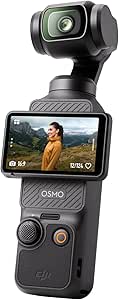 | Best Premium Portable Camera | Sensor: 1-inch CMOS | Video resolution: 4K | Maximum frame rate: 120 fps in Slow Motion mode | VIEW LATEST PRICE | See Our Full Breakdown |
| EMEET PIXY Dual-Camera AI-Powered PTZ 4K Webcam |  | Best for Gesture-Controlled Streaming | Sensor: Sony 1/2.55-inch | Focus: PDAF and AI autofocus | Viewing angle: 73 degrees | VIEW LATEST PRICE | See Our Full Breakdown |
| Insta360 Luna Ultra – 8K Vlogging Camera with Dual Leica Lenses |  | Best for Flexible, Feature-Rich Recording | Sensor type: CMOS | Listed sensor size: 1/2.8 inch | Video recording: Up to 8K, as stated in product description | VIEW LATEST PRICE | See Our Full Breakdown |
| 4K Vlogging Camera with Tripod Mount, Face Tracking & WiFi |  | Best for Beginner Solo Hosts | Sensor type: CMOS | Video resolution: 4K | Lens rotation: 330° | VIEW LATEST PRICE | See Our Full Breakdown |
| SJCAM C400 4K 64GB Pocket Vlogging Camera for Travel and Content Creation |  | Best for Outdoor Podcasting | Sensor type: CMOS | Video resolution: 4K Ultra HD | Battery life: Up to 7 hours, as stated in product data | VIEW LATEST PRICE | See Our Full Breakdown |
| CGXUED Mini Vlogging Camera with 180° Rotating Lens |  | Best for Simple, Casual Recording | Sensor type: NMOS | Dimensions: 5.35 × 1.56 inches | Battery capacity: 2000 mAh | VIEW LATEST PRICE | See Our Full Breakdown |
| 4K Vlogging Camera Portable Pocket Camera with 75MP, 330° Rotating Lens & Face Tracking, 1.7″ Touch Screen, Wi-Fi, 18x Digital Zoom, Includes 128GB Card & Tripod |  | Best Accessory Bundle for Social Clips | Video resolution: 2160p at 30fps | Photo sensor resolution: 75 MP | Sensor type: CMOS | VIEW LATEST PRICE | See Our Full Breakdown |
| DJI Osmo Pocket 3 Enhanced Vlog Bundle, Vlogging Camera with 1” CMOS |  | Best for Stabilized On-the-Go Recording | Sensor: 1-inch CMOS | Video resolution: 4K | Maximum frame rate: 120fps | VIEW LATEST PRICE | See Our Full Breakdown |
| Lmzour 4K Vlogging Camera with 330° Rotating Lens |  | Best Beginner Kit | Sensor: CMOS | Video resolution: 1080p and 2160p | Frame rate: 30fps | VIEW LATEST PRICE | See Our Full Breakdown |
| Kaysunlink 1080P Vlogging Camera with 270° Rotatable Lens, Touch Screen & WiFi, 5 Hours Battery, 64GB Card, Handheld Pocket Camcorder for Travel and Daily Use |  | Best for Long Recording Sessions | Video resolution: 1080p maximum | Frame rate: 30fps | Battery life: Up to 5 hours | VIEW LATEST PRICE | See Our Full Breakdown |
| Zoom Q2n-4K Video Recorder for Musicians, Streamers & Filmmakers |  | Best for Music and Live Audio | Sensor: CMOS | Video resolution: 4K / UHD | Lens: Wide angle, zoom; 15.2mm maximum focal length | VIEW LATEST PRICE | See Our Full Breakdown |
| portable podcast camera | Display | Connectivity | Video resolution | Sensor |
|---|---|---|---|---|
| EMEET PIXY Dual-Camera AI PTZ | — | — | UHD 4K | 1/2.55-inch Sony sensor |
| Uytya X70 5K Camcorder with 64 | 3-inch IPS touchscreen; rotates 270 degrees | Wi-Fi, USB, and HD output | — | CMOS |
| 4K Vlogging Camera with 330° R | 1.72-inch touchscreen | Wi-Fi and USB | 2160p (4K); listed support for 4K at 30 fps | — |
| DJI Osmo Pocket 3 Vlogging Cam | 2-inch rotating touchscreen | — | 4K | 1-inch CMOS |
| EMEET PIXY Dual-Camera AI-Powe | — | USB 2.0 and Type-C | — | Sony 1/2.55-inch |
| Insta360 Luna Ultra | 2-inch detachable touchscreen | Wi-Fi | — | — |
| 4K Vlogging Camera with Tripod | 1.72 inches | USB and Wi-Fi | 4K | — |
| SJCAM C400 4K 64GB Pocket Vlog | 2.29 inches | Wi-Fi | 4K Ultra HD | — |
| CGXUED Mini Vlogging Camera wi | 1.3 inches | USB | — | — |
| 4K Vlogging Camera Portable Po | 1.7-inch touchscreen | Wi-Fi | 2160p at 30fps | — |
| DJI Osmo Pocket 3 Enhanced Vlo | Rotating 2-inch touchscreen | Bluetooth, Wi-Fi | 4K | 1-inch CMOS |
| Lmzour 4K Vlogging Camera with | 1.72 inches | USB, Wi-Fi | 1080p and 2160p | CMOS |
| Kaysunlink 1080P Vlogging Came | 1.33-inch touchscreen | USB, Wi-Fi | 1080p maximum | — |
| Zoom Q2n-4K Video Recorder for | 2.8 inches | USB, 3.5mm TRS | 4K / UHD | CMOS |
More Details on Our Top Picks
EMEET PIXY Dual-Camera AI PTZ 4K Webcam Kit with Tripod
The EMEET PIXY webcam kit is the strongest fit here for a podcast recorded at a desk, especially when the host moves around while speaking. Its AI pan-and-tilt tracking can keep a subject framed without a camera operator, while the included tripod makes positioning easier than with the standalone EMEET PIXY webcam. A Sony sensor, PDAF and AI autofocus, and a three-microphone array give it a more production-ready starting point than a basic computer camera. The tradeoff is that this is a computer-dependent USB webcam, not a self-contained field camera like the DJI Osmo Pocket 3. Its adjustable field of view also depends on resolution and frame-rate settings, and the remote is sold separately. Choose it for a fixed recording setup with automatic framing; skip it if you need untethered recording or dependable built-in storage.
Pros:- AI pan-and-tilt tracking can keep a moving host in frame without a camera operator.
- Included adjustable tripod reaches 6.7–18.5 inches and has a 360-degree swivel head.
- Three microphones with multiple sound modes offer an onboard audio option for simple recordings.
- Software presets, whiteboard detection, and privacy controls suit recurring studio or teaching setups.
Cons:- Relies on a connected PC or Mac rather than recording independently.
- Field-of-view adjustment is limited to certain resolution and frame-rate modes.
- Remote control is sold separately.
Best for: Podcast hosts recording at a desk who want automatic subject tracking, a supplied tripod, and a camera that works with a PC or Mac.
Not ideal for: Creators who record away from a computer or need a standalone camera with onboard recording and storage.
- Sensor:1/2.55-inch Sony sensor
- Video resolution:UHD 4K
- Focus:PDAF and AI autofocus; 0.2-second focus
- Pan and tilt:310-degree pan; 180-degree tilt
- Microphones:Three-microphone array with three sound modes
- Tripod height:6.7–18.5 inches
- Connection:5-foot USB 2.0 C-to-C cable; Type-C-to-A adapter
- Aperture:f/1.8
- Recording storage:Relies on PC or Mac
Our verdict“Choose this kit for a computer-based podcast where automatic framing and the included tripod matter more than standalone recording.”
Uytya X70 5K Camcorder with 64MP Photos, 3-Inch 270° Flip Touchscreen, Night Vision, Wi-Fi, and Accessory Bundle
The Uytya X70 is the most ready-to-pack option in this group: its bundle includes a memory card, two batteries, a tripod, an external microphone, and a remote. That makes it more self-contained for recording in different locations than the computer-dependent EMEET PIXY webcams, which need a connected computer. The 270-degree touchscreen helps when framing a solo host, and 4K at 60 fps offers smoother motion than the listed 5K mode, which tops out at 20 fps. That distinction matters for podcast clips: 5K is not automatically the better choice if motion is important. At 2.5 pounds, it is also less pocketable than the DJI Osmo Pocket 3. Manual focus may take extra attention, so I’d favor it for a planned, tripod-based setup rather than spontaneous handheld shots.
Pros:- Bundle includes a 32GB memory card, two batteries, tripod, external microphone, and remote.
- Records 4K at 60 fps for smoother-looking motion than its 5K-at-20-fps mode.
- 270-degree flip touchscreen helps solo hosts check framing.
- IR night vision and Wi-Fi add options for low-light recording and remote control.
Cons:- At 2.5 pounds, it is less portable than the DJI Osmo Pocket 3.
- Manual focus may require repeated adjustment during setup.
- Not water resistant, limiting its suitability for exposed outdoor recording.
Best for: Podcast creators who record in multiple locations and want a camcorder package with batteries, a card, tripod, and external microphone included.
Not ideal for: Travelers prioritizing a genuinely pocket-sized camera or hosts who want fast autofocus with minimal manual adjustments.
- Video modes:5K at 20 fps; 4K at 60 fps
- Photo resolution:64MP
- Sensor:CMOS
- Display:3-inch IPS touchscreen; rotates 270 degrees
- Zoom:16x
- Night vision:IR
- Connectivity:Wi-Fi, USB, and HD output
- Weight:2.5 pounds
- Included recording accessories:32GB C10 memory card, two batteries, external microphone, tripod, remote control, and lens hood
Our verdict“Pick the X70 if you want a bundled, battery-powered camcorder for planned podcast shoots and can accept its bulk and manual-focus demands.”
4K Vlogging Camera with 330° Rotating Lens and Face Tracking
This 330-degree rotating-lens camera suits a solo podcaster who wants a small, self-framing camera for short clips or travel interviews. Face tracking and a rotating lens make it easier to keep yourself in view than with a fixed-lens webcam, while its listed 30 g weight is far below the 2.5-pound Uytya X70. It records 4K at 30 fps, but the 16GB card and expandable storage limit mean recording time needs planning; the product data lists expansion only to 32GB. The up-to-three-hour battery life also falls short of a long recording day. Compared with the DJI Osmo Pocket 3, this camera emphasizes rotation and low weight over a specified 1-inch sensor and mechanical stabilization. It makes most sense for short, mobile segments—not as the main camera for lengthy, polished sessions.
Pros:- 330-degree horizontal lens rotation and face tracking help a solo host stay framed.
- Records 4K video at 30 fps.
- Listed 30 g weight makes it far lighter to carry than the Uytya X70.
- Wi-Fi and USB support connection to phones, tablets, and computers.
Cons:- Included 16GB storage is limited, with listed expansion only to 32GB.
- Battery life is listed at up to three hours, which may not cover a long recording day.
- Digital stabilization is a different, less capable tool for movement than the DJI Osmo Pocket 3’s 3-axis mechanical stabilization.
Best for: Solo creators making short podcast clips, travel updates, or self-recorded interviews who value a lightweight camera with face tracking.
Not ideal for: Hosts recording long sessions or needing generous storage, longer battery endurance, or mechanical stabilization.
- Video resolution:2160p (4K); listed support for 4K at 30 fps
- Photo resolution:75MP
- Lens rotation:330 degrees horizontal; 180 degrees vertical
- Display:1.72-inch touchscreen
- Stabilization:Digital
- Battery:2400mAh; up to three hours
- Storage:16GB microSD; expandable to 32GB
- Connectivity:Wi-Fi and USB
- Weight:30 g
Our verdict“Choose this camera for lightweight, short-form solo recording, but look to the DJI Osmo Pocket 3 for more capable stabilization and the Uytya X70 for a fuller recording bundle.”
DJI Osmo Pocket 3 Vlogging Camera with 1-Inch CMOS Sensor and 4K Video
The DJI Osmo Pocket 3 is the most capable standalone camera in this batch for creators who move between podcast locations. Its 1-inch sensor and 3-axis mechanical stabilization give it a different advantage from the EMEET PIXY webcams: it can travel with the host and steady footage without relying on a computer-based tracking setup. The rotating touchscreen supports both horizontal and vertical framing, while 10-bit D-Log M gives editors more latitude when matching footage in post. Its strongest listed frame rate, 4K at 120 fps, applies only to slow motion, so it should not be mistaken for a standard-speed recording mode. It also needs a microSD card, and the charger is sold separately. Compared with the Uytya X70 bundle, it prioritizes sensor, stabilization, and grading options over included recording accessories.
Pros:- 1-inch CMOS sensor gives this model a larger listed sensor than the EMEET PIXY webcams.
- 3-axis mechanical stabilization is suited to handheld movement between podcast locations.
- Rotating 2-inch touchscreen supports horizontal and vertical framing.
- 10-bit D-Log M provides more flexibility for color grading.
Cons:- A microSD card is required and is not specified as included.
- Battery charger is sold separately.
- 4K at 120 fps is available only in Slow Motion mode.
Best for: Mobile podcast creators who want stabilized standalone footage, a larger listed sensor, and color-grading flexibility for edited video.
Not ideal for: Buyers who want a complete out-of-box kit with a memory card and charger, or a webcam designed for computer-based live recording.
- Sensor:1-inch CMOS
- Video resolution:4K
- Maximum frame rate:120 fps in Slow Motion mode
- Display:2-inch rotating touchscreen
- Stabilization:3-axis mechanical
- Color profile:10-bit D-Log M
- Audio connectivity:Connects to two DJI Mic 2 or Mic Mini transmitters
- Storage:Requires a microSD card
- Included accessories:Protective cover, wrist strap, and handle with 1/4-inch thread
Our verdict“Choose the Osmo Pocket 3 for premium portable footage and mechanical stabilization, provided you supply its memory card and charger.”
EMEET PIXY Dual-Camera AI-Powered PTZ 4K Webcam
This EMEET PIXY webcam is aimed at a desk-based host who wants camera movement and control without handling a separate camera during a recording. Its dual-camera AI tracking, gesture control, and PTZ movement make it more interactive than a conventional fixed webcam, while its compact 131.54 g body takes less space than a camcorder such as the Uytya X70. The three-microphone array adds a basic onboard audio option, but a webcam microphone is not a substitute for a dedicated podcast mic when audio quality is the priority. Unlike the DJI Osmo Pocket 3, this model is designed around a USB connection to a Windows or Mac computer, not untethered capture or mechanical stabilization. The supplied data also describes maximum display resolution as FHD, so buyers should verify their required output mode rather than relying on the 4K product title.
Pros:- Dual-camera AI tracking and PTZ movement support automatic reframing.
- Gesture control and preset positions reduce the need to adjust the camera by hand.
- Three-microphone array with noise cancellation offers a built-in audio option.
- Compact 131.54 g body is easier to keep on a desk than the Uytya X70 camcorder.
Cons:- No built-in storage; recording depends on a connected PC or Mac.
- USB Video Class operation and listed operating-system compatibility may limit some setups.
- The supplied display-resolution spec lists maximum FHD despite the 4K title.
Best for: Streamers and remote podcast hosts using a compatible Windows or Mac computer who want gesture control and AI-driven framing.
Not ideal for: Creators recording away from a computer, those who need onboard storage, or buyers requiring clearly specified 4K output in every mode.
- Sensor:Sony 1/2.55-inch
- Focus:PDAF and AI autofocus
- Viewing angle:73 degrees
- Maximum listed display resolution:FHD
- Microphones:Three-microphone array
- Connectivity:USB 2.0 and Type-C
- Weight:131.54 g
- Dimensions:2.09 x 2.09 x 2.87 inches
- Operating system compatibility:Windows 10 or later; macOS 10.14 or later
Our verdict“Pick this PIXY for computer-based streaming with gesture-controlled tracking, but choose a standalone camera such as the DJI Osmo Pocket 3 for mobile recording.”
Insta360 Luna Ultra – 8K Vlogging Camera with Dual Leica Lenses
The Insta360 Luna Ultra is the most feature-packed choice in this group for podcasters who also want a camera for mobile video production. Its stated 8K recording, dual lenses, stabilization, and AI tracking can help keep a solo host framed while recording away from a fixed desk. The detachable 2-inch touchscreen adds flexibility for checking framing, though its small size is less comfortable for detailed adjustments than a larger flip screen. Compared with the CGXUED Mini Vlogging Camera, the Luna Ultra aims at more ambitious image-making, while the CGXUED is simpler and easier to operate casually. The tradeoff is that its advanced feature set comes with a stated single AAA battery, which may be a poor match for long podcast sessions unless power arrangements are confirmed. I’d choose it for creators who value framing tools and versatility over a straightforward, long-running setup.
Pros:- 8K video recording and dual Leica lenses are aimed at detailed, flexible content capture
- AI tracking can help keep a solo host centered while moving
- Advanced stabilization is useful for handheld recording between podcast setups
- Detachable 2-inch touchscreen allows more flexible framing and remote control
Cons:- The listed single AAA battery may require frequent replacement during extended recording
- The 2-inch display is small for checking framing and settings
- Its feature-heavy design may be more camera than a fixed-location podcast setup needs
Best for: Solo video podcasters who record in changing locations and want tracking, stabilization, and a detachable screen
Not ideal for: Hosts recording long, uninterrupted episodes who need dependable battery endurance or a large screen for monitoring
- Sensor type:CMOS
- Listed sensor size:1/2.8 inch
- Video recording:Up to 8K, as stated in product description
- Lens:Zoom; dual Leica lenses, as stated in product description
- Maximum aperture:f/2.0
- Optical zoom:15×
- Display:2-inch detachable touchscreen
- Connectivity:Wi-Fi
- Storage:Micro SD
Our verdict“Choose the Luna Ultra if you want a versatile, tracking-capable camera for mobile video podcasts and can work around its small screen and listed battery setup.”
4K Vlogging Camera with Tripod Mount, Face Tracking & WiFi
This compact camera is the most approachable pick here for a new video podcaster who wants 4K recording and face tracking without starting with a more involved camera setup. Its 330° rotating lens makes it easier to switch between self-recording and filming a guest or scene, while Wi-Fi and USB provide basic ways to connect or share. Against the Insta360 Luna Ultra, it gives up the more ambitious 8K and dual-lens positioning in favor of a simpler, lightweight design. That restraint suits casual recording, but the listed limited manual controls may frustrate hosts who want precise exposure or focus adjustments. Battery life is another concern: the product data warns that long sessions may need an external power source. I’d favor it for short, uncomplicated episodes rather than a full-day recording schedule.
Pros:- 4K video recording offers a capable starting point for video podcast clips
- AI face tracking helps keep a solo host framed
- 330° rotating lens supports self-facing and alternate shooting angles
- Compact form and Wi-Fi make it convenient for travel and sharing
Cons:- Limited manual controls restrict fine adjustment for controlled podcast lighting
- Battery life may not cover long recording sessions without external power
- The 1.72-inch screen leaves little room for comfortable framing checks
Best for: First-time solo video podcasters recording short episodes, social clips, or travel interviews
Not ideal for: Hosts who need advanced manual control or expect to record long episodes away from external power
- Sensor type:CMOS
- Video resolution:4K
- Lens rotation:330°
- Lens focal length range:4–20 mm
- Focus:Autofocus
- Display:1.72 inches
- Connectivity:USB and Wi-Fi
- Storage:Micro SD
- Special features:Face detection, slow motion, time lapse, timer, and digital filters
Our verdict“Pick this camera for easy, short solo recordings, but look elsewhere if your podcast sessions are long or require hands-on image control.”
SJCAM C400 4K 64GB Pocket Vlogging Camera for Travel and Content Creation
The SJCAM C400 is the strongest fit for podcasters who take recording outdoors, where its stated waterproofing to 30 meters and seven-hour battery life set it apart from the other cameras in this batch. That combination favors field conversations and travel footage more than a stationary desk show. Compared with the 4K Vlogging Camera with Tripod Mount, Face Tracking & WiFi, the C400 emphasizes endurance and environmental protection rather than beginner-friendly face tracking. The compromise is portability: at a listed 0.78 kg, it is heavier than its pocket-camera framing suggests, and its 2.29-inch display still offers limited monitoring space. Its proprietary operating system may also make some functions less familiar. I’d choose it when the recording environment is the main challenge, not when compactness or a studio-style workflow matters most.
Pros:- Listed waterproofing to 30 meters suits wet and outdoor recording conditions
- Up to seven hours of stated battery life supports extended field sessions
- 4K video and a wide-angle lens suit travel interviews and environmental footage
- Wireless control and Wi-Fi support remote operation and sharing
Cons:- Listed weight of 0.78 kg is substantial for a pocket camera
- The 2.29-inch display can make precise framing difficult
- Proprietary operating system may limit familiarity with some functions
Best for: Travel podcasters and outdoor interviewers who need long battery life and water protection
Not ideal for: Desk-based hosts seeking a lightweight camera with a larger screen and a conventional operating experience
- Sensor type:CMOS
- Video resolution:4K Ultra HD
- Battery life:Up to 7 hours, as stated in product data
- Waterproofing:Up to 30 meters, as stated in product description
- Weight:0.78 kg
- Display:2.29 inches
- Optical zoom:8×
- Connectivity:Wi-Fi
- Operating system:Proprietary
Our verdict“Choose the C400 for outdoor podcasting where endurance and water protection outweigh its relatively heavy body and small display.”
CGXUED Mini Vlogging Camera with 180° Rotating Lens
The CGXUED Mini Vlogging Camera makes the most sense for casual podcast clips when ease of operation matters more than image ambition. Its one-button recording, included 32GB card, and stated battery life of up to seven hours reduce setup steps for informal interviews or travel notes. The manually rotating 180° lens supports both self-recording and point-of-view shots, but it is less adaptable than the 330° rotating lens on the 4K Vlogging Camera with Tripod Mount, Face Tracking & WiFi. The CGXUED also lacks that model’s stated face tracking and 4K positioning, and its own description says it is not intended to deliver DSLR-level image quality. With no water resistance and only a 1.3-inch display, it is a basic capture tool rather than a polished podcast camera. I’d pick it for uncomplicated recording, not a primary studio channel.
Pros:- One-button operation keeps casual recording straightforward
- Compact pocket-size form is easy to carry between locations
- Up to seven hours of stated battery life supports longer outings
- A 32GB memory card is included
Cons:- The product is not designed for DSLR-level image quality
- The lens rotates manually and lacks the broader range of some alternatives
- It is not water resistant and has a small 1.3-inch display
Best for: Casual creators who want a pocketable camera for informal podcast snippets, travel notes, and simple self-recording
Not ideal for: Video podcasters who need high image quality, automatic tracking, water protection, or a comfortable monitoring screen
- Sensor type:NMOS
- Dimensions:5.35 × 1.56 inches
- Battery capacity:2000 mAh
- Battery life:Up to 7 hours, as stated in product description
- Lens rotation:180°, manual
- Display:1.3 inches
- Storage included:32GB memory card
- Connectivity:USB
- Water resistance:Not water resistant
Our verdict“Choose the CGXUED for simple, portable clips rather than as the main camera for a polished video podcast.”
4K Vlogging Camera Portable Pocket Camera with 75MP, 330° Rotating Lens & Face Tracking, 1.7″ Touch Screen, Wi-Fi, 18x Digital Zoom, Includes 128GB Card & Tripod
This ultracompact camera stands out as a ready-to-start option for creators who want 4K video, face tracking, and included accessories in one package. The 330° rotating lens and tripod mount make it easy to switch between solo hosting and a fixed shot, while the included 128GB card removes one setup purchase. Compared with the CGXUED Mini Vlogging Camera, this model offers a more social-video-oriented feature set and a larger included card; compared with the SJCAM C400, it is positioned as the more compact choice rather than an outdoor endurance camera. The tradeoffs are its 30fps recording limit, small 1.7-inch screen, and unspecified battery life. Its 18× zoom is digital, so I would not treat it as a substitute for optical reach. It suits short, mobile recordings better than long podcast sessions.
Pros:- 4K video recording at 30fps supports detailed standard-speed clips
- 330° rotating lens and face tracking help with solo framing
- Included 128GB card and tripod make the package ready for basic recording
- Ultracompact design suits mobile content creation
Cons:- Video recording is limited to 30fps, restricting slow-motion options
- The 1.7-inch touchscreen is small for monitoring and menu adjustments
- Battery life is not specified, making long-session planning uncertain
Best for: YouTube and TikTok creators who want a compact, face-tracking camera with a memory card and tripod included
Not ideal for: Podcasters recording long sessions, needing slow-motion frame rates, or relying on zoom for image detail
- Video resolution:2160p at 30fps
- Photo sensor resolution:75 MP
- Sensor type:CMOS
- Lens rotation:330°
- Digital zoom:18×
- Display:1.7-inch touchscreen
- Battery capacity:2400 mAh
- Included storage:128GB SD card
- Connectivity:Wi-Fi
Our verdict“Pick this model for compact, accessory-ready social clips, but choose a camera with clearer battery information for extended podcast recording.”
DJI Osmo Pocket 3 Enhanced Vlog Bundle, Vlogging Camera with 1” CMOS
For a portable podcast camera that may need to follow a host between locations, the DJI Osmo Pocket 3 is the strongest pick here. Its three-axis stabilization helps keep handheld footage steady, while ActiveTrack can keep a moving speaker framed without a camera operator. The 1-inch CMOS sensor and 4K recording up to 120fps offer more flexibility for polished video than the 1080p Kaysunlink, though the Zoom Q2n-4K is better suited to capturing musicians with its built-in stereo microphones. The rotating 2-inch screen also makes self-framing easier than the Zoom’s fixed-focus setup. The tradeoff is a more involved workflow: you need a microSD card, and app compatibility or firmware setup may take extra effort. Its portability favors solo, mobile video over a fixed studio multicamera setup.
Pros:- Three-axis stabilization helps smooth handheld shots while moving
- 4K recording up to 120fps supports detailed footage and slow-motion clips
- Rotating touchscreen makes solo framing and camera control more convenient
- ActiveTrack can keep a moving host in frame
Cons:- Requires a microSD card for recording
- Firmware updates and app compatibility may complicate setup
- Battery charger is sold separately
Best for: Solo podcasters and mobile interviewers who want stabilized 4K footage while walking, traveling, or changing locations
Not ideal for: Podcasters who prioritize built-in stereo microphone capture or want the simplest setup without app, firmware, and memory-card requirements
- Sensor:1-inch CMOS
- Video resolution:4K
- Maximum frame rate:120fps
- Image stabilization:Optical; three-axis gimbal stabilization described
- Display:Rotating 2-inch touchscreen
- Connectivity:Bluetooth, Wi-Fi
- Lens:Wide angle; 20mm maximum focal length; f/2 maximum aperture
- Storage:MicroSD card required
Our verdict“Choose the Osmo Pocket 3 for stabilized, high-resolution podcast video on the move, but pick the Zoom Q2n-4K if onboard stereo audio is the priority.”
Lmzour 4K Vlogging Camera with 330° Rotating Lens
The Lmzour 4K Vlogging Camera is the most ready-to-start option in this group: its kit includes a 16GB TF card, mini tripod, and carrying bag, so a new creator has basic recording gear on hand. The 330-degree rotating lens helps a solo host check framing, and Wi-Fi transfer can simplify moving clips to a phone. Its listed 4K recording gives it a resolution advantage over the 1080p Kaysunlink, but the Lmzour’s frame rate is 30fps and its battery life is listed at just 1.5 hours. That makes it less appealing for long interviews than the Kaysunlink, which lists up to five hours of use. It also lacks the Osmo Pocket 3’s described gimbal stabilization, so this is better for simple, mostly stationary podcast clips than walking shots.
Pros:- Includes a 16GB TF card, mini tripod, cable, wrist strap, and carrying bag
- 330-degree rotating lens supports solo framing
- Lists 4K video recording and autofocus
- Wi-Fi supports wireless transfer to a smartphone
Cons:- Listed battery life is only 1.5 hours
- Not water resistant
- No built-in flash
Best for: First-time podcasters who want an inexpensive-to-set-up, compact camera kit for short, stationary recordings and phone transfers
Not ideal for: Creators recording long interviews, filming in wet environments, or needing stabilized footage while moving
- Sensor:CMOS
- Video resolution:1080p and 2160p
- Frame rate:30fps
- Photo resolution:75MP
- Lens rotation:330 degrees
- Display:1.72 inches
- Battery life:1.5 hours
- Included storage:16GB TF card
- Connectivity:USB, Wi-Fi
Our verdict“Pick the Lmzour for a beginner-friendly starter kit and short 4K sessions, but choose the Kaysunlink if longer listed battery life matters more than resolution.”
Kaysunlink 1080P Vlogging Camera with 270° Rotatable Lens, Touch Screen & WiFi, 5 Hours Battery, 64GB Card, Handheld Pocket Camcorder for Travel and Daily Use
If recording time matters more than 4K, the Kaysunlink 1080P camera has a clear practical advantage: its listed five-hour battery life and included 64GB card suit extended travel logs or long-form sessions away from a charger. The 270-degree rotating lens and Wi-Fi add useful flexibility for solo hosts, though the small 1.33-inch screen gives less room to check framing than the Lmzour’s 1.72-inch display. Video tops out at 1080p and 30fps, so it gives up resolution to the Lmzour and the DJI Osmo Pocket 3. Its lens rotation is manual rather than automatic, and the product data identifies a fisheye lens, which may produce a less natural look for a straightforward talking-head podcast. Treat it as a lightweight utility camera, not a stabilized studio-quality substitute.
Pros:- Lists up to five hours of battery life
- Includes a 64GB Micro SD card
- 270-degree rotatable lens offers flexible framing
- Compact handheld dimensions support travel use
Cons:- Video is limited to 1080p at 30fps
- Lens rotation requires manual adjustment
- Small 1.33-inch display can make framing harder
Best for: Traveling podcasters and casual creators who need long listed battery life and included storage for extended 1080p recording
Not ideal for: Hosts who need 4K detail, automatic subject tracking, a larger framing screen, or dependable use in wet conditions
- Video resolution:1080p maximum
- Frame rate:30fps
- Battery life:Up to 5 hours
- Lens type:Fisheye
- Lens rotation:270 degrees; manual adjustment
- Display:1.33-inch touchscreen
- Included storage:64GB Micro SD
- Connectivity:USB, Wi-Fi
- Dimensions:0.98 x 1.18 x 4.9 inches
Our verdict“Choose the Kaysunlink for extended, portable 1080p sessions, but favor the Lmzour or Osmo Pocket 3 if sharper video is your priority.”
Zoom Q2n-4K Video Recorder for Musicians, Streamers & Filmmakers
The Zoom Q2n-4K takes a different approach to podcast video: it is a pocket recorder built around a wide-angle lens and stereo microphones, making it especially relevant for musician interviews, rehearsal-room conversations, or livestreams where room sound matters. It can connect by USB for live streaming, and its 2.8-inch screen is larger than the Kaysunlink’s, which helps when checking a fixed shot. Unlike the DJI Osmo Pocket 3, however, the Zoom has fixed focus and no image stabilization; it is better placed on a tripod than carried during a moving segment. Its 4K recording is useful for reframing or detailed footage, but operation depends on two AA batteries. Buyers seeking a conventional solo-vlogging camera may prefer the rotating lens and tracking features of the Osmo instead.
Pros:- Built-in stereo microphones are suited to loud music and room sound
- Records video in 4K with a wide-angle lens
- Supports live streaming through USB
- Compact body includes a built-in tripod mount
Cons:- No image stabilization
- Fixed-focus lens offers less flexibility than autofocus options
- Requires two AA batteries
Best for: Musician podcasters, streamers, and interviewers who want onboard stereo microphones and USB livestream capability in a compact recorder
Not ideal for: Mobile hosts who need stabilization, autofocus, or a camera designed to follow a moving subject
- Sensor:CMOS
- Video resolution:4K / UHD
- Lens:Wide angle, zoom; 15.2mm maximum focal length
- Maximum aperture:f/2.8
- Focus:Fixed focus
- Display:2.8 inches
- Connectivity:USB, 3.5mm TRS
- Power:Two AA batteries
- Weight:32g
Our verdict“Choose the Zoom Q2n-4K for music-focused podcast recording and USB streaming, but pick the Osmo Pocket 3 for stabilized, moving-host footage.”

How We Picked
I ranked these portable podcast cameras by how well their stated design fits real recording situations: solo hosting, mobile interviews, performance capture, or a fixed streaming desk. I weighed portability, recording quality claims, framing tools, controls, and how much setup each style appears to demand. A 1-inch sensor, a gimbal-style pocket form, PTZ framing, a rotating lens, and a recorder-led design solve different problems, so I did not treat headline resolution or accessory bundles as a substitute for fit.
The order favors options with a clear podcast use case and a useful balance of image capability and mobility. The Osmo Pocket 3 leads as a versatile pocket camera; the Zoom Q2n-4K and EMEET PIXY models rank for more specific recording workflows rather than universal use. Compact budget-oriented camcorders remain relevant for simple capture, but claims such as high megapixel counts, digital zoom, and face tracking need to be weighed against practical controls, audio needs, and the limits of the product information provided.
Factors to Consider When Choosing Portable Podcast Cameras
Choosing a camera for a podcast is less about chasing the biggest number on the box and more about matching the recording setup you can repeat. I would start with where the show happens, how many people appear on camera, and whether the camera is meant to capture a finished episode or supplementary clips.
Match the camera style to your recording space
A pocket camera, webcam, and video recorder each suit a different routine. A pocket camera is convenient for a mobile host, quick guest clips, and behind-the-scenes footage; a webcam-style unit is more at home on a desk with a computer nearby. A recorder such as the Zoom Q2n-4K points toward performance or room capture, where the sound and scene may matter as much as a close talking-head frame. A common mistake is buying for portability alone and then discovering the device does not fit the show’s normal workflow. Decide whether you need a camera to travel, stay mounted, or record a performance before comparing specifications.
Treat audio as a separate part of the camera decision
A camera that records video does not automatically provide the microphone connections, monitoring, or clean audio workflow a podcast requires. Before buying, map out how the host and guests will be miked and how their audio will reach the recording device or computer. For a solo video podcast, a camera can capture the image while a dedicated microphone records sound separately, but that adds a sync step in editing. Multi-person shows need a plan for multiple microphones and consistent levels, not just a wider frame. Check the specific camera’s documented audio inputs and compatibility rather than assuming that a general-purpose vlog camera covers the whole production.
Choose sensor and resolution for the final viewing format
Resolution labels are only one part of image quality; sensor size, lighting, focus behavior, and the final platform all affect the result. A 4K camera can give room to crop or reframe, but a high megapixel figure for still photos does not tell you how clean its video will look indoors. A larger sensor, such as the 1-inch sensor listed for the Osmo Pocket 3, may be more relevant to image capture than an unusually large still-photo number on a compact camcorder. If the show will mostly appear as small social clips, reliable exposure and framing can matter more than chasing the highest listed resolution. Match the camera’s output to your editing and publishing needs before paying for features you will not use.
Plan the shot before relying on tracking
Face tracking and AI PTZ can reduce hands-on adjustments, especially for a solo host who moves during a recording. They do not remove the need to check the background, lens angle, lighting, and focus before a session. Tracking can also be a poor fit for a fixed interview where two people need to stay in frame together, or for a camera that must follow a speaker across a room. A rotating lens offers another kind of framing flexibility, but it is not the same thing as a stabilized gimbal or an automated multi-person shot. Choose framing tools around the movements and number of people in your actual format.
Account for setup time, power, and storage
Portability is useful only if the camera is ready when a recording opportunity appears. Think about how the device mounts, how long a session tends to run, where footage is stored, and whether you will need a card, tripod, or other accessories. Bundles can fill a practical gap, but included items should be judged by whether they suit your setup rather than by quantity. For a long interview, stopping to manage batteries or storage can be more disruptive than carrying a slightly larger camera. Check the manufacturer’s specifications for recording limits, battery performance, and card requirements before planning a full episode around a compact device.
Pay for workflow benefits, not feature-count inflation
Spending more makes sense when a feature saves time or solves a recurring production problem: better low-light capability, more useful stabilization, dependable framing, or a recording workflow suited to your show. It is less compelling to pay extra for a long list of digital zoom levels or resolution claims that do not improve the finished episode. Beginners may benefit more from straightforward controls and a repeatable setup than from advanced tracking they have to configure. A fixed studio host may get greater value from a computer-friendly webcam than from a pocket camera with travel features. Compare the cost of the camera with any microphone, mount, lighting, or editing needs the camera cannot cover.
Frequently Asked Questions
Can a portable podcast camera replace a webcam for a home studio?
Sometimes, but the right choice depends on how the camera connects to your recording setup. The EMEET PIXY models are explicitly webcam-style options, making them a more natural match for a fixed computer-based studio. A pocket camera may offer more freedom for travel or handheld clips, but that flexibility does not guarantee a simple live connection to a computer. Check the camera’s supported connection modes and recording workflow before treating it as a webcam replacement. If most episodes happen at one desk, prioritize easy framing and computer compatibility over pocket size.
Which camera style makes the most sense for recording two-person interviews?
Start with the framing requirement: both speakers need to remain clearly visible, even when one person turns or moves. A fixed wide shot can be more dependable than face tracking that follows only one subject, while PTZ control may help if the camera can frame the full conversation appropriately. A compact rotating-lens camera can make setup flexible, but rotation alone does not guarantee a useful two-person composition. For remote interviews, also account for the computer and audio workflow rather than selecting a camera based only on its lens. Check the intended camera position and seating arrangement before choosing a model.
Is 4K necessary for a video podcast?
No; 4K is most useful when you want room to crop, reframe, or create smaller clips from a wider recording. A well-lit, correctly framed lower-resolution recording can serve a straightforward podcast better than a poorly lit image with a higher resolution label. The product lineup also shows why resolution alone is not enough: sensor size, camera format, and recording workflow differ between the Osmo Pocket 3, Zoom Q2n-4K, and compact camcorders. Check what your editing software and publishing platform support before paying for extra resolution. If you rarely crop footage, put lighting and audio higher on your list.
Should I buy a camera bundle or choose the camera body on its own?
A bundle is worthwhile when its included tripod or storage card fits the way you record and saves you from buying compatible accessories separately. It is less useful if the included mount does not suit your desk or if you already have the needed gear. For podcasting, a basic camera bundle may still leave out the microphone, lighting, or audio interface that has the greatest effect on your finished episode. Check exactly what is included and what the camera requires for recording and power. Choose the package that completes your workflow rather than the one with the longest accessory list.
What should I prioritize if I record podcasts while traveling?
Put size and setup speed first, then check whether the camera suits the kinds of clips you plan to make. The DJI Osmo Pocket 3 is the clearest all-around pocket-camera fit in this lineup, while the SJCAM C400 and compact camcorders offer other portable formats. Travel recording also exposes weak spots that desk use can hide: battery planning, storage capacity, mounting options, and the need to capture usable audio in unfamiliar places. Avoid treating digital zoom as a substitute for moving closer or choosing a better camera position. A small microphone and a repeatable packing setup can matter as much as the camera body.
Conclusion
For most creators who want one camera for solo hosting, travel clips, and flexible 4K capture, I would choose the DJI Osmo Pocket 3 as best overall. The Zoom Q2n-4K is my best value for musicians and performance-led shows, since its recorder-oriented role is more relevant to those sessions than a general pocket camera. For a premium imaging direction, consider the Insta360 Luna Ultra, while remembering that its advanced positioning may be more camera than a simple podcast needs. Beginners who want an easy handheld starting point can look at the SJCAM C400 or a compact camcorder, after confirming the audio and connection workflow. For a fixed desk host who values automated framing, the EMEET PIXY is the specific-use pick; choose the tripod kit if the included support suits your setup, and skip webcam-style models if travel is the priority.