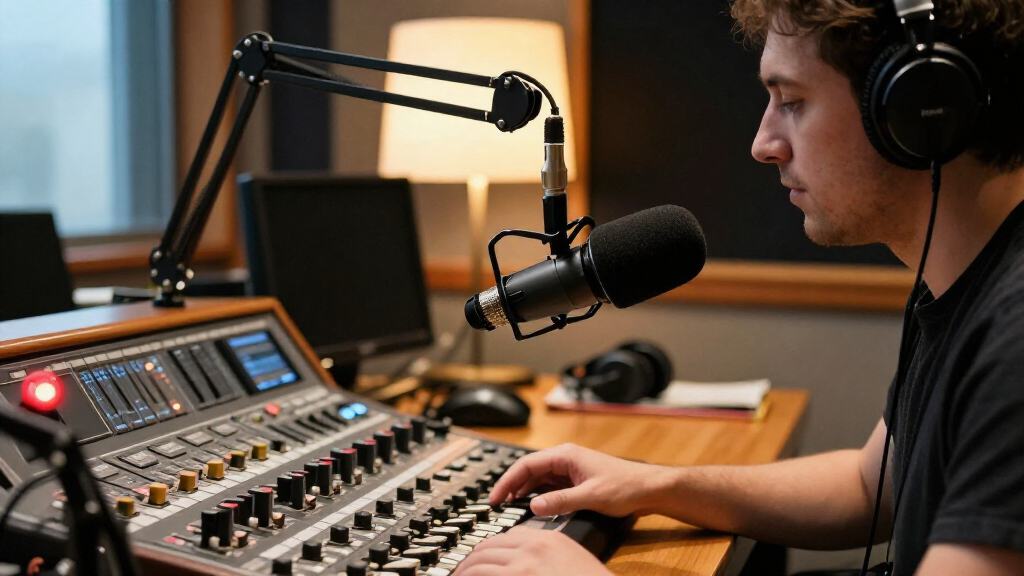

For most voice-focused setups, I’d put the Electro-Voice RE20 first for its broadcast-oriented design and Variable-D response, while the RØDE PodMic USB is a flexible pick for creators who want USB and XLR connections. The Shure MV7X is a simpler XLR option, and the Blue Yeti suits people who value USB convenience and multiple pickup patterns. The main choice is between dynamic mics that help limit room sound but need close placement and gain, and USB or multi-pattern options that are easier to connect but can capture more of the space. Continue for a role-by-role comparison of all 15 models and guidance on matching a microphone to your room, gear, and workflow.

Get everyday essentials delivered free with Prime
- Fast, free delivery on millions of items
- Prime Video, Amazon Music and more included
- Member-only deals all year
Complete the kit


Key Takeaways
- The RE20 leads for dedicated broadcast use: its Variable-D design helps manage tonal changes as a speaker moves, though its XLR connection calls for additional audio gear.
- USB/XLR flexibility separates the PodMic USB from the traditional PodMic: the USB model can connect directly to a computer, while the XLR version fits an interface-based studio.
- Dynamic does not mean plug-and-play: the RE20, Procaster, SM7B, and MV7X need close mic technique and an appropriate XLR signal chain.
- The Blue Yeti models serve a different workflow: USB and selectable pickup patterns offer easy setup and group recording options, but the open patterns can pick up room noise.
- Several entries are alternate versions or bundles: the white PodMic and Blackout Yeti mainly change appearance, while the RE20 bundle adds mounting equipment rather than a different microphone.
| MXL BCD-1 Dynamic Broadcast and Podcast Microphone |  | Best for Built-In Plosive Control | Microphone type: Dynamic | Connectivity: Wired XLR | Polar pattern: Unidirectional | VIEW LATEST PRICE | See Our Full Breakdown |
| RØDE PodMic USB Dynamic Broadcast Microphone |  | Best for USB and XLR Flexibility | Microphone type: Dynamic | Connectivity: USB-C, XLR | Polar pattern: Unidirectional | VIEW LATEST PRICE | See Our Full Breakdown |
| MAONO PD200W Hybrid Wireless Podcast Microphone |  | Best for Wireless Recording | Microphone type: Dynamic | Connectivity: Wireless, USB, XLR | Polar pattern: Unidirectional (cardioid) | VIEW LATEST PRICE | See Our Full Breakdown |
| RØDE Procaster Broadcast Dynamic Vocal Microphone |  | Best for Dedicated XLR Broadcast Rigs | Microphone type: Dynamic, large diaphragm | Connectivity: Wired XLR | Polar pattern: Unidirectional | VIEW LATEST PRICE | See Our Full Breakdown |
| Logitech Blue Yeti USB Microphone, Midnight Blue |  | Best for Multi-Pattern Desktop Recording | Microphone type: Condenser | Connectivity: USB Type-A | Microphone array: Three-capsule | VIEW LATEST PRICE | See Our Full Breakdown |
| FIFINE AmpliTank K688CT USB/XLR Dynamic Podcast Microphone Kit with Boom Arm | 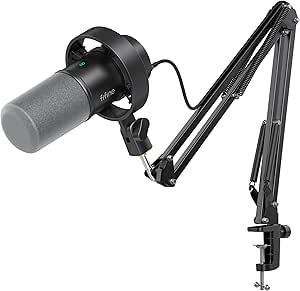 | Best Complete Starter Kit | Connectivity: USB, XLR | Microphone type: Dynamic | Polar pattern: Cardioid (unidirectional) | VIEW LATEST PRICE | See Our Full Breakdown |
| Electro-Voice RE20 Dynamic Broadcast Microphone, Black |  | Best for Close-Mic Broadcast Voice | Microphone type: Dynamic | Polar pattern: Unidirectional cardioid | Connectivity: XLR | VIEW LATEST PRICE | See Our Full Breakdown |
| RØDE PodMic Cardioid Dynamic Broadcast Microphone | 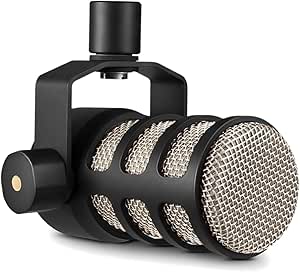 | Best Speech-Tuned XLR Pick | Connectivity: XLR | Polar pattern: Unidirectional | Impedance: 150 ohm | VIEW LATEST PRICE | See Our Full Breakdown |
| RØDE PodMic Cardioid Dynamic Broadcast Microphone, White |  | Best for a Coordinated White Setup | Connectivity: XLR | Microphone type: Dynamic | Polar pattern: Unidirectional | VIEW LATEST PRICE | See Our Full Breakdown |
| Shure MV7X XLR Dynamic Podcast Microphone |  | Best for Noisy Home Rooms | Connectivity: XLR | Polar pattern: Unidirectional cardioid | Frequency response: 50–16,000 Hz | VIEW LATEST PRICE | See Our Full Breakdown |
| Electro-Voice RE20 Broadcast Announcer Microphone Bundle with Shockmount and Broadcast Arm |  | Best Complete Broadcast Setup | Microphone type: Dynamic | Polar pattern: Cardioid | Connectivity: XLR | VIEW LATEST PRICE | See Our Full Breakdown |
| Audio-Technica BPHS1 Broadcast Stereo Headset with Dynamic Cardioid Boom Microphone |  | Best for Live Commentary | Microphone type: Dynamic cardioid | Headphone design: Closed-back, over-ear | Microphone frequency response: 40 Hz–20 kHz | VIEW LATEST PRICE | See Our Full Breakdown |
| FIFINE AmpliGame AM8 USB/XLR Dynamic Microphone |  | Best for First-Time Streamers | Microphone type: Dynamic | Polar pattern: Cardioid (unidirectional) | Connectivity: USB and XLR | VIEW LATEST PRICE | See Our Full Breakdown |
| Shure SM7B Dynamic Vocal Microphone |  | Best for Studio Voice Work | Microphone type: Dynamic | Polar pattern: Unidirectional | Connectivity: XLR | VIEW LATEST PRICE | See Our Full Breakdown |
| Logitech Blue Yeti USB Microphone, Blackout | 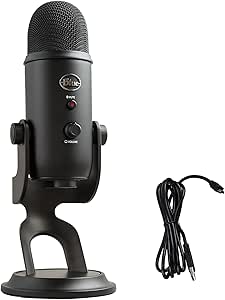 | Best for Multi-Pattern Recording | Microphone type: Tri-capsule condenser | Connectivity: USB | Pickup patterns: Cardioid, omnidirectional, bidirectional, stereo | VIEW LATEST PRICE | See Our Full Breakdown |
| broadcast microphone | Connectivity | Microphone type | Polar pattern | Signal-to-noise ratio |
|---|---|---|---|---|
| MXL BCD-1 Dynamic Broadcast an | Wired XLR | Dynamic | Unidirectional | 78 dB |
| RØDE PodMic USB Dynamic Broadc | USB-C, XLR | Dynamic | Unidirectional | 60 dB |
| MAONO PD200W Hybrid Wireless P | Wireless, USB, XLR | Dynamic | Unidirectional (cardioid) | 82 dB |
| RØDE Procaster Broadcast Dynam | Wired XLR | Dynamic, large diaphragm | Unidirectional | 78 dB |
| Logitech Blue Yeti USB Microph | USB Type-A | Condenser | — | 70 dB |
| FIFINE AmpliTank K688CT USB/XL | USB, XLR | Dynamic | Cardioid (unidirectional) | 80 dB |
| Electro-Voice RE20 Dynamic Bro | XLR | Dynamic | Unidirectional cardioid | 78 dB |
| RØDE PodMic Cardioid Dynamic B | XLR | — | Unidirectional | 78 dB |
| RØDE PodMic Cardioid Dynamic B | XLR | Dynamic | Unidirectional | 78 dB |
| Shure MV7X XLR Dynamic Podcast | XLR | — | Unidirectional cardioid | 72 dB |
| Electro-Voice RE20 Broadcast A | XLR | Dynamic | Cardioid | — |
| Audio-Technica BPHS1 Broadcast | — | Dynamic cardioid | — | — |
| FIFINE AmpliGame AM8 USB/XLR D | USB and XLR | Dynamic | Cardioid (unidirectional) | 80 dB |
| Shure SM7B Dynamic Vocal Micro | XLR | Dynamic | Unidirectional | — |
| Logitech Blue Yeti USB Microph | USB | Tri-capsule condenser | — | 100 dB |
More Details on Our Top Picks
MXL BCD-1 Dynamic Broadcast and Podcast Microphone
The MXL BCD-1 puts practical speech cleanup into the microphone: its built-in pop filter and shock mount help tame plosives and handling noise, while the unidirectional pattern helps reject sound from the sides. That makes it a focused choice for a single voice in a treated or moderately noisy space. Unlike the RØDE PodMic USB, it has no USB connection or onboard digital processing, so recording requires an XLR interface or mixer. It also needs no phantom power, which keeps its power needs simple once connected. The tradeoff is a less flexible setup: the stand is separate, and XLR gear is essential. I’d choose it for straightforward, close-miked speech when built-in noise control matters more than USB convenience.
Pros:- Built-in pop filter helps reduce plosive bursts.
- Internal shock mount helps limit handling noise.
- Unidirectional pickup supports isolation from side sounds.
- Dynamic design does not require phantom power.
Cons:- Requires an XLR interface or mixer.
- Stand is sold separately.
- Offers no USB connection or onboard digital processing.
Best for: Podcasters and voice-recording beginners who already have an XLR interface and want a dynamic mic with built-in pop and handling-noise control.
Not ideal for: USB-only streamers or buyers who need a complete desktop setup, since it requires XLR equipment and the stand is sold separately.
- Microphone type:Dynamic
- Connectivity:Wired XLR
- Polar pattern:Unidirectional
- Impedance:600 ohm
- Signal-to-noise ratio:78 dB
- Channels:1
- Weight:16 ounces
- Dimensions:2 x 2 x 6.2 inches
Our verdict“Choose the BCD-1 for focused XLR speech recording with built-in pop control, provided you have the supporting gear.”
RØDE PodMic USB Dynamic Broadcast Microphone
The RØDE PodMic USB is the most adaptable speech setup here: connect it directly by USB-C for APHEX processing and zero-latency headphone monitoring, or use XLR with an interface or mixer. That makes it easier to start simple and keep the same mic if a studio rig comes later. Compared with the XLR-only RØDE Procaster, it trades a purely analog setup for USB convenience and digital tools. Its dynamic, unidirectional design, internal shock mount, and pop filter suit close speech recording, while the included swing mount helps position it. The limitation is that its APHEX features work over USB; XLR use still calls for external audio gear. I’d pick it when connection flexibility matters more than keeping the signal path entirely analog.
Pros:- USB-C and XLR connections support both simple and studio setups.
- USB mode offers APHEX processing and headphone monitoring.
- Internal shock mount and pop filter support cleaner close speech.
- Swing mount, cable, and pouch are included.
Cons:- APHEX processing is available only over USB.
- XLR operation requires an interface or mixer.
- USB-C connectivity may require an adapter for some devices.
Best for: Podcasters and streamers who want direct USB recording now, with the option to move to XLR studio equipment later.
Not ideal for: Buyers committed to an XLR-only chain or those who want USB digital processing while connected through XLR.
- Microphone type:Dynamic
- Connectivity:USB-C, XLR
- Polar pattern:Unidirectional
- Frequency range:20 Hz–20 kHz
- Signal-to-noise ratio:60 dB
- Channels:1
- Enclosure material:Metal
- Compatibility:Mac, PC, iPad, Android
- Included accessories:Swing mount, USB-C cable, pouch
Our verdict“Choose the PodMic USB if you want one broadcast-style mic that can move between direct USB use and an XLR studio.”
MAONO PD200W Hybrid Wireless Podcast Microphone
The MAONO PD200W stands apart by letting a speaker record over wireless, USB, or XLR, a useful spread for mobile setups and changing studio needs. Its 60 m wireless range and up to 60 hours of battery life with RGB off can free a host from a desk, while cardioid pickup and three-stage noise cancellation target unwanted room sound. Compared with the wired MXL BCD-1, it offers far more placement freedom and app-based sound adjustments, but adds battery management and more setup choices. The included desktop stand and receiver help get started; camera and Lightning accessories are separate. At 1.32 kg, it is also a substantial mic to move around. I’d choose it when wireless flexibility is central, not for the simplest fixed broadcast rig.
Pros:- Wireless, USB, and XLR connections support varied recording setups.
- Wireless range is listed at 60 m.
- Battery life is up to 60 hours with RGB lighting off.
- Cardioid pickup, noise cancellation, and app controls offer sound-shaping options.
Cons:- Wireless use depends on battery power.
- Camera and Lightning accessories are sold separately.
- At 1.32 kg, it is heavier than a typical portable handheld mic.
Best for: Mobile podcasters, streamers, and interview hosts who want to move away from the desk and switch among wireless, USB, and XLR workflows.
Not ideal for: Broadcasters seeking a lightweight, permanently wired studio microphone or users who need camera or Lightning accessories included.
- Microphone type:Dynamic
- Connectivity:Wireless, USB, XLR
- Polar pattern:Unidirectional (cardioid)
- Signal-to-noise ratio:82 dB
- Maximum SPL:128 dB
- Wireless range:60 m
- Battery life:Up to 60 hours (RGB off)
- Weight:1.32 kg
- Included accessories:Desktop stand, USB-C to USB-A&C cable, Type-C receiver, Type-C adapter cable
Our verdict“Pick the PD200W if wireless movement and multiple connection options matter more than a lighter, simpler wired setup.”
RØDE Procaster Broadcast Dynamic Vocal Microphone
The RØDE Procaster is a purpose-built wired option for a broadcast desk: its metal enclosure, internal shock mounting, and built-in pop filter address common close-mic problems without adding separate filters to the setup. The included stand mount, 3/8-inch adapter, and pouch make it more ready for studio placement than the MXL BCD-1, whose stand is sold separately. Both use a unidirectional dynamic design and need XLR equipment, but the Procaster’s listed 75 Hz–18 kHz response is narrower than the PodMic USB’s stated 20 Hz–20 kHz range. Its 1500-ohm impedance is another system detail to check against the intended preamp. I’d pick it for a stable, XLR-based voice rig; USB-first creators should look to the PodMic USB instead.
Pros:- Internal pop filter helps control plosives during close speech.
- Internal shock mounting helps reduce handling noise.
- Metal enclosure suits regular studio use.
- Stand mount, adapter, and pouch are included.
Cons:- Requires an XLR interface or mixer.
- Listed frequency response is 75 Hz–18 kHz.
- The 1500-ohm impedance may need checking against the planned preamp.
Best for: Radio producers and podcasters building a fixed XLR voice setup who want a rugged metal mic with internal plosive and handling-noise control.
Not ideal for: USB-only creators or buyers who need a mic with a stated wider frequency range and direct computer connection.
- Microphone type:Dynamic, large diaphragm
- Connectivity:Wired XLR
- Polar pattern:Unidirectional
- Frequency response:75 Hz–18 kHz
- Impedance:1500 ohm
- Signal-to-noise ratio:78 dB
- Enclosure material:Metal
- Included accessories:Stand mount, 3/8-inch adapter, zip pouch
- Warranty:1 year
Our verdict“Choose the Procaster for a durable, accessory-ready XLR broadcast station with built-in speech-noise controls.”
Logitech Blue Yeti USB Microphone, Midnight Blue
The Blue Yeti is the most versatile desktop recorder in this group, with four pickup patterns for solo speech, interviews, group recording, and stereo capture. Its USB connection and onboard gain, mute, pattern, and headphone controls make it easier to use for varied formats than the single-pattern dynamic MXL BCD-1. That flexibility changes the broadcast tradeoff: the Yeti is a condenser with multiple patterns, so it is less specialized for isolating one close voice in a noisy room than a unidirectional dynamic mic. Blue VO!CE effects also depend on Logitech G HUB, adding software to the setup. The included desktop stand supports quick placement, but this is not an XLR studio microphone. I’d choose it for a quiet desktop where pattern switching matters more than focused broadcast isolation.
Pros:- Four pickup patterns adapt to solo, group, and stereo recording.
- Onboard controls provide quick access to gain, mute, pattern, and headphone volume.
- USB setup and included desktop stand support a straightforward start.
- Zero-latency headphone monitoring is available.
Cons:- Condenser design and multiple patterns are less specialized for noisy-room voice isolation.
- Blue VO!CE effects require Logitech G HUB.
- Uses USB Type-A and does not offer an XLR connection.
Best for: Desktop creators recording solo shows, interviews, or small group sessions in a reasonably quiet room who want multiple pickup patterns over USB.
Not ideal for: Radio and podcast hosts in noisy rooms who need a focused XLR dynamic mic and stronger single-voice isolation.
- Microphone type:Condenser
- Connectivity:USB Type-A
- Microphone array:Three-capsule
- Pickup patterns:Cardioid, omnidirectional, bidirectional, stereo
- Audio sensitivity:45 dB
- Signal-to-noise ratio:70 dB
- Frequency response:20 Hz–20 kHz
- Channels:2
- Power source:Corded electric
Our verdict“Choose the Blue Yeti for a flexible USB desktop setup in a quiet room, rather than a dedicated XLR broadcast station.”
FIFINE AmpliTank K688CT USB/XLR Dynamic Podcast Microphone Kit with Boom Arm
The FIFINE AmpliTank K688CT is the easiest pick here for a new desk setup: it combines a dynamic cardioid mic with USB controls and the arm, windscreen, and shock mount needed to get started. USB mute, gain, and headphone volume controls make it more self-contained than the XLR-only Shure MV7X. Its USB/XLR options also leave room to move to an interface later. The tradeoff is that the onboard controls work only over USB, so an XLR setup loses that convenience. Its clamp also fits desks under two inches thick, which may rule out some desks. For broadcast-style speech in a typical home workspace, it offers a practical, bundled route; buyers seeking the RE20’s Variable-D design or a more specialized broadcast mic should look elsewhere.
Pros:- USB and XLR connectivity support both simple and interface-based setups
- USB mute, gain, and headphone volume controls are accessible on the mic
- Includes a boom arm, windscreen, and shock mount
- Cardioid dynamic design suits speech in rooms with some ambient noise
Cons:- On-mic controls work only in USB mode
- Included desk clamp fits desks under two inches thick
Best for: First-time podcasters or streamers who want a USB setup with a boom arm and the option to move to XLR later
Not ideal for: Users with desks two inches thick or more, or XLR users who expect the onboard mute and gain controls to work
- Connectivity:USB, XLR
- Microphone type:Dynamic
- Polar pattern:Cardioid (unidirectional)
- Frequency response:50 Hz–16 kHz
- Maximum SPL:120 dB
- Signal-to-noise ratio:80 dB
- Included accessories:Boom arm, windscreen, shock mount
- Desk clamp compatibility:Desks under 2 inches thick
Our verdict“Choose the K688CT for a ready-to-mount starter setup with USB convenience and an XLR upgrade path.”
Electro-Voice RE20 Dynamic Broadcast Microphone, Black
The Electro-Voice RE20 is the specialist in this group for broadcasters who work close to the mic and want less change in tone as they move. Its Variable-D design helps control proximity effect, while the internal pop filter and shock mount address plosives and vibration. Compared with the speech-tuned RØDE PodMic, the RE20 is the more broadcast-focused choice for close-positioned voice work, though it asks for a compatible XLR interface or mixer. Its metal body weighs 2.9 pounds, so a sturdy stand or arm matters. This is a strong fit for a dedicated studio chain, but less convenient than the USB/XLR FIFINE K688CT for someone who wants to record without extra gear.
Pros:- Variable-D design helps limit proximity effect as speaking distance changes
- Internal pop filter supports close speech recording
- Shock mount helps reduce vibration noise
- Metal construction and broad broadcast, podcast, and production use
Cons:- XLR connection requires compatible recording equipment
- At 2.9 pounds, it needs a securely rated stand or boom arm
Best for: Radio hosts, announcers, and podcasters with an XLR interface who record close to the microphone
Not ideal for: New creators seeking direct USB connection or a lightweight mic for an improvised desk arm
- Microphone type:Dynamic
- Polar pattern:Unidirectional cardioid
- Connectivity:XLR
- Special feature:Variable-D design
- Enclosure material:Metal
- Weight:2.9 pounds
- Signal-to-noise ratio:78 dB
- Warranty:3 years
Our verdict“Pick the RE20 for close-mic broadcast work where steadier tone across small movements matters more than plug-and-play convenience.”
RØDE PodMic Cardioid Dynamic Broadcast Microphone
The black RØDE PodMic makes sense for a podcast desk where speech tone and a tidy mic body matter more than USB controls. Its speech-tuned sound, internal pop filter, and shock mounting address common voice-recording problems without needing a separate pop screen. Unlike the bundled FIFINE AmpliTank K688CT, it arrives without a boom arm and connects by XLR, so budget for an interface or mixer and suitable mounting hardware. The all-metal body is substantial at 937 g; that can feel reassuring on a stable setup, but it puts more demand on an arm than a lighter mic. Compared with the more specialized Electro-Voice RE20, the PodMic is the straightforward podcast-focused option, while giving up the RE20’s Variable-D feature.
Pros:- Speech-tuned sound is aimed at podcast and broadcast voice
- Internal pop filter helps reduce plosives
- Shock mounting helps limit vibration
- All-metal construction
Cons:- Requires an XLR interface or mixer
- The 937 g body calls for a stable mounting arm
- No boom arm is listed among the included items
Best for: Podcast hosts with an XLR interface who want a purpose-tuned speech mic with internal plosive and vibration control
Not ideal for: USB-first creators or anyone needing a lightweight microphone and included boom arm
- Connectivity:XLR
- Polar pattern:Unidirectional
- Impedance:150 ohm
- Frequency range:20 Hz–20 kHz
- Signal-to-noise ratio:78 dB
- Weight:937 g
- Material:Metal
- Warranty:2 years
Our verdict“Choose the black PodMic for a speech-focused XLR podcast setup that does not need bundled mounting gear.”
RØDE PodMic Cardioid Dynamic Broadcast Microphone, White
The white RØDE PodMic brings the same podcast-oriented design as its black counterpart, with a finish that suits a coordinated light-colored recording space. The useful distinction in this lineup is its integrated yoke mount and fittings for both 3/8-inch and 5/8-inch mounting threads, which make positioning easier across compatible arms. Its internal pop filter and shock mount help control plosives and vibration; the all-metal, 937 g construction still calls for a sturdy support. Like the black PodMic, it is XLR-only and requires an interface or mixer, while the FIFINE K688CT offers USB controls and includes an arm. Choose the white version for appearance and mounting flexibility, not for different listed recording features.
Pros:- White finish suits coordinated light-colored setups
- Internal pop filter helps tame plosive sounds
- Internal shock mount helps reduce vibration
- Integrated yoke mount and 3/8-inch and 5/8-inch threads support flexible positioning
Cons:- XLR connection requires an interface or mixer
- At 937 g, it needs sturdy mounting support
- Listed specs do not show a performance distinction from the black PodMic
Best for: Podcasters building a white or light-colored studio who already have XLR recording gear and a suitable arm
Not ideal for: USB-only beginners or buyers who want a distinct audio feature set over the black PodMic
- Connectivity:XLR
- Microphone type:Dynamic
- Polar pattern:Unidirectional
- Frequency response:20 kHz
- Signal-to-noise ratio:78 dB
- Weight:937 g
- Mounting threads:3/8 in and 5/8 in
- Color:White
Our verdict“Pick the white PodMic when its finish and flexible mounting fit your studio, and you already have an XLR chain.”
Shure MV7X XLR Dynamic Podcast Microphone
The Shure MV7X suits a home podcaster who needs the mic to favor their voice over a less controlled room. Its voice isolation technology and integrated shock mount are aimed at limiting room noise and handling vibration, while the cardioid dynamic design keeps the focus on close speech. Compared with the FIFINE AmpliTank K688CT, the MV7X gives up USB connection and onboard controls in favor of a simple XLR route into an interface or mixer. The adjustable yoke mount and included 3/8-inch adapter help with placement, but there is no USB fallback listed for recording without extra gear. Choose it for an XLR-based spoken-word setup; skip it if you want direct computer connection or flexible USB operation.
Pros:- Voice isolation technology is designed to reduce background noise
- Integrated shock mount helps limit vibration
- XLR output works with audio interfaces and mixers
- Adjustable yoke mount includes a 3/8-inch adapter
Cons:- XLR-only connection requires additional recording equipment
- No USB connectivity is listed
- Listed signal-to-noise ratio is lower than the FIFINE K688CT’s
Best for: Podcasters recording close to the mic in a shared or untreated room who already use an XLR interface
Not ideal for: USB-first streamers and beginners without an audio interface or mixer
- Connectivity:XLR
- Polar pattern:Unidirectional cardioid
- Frequency response:50–16,000 Hz
- Audio sensitivity:38 dB
- Signal-to-noise ratio:72 dB
- Construction:All-metal
- Included adapter:3/8-inch
- Channels:1
Our verdict“Choose the MV7X for close spoken-word recording in a noisy room if you already have an XLR interface.”
Electro-Voice RE20 Broadcast Announcer Microphone Bundle with Shockmount and Broadcast Arm
The RE20 bundle is the most ready-to-mount choice here for an announcer building a dedicated XLR desk setup. Its Variable-D design helps keep bass response steadier as you move closer or farther from the mic, which gives on-air delivery more room to vary without the pronounced proximity effect common to many dynamic mics. Compared with the Shure SM7B, this package includes the shockmount and broadcast arm, so fewer mounting pieces need to be sourced separately. The cardioid pattern and rugged steel body suit a fixed studio position, while the included arm’s integrated XLR cable keeps the desk setup tidy. The tradeoff is its 16-ounce weight: it needs a sturdy mount, and the bundle remains an XLR setup that depends on an interface or mixer.
Pros:- Variable-D design helps limit proximity-effect changes as speaking distance shifts
- Cardioid pickup supports focused voice capture
- Rugged alloy-steel enclosure is suited to regular studio use
- Includes a shockmount and broadcast arm with integrated XLR cable
Cons:- Its 16-ounce weight calls for a sturdy mounting setup
- XLR connectivity requires a compatible interface or mixer
Best for: Announcers setting up a permanent XLR studio desk who want the microphone, shockmount, and broadcast arm together
Not ideal for: USB-first streamers or buyers with a light-duty arm that may not support a 16-ounce microphone
- Microphone type:Dynamic
- Polar pattern:Cardioid
- Connectivity:XLR
- Design:Variable-D
- Weight:16 ounces
- Enclosure material:Alloy steel
- Included accessories:Shockmount, two-section broadcast arm with integrated XLR cable, stand adapter, combo mount, screws, and riser
Our verdict“Choose the RE20 bundle if you want a broadcast-oriented XLR microphone and its main mounting hardware in one package.”
Audio-Technica BPHS1 Broadcast Stereo Headset with Dynamic Cardioid Boom Microphone
The BPHS1 makes sense when monitoring and speaking need to happen from one wearable broadcast rig. Its closed-back ear cups help reduce surrounding sound in the headphones, while the dynamic cardioid boom keeps the microphone close to the speaker’s mouth. That close placement can make commentary easier to manage than a desk mic such as the Electro-Voice RE20, especially during interviews or sports coverage where the speaker may move. The boom can be positioned on either side, and separate XLR and quarter-inch outputs connect the mic and headphones to compatible equipment. This is a specialist choice, though: it is wired, and its 8-pin headset connector may require compatible gear or an adapter. For a stationary solo announcer who already owns headphones, a standalone microphone may be simpler.
Pros:- Dynamic cardioid boom microphone focuses voice pickup
- Closed-back over-ear cups help reduce background sound in the headphones
- Microphone boom can be positioned on either side
- Separate XLR microphone and quarter-inch headphone outputs
Cons:- Wired design limits movement compared with a wireless setup
- The 8-pin headset connector requires compatible equipment or an adapter
Best for: Sports commentators, interviewers, and broadcast operators who need a close boom mic and monitoring headphones in one headset
Not ideal for: Stationary studio speakers who prefer separate headphones and a desk-mounted microphone, or users without compatible headset connections
- Microphone type:Dynamic cardioid
- Headphone design:Closed-back, over-ear
- Microphone frequency response:40 Hz–20 kHz
- Headphone frequency response:20 Hz–20 kHz
- Connectors:8-pin headset, 3-pin XLR microphone output, 6.3 mm TRS headphone output
- Cable length:3.3 m (10.8 ft)
- Weight:9.3 oz
Our verdict“Pick the BPHS1 for live commentary when having the microphone and monitoring headphones on one headset matters more than desk flexibility.”
FIFINE AmpliGame AM8 USB/XLR Dynamic Microphone
The FIFINE AmpliGame AM8 bridges a simple USB start and a later XLR setup. In USB mode, tap-to-mute and headphone monitoring put useful controls on the mic, while its cardioid dynamic design suits a single speaker at a desk. That makes it more approachable than the XLR-only Shure SM7B, which needs an interface or mixer and substantial gain. The AM8 also accepts common 3/8-inch and 5/8-inch stand threads, so it can move to a typical boom arm. Its tradeoffs matter for broadcast buyers: USB conveniences and RGB lighting disappear in XLR mode, and the XLR cable is not included. The 50 Hz–16 kHz response is a more limited stated range than the SM7B’s, so it is best treated as a flexible starter mic rather than a studio upgrade endpoint.
Pros:- USB and XLR connectivity support different stages of a desk setup
- USB mode includes tap-to-mute and headphone monitoring
- Built-in threads fit common 3/8-inch and 5/8-inch stands
- Cardioid dynamic pickup is suited to a single speaker
Cons:- Tap-to-mute, monitoring controls, and RGB lighting are unavailable in XLR mode
- XLR cable is not included
- Specified frequency response is narrower than the Shure SM7B’s
Best for: New streamers or podcasters who want USB controls now and the option to connect over XLR later
Not ideal for: Broadcast professionals seeking a full-featured XLR mic with onboard USB controls or a supplied XLR cable
- Microphone type:Dynamic
- Polar pattern:Cardioid (unidirectional)
- Connectivity:USB and XLR
- Frequency response:50 Hz–16 kHz
- Signal-to-noise ratio:80 dB
- Stand threads:3/8 in and 5/8 in
- XLR cable:Not included
Our verdict“Choose the AM8 if you want an accessible USB broadcast-style setup with a path to XLR, and can accept fewer features in XLR mode.”
Shure SM7B Dynamic Vocal Microphone
The Shure SM7B is a strong fit for a treated or carefully managed broadcast desk where a durable XLR mic and built-in vocal-noise controls take priority. Its shock isolation and pop filtering help reduce handling noise and plosives, while the cardioid pattern focuses pickup toward the speaker. Compared with the FIFINE AmpliGame AM8, the SM7B is a more dedicated studio choice, but it does not offer USB convenience or onboard mute and monitoring controls. The cost in setup effort is clear from the supplied data: Shure recommends at least 60 dB of gain, so a suitable interface, mixer, or preamp matters. Its metal body and electromagnetic shielding support a permanent studio role, though at 2.7 pounds it also calls for a robust mount.
Pros:- Built-in pop filtering helps reduce plosive bursts
- Shock isolation helps limit handling noise
- Cardioid pickup focuses on the speaker
- Metal body and electromagnetic shielding suit studio use
Cons:- At least 60 dB of gain is recommended
- Requires an XLR interface or mixer
- Its 2.7-pound weight calls for a sturdy mount
Best for: Broadcasters and podcasters with an XLR interface or mixer that can provide the recommended gain and a sturdy mic mount
Not ideal for: USB-only creators, lightweight boom-arm owners, or users whose audio setup cannot provide enough gain
- Microphone type:Dynamic
- Polar pattern:Unidirectional
- Connectivity:XLR
- Frequency response:50–20,000 Hz
- Impedance:150 ohm
- Power:Does not require phantom power
- Weight:2.7 pounds
- Dimensions:13.5 x 7 x 4.5 inches
Our verdict“Choose the SM7B for a durable studio XLR setup if your audio chain can supply its recommended gain.”
Logitech Blue Yeti USB Microphone, Blackout
The Blue Yeti stands apart from the dynamic broadcast mics here by using a tri-capsule condenser with four pickup patterns. Cardioid handles a single speaker, while omnidirectional, bidirectional, and stereo modes allow interviews or other recording arrangements without changing microphones. Onboard gain, mute, pattern selection, headphone volume, and zero-latency monitoring make it more self-contained than the XLR-only Electro-Voice RE20. That flexibility comes with a broadcast tradeoff: the Yeti is a USB condenser rather than a focused dynamic XLR mic, so it may suit controlled rooms and varied recording tasks better than noisy environments where close, single-voice pickup is the priority. Full access to its Blue VO!CE effects requires installing Logitech G HUB.
Pros:- Four pickup patterns support solo, group, and stereo recording
- Onboard gain, mute, pattern, and headphone-volume controls
- USB connection and included desktop stand simplify setup
- Zero-latency monitoring and Blue VO!CE effects are available
Cons:- Condenser design may be less suited to noisy spaces than the lineup’s dynamic broadcast mics
- Full Blue VO!CE functionality requires Logitech G HUB
Best for: USB creators who record solo voice as well as interviews or stereo content and want selectable pickup patterns
Not ideal for: Broadcasters in noisy rooms who want a focused dynamic XLR mic or need a setup without companion software
- Microphone type:Tri-capsule condenser
- Connectivity:USB
- Pickup patterns:Cardioid, omnidirectional, bidirectional, stereo
- Frequency response:20 Hz–20 kHz
- Signal-to-noise ratio:100 dB
- Channels:2
- Compatibility:PC and Mac
Our verdict“Pick the Blue Yeti if your broadcast work includes varied recording setups and you value USB controls over a dedicated dynamic XLR design.”
How We Picked
I ranked these microphones for broadcast voice work, weighing how well each design suits close spoken-word recording, how manageable it is to set up, and what equipment it requires. I also considered connection options, pickup pattern, physical build, included mounting or monitoring gear, and whether a feature solves a real workflow problem. A microphone’s intended use matters: a headset can be the practical choice for live commentary even if it is less versatile in a fixed studio.
The RE20 ranks first for its broadcast-specific design, while the PodMic USB follows for combining broadcast-style dynamic capture with direct USB and XLR connections. XLR models such as the Procaster, MV7X, and SM7B rank well for focused voice work but require a compatible signal chain. USB condensers remain useful for convenience and flexible pickup, though their room sensitivity makes them less suited to untreated spaces. Where two listings name the same microphone in different colors or bundles, I treat the distinction as a fit or accessory choice, not a change in core sound performance.
| broadcast microphone | Microphone type | Polar pattern |
|---|---|---|
| MXL BCD-1 Dynamic Broadcast an | Dynamic | Unidirectional |
| RØDE PodMic USB Dynamic Broadc | Dynamic | Unidirectional |
| MAONO PD200W Hybrid Wireless P | Dynamic | Unidirectional (cardioid) |
| RØDE Procaster Broadcast Dynam | Dynamic, large diaphragm | Unidirectional |
| Logitech Blue Yeti USB Microph | Condenser | — |
| FIFINE AmpliTank K688CT USB/XL | Dynamic | Cardioid (unidirectional) |
| Electro-Voice RE20 Dynamic Bro | Dynamic | Unidirectional cardioid |
| RØDE PodMic Cardioid Dynamic B | — | Unidirectional |
| RØDE PodMic Cardioid Dynamic B | Dynamic | Unidirectional |
| Shure MV7X XLR Dynamic Podcast | — | Unidirectional cardioid |
| Electro-Voice RE20 Broadcast A | Dynamic | Cardioid |
| Audio-Technica BPHS1 Broadcast | Dynamic cardioid | — |
| FIFINE AmpliGame AM8 USB/XLR D | Dynamic | Cardioid (unidirectional) |
| Shure SM7B Dynamic Vocal Micro | Dynamic | Unidirectional |
| Logitech Blue Yeti USB Microph | Tri-capsule condenser | — |
Factors to Consider When Choosing Broadcast Microphones
Before choosing a broadcast microphone, I’d match the recording environment and signal chain to the microphone’s design. A mic that sounds natural in a treated studio may be frustrating on a desk beside a noisy computer. These broader tradeoffs can help narrow the field beyond model-by-model feature lists.
Match the pickup pattern to your room and format
Cardioid microphones focus on sound in front of the capsule, which suits a solo host speaking close to the mic. That directionality can reduce some room sound, but it will not remove keyboard clicks, fan noise, or reflections if the microphone is placed poorly. Multi-pattern microphones offer more ways to record interviews or groups, yet broader patterns also hear more of the surrounding space. A common mistake is buying extra patterns for flexibility when nearly every recording will be a solo voice. For untreated rooms, prioritize placement and a controlled pattern over a long feature list. For roundtable recording, plan the room and mic count before relying on one microphone to cover everyone.
Choose USB, XLR, or both based on your signal chain
USB connects directly to a computer and is usually the shortest route to recording. XLR connects through an interface or mixer, adding control over gain, monitoring, and future microphone changes. A hybrid microphone can support a simple USB setup now and an XLR workflow later, but its two connection paths do not automatically improve sound. Before buying XLR, check that your interface has enough clean gain for the microphone and that you have a cable and stand. Avoid paying for hybrid capability if you already own a stable interface and do not need computer-direct recording. The right connection is the one that fits your existing setup and how you plan to expand it.
Account for gain, distance, and speaking technique
Many dynamic broadcast microphones are designed for close speech, so they reward consistent distance and position. Some need substantial preamp gain, which can expose hiss from a weak interface or mixer. Check the microphone’s sensitivity and your audio gear’s gain range before assuming any XLR input will be sufficient. Moving closer can strengthen the voice relative to room noise, but working too close may exaggerate plosives and low frequencies. A pop filter, careful angle, and a few practice recordings can solve issues that a more expensive mic will not. If your format involves frequent movement, prioritize forgiving off-axis behavior or a headset boom.
Budget for the whole recording setup
The microphone is one part of the broadcast chain. An XLR mic may also call for an interface or mixer, a sturdy stand or boom arm, a cable, and pop protection. Included accessories can make a bundle easier to assemble, but check whether they match your desk, mic weight, and preferred placement. A shock mount can help with stand-borne bumps, while a boom arm can free desk space; neither improves a noisy room. For a first setup, compare the cost and effort of a complete USB kit with the separate pieces an XLR route needs. Spend on the missing part that fixes your actual bottleneck instead of adding accessories by default.
Pick a format that fits how you work
A fixed studio setup can favor a larger XLR microphone and separate monitoring gear. A headset keeps the mic close to your mouth while you turn your head, which can help with live commentary or production work. Portable and wireless options reduce cable constraints, but add battery, pairing, and interference considerations. USB condenser models suit quick desk recording and can be useful for multiple speakers when their pickup patterns match the room. Think through whether you record alone, switch speakers, travel, or monitor while speaking. The best fit is the one you can position consistently during your real recording routine.
Frequently Asked Questions
Do I need an audio interface for a broadcast microphone?
It depends on the connection. XLR models such as the RE20, Procaster, SM7B, and MV7X need an interface, mixer, or other compatible XLR preamp to connect to a computer. Check that the device provides enough clean gain for your chosen microphone; a quiet recording can tempt you to raise gain until preamp noise becomes audible. USB models can connect directly to a computer, and hybrid models give you a choice of paths. Include the interface, cable, and monitoring needs when comparing complete setups.
Will a dynamic microphone make my untreated room sound studio-ready?
A dynamic microphone with a close speaking position can help reduce the amount of room sound in the recording, but it cannot remove reflections or background noise already captured by the capsule. Placement usually matters more than the microphone label: keep it close, aim it toward your mouth, and move noisy equipment away where possible. Soft furnishings can help reduce harsh reflections, though they do not replace acoustic treatment. If the room is very noisy, address the source and recording position before changing microphones. A condenser with an appropriate pattern can still work well in a controlled room.
Should I choose the RØDE PodMic USB or the XLR PodMic?
Choose the PodMic USB if direct computer connection or a choice between USB and XLR fits your workflow. The traditional PodMic makes more sense if you already use an interface or mixer and want a straightforward XLR setup. The USB model’s flexibility does not remove the need for good mic placement, gain management, and a stable mount. If your recording setup will remain XLR-only, the extra connection option may not matter much. Compare the equipment you own and the way you monitor before deciding.
Is a Blue Yeti a good choice for a solo broadcast?
The Blue Yeti can suit a solo host who wants USB simplicity and the option to change pickup patterns for other recording formats. Its condenser design and selectable patterns can also capture more room sound than a close-used dynamic cardioid microphone. That can make it less forgiving beside a loud computer or in a reflective room. For solo speech, use a directional setting, position the mic close, and monitor for keyboard and fan noise. If room control is your main concern, compare it with the dynamic options in this roundup.
When does a headset microphone make more sense than a studio mic?
A headset such as the BPHS1 can be a strong fit when you need to speak while turning your head, move around, or keep microphone distance steady during live work. A desk-mounted broadcast mic can offer a more flexible studio arrangement, but its position needs attention whenever you shift. The headset’s form factor is less suited to buyers who want a discreet desk setup or a microphone they can reposition for different voices. Check headset comfort, connection compatibility, and monitoring requirements for your production gear. Choose based on movement and consistency needs rather than assuming one format is universally better.
Conclusion
I’d choose the Electro-Voice RE20 as the best overall fit for a dedicated broadcast voice setup, and the RE20 bundle if its included mounting gear suits your studio. For value, the FIFINE AmpliTank K688CT kit stands out as a bundled USB/XLR route, while the PodMic USB is the more flexible choice for creators who want direct computer connection and an XLR path. Beginners who want the simplest connection can start with the Blue Yeti, provided their room is reasonably quiet. For premium voice work, compare the Shure SM7B and RE20 alongside the cost of the supporting signal chain. Choose the BPHS1 headset for live work that calls for a consistent mic position, or the MAONO PD200W when wireless flexibility is the priority.
Fall Picks

Philips Hue Essential Starter Kit – Bridge and 4 E26 Smart Bulbs
As an affiliate, we earn on qualifying purchases.