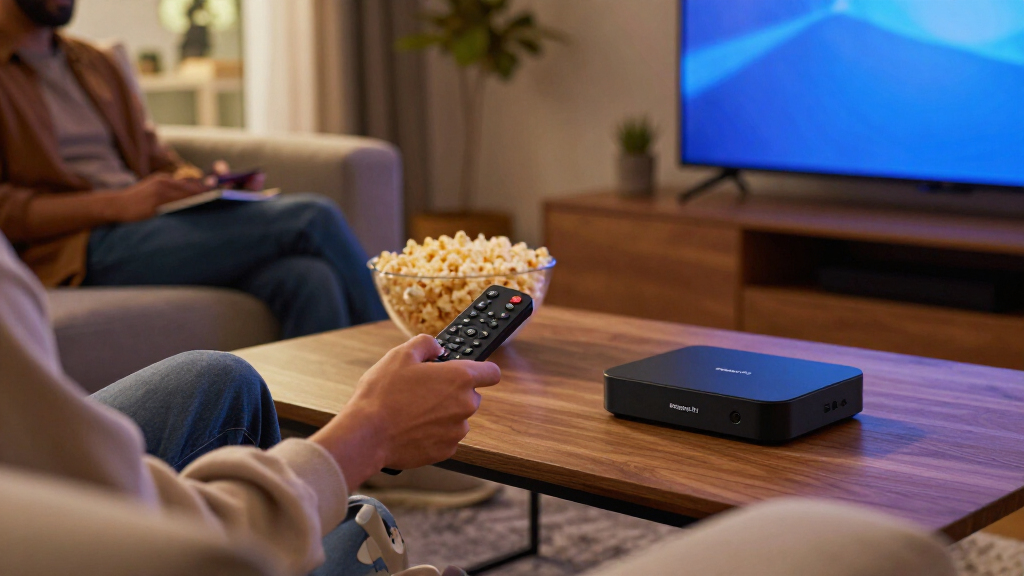

Amazon Fire TV streaming boxes and sticks cover nearly every budget and use case, but the lineup is confusingly similar on paper. After comparing all eight current options, the Amazon Fire TV Cube (3rd Gen) stands out as the best overall pick thanks to its hands-free Alexa, Wi-Fi 6E, and the fastest processor in the range. If you want most of that performance for less, the Fire TV Stick 4K Max (2nd Gen) is the strongest streaming-only value, while the Fire TV Stick 4K Plus hits a sweet spot for most living rooms. The main tradeoff you face is between raw speed and hands-free control (the Cubes) versus portability and price (the Sticks). Read on for the full breakdown, including which refurbished options are actually worth it.

Get everyday essentials delivered free with Prime
- Fast, free delivery on millions of items
- Prime Video, Amazon Music and more included
- Member-only deals all year
Key Takeaways
- The Fire TV Cube line split the pack: hands-free Alexa and Wi-Fi 6E separate the Cubes from every Stick, but only the Cube with Alexa Voice Remote Pro justifies its premium for power users.
- The gap between the Stick 4K Plus and Stick 4K Max (2nd Gen) is smaller than the naming suggests — the Max mainly wins on Wi-Fi 6E and gaming-adjacent performance, not everyday streaming smoothness.
- Refurbished options (the Like-New Cube and Like-New Stick 4K) are the smartest plays in the lineup if cosmetics don’t matter, matching new-model performance at a lower entry point.
- The Fire TV Stick HD is the only 1080p option here; anyone with a 4K TV should skip it entirely, as even the cheapest 4K-capable Stick outclasses it for future-proofing.
- The Stick 4K Select’s compromise — 4K streaming without Wi-Fi 6 — makes it the default pick for older routers, where newer Wi-Fi standards deliver no benefit anyway.
| Amazon Fire TV Cube (3rd Gen) 4K Streaming Media Player with Alexa and Wi-Fi 6E |  | Best Overall | Resolution: 4K Ultra HD up to 2160p at 60 fps | Processor: Octa-core (4x 2.2 GHz, 4x 2.0 GHz) | Storage: 16 GB | VIEW LATEST PRICE | See Our Full Breakdown |
| Amazon Fire TV Stick 4K Select with Alexa Voice Remote |  | Best Value 4K | Resolution: 2160p, 1080p, 720p up to 60 fps | Processor: Quad-core 1.7 GHz | Storage: 8 GB | VIEW LATEST PRICE | See Our Full Breakdown |
| Amazon Fire TV Stick HD with Alexa Voice Remote |  | Best for Secondary TVs | Resolution: Full HD (1080p) | Wi-Fi: Wi-Fi 6 | Power: TV-powered via included USB-C cable | VIEW LATEST PRICE | See Our Full Breakdown |
| Amazon Fire TV Stick 4K (Like-New Refurbished) with Wi-Fi 6 and Alexa Voice Remote |  | Best Smart Budget Pick | Condition: Refurbished; tested and certified like-new | Resolution: 4K Ultra HD | Wi-Fi: Wi-Fi 6 | VIEW LATEST PRICE | See Our Full Breakdown |
| Amazon Fire TV Cube (Like-New), 4K Streaming Media Player with Alexa and Wi-Fi 6E |  | Best Premium on a Budget | Condition: Refurbished; tested and certified like-new | Processor: Octa-core | Wi-Fi: Wi-Fi 6E | VIEW LATEST PRICE | See Our Full Breakdown |
| Amazon Fire TV Stick 4K Plus |  | Best Balance of Price and Performance | Maximum resolution: 2160p at up to 60 fps | Processor: Quad-core 1.7 GHz | Storage: 8 GB | VIEW LATEST PRICE | See Our Full Breakdown |
| Amazon Fire TV Stick 4K Max (2nd Gen) Streaming Device |  | Best Stick for Power Users | Maximum resolution: 2160p at up to 60 fps | Processor: Quad-core 2.0 GHz | Storage: 16 GB | VIEW LATEST PRICE | See Our Full Breakdown |
| Amazon Fire TV Cube (3rd Gen) with Alexa Voice Remote Pro |  | Best Premium Pick | Maximum resolution: 2160p at up to 60 fps | Processor: Octa-core (4 × 2.2 GHz + 4 × 2.0 GHz) | Storage: 16 GB | VIEW LATEST PRICE | See Our Full Breakdown |
| Amazon Fire TV streaming boxe | Wi-Fi | Processor | Storage | Audio |
|---|---|---|---|---|
| Amazon Fire TV Cube | Wi-Fi 6E tri-band; 802.11a/b/g/n/ac/ax | Octa-core (4x 2.2 GHz, 4x 2.0 GHz) | 16 GB | Dolby Atmos, 7.1 surround, HDMI pass-through |
| Amazon Fire TV Stick 4K Select | Dual-band MIMO, 802.11a/b/g/n/ac | Quad-core 1.7 GHz | 8 GB | — |
| Amazon Fire TV Stick HD with A | Wi-Fi 6 | — | — | — |
| Amazon Fire TV Stick 4K | Wi-Fi 6 | — | — | Dolby Atmos |
| Amazon Fire TV Cube | Wi-Fi 6E | Octa-core | — | Dolby Atmos |
| Amazon Fire TV Stick 4K Plus | Dual-band Wi-Fi 6 (2.4 GHz and 5 GHz) | Quad-core 1.7 GHz | 8 GB | Dolby Atmos, 7.1 surround, HDMI pass-through up to 5.1 |
| Amazon Fire TV Stick 4K Max | Wi-Fi 6E tri-band (2.4, 5, and 6 GHz) | Quad-core 2.0 GHz | 16 GB | — |
| Amazon Fire TV Cube | Wi-Fi 6E tri-band | Octa-core (4 × 2.2 GHz + 4 × 2.0 GHz) | 16 GB | Dolby Atmos, 7.1 surround, HDMI pass-through up to 5.1 |
More Details on Our Top Picks
Amazon Fire TV Cube (3rd Gen) 4K Streaming Media Player with Alexa and Wi-Fi 6E
The Fire TV Cube (3rd Gen) earns the top spot because it does things no stick in this lineup can. The HDMI input lets you route a cable box or console through the Cube and switch sources with your voice, which turns it into a genuine AV hub rather than just a streamer. Its octa-core processor makes app launches feel instant compared with the Fire TV Stick 4K Select, and the Ethernet port removes Wi-Fi as a variable entirely. Add Dolby Vision and Dolby Atmos support plus hands-free Alexa with far-field mics, and this is the most complete package here. The tradeoffs: it costs more, takes up shelf space, and Wi-Fi 6E only pays off if your router broadcasts on the 6 GHz band with WPA3.
Pros:- HDMI input lets you control cable boxes and consoles through Alexa
- Fast octa-core processor with 16 GB of storage
- Wired Ethernet option plus Wi-Fi 6E for reliable 4K streaming
- Hands-free Alexa with a physical microphone disconnect for privacy
Cons:- Wi-Fi 6E requires a compatible 6 GHz router with WPA3
- Bulkier and pricier than any stick option in this roundup
Best for: Home theater owners who want streaming, source switching, and voice control unified in one box
Not ideal for: Casual viewers with a simple 1080p TV — the extra horsepower and HDMI input go unused
- Resolution:4K Ultra HD up to 2160p at 60 fps
- Processor:Octa-core (4x 2.2 GHz, 4x 2.0 GHz)
- Storage:16 GB
- Wi-Fi:Wi-Fi 6E tri-band; 802.11a/b/g/n/ac/ax
- Ports:HDMI 2.1 in/out, USB-A 2.0, 10/100 Mbps Ethernet
- HDR formats:Dolby Vision, HDR10, HDR10+, HLG
- Audio:Dolby Atmos, 7.1 surround, HDMI pass-through
- Dimensions:3.38 x 3.38 x 2.99 in (86 x 86 x 77 mm)
Our verdict“Buy this if you want a streaming box that can run your entire entertainment setup, not just your apps.”
Amazon Fire TV Stick 4K Select with Alexa Voice Remote
This Stick 4K Select hits the sweet spot for most buyers: genuine 4K with HDR10+ and HLG, the full app library, and Alexa voice search at a mid-tier price. Compared with the Fire TV Stick HD, the jump to 4K and HDR is the whole point — if your TV supports it, this is the cheapest sensible way to use it. Against the Fire TV Cube (3rd Gen), you give up Dolby Vision, Dolby Atmos, wired Ethernet, and hands-free Alexa, but most living rooms won’t miss them. The quad-core chip is noticeably less snappy than the Cube’s octa-core, and the older Wi-Fi spec can struggle on congested networks where Wi-Fi 6 sticks stay smooth. Still, for a straightforward 4K upgrade, this pick makes the most sense for the money.
Pros:- 4K Ultra HD with HDR10+ and HLG at an accessible price
- Alexa remote handles search, playback, and smart home devices
- Cloud gaming via Xbox Game Pass without a console
- Huge app library including free ad-supported content
Cons:- No Dolby Vision or Dolby Atmos, unlike the Cube and Stick 4K refurb
- Older dual-band Wi-Fi 5 radio can lag on crowded networks
Best for: Buyers with a 4K HDR TV who want the core experience without paying for flagship extras
Not ideal for: Homeowners with busy networks or Dolby Vision TVs — Wi-Fi 5 and missing Dolby Vision cap the ceiling
- Resolution:2160p, 1080p, 720p up to 60 fps
- Processor:Quad-core 1.7 GHz
- Storage:8 GB
- Wi-Fi:Dual-band MIMO, 802.11a/b/g/n/ac
- HDR formats:HDR10, HDR10+, HLG
- Video codecs:H.265, H.264, VP9, AV1
- Bluetooth:Bluetooth 5.0 + LE
- Dimensions:3.9 x 1.2 x 0.6 in (99 x 30 x 14 mm)
Our verdict“The right pick if you want real 4K HDR streaming and nothing you won’t use.”
Amazon Fire TV Stick HD with Alexa Voice Remote
For bedrooms, guest rooms, and older 1080p sets, the Fire TV Stick HD is the sensible choice — paying for 4K hardware on a TV that can’t display it is wasted money. Unlike the Stick 4K Select, it caps out at Full HD, but it matches newer sticks on Wi-Fi 6, which actually matters more than resolution for avoiding buffering on busy networks. Two features stand out for its role: it draws power directly from the TV’s USB-C port, so there’s no wall adapter to hunt for, and Bluetooth headphone listening lets one person watch without disturbing the house. The tradeoff is real, though — plug this into a 4K TV later and every stream will be softened to 1080p.
Pros:- Wi-Fi 6 connectivity despite the budget positioning
- TV-powered USB-C design eliminates a wall outlet dependency
- Bluetooth headphone support for private listening
- Alexa remote controls TV, soundbar, and receiver functions
Cons:- Full HD ceiling looks soft on 4K panels
- Direct power fails if your TV lacks a suitable USB-C or USB port
Best for: Anyone outfitting a 1080p bedroom or guest TV, or travelers who want streaming in a pocket
Not ideal for: 4K TV owners — resolution is locked to Full HD with no upgrade path
- Resolution:Full HD (1080p)
- Wi-Fi:Wi-Fi 6
- Power:TV-powered via included USB-C cable
- Connectivity:HDMI, Bluetooth
- Remote:Alexa Voice Remote with TV, soundbar, and receiver controls
- Content:Popular streaming apps plus free ad-supported content
Our verdict“A smart buy for second screens — skip it for anything that might become your main TV.”
Amazon Fire TV Stick 4K (Like-New Refurbished) with Wi-Fi 6 and Alexa Voice Remote
This refurbished Stick 4K is the value play of the lineup. It carries the same limited warranty as a new unit, yet adds things the pricier Stick 4K Select leaves out: Dolby Vision, Dolby Atmos, and Wi-Fi 6. That combination is what makes it stand out — Wi-Fi 6 keeps streams stable when phones, laptops, and consoles share the router, and Dolby Vision matters if your TV favors that format over HDR10+. You won’t get the Cube’s HDMI input, Ethernet, or hands-free Alexa, and the remote lacks the premium feel of the Voice Remote Pro bundle. The honest tradeoff is cosmetic: expect a generic box rather than retail packaging, which matters if this is a gift and not at all if it’s for you.
Pros:- Dolby Vision, HDR10+, and Dolby Atmos in a stick format
- Wi-Fi 6 holds up on congested home networks
- Same warranty coverage as a brand-new device
- Remote includes TV power, volume, and preset app buttons
Cons:- No Ethernet option or HDMI input like the Fire TV Cube
- Generic Amazon-branded packaging signals its refurbished status
Best for: Value hunters who want flagship-tier formats and Wi-Fi 6 without the flagship price
Not ideal for: Gift buyers — refurbished units arrive in plain, generic packaging
- Condition:Refurbished; tested and certified like-new
- Resolution:4K Ultra HD
- Wi-Fi:Wi-Fi 6
- HDR formats:Dolby Vision, HDR10+
- Audio:Dolby Atmos
- Cloud gaming:Xbox Game Pass supported
- Warranty:Same limited warranty as new device
Our verdict“The smartest money-for-features ratio here, as long as a plain box doesn’t bother you.”
Amazon Fire TV Cube (Like-New), 4K Streaming Media Player with Alexa and Wi-Fi 6E
This refurbished Fire TV Cube is the entry ticket to Amazon’s flagship hardware at a reduced cost, with the same warranty as a new unit. Functionally it mirrors the new Fire TV Cube (3rd Gen): octa-core speed, Wi-Fi 6E, Dolby Vision, Dolby Atmos, and hands-free Alexa that can switch between streaming, cable, consoles, and even webcams. That last part is what separates it from every stick here — it’s a command center, not a dongle. Compared with the refurbished Stick 4K, you gain the HDMI input, faster processor, and far-field voice, at the cost of a box that occupies shelf space near your TV. The same caveat applies: generic packaging, so check the condition notes before gifting.
Pros:- Flagship octa-core performance and Wi-Fi 6E at a lower cost
- Hands-free Alexa with built-in microphones and speaker
- Controls TVs, soundbars, cable boxes, consoles, and webcams
- Full Dolby Vision, HDR, and Dolby Atmos support
Cons:- Refurbished stock arrives in non-retail packaging
- Wi-Fi 6E benefits require a compatible router to be felt
Best for: Buyers who want flagship Cube features — hands-free Alexa and device switching — for less
Not ideal for: Minimalists who want an invisible dongle behind the TV, or gifting occasions where packaging matters
- Condition:Refurbished; tested and certified like-new
- Processor:Octa-core
- Wi-Fi:Wi-Fi 6E
- Video:4K Ultra HD, Dolby Vision, HDR
- Audio:Dolby Atmos
- Voice:Alexa with built-in microphones and speaker
- Privacy:Microphone off button electronically disconnects mics
- Device control:TVs, soundbars, receivers, cable boxes, consoles, webcams
Our verdict“A refurbished Cube is the cheapest path to a true whole-room Alexa entertainment hub.”
Amazon Fire TV Stick 4K Plus
The Fire TV Stick 4K Plus sits in a smart middle ground: it delivers Dolby Vision, HDR10+, and Dolby Atmos at a level the standard Fire TV Stick HD simply can’t touch, while costing meaningfully less than the 4K Max. Its Wi-Fi 6 support keeps streams stable on modern routers, though buyers with older Wi-Fi 5 hardware won’t see the full benefit. Compared with the Fire TV Stick 4K Max (2nd Gen), the differences are real but modest — the Max adds a faster 2.0 GHz processor, 16 GB of storage, and Wi-Fi 6E, while the Plus makes do with a 1.7 GHz chip and 8 GB. That means heavier app libraries and cloud gaming run a touch smoother on the Max. For most households streaming movies and shows in 4K, this option covers the essentials without paying for headroom that goes unused.
Pros:- Full 4K Ultra HD with Dolby Vision, HDR10+, and Dolby Atmos at a mid-range price
- Wi-Fi 6 support keeps streaming smooth on modern dual-band routers
- Xbox cloud gaming support with a Game Pass subscription
- Alexa Voice Remote can control compatible TVs and soundbars
Cons:- 8 GB of storage fills quickly with apps and downloaded content
- 4K, Dolby Vision, and Wi-Fi 6 features all require compatible TVs and routers
- Streaming services require separate subscriptions
Best for: Buyers who want full 4K HDR streaming and Atmos sound at a mid-tier price, and who don’t hoard apps or games
Not ideal for: Households with a Wi-Fi 6E router and heavy app or cloud gaming habits — the 4K Max makes better use of that setup
- Maximum resolution:2160p at up to 60 fps
- Processor:Quad-core 1.7 GHz
- Storage:8 GB
- Wi-Fi:Dual-band Wi-Fi 6 (2.4 GHz and 5 GHz)
- Video formats:Dolby Vision, HDR10, HDR10+, HLG, AV1
- Audio:Dolby Atmos, 7.1 surround, HDMI pass-through up to 5.1
- Ports:HDMI 2.1 output, micro USB
Our verdict“This stick makes the most sense for viewers who want premium picture formats without paying Max-tier prices for extra speed and storage.”
Amazon Fire TV Stick 4K Max (2nd Gen) Streaming Device
The Fire TV Stick 4K Max (2nd Gen) is the fastest stick in this lineup, and the gaps show up where demanding buyers feel them: a 2.0 GHz quad-core processor loads apps faster than the 4K Plus, 16 GB of storage doubles the room for apps and downloads, and Wi-Fi 6E taps the less-crowded 6 GHz band when your router supports it. If you’ve invested in a Wi-Fi 6E router, this model is the only stick here that can actually use it — the 4K Plus tops out at Wi-Fi 6. Compared with the Fire TV Cube (3rd Gen), you give up hands-free Alexa and an Ethernet port, but you gain a hide-behind-the-TV form factor. The tradeoffs are honest ones: Wi-Fi 6E is useless without a compatible router, and the Max still can’t match the Cube’s octa-core muscle for the most demanding tasks.
Pros:- Wi-Fi 6E tri-band support for faster, less congested streaming
- 16 GB of storage — double the 4K Plus — for apps and games
- Fastest processor of any Fire TV stick in this roundup
- Full Dolby Vision, HDR10+, and Dolby Atmos support
Cons:- Wi-Fi 6E only works with a compatible router and WPA3 setup
- No Ethernet port, unlike the Fire TV Cube
- Cloud gaming and streaming services require separate subscriptions
Best for: Streamers with Wi-Fi 6E routers, large app libraries, or regular cloud gaming sessions on a 4K TV
Not ideal for: Anyone with a standard Wi-Fi 5 router or a small app collection — the cheaper 4K Plus delivers nearly the same experience for less
- Maximum resolution:2160p at up to 60 fps
- Processor:Quad-core 2.0 GHz
- Storage:16 GB
- Wi-Fi:Wi-Fi 6E tri-band (2.4, 5, and 6 GHz)
- Bluetooth:Bluetooth 5.2 + BLE
- Video formats:Dolby Vision, HDR10, HDR10+, HLG, AV1
- Ports:HDMI 2.1 output, micro USB
Our verdict“This pick is best for enthusiasts whose router and viewing habits can actually exploit its extra speed and storage.”
Amazon Fire TV Cube (3rd Gen) with Alexa Voice Remote Pro
The Fire TV Cube (3rd Gen) bundle is the most capable option here, and its advantages over both sticks are structural rather than incremental. An octa-core processor outmuscles the 4K Max’s quad-core chip, a built-in Ethernet port allows a wired connection neither stick can offer, and an HDMI input lets you route another device — a cable box, for example — through the Cube and control it by voice. Hands-free Alexa means no remote needed for basic commands, and the included Voice Remote Pro adds backlit buttons, two customizable shortcuts, and a remote-finder ring. The catch is size and cost: this is a 513 g set-top box that occupies shelf space and a power outlet, not something hidden behind the TV like a stick. Buyers who just stream shows in 4K will get the same picture from the cheaper 4K Plus.
Pros:- Hands-free Alexa voice control without picking up the remote
- Ethernet port for a rock-solid wired connection the sticks can’t match
- HDMI input lets you route and voice-control another source device
- Voice Remote Pro with backlit buttons, custom shortcuts, and a finder feature
Cons:- Bulky set-top box design requires shelf space and a nearby power outlet
- Wi-Fi 6E requires a compatible router with WPA3 encryption
- 4K viewing requires a compatible 4K TV and high-speed HDMI connection
Best for: Home theater owners who want hands-free Alexa, wired Ethernet, and HDMI input routing in one hub-style device
Not ideal for: Minimalists and budget buyers who only stream apps — a Fire TV Stick 4K Plus delivers the same picture formats at a fraction of the cost and clutter
- Maximum resolution:2160p at up to 60 fps
- Processor:Octa-core (4 × 2.2 GHz + 4 × 2.0 GHz)
- Storage:16 GB
- Memory:2 GB
- Wi-Fi:Wi-Fi 6E tri-band
- Ports:HDMI 2.1 in/out, USB-A 2.0, Ethernet (10/100 Mbps), IR extender
- Audio:Dolby Atmos, 7.1 surround, HDMI pass-through up to 5.1
Our verdict“This bundle makes the most sense for buyers building a voice-controlled entertainment hub rather than simply adding streaming apps to a TV.”

How We Picked
I evaluated each Fire TV device on four factors that actually change the viewing experience: video output and codec support (4K, HDR formats like Dolby Vision), wireless connectivity (Wi-Fi 5 versus 6 versus 6E, which affects buffering on busy home networks), processing speed and interface responsiveness, and remote and voice-control features, including whether hands-free Alexa is built in. Because these devices live inside Amazon’s ecosystem, I also weighed how well each one handles both Prime content and third-party apps like Netflix, Disney+, and YouTube without favoritism or lag.
The ranking logic is straightforward: the Cubes lead because they combine the fastest processors with hands-free voice control and Wi-Fi 6E, making them the most capable and most expensive options. The mid-tier Sticks (4K Max, 4K Plus, 4K Select) are ordered by connectivity and speed tiers, while refurbished variants of identical hardware sit right next to their new counterparts since performance is the same. The Stick HD lands last for 4K households, though it remains a legitimate choice for older TVs — a tradeoff I explain in its entry.
| Amazon Fire TV streaming boxe | Processor | Ports | Audio |
|---|---|---|---|
| Amazon Fire TV Cube | Octa-core (4x 2.2 GHz, 4x 2.0 GHz) | HDMI 2.1 in/out, USB-A 2.0, 10/100 Mbps Ethernet | Dolby Atmos, 7.1 surround, HDMI pass-through |
| Amazon Fire TV Stick 4K Select | Quad-core 1.7 GHz | — | — |
| Amazon Fire TV Stick HD with A | — | — | — |
| Amazon Fire TV Stick 4K | — | — | Dolby Atmos |
| Amazon Fire TV Cube | Octa-core | — | Dolby Atmos |
| Amazon Fire TV Stick 4K Plus | Quad-core 1.7 GHz | HDMI 2.1 output, micro USB | Dolby Atmos, 7.1 surround, HDMI pass-through up to 5.1 |
| Amazon Fire TV Stick 4K Max | Quad-core 2.0 GHz | HDMI 2.1 output, micro USB | — |
| Amazon Fire TV Cube | Octa-core (4 × 2.2 GHz + 4 × 2.0 GHz) | HDMI 2.1 in/out, USB-A 2.0, Ethernet (10/100 Mbps), IR extender | Dolby Atmos, 7.1 surround, HDMI pass-through up to 5.1 |
Factors to Consider When Choosing Amazon Fire TV Streaming Boxes
Before picking a specific Fire TV device, it helps to understand what actually separates these models and where buyers commonly overspend or underspend. These are the factors that shaped my ranking.Match the Device to Your TV, Not Your Budget Alone
The most common mistake I see is buying a 4K streaming device for a 1080p television, or the reverse — pairing a 1080p-only Stick HD with a 4K panel and losing picture quality you already paid for. Check your TV’s resolution and HDR support first: if your television handles Dolby Vision or HDR10+, choose a Fire TV device that supports those formats, because the stream quality difference is visible even to casual viewers. A mismatch in either direction wastes money. That said, buying slightly ahead of your current TV is reasonable if an upgrade is coming within a year or two, since Fire TV devices outlast most television purchase cycles.
Wi-Fi Standards Matter More Than You Think
The lineup spans Wi-Fi 5, Wi-Fi 6, and Wi-Fi 6E, and the difference shows up in real homes — especially apartments or households with a dozen connected devices competing for bandwidth. Wi-Fi 6E uses the less congested 6 GHz band, which is why the Cube and Stick 4K Max buffer less during peak evening hours in busy network environments. However, if your router is three or more years old and lacks Wi-Fi 6E, paying extra for a 6E-capable Fire TV device buys you nothing today. Either plan to upgrade your router alongside it, or save money with a Wi-Fi 6 or Wi-Fi 5 model and put the difference toward your internet plan instead.
Hands-Free Alexa: Convenience or Privacy Tradeoff?
Only the Cube models offer true hands-free Alexa — you can walk into the room and ask for a show without touching anything, and the Cube doubles as an extender for other Echo devices. For many buyers this is the single feature that justifies the Cube premium, particularly in living rooms used for music, smart-home control, and ambient questions throughout the day. But it means a device with an always-listening microphone sits under your TV, which some households prefer to avoid. There is a physical mic button to disconnect it, but if always-on voice is something you neither want nor would use, a Stick with a voice remote gives you 90% of the functionality at a fraction of the cost.
Are Refurbished Fire TV Devices Worth It?
Two of the eight options here are refurbished, and in this category refurbished units are a genuinely low-risk purchase — streaming sticks have no moving parts, batteries are replaceable, and the failure points are minimal. Amazon’s Like-New units carry the same warranty as new devices, and functionally you will never notice the difference once it’s hidden behind the TV. The honest caveat: refurbishment savings only make sense when the discount is meaningful, so compare against the new-model price on the day you buy. If the gap is small, buy new for peace of mind; if it’s substantial, the refurbished Cube or Stick 4K are among the smartest purchases in this entire roundup.
Remote Quality Is a Real Differentiator
The remote is the part of the system you touch every single day, and Amazon tiers them deliberately: the basic Alexa Voice Remote lacks TV power and volume buttons, mid-tier remotes add those plus app shortcuts, and the Alexa Voice Remote Pro adds a remote-finder chime and backlit buttons. The remote-finder feature sounds gimmicky until the remote has disappeared between couch cushions for the third time — in a busy household it’s worth real money. If you’re choosing between two similarly priced sticks, the better remote should break the tie. Also note that recent-channel buttons can be programmed, so don’t over-weight pre-printed shortcuts.
Don’t Overpay for Specs You Won’t Use
The fastest processor in the lineup matters for two groups: heavy gamers using cloud gaming services, and households that fling between apps constantly and hate loading spinners. For everyone else — people who open Netflix, watch a show, and turn the TV off — the mid-tier sticks feel identical in day-to-day use. Paying Cube money for a bedroom TV that gets an hour of use per week is a common overspend. My advice: put your budget toward the main living-room TV and use cheaper sticks or refurbished units for secondary rooms, rather than matching your best device across every television in the house.
Frequently Asked Questions
Is the Fire TV Cube worth it over a Fire TV Stick if I already have an Echo speaker?
If you already own an Echo device in the same room, the Cube’s hands-free Alexa advantage shrinks considerably, since your Echo can already answer questions and control playback. What still separates the Cube is processing speed — apps open faster and navigation is snappier than on any Stick — plus Wi-Fi 6E and an HDMI passthrough-style setup with an Ethernet adapter included. Those matter for heavy users and large libraries, but casual streamers with an Echo nearby are honestly better served by the Stick 4K Max and the money saved. The Cube makes the most sense as your only Alexa device in the room, replacing both a streaming stick and a smart speaker.
What’s the actual difference between the Fire TV Stick 4K, 4K Plus, 4K Select, and 4K Max?
All four stream 4K with HDR support, so the differences come down to processor tier, Wi-Fi standard, and the remote in the box. The Select is the entry point with older Wi-Fi; the standard 4K adds Wi-Fi 6; the 4K Plus gets a faster processor and a better remote; and the 4K Max (2nd Gen) sits at the top with Wi-Fi 6E and the quickest Stick performance. In everyday Netflix-and-YouTube use, most people would struggle to tell the Plus from the Max apart — the Max pulls ahead mainly with cloud gaming, heavy multitasking, and congested networks. My rule of thumb: buy the Max if your router supports 6E, otherwise the Plus or standard 4K delivers nearly identical viewing.
Should I buy a refurbished (Like-New) Fire TV device or pay more for new?
For streaming sticks specifically, refurbished is one of the lowest-risk purchases in consumer electronics: no moving parts, no screens to degrade, and minimal wear points beyond the remote. Amazon’s Like-New units are tested, reset, and covered by the same warranty as new devices, and once the stick is plugged in behind your TV, nobody sees the housing anyway. The only real question is the size of the discount on the day you buy — if the refurbished price is meaningfully below new, take it without hesitation. If the gap has narrowed to a few dollars, new is the better buy simply for the unopened-box experience and resale value.
Do any of these Fire TV devices let me skip the ads and Amazon promotions on the home screen?
Every Fire TV device shares the same software, so the home-screen experience — including banner ads and promoted content rows — is identical across the entire lineup, from the Stick HD to the Cube. Paying more buys you speed and connectivity, not a cleaner interface, so don’t upgrade expecting a less commercial experience. What you can do is adjust settings to limit autoplaying video and personalized ads, and pinning your most-used apps to the top row speeds up daily navigation considerably. Buyers who find the Fire TV interface intrusive often pair the device with a different launcher habit or consider that a fair price for the hardware value on offer.
Can I use a Fire TV device on a TV that already has built-in smart apps?
Yes, and it’s one of the most common reasons people buy one — aging smart TVs stop receiving app updates long before the panel itself dies, and a Fire TV stick effectively refreshes the entire app ecosystem for the cost of a takeout dinner. Even on newer TVs, many people prefer Fire TV because the interface is faster than sluggish built-in software and stays consistent across every television in the house. The main thing to check is a free HDMI port and whether your TV supports HDMI-CEC, which lets the Fire TV remote control power and volume automatically. Just avoid buying a more powerful device than the TV can display — a 4K Max on a 1080p set wastes its capabilities.
Conclusion
After comparing all eight devices, my recommendations break down cleanly by buyer type. For best overall, the Fire TV Cube (3rd Gen) wins with the fastest processor, Wi-Fi 6E, and hands-free Alexa in a single box. The Cube with Alexa Voice Remote Pro is my best premium pick — the backlit, finder-equipped remote is the upgrade power users will appreciate daily. Best value goes to the refurbished Fire TV Cube (Like-New) for Cube-level performance at a lower entry point, with the Stick 4K Select as the value pick if you prefer new hardware and have an older router.
For beginners and secondary TVs, the Fire TV Stick HD is the simplest, cheapest way in — provided your TV is 1080p. The Stick 4K Plus is the best fit for most living rooms, striking the balance between speed, price, and features, while the Stick 4K Max (2nd Gen) suits specific needs: cloud gaming, Wi-Fi 6E networks, and maximum Stick performance. Finally, the refurbished Stick 4K is the smart buy for outfitting a bedroom or guest TV cheaply without giving up 4K. Whatever your budget, matching the device to your TV, router, and viewing habits matters more than buying the most expensive box on the shelf.
Halloween Picks
halloween
As an affiliate, we earn on qualifying purchases.