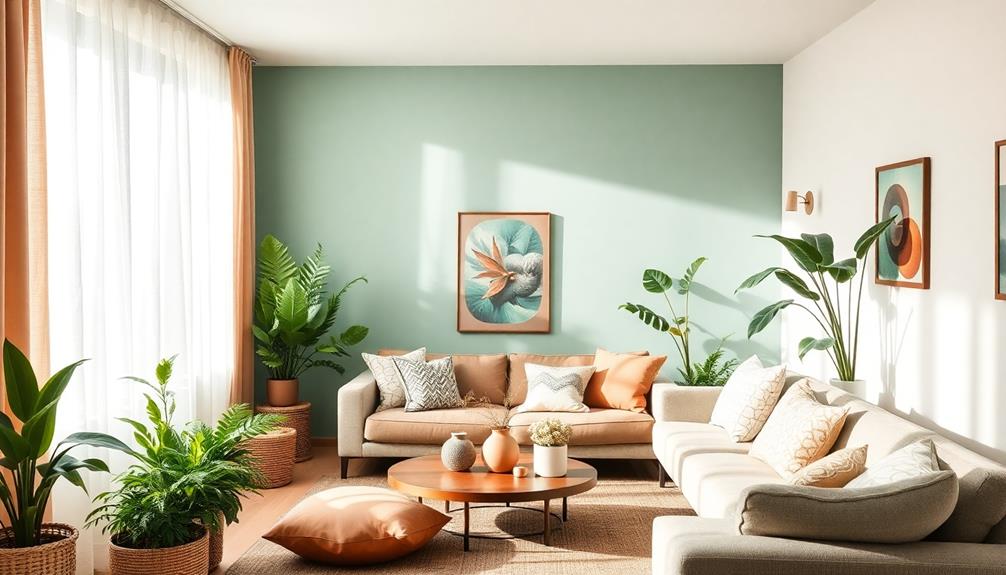
To design an accessible home for all ages, use contrasting colors to highlight features like switches, furniture edges, and stairs, making them easier to see. Add tactile markers such as textured strips on stair edges and door handles to guide touch and navigation. Combining visual contrast with tactile cues creates a safe, welcoming space suited for everyone. Keep exploring more ways to blend style and functionality for a truly inclusive home environment.
Key Takeaways
- Incorporate high-contrast colors for key features to improve visibility for all ages and abilities.
- Use tactile markers on switches, door handles, and stair edges to enhance physical navigation.
- Blend visual contrast and tactile cues seamlessly into decor to maintain style and accessibility.
- Choose textured finishes and raised patterns for controls and fixtures to aid tactile identification.
- Make small design adjustments that promote independence, safety, and comfort for everyone across age groups.
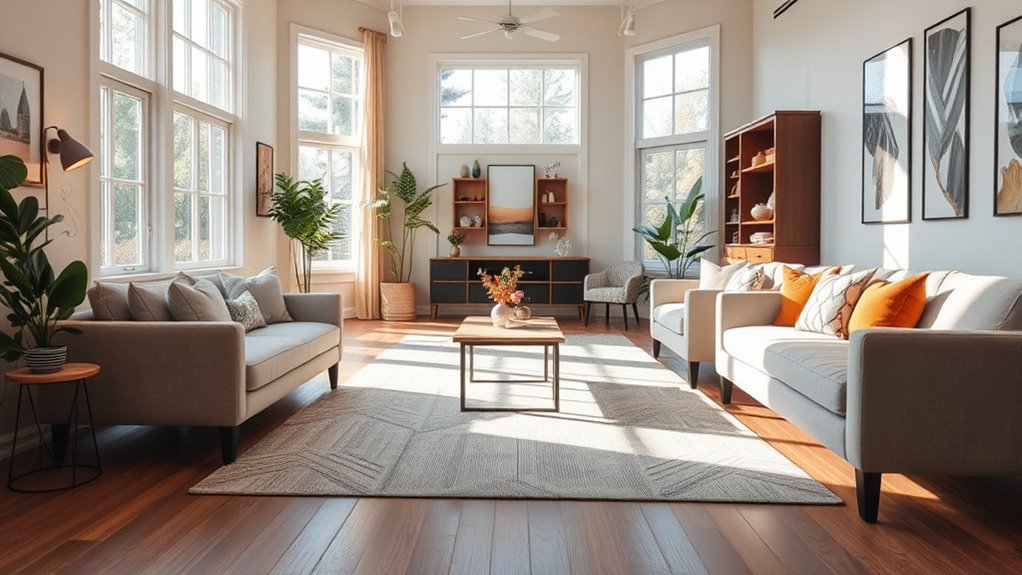
Have you ever considered how your designs can be inclusive to everyone? When decorating your home, it’s essential to think beyond aesthetics and focus on creating spaces that accommodate all ages and abilities. One of the most effective ways to do this is by paying attention to visual contrast. By choosing colors that sharply differentiate from each other, you make important features stand out. For example, placing a white vase on a dark-colored table ensures it’s easily noticeable, reducing the risk of accidents or missed details. Visual contrast helps individuals with visual impairments or age-related vision decline navigate spaces more comfortably. It also adds a dynamic touch to your decor, making your home both beautiful and functional.
Using high contrast in decor enhances safety and style for all ages and abilities.
Another critical feature to incorporate is tactile markers. These are physical cues that provide feedback through touch, which is especially helpful for people with visual impairments or those who might have difficulty identifying objects or navigating unfamiliar areas. You can integrate tactile markers into various elements in your home, such as textured strips on stair edges or around door handles. These markers serve as intuitive guides, alerting you to changes in floor level or the location of essential fixtures. Tactile markers not only enhance safety but also promote independence, allowing everyone to move freely without constant assistance. When combined with visual contrast, tactile markers create a multi-sensory environment that supports different needs seamlessly. Additionally, understanding how to incorporate self-watering plant pots into your home can add both beauty and ease of maintenance, especially for those with limited mobility or busy schedules.
Designing with accessibility in mind doesn’t mean sacrificing style. You can choose contrasting colors that complement your overall decor scheme, adding visual interest without compromising clarity. For instance, if you prefer soft pastel tones, consider adding darker accents on key elements like switches or furniture edges. Likewise, opt for textured finishes or raised patterns on items such as cabinet handles or control panels to serve as tactile markers. These small but impactful details make your home more inclusive, inviting, and safe for all residents and visitors. Remember, thoughtful design choices like these foster independence, reduce potential hazards, and show that you value everyone’s comfort and safety.
Ultimately, integrating visual contrast and tactile markers into your home decor is about creating a space that’s intuitive, accessible, and welcoming. Small adjustments can make a significant difference in how comfortably people of all ages and abilities experience your home. As you plan your decorating projects, keep these principles in mind, and you’ll craft a living environment that truly cares for everyone who enters. Your efforts will result in a more functional, beautiful, and inclusive home that celebrates diversity and promotes well-being.

Leviton 15 Amp, 120/277 Volt, Decora Rocker Single-Pole AC Quiet Switch, Residential Grade, Grounding, 5601-2T, Light Almond
- Dust-Resistant Switch Frame: Prevents dust buildup and rocker binding
- Compatible Terminal Screws: Accepts up to No. 12 AWG wires
- Quickwire Push-In Terminals: Accepts No. 14 AWG solid copper wire
As an affiliate, we earn on qualifying purchases.
As an affiliate, we earn on qualifying purchases.
Frequently Asked Questions
How Can I Incorporate Technology for Accessibility in Home Decor?
You can incorporate technology for accessibility by installing a smart home system that allows you to control lighting, temperature, and appliances with voice control. This makes it easier to manage your home, especially for those with mobility or vision challenges. Opt for devices that are compatible with voice assistants like Alexa or Google Home, ensuring seamless integration and convenience for everyone in your household.
What Are Budget-Friendly Accessibility Modifications for Existing Furniture?
Think of your home as a canvas, ready for your creative touch. Budget-friendly accessibility modifications for existing furniture are like adding vibrant strokes. You can make DIY adaptations, like attaching non-slip pads to prevent slips or adding grab bars with simple brackets. Swap out knobs for lever handles, or use foam grips for easier use. These small changes transform your space into an inclusive haven without breaking the bank.
How Do Colors Affect Accessibility and Mood in Home Design?
Colors greatly influence accessibility and mood in your home. Using high color contrast guarantees clarity for those with visual impairments, making spaces easier to navigate. Additionally, consider color psychology: warm tones like reds and yellows boost energy and comfort, while cool shades like blues and greens promote calmness. By thoughtfully choosing your color palette, you create an inviting environment that’s both accessible and emotionally supportive for everyone.
What Are Seasonal or Temporary Accessibility Solutions?
Think of seasonal or temporary accessibility solutions as the Swiss Army knife of home design. You can easily add temporary ramps outside your home or portable grab bars inside, offering flexibility for visitors or changes in mobility needs. These solutions are perfect for short-term use, renovations, or seasonal adjustments, ensuring everyone feels safe and comfortable without permanent alterations. They’re your quick fix to maintaining accessibility all year round.
How Can I Personalize Accessible Home Decor for Different Disabilities?
You can personalize accessible home decor by choosing customizable furniture that suits specific needs and preferences. Incorporate sensory-friendly decor, like soft lighting, textured fabrics, and calming colors, to create a comfortable environment for various disabilities. Adjust furniture heights, add non-slip mats, or use visual cues to enhance usability. Tailoring these elements guarantees your space feels welcoming and functional for everyone, regardless of their individual accessibility requirements.

Kwikset Casey Passage Door Lever, Non-Locking Handle for Interior Hall and Closet Doors, Reversible for Easy Install, Featuring Microban Protection in Matte Black
- Type: Non-locking passage handle
- Design: Never sag lever with dual springs
- Installation: Easy DIY installation, reversible handle
As an affiliate, we earn on qualifying purchases.
As an affiliate, we earn on qualifying purchases.
Conclusion
By prioritizing accessibility in your home decor, you create a welcoming space for everyone. For instance, imagine a family with an elderly member who benefits from wider doorways and lever handles, making daily tasks easier. Incorporating thoughtful designs not only enhances safety but also fosters inclusivity. Remember, small adjustments—like non-slip rugs or adjustable lighting—can make a big difference, ensuring your home remains functional and beautiful for all ages and abilities.
As an affiliate, we earn on qualifying purchases.

Fielda 8/10/12 Inch Self Watering Pots for Indoor/Outdoor Plants
- Self-Watering with Water Level Indicator: Automatic water draw and hydration monitoring
- Removable Tray and Drainage Holes: Promotes healthy roots and easy maintenance
- Durable High-Temperature Plastic: Resistant to sun, rain, and humidity
As an affiliate, we earn on qualifying purchases.
As an affiliate, we earn on qualifying purchases.