

Cyber Monday smart home deals can make a handful of connected devices look like an easy upgrade, but the real choice is whether to buy a low-cost starter bundle or spend more on a premium ecosystem. The starter route typically pairs a smart speaker or hub with a few plugs, bulbs, or sensors. A premium bundle may add a more capable hub, cameras, a doorbell, or devices designed to work together. Exact features vary by brand and sale, so check the product details before buying.

Get everyday essentials delivered free with Prime
- Fast, free delivery on millions of items
- Prime Video, Amazon Music and more included
- Member-only deals all year

Linkind Matter Smart Plug, 4-Pack
- ✔ Pack size: 4 plugs
- ✔ Plug type: Type A
- ✔ Maximum capacity: 15 A; 1800 W
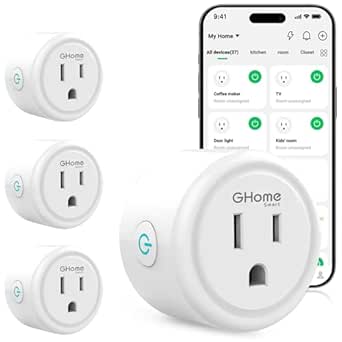
GHome Smart Wi-Fi Plug with Alexa and Google Home Compatibility, 4-Pack
- ✔ Quantity: 4 plugs
- ✔ Connectivity: Wi-Fi with Bluetooth setup
- ✔ Wi-Fi requirement: 2.4 GHz

Echo Show 5 (Newest Model) – Smart Display with Enhanced Bass, Charcoal
- ✔ Display: 5.5-inch touchscreen
- ✔ Camera: 2 MP with built-in shutter
- ✔ Speaker: 1.75-inch full-range
The budget bundle suits people who want to try voice control, schedules, and simple lighting without committing much. The premium system makes more sense for households that want devices from several categories to coordinate and plan to add more over time. The key tradeoff is upfront savings against compatibility and flexibility: a cheaper deal can be good value, but only if its devices work with the phone, platform, and other products you already use.
At a Glance
| Criteria | Budget Smart Home Starter Bundle | Premium Smart Home Ecosystem Bundle | Winner |
|---|---|---|---|
| Upfront cost | Usually lower; good for trying a few devices | Usually higher, even with a sale discount | A |
| Setup and learning curve | Often simple, especially when sold as a matched kit | More decisions and configuration, particularly across device types | A |
| Platform compatibility | Can be limited by the included hub and supported platforms | Often broader, though support still varies by model and standard | B |
| Automation depth | Covers schedules, voice commands, and basic routines | Can coordinate more device types and household routines | B |
| Device range | Usually a small set of plugs, bulbs, or sensors | More likely to include hubs, cameras, locks, or a doorbell | B |
| Privacy and security controls | Features depend on the brand; fewer device categories may mean fewer settings to manage | May offer more controls; check recording, account, and network settings | Depends |
| Expansion value | Good when the starter devices fit your needs and can be reused later | Better for planned growth if future devices stay compatible | Depends |
Linkind Matter Smart Plug, 4-Pack
For a Cyber Monday upgrade that can spread across several rooms, the Linkind four-pack is our most versatile choice. It supports Apple Home, Alexa, Google Home, SmartThings, and the AiDot app, giving it a wider ecosystem reach than the GHome pack, which focuses on Alexa and Google Assistant. Matter’s local-network communication is also useful in homes where internet interruptions should not automatically make every connected appliance unreachable.That breadth only pays off if the home has the required pieces in place. For the major smart home platforms, Linkind requires a compatible Matter hub, plus a 2.4 GHz Wi-Fi network and IPv6. If those requirements are unfamiliar, GHome is the more straightforward hub-free option, though its assistant connection still follows app setup. The Linkind plugs are rated for 15 A and up to 1800 W, higher than GHome’s listed 1200 W maximum; buyers should still check an appliance’s load before connecting it.Scheduling, timers, remote access, and voice commands make this pack suitable for routine automations such as switching lamps on at set times. Its short-circuit and overload protection and compact Type A format add practical reassurance, while FCC and ETL certifications are listed in the supplied specifications. Compared with the Echo Show 5, this is a behind-the-scenes choice: it automates compatible appliances but does not provide a screen, camera, or room audio. Choose it when platform flexibility matters more than a visible control point.
Pros:
- Supports Apple Home, Alexa, Google Home, SmartThings, and AiDot.
- Matter local-network communication can keep supported control available during internet outages.
- Four plugs include schedules, timers, remote access, and voice control.
- Listed capacity is 1800 W, with short-circuit and overload protection.
Cons:
- Requires a compatible Matter hub for setup with the major platforms.
- Needs 2.4 GHz Wi-Fi and IPv6 support.
Best for: Households with a compatible Matter hub that want to automate several appliances across Apple Home, SmartThings, Alexa, or Google Home.
Not ideal for: Shoppers without a Matter hub, or anyone whose router does not support IPv6 or 2.4 GHz Wi-Fi.
Bottom line: We recommend Linkind for multi-platform homes that already meet its hub and network requirements and want a flexible four-plug foundation.
“We recommend Linkind for multi-platform homes that already meet its hub and network requirements and want a flexible four-plug foundation.”
GHome Smart Wi-Fi Plug with Alexa and Google Home Compatibility, 4-Pack
When the goal is simple appliance automation without buying a separate hub, the GHome four-pack is the more approachable plug choice. It works with Alexa and Google Assistant after setup through the GHome app, and it also supports Smart Life and Tuya. The bundle’s scheduling, timers, grouping, and family sharing can help several household members control lamps or other compatible appliances without navigating separate controls for every plug.Its main advantage over Linkind is the no-hub requirement; its main compromise is narrower platform coverage. GHome relies on a 2.4 GHz Wi-Fi network and the plugs need to be connected in the app before voice assistants can control them. Unlike Linkind, it does not list Matter or Apple Home support, and it does not offer the same stated local-control benefit during internet outages. For an Alexa or Google household with stable Wi-Fi, that may be a reasonable simplification. For a mixed ecosystem or a home that prioritizes local operation, Linkind is the stronger fit.The listed maximum is 1200 W, below Linkind’s 1800 W, so shoppers should confirm that a device’s load is within the plug’s stated limit. The compact dimensions and 120 V operating voltage suit ordinary indoor appliance control, while ETL and FCC certifications are listed. Compared with the Echo Show 5, GHome is about automating existing devices rather than adding a shared screen or camera to a room. Pick this pack when four app-controlled outlets are the goal and the ecosystem limitations match your household.
Pros:
- Does not require a separate hub.
- Supports Alexa and Google Assistant after app setup.
- Scheduling, timers, grouping, and family sharing support everyday routines.
- Works with GHome, Smart Life, and Tuya apps.
Cons:
- Requires 2.4 GHz Wi-Fi and app configuration before voice assistant use.
- Listed maximum is 1200 W, lower than Linkind’s 1800 W.
- Does not list Matter or Apple Home compatibility.
Best for: Alexa or Google Assistant households seeking a four-plug Wi-Fi setup without a separate hub.
Not ideal for: Apple Home or Matter users, buyers who want local control during internet outages, or those needing capacity above 1200 W.
Bottom line: We would choose GHome for straightforward Alexa or Google appliance automation when hub-free setup matters more than broader ecosystem support.
“We would choose GHome for straightforward Alexa or Google appliance automation when hub-free setup matters more than broader ecosystem support.”
Echo Show 5 (Newest Model) – Smart Display with Enhanced Bass, Charcoal
The Echo Show 5 is the pick for buyers who want smart home controls to be visible and easy to reach from a bedside table, kitchen counter, or desk. Its 5.5-inch touchscreen can show information at a glance and gives Alexa users a visual interface for compatible devices. Video calls and photo viewing make it more of a small household display than a simple voice assistant. The built-in camera has a physical shutter, alongside a microphone-off button, so privacy controls are easy to understand.Against the two plug packs, this is a different kind of Cyber Monday buy: it does not add four independently controlled outlets, but it creates a convenient Alexa control point and adds a speaker and camera. The Linkind plugs are more compelling for shoppers seeking cross-platform automation; GHome better fits those who want to control multiple appliances without adding a display. The Echo Show 5 makes most sense when the screen itself will be used regularly, not simply as a way to turn a lamp on and off.The newer model’s speaker is described as offering deeper bass and clearer vocals, but its 1.75-inch full-range speaker remains small for filling a larger room or playing music loudly. Bluetooth features also have limits, including no hands-free support for Mac devices and restrictions with some speakers. Its Alexa integration is convenient for households already using Amazon’s ecosystem, though that focus makes it less flexible than Linkind across platforms. Recycled polyester fabric and recycled aluminum are useful material choices, but buyers should also account for the space and power needs of a countertop display.
Pros:
- 5.5-inch touchscreen gives Alexa smart home controls a visible interface.
- Camera includes a physical privacy shutter, with a microphone-off button.
- Speaker is described as having enhanced bass and clearer vocals.
- Uses recycled polyester fabric and recycled aluminum.
Cons:
- Alexa-centered, so it does not match Linkind’s broad multi-platform plug support.
- Small speaker may not suit larger rooms or loud music.
- Bluetooth support has limitations, including no hands-free support for Mac devices.
Best for: Alexa households that want a compact screen for smart home controls, glanceable information, photos, or video calls.
Not ideal for: Shoppers focused on controlling multiple appliances, those who need broad ecosystem flexibility, or anyone expecting room-filling audio.
Bottom line: We recommend the Echo Show 5 when a compact Alexa screen and camera add more value to your routine than another set of smart plugs.
“We recommend the Echo Show 5 when a compact Alexa screen and camera add more value to your routine than another set of smart plugs.”
As an Amazon Associate we earn from qualifying purchases.
Key Differences
The most immediate difference is how much system you are buying. A starter bundle is built around a few visible conveniences: turn lamps on by voice, set a timer, or schedule a plug. That is enough for many homes. A premium ecosystem can connect more parts of daily life, such as lighting, entry alerts, and camera notifications, but the extra capability only matters when you will use it and when the devices actually cooperate.
Compatibility is the main risk behind a tempting Cyber Monday price. Smart home products may support different assistants, apps, hubs, and connection standards. A low-priced bulb can become a poor deal if it requires an extra hub or cannot join routines with the speaker you already own. The premium choice often provides a clearer path across product categories, but its brand advantage is not automatic: check each model’s supported platforms and whether key features require a subscription.
For a first purchase, the budget bundle is usually the more sensible value because it limits both spending and setup. For a household building toward security and whole-home automation, the premium system can justify its higher price through coordination and expansion. Buying a larger bundle just because the discount is steep is rarely a saving if half the devices will sit unused.
Detailed Comparison
Upfront cost (Budget Smart Home Starter Bundle wins — major)
The Budget Smart Home Starter Bundle wins by asking for less money and usually covering a few common tasks. This is a major difference for a first-time buyer: it lowers the cost of learning whether smart plugs or bulbs fit everyday routines. The Premium Smart Home Ecosystem Bundle may be discounted, but the larger purchase still costs more and can include devices you do not need.Setup and learning curve (Budget Smart Home Starter Bundle wins — moderate)
The starter bundle is generally easier to get running because it contains fewer devices and often uses one app or hub. The gap is moderate: even simple kits can involve account linking and Wi-Fi setup, while premium bundles add more configuration and choices. Choose the starter option if you want a quick, small project; choose premium if you are comfortable setting up a larger system.The premium ecosystem wins when it supports the platforms and connection standards your household uses, since its broader range gives more ways to combine devices. The difference can be major if you plan to mix brands. Neither bundle is automatically universal, so confirm compatibility with your existing speaker, phone, router, and hub before checkout.
The premium bundle usually supports more involved routines across device types, such as tying a door sensor to lights or an alert. That is a moderate-to-major practical gain for a household that will build routines; for someone who only wants scheduled lights, the starter bundle is sufficient. A more capable system adds little value if you will use only basic commands.
The premium option is more likely to cover several categories, potentially including cameras, locks, or a doorbell alongside lighting and plugs. This is a moderate advantage for buyers who want one coordinated setup. The starter bundle’s smaller range is a benefit when you only need a few devices and want to avoid paying for extras.
Privacy and security controls (moderate difference)
There is no reliable winner based on bundle tier alone. A premium camera system may provide more settings, but it can also collect more sensitive data; a starter kit with fewer device types can be simpler to manage. The difference is moderate and depends on the products. Review account security, recording options, data storage, update support, and any subscription terms for the specific models.Expansion value (moderate difference)
The premium ecosystem wins if its devices remain compatible with products you expect to add, since a capable hub and shared routines can reduce friction later. The difference is moderate, not guaranteed: ecosystems change, and brand-specific devices can limit future choice. The starter kit can be better value when its devices are reusable with your preferred platform and you have no broader plan.Budget Smart Home Starter Bundle: Pros and Cons
Pros:
- Lower entry cost for trying smart home routines
- Usually fewer devices to set up and manage
- Good fit for basic lighting, scheduling, and voice control
Cons:
- May offer fewer device categories and automation options
- Compatibility can be narrow or require an additional hub
- A cheap bundle can become costly if its devices cannot join the setup you want
Pros:
- More likely to coordinate devices across several household needs
- Often provides a clearer route to expand within a supported ecosystem
- Can justify its price for users who will use advanced routines
Cons:
- Higher initial spend, including during a sale
- More setup and configuration decisions
- Some features may depend on subscriptions or specific platform support
Who Should Choose What
Choose Budget Smart Home Starter Bundle if:
- You are buying your first smart home devices and want to test basic routines on a modest budget.
- Your main goal is scheduled lighting, voice control, or switching a lamp or appliance remotely.
- You already have a preferred assistant or platform and the listed devices explicitly support it.
Choose Premium Smart Home Ecosystem Bundle if:
- You already use connected devices and want cameras, sensors, lighting, or entry devices to work together.
- You expect to expand the system and have confirmed the hub and devices support your preferred platform.
- You will use the advanced routines enough to make the higher upfront cost worthwhile.
Skip both if: Skip both bundles if the devices do not support your existing platform, require subscriptions you do not want, or include categories you will not use; buy compatible devices individually instead.
Value for Money
The starter bundle is the better value for most first-time buyers. Its lower cost buys a practical trial of smart lighting, plugs, or voice control without asking you to commit to an entire household system. It is only a bargain if the devices work with your existing platform and can remain useful if you expand later.
Pay more for the premium ecosystem when you have a specific plan for its extra device categories or automation features. Before buying, compare the sale price with the cost of the devices you would actually use, check for required hubs and subscriptions, and confirm compatibility model by model. If the added features will go unused, the discount does not make the premium bundle better value.
Final Verdict
For most shoppers exploring smart home devices this Cyber Monday, choose the Budget Smart Home Starter Bundle. It covers the common first steps at lower cost, with less setup and less risk of buying features you will not use. Choose the Premium Smart Home Ecosystem Bundle if you already know you want a coordinated system across multiple device categories and have verified platform support for every key device. The deciding factor is your plan for the next year: basic convenience favors the starter kit; active expansion and cross-device routines can justify premium pricing.
Frequently Asked Questions
Are smart home bundles worth buying on Cyber Monday?
They can be, if the bundle includes devices you would buy anyway and those devices work with your platform. Compare the deal with the individual prices, and account for any required hub or subscription before treating the discount as savings.
Should I choose one smart home brand or mix brands?
A single ecosystem can make setup and routines simpler, while mixing brands can offer more choice. Either way, confirm that each model supports the assistant, hub, and connection standard you plan to use; brand names alone do not guarantee compatibility.
Is a premium smart home system worth the extra cost?
It is worth paying more when you will use its wider device range, shared routines, or expansion path. For scheduled lights and a few voice commands, a starter bundle is usually enough.
What should I check before buying a smart home device?
Check supported platforms, whether a separate hub is needed, subscription requirements, privacy and recording controls, and the product’s update support. For a bundle, verify the model number of every included device.