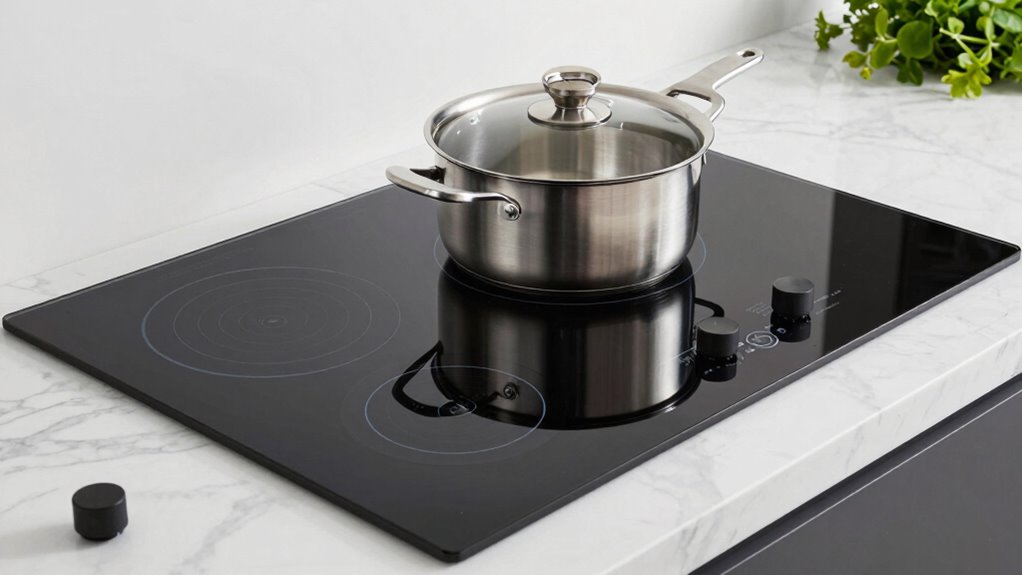
Induction cooking works by using electromagnetic fields to transfer energy directly to compatible cookware, creating heat instantly in the pot or pan. To use it effectively, you need cookware made of ferromagnetic metals like cast iron or some stainless steel, with flat bottoms for even heating. It heats faster, safer, and more efficiently than traditional methods. If you’re curious about choosing the right cookware and how to operate it properly, keep exploring for more tips.

Get everyday essentials delivered free with Prime
- Fast, free delivery on millions of items
- Prime Video, Amazon Music and more included
- Member-only deals all year
Key Takeaways
- Induction cooking uses electromagnetic fields to directly heat compatible cookware, providing fast and precise temperature control.
- Compatible cookware must have a magnetic base, such as cast iron or certain stainless steel, verified with a magnet test.
- Proper placement and flat-bottomed pots ensure even heating, efficiency, and safe operation on induction cooktops.
- The cooktop remains cool, heats only when suitable cookware is present, and often includes safety features like automatic shut-off.
- Regular cleaning and correct cookware use optimize performance, safety, and extend the lifespan of your induction stove.
induction compatible cookware set
As an affiliate, we earn on qualifying purchases.
As an affiliate, we earn on qualifying purchases.
What Is Induction Cooking and How Does It Work?

Have you ever wondered how induction cooking heats your pots so quickly and efficiently? It works through electromagnetic fields that directly transfer energy to compatible cookware. When you turn on the induction cooktop, an electric current creates a magnetic field beneath the surface. This field induces electric currents in the cookware, which then heats up rapidly. Because the heat is generated directly in the pot, induction cooking offers excellent induction safety—surfaces stay cooler, reducing burn risks. Not all cookware materials are suitable; magnetic metals like cast iron and certain stainless steels are necessary, while aluminum or glass won’t work unless they have a magnetic layer. This targeted heating makes induction more precise and safer, giving you quick control over your cooking process. Understanding electromagnetic fields is key to grasping how induction technology works at a fundamental level. Additionally, proper cookware selection is essential to ensure efficiency and safety in induction cooking.
cast iron skillet for induction cooktop
As an affiliate, we earn on qualifying purchases.
As an affiliate, we earn on qualifying purchases.
Why Choose an Induction Cooktop? Benefits for Your Kitchen
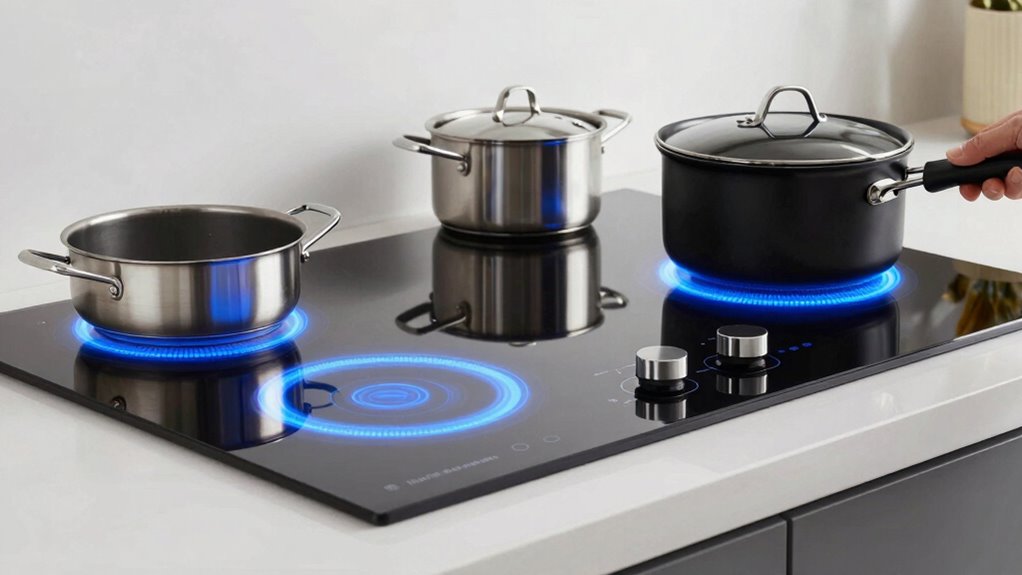
Choosing an induction cooktop can substantially enhance your kitchen’s efficiency and safety. Induction safety is a major benefit, as it heats only your cookware, reducing the risk of burns and accidental fires. The cooktop remains cool to the touch, making it safer for busy households. Additionally, induction cooking offers fast, precise temperature control, saving you time and energy. When it comes to cookware durability, induction-compatible pots and pans tend to last longer since they are often made from high-quality materials like stainless steel or cast iron, which withstand frequent use. This durability means you won’t need to replace your cookware as often. Proper anti-fatigue mats can further improve your standing comfort during cooking tasks. Moreover, the technology behind induction heating ensures rapid response times and consistent heat distribution, making your cooking more efficient. Understanding the induction process, including how electromagnetic fields generate heat directly in cookware, can help you optimize your cooking techniques and maximize energy savings. For example, induction cookware must have a ferromagnetic base to work effectively with induction cooktops. Additionally, selecting the right tip size for tips can refine your control over heat application for different recipes. Overall, an induction cooktop provides a safer, more efficient cooking experience that fits seamlessly into a modern kitchen.
stainless steel induction cookware
As an affiliate, we earn on qualifying purchases.
As an affiliate, we earn on qualifying purchases.
How Can You Tell if Your Cookware Is Compatible With Induction?
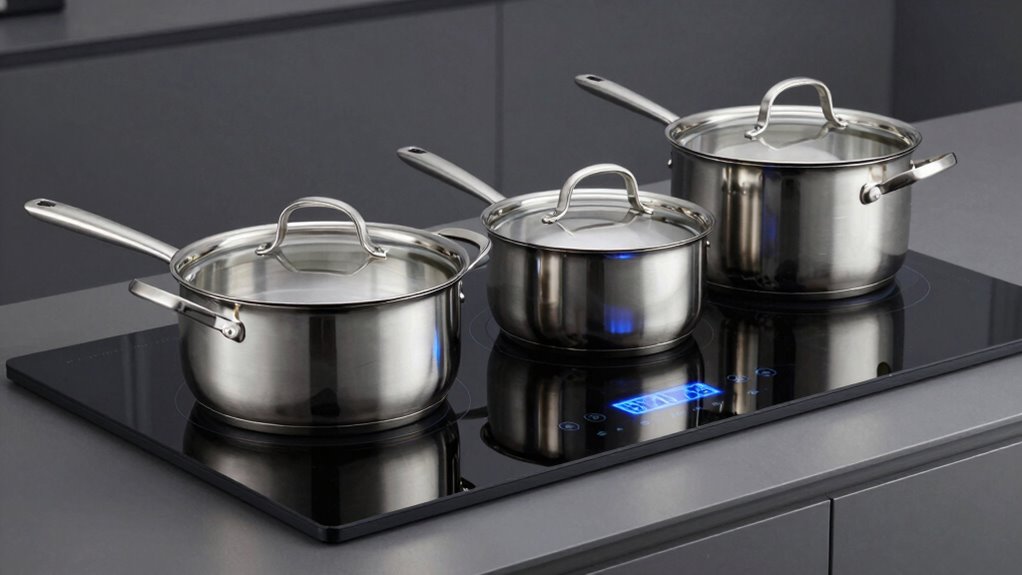
To determine if your cookware works with induction, start by checking for a magnetic base. If a magnet sticks firmly to the bottom, your cookware is likely compatible. Next, consider these points:
Check for a magnetic base—if a magnet sticks, your cookware likely works with induction.
- Material: Look for cookware made from ferromagnetic metals like cast iron or some stainless steel, which ensures durability and compatibility.
- Brand Reputation: Choose induction cookware brands known for quality and durability to avoid frequent replacements.
- Base Flatness: Ensure the bottom is flat for even heat transfer and efficient induction cooking.
- Label or Marking: Some cookware explicitly state “induction compatible” on their packaging or bottom.
- Testing Method: Using a simple magnet test can quickly verify if the cookware is suitable for induction cooking for reliable results.
magnetic cookware for induction stove
As an affiliate, we earn on qualifying purchases.
As an affiliate, we earn on qualifying purchases.
How Do You Set Up and Use an Induction Stove? A Step-by-Step Guide

Getting your induction stove up and running is straightforward if you follow a few simple steps. First, ensure you have compatible induction cookware, which must have a magnetic base. Place the cookware on the stove’s surface, making sure it’s centered. Turn on the stove and select your desired heat level. Always prioritize setup safety by keeping the area clear and avoiding metal objects near the cooktop. Use the following table to understand the importance of proper setup:
| Step | Purpose |
|---|---|
| Check cookware | Ensures it’s induction-compatible |
| Proper placement | Prevents uneven heating |
| Power on stove | Initiates safe operation |
| Adjust heat | Controls cooking speed and safety |
Ensuring your cycling confidence during setup can help prevent accidents and make the cooking process more enjoyable. Being aware of magnetic properties is essential for selecting the right cookware. Additionally, understanding electromagnetic fields can enhance your safety and efficiency when using induction appliances. Recognizing the power transfer mechanism can help optimize cooking performance and energy usage. A good understanding of induction technology can also help troubleshoot common issues and improve your overall experience. Following these steps guarantees safe and efficient induction cooking.
What Common Mistakes Should You Avoid When Cooking With Induction?
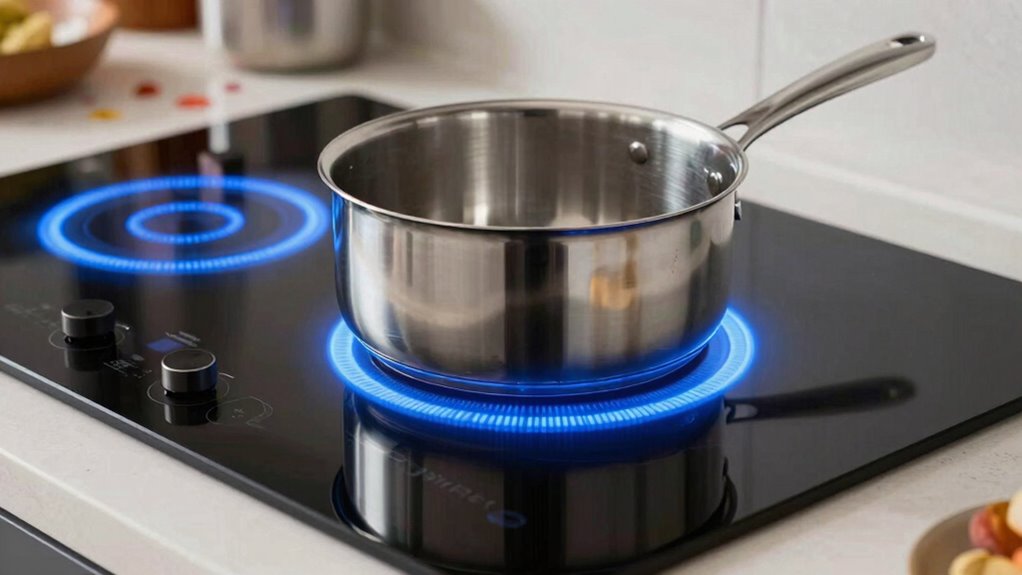
One common mistake is using the wrong cookware, which can prevent proper heating. You also need to pay attention to placement on the stove to guarantee safety and efficiency. Proper induction-compatible cookware is essential to ensure your induction cooktop functions correctly. Additionally, choosing cookware with magnetic bases can improve heat transfer and cooking performance. Proper heat setting selection is crucial to avoid overcooking or undercooking your food. Additionally, overlooking the importance of water management can cause energy loss and reduce the effectiveness of your induction cooktop. Paying attention to visual and auditory cues can also help ensure your cookware is compatible and positioned correctly for optimal performance.
Using Wrong Cookware
Using the wrong cookware is a common mistake that can hinder your induction cooking experience. Incompatible pots won’t heat properly and can damage your cooktop. To avoid this, keep these tips in mind:
- Check for a magnetic base—if it sticks, it’s compatible.
- Avoid non-magnetic materials like aluminum or glass alone.
- Use cookware with a flat, smooth bottom for even heat transfer.
- Replace rusty or warped pots that may not make proper contact.
Using incompatible pots wastes energy and can lead to uneven cooking. Always verify your cookware’s compatibility before turning on your induction stove to ensure efficient and safe operation.
Overlooking Proper Placement
Have you ever noticed uneven heating on your induction cooktop? One common mistake is overlooking proper placement of your cookware. Proper placement guarantees the cookware’s base is centered on the induction zone, allowing for efficient heat transfer. Incorrect cookware positioning can lead to hot spots or uneven cooking, frustrating your efforts. Always align the cookware’s bottom with the induction coil beneath the surface. If your pan is off-center or too small, the cooktop may not activate properly or heat inconsistently. Pay attention to the size and shape of your cookware relative to the induction zone. Proper placement not only improves cooking results but also maximizes energy efficiency and prevents unnecessary wear on your appliance. Taking the time to position your cookware correctly makes a noticeable difference. Understanding appliance operation can help prevent common mistakes and ensure safe, effective use of your induction cooktop.
Ignoring Heat Settings
Are you adjusting the heat settings appropriately during your cooking? Ignoring heat settings or neglecting temperature control can cause uneven cooking and wasted energy. To avoid this common mistake:
- Always start with a low or medium setting and increase as needed.
- Pay attention to how your cookware responds; if food is boiling over or not simmering, adjust accordingly.
- Remember that high heat isn’t always necessary; it can lead to burning or sticking.
- Don’t rely solely on the power level; use the temperature indicator if available to fine-tune your heat.
How Does Induction Compare to Gas and Electric Cooktops? Which Is Better?

When comparing induction to gas and electric cooktops, you’ll find differences in heating efficiency, safety features, and costs. Each option offers unique control and installation considerations that can influence your choice. Understanding these points helps you decide which cooktop best fits your needs. Additionally, considering indoor air quality is important, as some appliances can impact dust and microplastics levels in your kitchen environment. Modern induction cooktops tend to produce less air pollution compared to traditional gas stoves, which can be beneficial for overall health. Moreover, research indicates that energy efficiency varies significantly among different cooktop types, affecting long-term electricity costs. Furthermore, some studies suggest that sound vibrations from certain appliances may influence the kitchen atmosphere, although induction cooktops operate quietly and without disruptive noise. Incorporating proper ventilation can further help reduce potential indoor pollutants from other appliances.
Heating Efficiency Comparison
Induction cooking stands out for its remarkable efficiency compared to gas and electric cooktops. It heats cookware directly through electromagnetic energy, reducing energy consumption and increasing cooking speed. Here’s how it compares:
- Energy consumption: Induction uses about 20-25% less energy than electric and gas, saving you money over time.
- Cooking speed: It heats up faster, often boiling water in half the time of traditional methods.
- Heat transfer: Induction transfers heat directly to the pan, minimizing heat loss.
- Response time: You get instant adjustments, giving you precise control and quicker responses.
Safety and Control Features
Compared to gas and electric cooktops, induction offers enhanced safety features that reduce the risk of accidents. The cooktop only heats when a compatible pot is placed on it, minimizing burns and unintended activation. Child safety is improved because the surface remains relatively cool, preventing children from getting burned if they touch it. Additionally, induction cooktops automatically turn off when cookware is removed, giving you better control over cooking. Modern neural interface technologies are being explored to make these devices even more intuitive and responsive. Moreover, the environmental impact of tissue paper is an important consideration for eco-conscious consumers seeking sustainable alternatives. However, electromagnetic exposure is a concern for some users, especially those with pacemakers or other medical devices. While the electromagnetic fields are generally safe for most people, it’s wise to keep a safe distance if you have sensitivities. The use of crochet tools for easy styling has also increased as a way to customize and enhance the appearance of protective styles. Advancements in digital literacy are also contributing to safer and more effective use of modern appliances. Overall, induction provides a safer, more controlled cooking environment compared to traditional gas or electric options.
Cost and Installation Factors
Choosing the right cooktop involves considering both upfront costs and installation requirements. Induction cooktops generally have higher initial prices than electric models but can be more affordable than gas. When evaluating installation costs, keep in mind:
- Electrical upgrades needed for induction, which may add to installation expenses.
- Existing gas lines or venting requirements for gas cooktops.
- The purchase price of the appliance itself.
- Potential countertop modifications for fit and safety.
Budget considerations play a key role, as induction units often cost more upfront but may save money long-term through energy efficiency. Gas cooktops might have lower initial costs but require more extensive installation. Electric cooktops usually fall in between. Weigh these factors carefully to find the best fit for your home.
How Do You Maintain and Clean Your Induction Cookware and Surface?
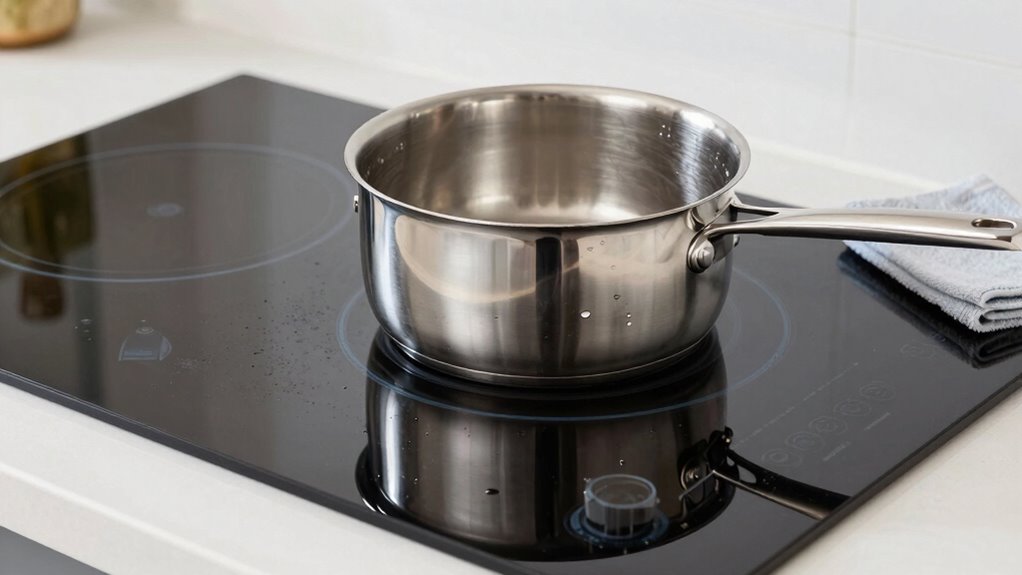
Keeping your induction cookware and surface clean is essential for ideal performance and longevity. Regular surface maintenance helps prevent damage and ensures efficient heat transfer. Use gentle cleaning tips, such as wiping the cooktop with a soft cloth or sponge after each use. For stubborn stains, a mixture of mild dish soap and warm water works well; avoid abrasive cleaners that can scratch the surface. Always dry the surface thoroughly to prevent water spots. When cleaning your cookware, check for warping or scratches, as these can affect performance. Use non-metallic scrubbers to avoid damaging the surface of your pots and pans. Proper maintenance extends the lifespan of your induction setup and keeps your cooking experience smooth and safe.
What Features Should You Look for When Buying an Induction Cooktop?
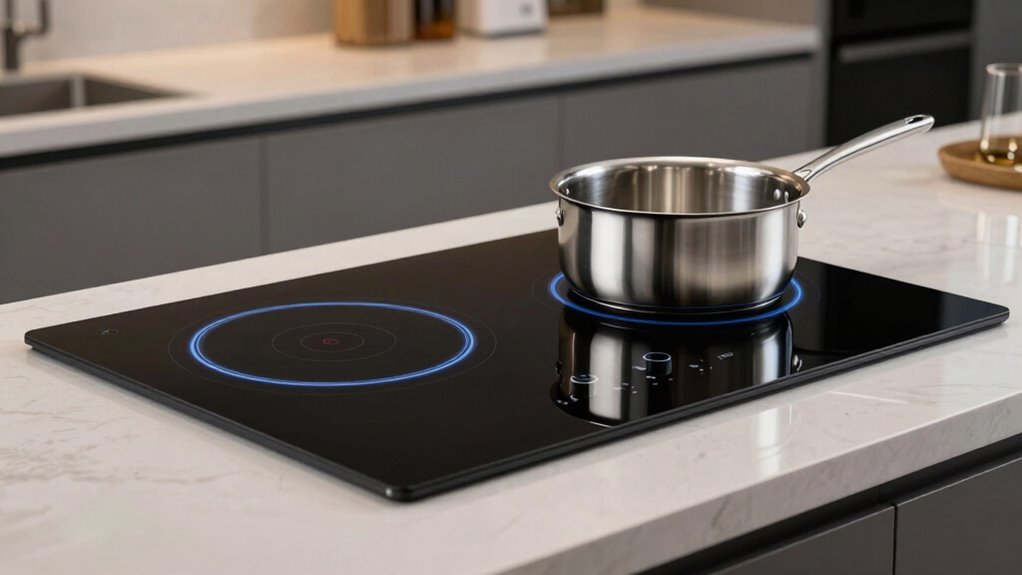
When choosing an induction cooktop, you should consider features like power and temperature control to cook precisely. Safety features such as locking mechanisms are also important to prevent accidents. Additionally, make sure the size and compatibility fit your kitchen space and cookware.
Power and Temperature Control
Have you ever wondered how precise your induction cooktop’s heat control really is? Good temperature regulation and power modulation are key to cooking success. Look for features like:
- Precise temperature controls that allow you to set exact heat levels for different dishes.
- Adjustments with fine increments to avoid sudden temperature jumps.
- Power modulation capabilities that automatically adjust power output based on cookware size and cooking needs.
- Digital displays that clearly show current heat settings for better control.
These features help you maintain consistent temperatures, prevent overheating, and fine-tune your cooking process. The better the temperature regulation and power modulation, the more control you’ll have over your cooking results, making your induction experience smoother and more accurate.
Safety and Lock Features
Safety and lock features are crucial considerations when choosing an induction cooktop, as they help prevent accidents and unauthorized use. Child safety locks are especially important if you have young kids, preventing them from turning on the stove or changing settings accidentally. Look for models with easily accessible lock buttons or controls that disable the cooktop when engaged. An emergency shutdown feature is also indispensable; it quickly turns off power if the cooktop overheats or detects a malfunction, reducing fire risk. Some models include visual indicators to show when the safety lock is active, giving you peace of mind. Prioritizing these features ensures safer cooking environments, protecting your household and preventing unintended operation. Always verify these safety mechanisms are reliable and user-friendly before making your purchase.
Compatibility and Size
Choosing an induction cooktop that fits your kitchen space and cookware compatibility is essential for efficient and safe cooking. To guarantee you select the right model, consider these features:
- Check the size compatibility with your existing induction cookware to avoid uneven heating.
- Look for a cooktop with adjustable burner sizes to accommodate various pot and pan dimensions.
- Ensure the cooktop has a clear cooking zone size indicator for better placement.
- Confirm the surface dimensions match your available countertop space for a seamless fit.
How Do You Troubleshoot Common Issues With Induction Cooking?

Troubleshooting induction cooktop issues can be straightforward if you know where to start. First, verify your cookware is compatible, as incompatible pots or pans can prevent the stove from functioning properly. Check for induction safety features; many models have error codes or indicators for issues like overheating or improper contact. If the cooktop won’t turn on, confirm it’s plugged in properly and that the circuit breaker hasn’t tripped. For uneven heating or failure to heat, clean the surface and cookware to remove debris that may interfere with contact. If problems persist, consult the user manual or contact customer support. Regularly maintaining your induction cooktop and using compatible cookware will help prevent many common issues and keep your cooking safe and efficient.
Is Induction Cooking Right for You? Factors to Consider Before Buying

Before deciding if induction cooking is right for you, it’s important to contemplate your cooking habits, budget, and kitchen setup. First, consider if you’re comfortable debunking induction myths, as some believe induction is only for fast cooking, but it offers precise temperature control. Second, evaluate your need for quick cooking speed—induction heats faster than traditional methods, saving time. Third, check if your existing cookware is compatible; induction requires magnetic pots and pans. Fourth, assess your budget, since induction cooktops tend to be more expensive initially but save energy in the long run. If you’re looking for efficiency and modern features, induction could be a great fit. However, if you value traditional cooking styles or are hesitant about cookware upgrades, it might not be the best choice.
Frequently Asked Questions
Can Induction Cooking Damage Non-Compatible Cookware Over Time?
Induction cooking can cause cookware damage if you use non-compatible cookware regularly. Since non-compatible cookware doesn’t have a magnetic base, it won’t heat properly, leading you to increase heat settings or use more energy, which might damage the cookware over time. To avoid this, always check if your cookware is induction-compatible. Using incompatible cookware repeatedly can result in warping or other damage, so it’s best to switch to suitable pots and pans.
Is Induction Cooking Safe for Households With Children or Pets?
Induction cooking is generally safe for households with children or pets because it heats only the cookware, not the cooktop surface, reducing burn risks. You should still supervise kids and pets around the stove to prevent accidents. Child safety is enhanced by using stove locks or safety covers, and pet safety is maintained by keeping the area clear of clutter. Always follow safety guidelines for peace of mind.
How Energy-Efficient Is Induction Compared to Other Cooktop Types?
You’ll find that induction cooktops are highly energy-efficient compared to gas or electric coil stoves, thanks to faster heating and precise temperature control. This means you save energy and reduce environmental impact. With less heat loss and quicker cooking times, induction helps lower your utility bills and minimizes your carbon footprint. Plus, the direct heat transfer guarantees safer, more controlled cooking, making it a smart choice for eco-conscious households.
Are There Any Health Concerns Related to Electromagnetic Fields From Induction?
You might be surprised to learn that electromagnetic exposure from induction cooktops is generally very low, with levels far below safety thresholds set by health agencies. While some worry about electromagnetic fields (EMFs), studies show no conclusive evidence linking induction cooking to health risks. To stay safe, follow safety precautions like using cookware properly and avoiding prolonged close contact with the cooktop. Overall, induction is considered safe for most users.
Can Induction Cooktops Be Installed in Outdoor or Mobile Kitchens?
You can install induction cooktops in outdoor or mobile kitchens, but you need to take into account some factors. For outdoor installation, guarantee the cooktop is weatherproof and protected from elements like rain and dust. In a mobile kitchen, secure the cooktop firmly to prevent movement during transit. Check manufacturer guidelines for specific installation instructions, and use proper ventilation and power sources to ensure safe, efficient operation wherever you set it up.
Conclusion
In your pursuit of perfect, efficient cooking, embracing induction can transform your kitchen experience. With quick, quiet, and safe operation, induction offers unmatched convenience and control. By understanding how it works, choosing compatible cookware, and following proper practices, you’ll enjoy an effortless culinary upgrade. So, seize the sleek, speedy, and sophisticated benefits—step into the world of induction and elevate your cooking game today!
Evergreen bestsellers Picks
bestsellers
As an affiliate, we earn on qualifying purchases.