Missouri is actively transforming its transportation system by investing in electric vehicles, expanding public transit options, and redesigning urban spaces for walkability and bike-friendliness. You’ll find more EV charging stations across cities and highways, along with incentives to encourage adoption. Public transit is also improving with electric buses and better routes to reduce traffic and emissions. Keep exploring to discover how these efforts are shaping Missouri’s sustainable transportation future.
Key Takeaways
- Missouri is investing in expanding electric vehicle charging infrastructure statewide to promote EV adoption.
- The state is upgrading public transit with electric buses and expanding routes for better accessibility.
- Urban areas are implementing walkable, bike-friendly streets and mixed-use developments to reduce reliance on personal vehicles.
- Missouri offers incentives like tax rebates to encourage residents and businesses to adopt sustainable transportation options.
- Infrastructure improvements include embedding EV charging stations in neighborhoods and commercial zones to support eco-friendly travel.
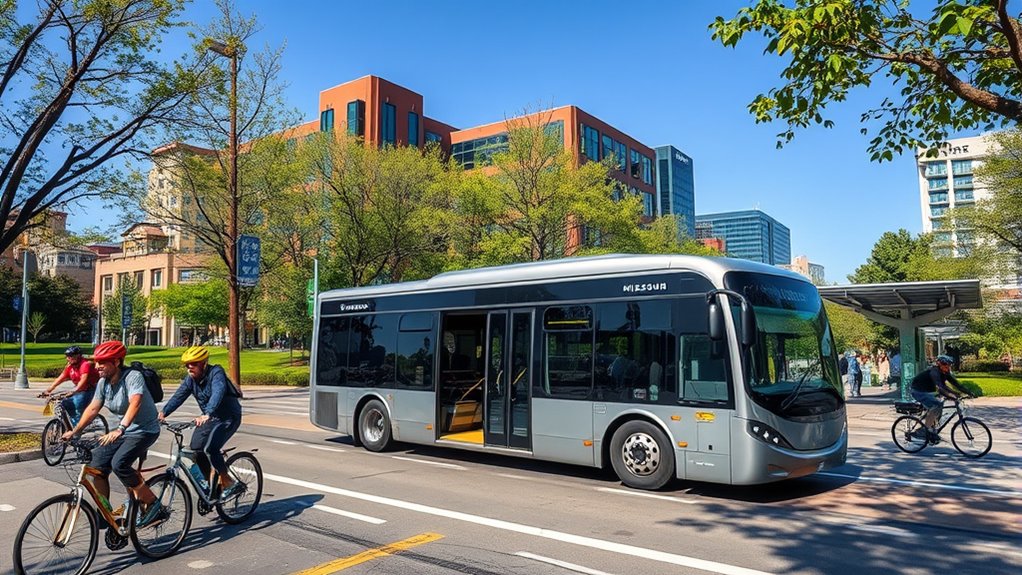
Missouri is making a concerted effort to transform its transportation system into a more sustainable and eco-friendly network. This shift begins with a focus on urban planning, where city designs are evolving to prioritize walkability, bike lanes, and efficient public transit. By rethinking how cities are laid out, Missouri aims to reduce reliance on personal vehicles, which are major contributors to pollution and traffic congestion. Urban planning now emphasizes mixed-use developments that bring homes, workplaces, and amenities closer together, making it easier for residents to choose alternative transportation options. As a result, you’ll find cities implementing more pedestrian-friendly streets and expanding bike infrastructure to encourage healthier, low-impact travel.
Missouri is redesigning cities to prioritize walkability, bike lanes, and public transit, reducing reliance on cars and promoting sustainable travel.
Alongside urban planning, the state is actively promoting the adoption of electric vehicles (EVs). Recognizing that traditional gasoline-powered cars are significant sources of greenhouse gases, Missouri is investing in EV charging stations across urban and rural areas. These charging networks are crucial for making electric vehicles a practical choice, especially for daily commuters and long-distance travelers. You’ll notice more fast chargers popping up along highways and in city centers, making it easier to charge your EV quickly and conveniently. The government also offers incentives, such as tax rebates and discounts, to encourage residents to switch to electric cars. This not only helps cut emissions but also reduces dependence on fossil fuels, aligning with Missouri’s broader sustainability goals.
The integration of urban planning and electric vehicle promotion is already showing results. Cities are planning new developments with sustainable transportation in mind, ensuring that EV charging stations are embedded within neighborhoods and commercial areas. This interconnected approach makes it easier for you to choose eco-friendly transportation options without sacrificing convenience. Moreover, public transit systems are receiving upgrades, incorporating electric buses and expanding routes to serve more communities efficiently. These improvements aim to make public transit a more viable alternative to driving, especially as prices for fuel and maintenance continue to rise.
Missouri’s push for sustainable transportation isn’t just about infrastructure; it’s about creating a cultural shift. By making urban environments more walkable and bike-friendly, and by supporting electric vehicles through better infrastructure and incentives, the state is laying the groundwork for a cleaner, healthier future. As a resident or visitor, you’ll benefit from cleaner air, reduced traffic, and more accessible transportation options. This extensive approach demonstrates Missouri’s commitment to building a modern, sustainable transportation network that meets the needs of its growing population while protecting the environment.
Additionally, the integration of public transit support hours ensures that residents can rely on reliable transportation options at various times of the day.
Frequently Asked Questions
What Specific Policies Incentivize Eco-Friendly Vehicle Adoption in Missouri?
Missouri incentivizes eco-friendly vehicle adoption through policies like tax credits and rebates for electric vehicle purchases. These initiatives encourage you to choose renewable energy-powered cars, reducing your carbon footprint. Urban planning efforts also support this shift by creating charging infrastructure and promoting walkable, bike-friendly communities. By aligning these policies, Missouri makes it easier for you to adopt sustainable transportation options, contributing to a cleaner, greener environment.
How Does Missouri Plan to Fund Large-Scale Transportation Infrastructure Projects?
While urban planning emphasizes sustainable growth, Missouri funds large-scale transportation projects through state and federal grants, bonds, and public-private partnerships. You’ll see investments in expanding public transit options and infrastructure upgrades to support eco-friendly mobility. This strategic approach balances immediate financial needs with long-term goals, ensuring efficient transit systems that reduce congestion and emissions, ultimately fostering a more sustainable and connected transportation network across the state.
What Are the Challenges Faced in Implementing Bike-Sharing Programs Statewide?
You’ll face challenges in implementing bike-sharing programs statewide due to gaps in urban infrastructure and limited public awareness. Poorly maintained bike lanes and insufficient parking hinder user safety and convenience, discouraging participation. Additionally, raising awareness about the benefits of bike-sharing is essential to boost adoption. Overcoming these hurdles requires coordinated efforts to improve infrastructure, educate communities, and promote sustainable transportation options across the state.
How Does Missouri Coordinate With Neighboring States on Transportation Sustainability?
You see Missouri coordinate with neighboring states through regional collaboration and cross-border planning, ensuring seamless transportation initiatives. They share data, align policies, and develop joint projects to promote sustainability. This cooperation helps optimize transit systems, reduce emissions, and improve infrastructure. By working together, Missouri and its neighbors create a unified approach to transportation, fostering innovation and shared responsibility for a cleaner, more efficient future across state lines.
What Role Do Private Companies Play in Missouri’s Sustainable Transit Initiatives?
Private companies play a vital role in Missouri’s sustainable transit initiatives through public-private partnerships and innovation funding. You might see them investing in new technologies, like electric vehicle infrastructure or smart transit systems, helping to accelerate progress. These collaborations enable the state to access additional resources and expertise, making sustainable transportation more practical and efficient. By partnering with private firms, Missouri boosts innovation and guarantees its transit systems meet evolving environmental and community needs.
Conclusion
As you see, Missouri’s efforts toward sustainable transportation are gaining momentum. By embracing eco-friendly options, you help pave the way for a cleaner, healthier future. It’s clear that progress might be slow, but every step forward counts. Keep in mind, Rome wasn’t built in a day, and meaningful change takes time. Stay committed, and together, you can guarantee Missouri leads the way in eco-conscious transit solutions for generations to come.