The best portable podcast microphones balance clear speech, a setup you can carry, and a connection that works with your recording device. I rank the MAONO PD200W as the best overall for its hybrid wireless and USB recording approach, while the DJI Mic Mini kits stand out for compact two-person recording and the Movo PodPro for a more complete podcast bundle. The main tradeoffs are between a purpose-built podcast mic and a tiny lavalier, and between flexible compatibility and a simpler, lighter setup. Group size, phone ports, and whether you need a receiver or accessories can matter as much as microphone style. Read on for the full breakdown and help matching a portable podcast microphone to your recording routine.

Get everyday essentials delivered free with Prime
- Fast, free delivery on millions of items
- Prime Video, Amazon Music and more included
- Member-only deals all year
Complete the kit


Key Takeaways
- The MAONO PD200W leads for format flexibility: its hybrid wireless and USB design suits buyers who want one microphone for more than one recording setup.
- The DJI Mic Mini options are focused on mobile two-person capture: compare the receiver and charging-case configurations against the accessories you actually need to carry.
- More people change the buying decision: the Gicorino four-person kit is aimed at group recording, while many compact sets are better suited to one or two speakers.
- Phone compatibility is not a minor detail: USB-C, Lightning, and USB receiver combinations differ across the listed sets, so check the exact devices before choosing.
- A low kit price is not the same as a complete workflow: the Movo PodPro bundle emphasizes included podcast equipment, while tiny wireless lavaliers prioritize portability and a lighter setup.
| DJI Mic Mini Wireless Microphone (2 Transmitters + Mobile Receiver) |  | Best for Phone-First Interviews | Transmitters: 2 | Transmitter weight: 10 g each | Maximum transmission range: 300 m | VIEW LATEST PRICE | See Our Full Breakdown |
| DJI Mic Mini Wireless Microphone Kit (2 Transmitters, 1 Receiver, Charging Case) | 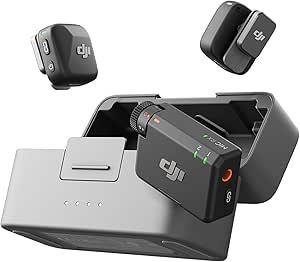 | Best for Long Recording Days | Transmitters: 2 | Transmitter weight: 10 g each | Maximum transmission range: 400 m | VIEW LATEST PRICE | See Our Full Breakdown |
| Movo PodPro Portable Podcast Equipment Bundle for Two |  | Best Complete Two-Person Podcast Kit | Microphones: 2 CastMic cardioid XLR dynamic microphones | Microphone frequency response: 40 Hz–16 kHz | Audio interface channels: 2 | VIEW LATEST PRICE | See Our Full Breakdown |
| wedaniya Wireless Mini Microphone Set for iPhone and Android, 2-Pack with USB-C and Lightning Receivers |  | Best Plug-and-Play Phone Set | Model: WM189 | Transmitters: 2 | Connectors: USB-C and Lightning | VIEW LATEST PRICE | See Our Full Breakdown |
| GoorDik Wireless USB-C Lavalier Microphone with Noise Reduction |  | Best Adapter-Rich Budget Setup | Microphone type: Wireless lavalier | Transmitters: 2 | Channels: 2 | VIEW LATEST PRICE | See Our Full Breakdown |
| MAONO PD200W Hybrid Wireless Podcast Microphone |  | Best Hybrid Mic for Portable-to-Studio Setups | Microphone type: Dynamic | Connectivity: Wireless, USB, XLR | Polar pattern: Unidirectional (cardioid) | VIEW LATEST PRICE | See Our Full Breakdown |
| Labstandard Dual Wireless Lavalier Microphone for iPhone, iPad, and USB-C Devices |  | Best for Low-Latency Two-Person Mobile Interviews | Microphone type: Omnidirectional condenser | Form factor: Mini lavalier | Connectivity: Bluetooth | VIEW LATEST PRICE | See Our Full Breakdown |
| NPTCL Wireless Lavalier Microphone Set for USB-C and USB Devices |  | Best Charging-Case Pick for USB-C Interviews | Microphone type: Lavalier | Connectivity: Wireless | Connector: USB Type-C; USB adapter included | VIEW LATEST PRICE | See Our Full Breakdown |
| Mini Mic Pro Wireless Lavalier Microphone for iPhone and Android | 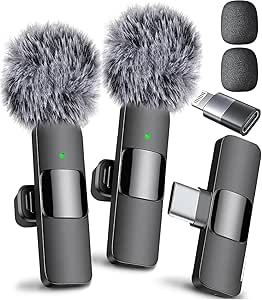 | Best Compact Plug-and-Play Kit | Connectivity: Wireless | Connectors: Lightning, USB Type-C | Compatible devices: Android devices, laptops, smartphones, tablets, iPads, iPhones | VIEW LATEST PRICE | See Our Full Breakdown |
| NPTCL Wireless Lavalier Microphone Set for USB-C and Lightning Devices |  | Best Dual-Mic Set for Mixed iPhone and Android Use | Connectivity: Wireless | Connectors: USB Type-C; Lightning adapter included | Microphone type: Lavalier | VIEW LATEST PRICE | See Our Full Breakdown |
| Gicorino 4-Person Wireless Lavalier Microphone Kit |  | Best for Four-Person Interviews | Microphones: 4 | Wireless technology: 2.4 GHz | Pickup pattern: Omnidirectional | VIEW LATEST PRICE | See Our Full Breakdown |
| MAYBESTA Wireless Mini Lavalier Microphone for iPhone and Android |  | Best for Quick Phone Recording | Connectivity: Wireless | Connectors: Lightning, USB Type-C | Microphones: 2 lavalier microphones | VIEW LATEST PRICE | See Our Full Breakdown |
| portable podcast microphone | Connectivity | Battery life | Connectors |
|---|---|---|---|
| DJI Mic Mini Wireless Micropho | Bluetooth, Wi-Fi, and USB Type-C | — | — |
| DJI Mic Mini Wireless Micropho | Bluetooth, DJI OsmoAudio, and USB Type-C | — | — |
| Movo PodPro Portable Podcast E | — | Up to 8 hours; up to 3 hours with phantom power on | — |
| wedaniya Wireless Mini Microph | Wireless, plug-and-play | Up to 6 hours | USB-C and Lightning |
| GoorDik Wireless USB-C Lavalie | — | — | — |
| MAONO PD200W Hybrid Wireless P | Wireless, USB, XLR | Up to 60 hours with RGB lighting off | — |
| Labstandard Dual Wireless Lava | Bluetooth | About 6 hours | Lightning, USB Type-C |
| NPTCL Wireless Lavalier Microp | Wireless | Up to 6 hours per microphone; up to 24 hours with charging case | — |
| Mini Mic Pro Wireless Lavalier | Wireless | Up to 6 hours per charge | Lightning, USB Type-C |
| NPTCL Wireless Lavalier Microp | Wireless | Up to 6 hours per microphone; up to 24 hours with charging case | USB Type-C; Lightning adapter included |
| Gicorino 4-Person Wireless Lav | — | — | USB-C, Lightning, 3.5 mm |
| MAYBESTA Wireless Mini Lavalie | Wireless | — | Lightning, USB Type-C |
More Details on Our Top Picks
DJI Mic Mini Wireless Microphone (2 Transmitters + Mobile Receiver)
For interviews recorded on a phone, I’d favor this kit’s mobile receiver and two tiny transmitters over the more involved Movo PodPro bundle. At just 10 g per transmitter, the clips are easy to wear for extended conversations, while the two noise-cancellation levels and automatic volume limiting help keep voices usable when recording conditions change. Its stated range reaches 300 m, giving creators room to move, though podcast guests are unlikely to need all of it. The tradeoff is a phone-centered setup rather than a complete desk studio: there are no XLR microphones or tabletop stands like Movo includes. It is also not waterproof, and connecting to Osmo Mobile series devices requires a specific first-generation module. I’d pick it for mobile interviews, not rugged field recording.
Pros:- Two 10 g transmitters are discreet and comfortable to wear.
- Two noise-cancellation levels suit different recording environments.
- Automatic volume limiting can help control sudden loud peaks.
- Includes a mobile receiver and supports phones, tablets, PCs, and compatible DJI devices.
Cons:- Not waterproof, limiting its suitability for wet or exposed outdoor recording.
- Osmo Mobile series connection requires the first-generation DJI OM Multifunctional Module.
- Unlike the Movo PodPro, it does not include XLR microphones, stands, or studio headphones.
Best for: Phone-based podcasters who record interviews with two people and want lightweight wireless transmitters with adjustable noise reduction.
Not ideal for: Creators who need waterproof gear, a traditional XLR desk setup, or direct compatibility with Osmo Mobile devices without the first-generation DJI OM Multifunctional Module.
- Transmitters:2
- Transmitter weight:10 g each
- Maximum transmission range:300 m
- Maximum operating time:Up to 11.5 hours
- Noise cancellation:Basic and Strong levels
- Audio format:48 kHz, 24-bit with supported OsmoAudio devices
- Polar pattern:Omnidirectional
- Connectivity:Bluetooth, Wi-Fi, and USB Type-C
Our verdict“Choose this kit for lightweight, two-person phone interviews, but pick the Movo PodPro if you want a more complete tabletop podcast setup.”
DJI Mic Mini Wireless Microphone Kit (2 Transmitters, 1 Receiver, Charging Case)
The charging case makes this the strongest pick here for creators who record several interviews or episodes away from an outlet. It pairs two 10 g transmitters with a receiver and offers up to 48 hours of battery life with the case, giving it a practical endurance advantage over the mobile-receiver DJI Mic Mini, which lists up to 11.5 hours of operating time. The claimed 400 m range also exceeds that model’s 300 m figure, although range matters less than battery and fast setup for most podcast conversations. Basic and Strong noise cancellation plus automatic limiting add useful control without a full audio interface. The tradeoffs are its lack of waterproofing and the same Osmo Mobile connection requirement: the first-generation DJI OM Multifunctional Module is needed. I’d choose it over the GoorDik when longer kit-level runtime and DJI connectivity matter more than broad adapter inclusion.
Pros:- Charging case supports up to 48 hours of battery life.
- Two lightweight 10 g transmitters suit extended on-camera or interview use.
- Basic and Strong noise-cancellation levels provide a choice for different surroundings.
- Automatic audio limiting can help prevent sudden peaks from clipping.
Cons:- Not waterproof for wet-weather recording.
- Osmo Mobile series products require the first-generation DJI OM Multifunctional Module.
- Less of a complete podcast desk kit than the Movo PodPro, which includes microphones, stands, and headphones.
Best for: Mobile interviewers and field podcasters who record multiple sessions between charging opportunities and want a case to carry and recharge two transmitters.
Not ideal for: People who need waterproof equipment, a simple wired desktop microphone, or Osmo Mobile compatibility without the required first-generation module.
- Transmitters:2
- Transmitter weight:10 g each
- Maximum transmission range:400 m
- Battery life with charging case:Up to 48 hours
- Audio sampling rate:48 kHz
- Audio resolution:24-bit via OsmoAudio direct connection
- Noise cancellation:Basic and Strong levels
- Connectivity:Bluetooth, DJI OsmoAudio, and USB Type-C
Our verdict“Pick this DJI kit if long recording days and a charging case matter more than a full tabletop studio bundle.”
Movo PodPro Portable Podcast Equipment Bundle for Two
This is the most studio-like option in the group: instead of clipping wireless mics to clothing, the Movo PodPro supplies two cardioid XLR microphones, stands, headphones, cables, and a dual-channel interface. That makes it a better fit than either DJI Mic Mini for seated conversations where each speaker wants a dedicated mic and headphone monitoring. The interface runs on battery power for up to 8 hours, and the included USB-A, USB-C, and Lightning cables help it connect to a range of devices. The portability claim needs context, though: the bundle weighs 5.76 kg, far more than the wearable wireless sets, and phantom power cuts interface runtime to about three hours. I’d choose it when a two-person podcast setup matters more than packing light; for quick mobile interviews, the DJI kits are easier to carry.
Pros:- Includes two cardioid XLR microphones, two stands, and two pairs of headphones.
- Dual-channel interface has two XLR inputs and two headphone outputs.
- Battery-powered interface supports portable recording for up to 8 hours without phantom power.
- Supplied USB-A, USB-C, and Lightning cables support multiple device types.
Cons:- At 5.76 kg, the bundle is much heavier and bulkier than the wireless lavalier kits.
- Interface battery life drops to about 3 hours when phantom power is on.
- Tabletop microphones and cables take more setup space than the DJI Mic Mini transmitters.
Best for: Two-person podcast hosts who want separate XLR microphones, headphone monitoring, and a battery-powered interface for recording away from a fixed studio.
Not ideal for: Solo creators, travelers prioritizing a compact bag, or interviewers who need clip-on wireless microphones rather than tabletop stands.
- Microphones:2 CastMic cardioid XLR dynamic microphones
- Microphone frequency response:40 Hz–16 kHz
- Audio interface channels:2
- Audio interface inputs:2 XLR inputs with 48V phantom power
- Headphone outputs:2
- Battery life:Up to 8 hours; up to 3 hours with phantom power on
- Supported devices:Laptop, PC, smartphone, and tablet
- Item weight:5.76 kg
Our verdict“Choose the Movo PodPro for a portable but full-featured two-person tabletop setup, not for lightweight run-and-gun interviews.”
wedaniya Wireless Mini Microphone Set for iPhone and Android, 2-Pack with USB-C and Lightning Receivers
The wedaniya set makes a straightforward choice for phone users who want USB-C and Lightning receiver options in one package. It skips app installation and Bluetooth pairing, so it is simpler to start with than the GoorDik, whose description notes that some Android phones may need OTG activation. Two transmitters cover a conversation between host and guest, while real-time headphone monitoring gives the speaker a chance to hear the recording as it happens. Its standard, reverb, and mute modes add flexibility, though reverb is less useful for clean podcast speech than a plain recording mode. Battery life reaches up to six hours, below the DJI charging-case kit’s listed 48-hour total. I’d pick wedaniya for short phone sessions and mixed connector needs, but skip it for marathon recording days or anyone who needs clearly documented device compatibility.
Pros:- Includes USB-C and Lightning receiver options for compatible devices.
- Plug-and-play connection avoids app installation and Bluetooth pairing.
- Real-time headphone monitoring can help catch recording issues during a session.
- Includes two transmitters, wind covers, and noise-reduction features.
Cons:- Up to 6 hours of battery life is shorter than the DJI Mic Mini kit’s stated case-supported runtime.
- Compatibility may depend on the device and connector.
- Reverb and mute modes may be less useful than straightforward audio controls for standard podcast recording.
Best for: Phone-first podcasters who record short two-person sessions and need both USB-C and Lightning receiver options without app or Bluetooth setup.
Not ideal for: Creators recording long sessions, buyers who need detailed compatibility confirmation for a specific device, or users seeking a dedicated interface and XLR microphones.
- Model:WM189
- Transmitters:2
- Connectors:USB-C and Lightning
- Connectivity:Wireless, plug-and-play
- Recording modes:Standard, reverb, and mute
- Battery life:Up to 6 hours
- Charging time:1 hour
- Included accessories:Receiver, portable bag, 2 deadcat covers, and 2 sponge covers
Our verdict“Choose wedaniya for simple, shorter phone interviews across USB-C and Lightning devices, but favor the DJI case kit for longer recording days.”
GoorDik Wireless USB-C Lavalier Microphone with Noise Reduction
GoorDik is a practical pick for creators who want two wireless lavalier transmitters and a bundle of connection and wind-protection accessories. Its USB-C receiver is joined by USB-A and Lightning adapters, giving it more connector flexibility than a receiver-only setup, though the included adapters do not remove every device hurdle: some Android phones may require OTG activation, and computer users may need to select the mic as their input. The 6–12 hour transmitter runtime is competitive with the wedaniya set’s up-to-six-hour figure, but GoorDik does not list a charging case. Its omnidirectional pickup can capture voices from different angles, while also making room noise harder to reject than the Movo PodPro’s cardioid microphones. I’d choose it for casual two-person recordings across several device types, not for a noisy room or a workflow that needs predictable setup.
Pros:- Two transmitters support recording a host and guest.
- USB-A and Lightning adapters broaden connection options beyond the USB-C receiver.
- Includes foam covers and furry windscreens for different recording conditions.
- Transmitter battery life is listed at 6–12 hours.
Cons:- Some Android phones may require OTG activation.
- Computer users may need to select the microphone as their default input.
- Omnidirectional pickup can admit more surrounding room noise than the Movo PodPro’s cardioid microphones.
Best for: Casual two-person podcasters who want wireless clip-on mics, useful wind covers, and adapters for USB-C, USB-A, and Lightning devices.
Not ideal for: Users who need a guaranteed plug-and-play experience on every Android phone, computer users unwilling to set an input device, or podcasters recording in noisy rooms who need tighter directional pickup.
- Microphone type:Wireless lavalier
- Transmitters:2
- Channels:2
- Connector:USB Type-C; USB Type-A adapter included
- Polar pattern:Omnidirectional
- Wireless range:30 m
- Transmitter battery life:6–12 hours
- Frequency response:20–20,000 Hz
Our verdict“Choose GoorDik for an accessory-rich two-person lavalier kit across several connector types, but skip it if you need reliable setup with no device adjustments.”
MAONO PD200W Hybrid Wireless Podcast Microphone
The MAONO PD200W is the most adaptable pick here for podcasters who want a portable setup without giving up a path to a desk-based recording chain. It supports wireless, USB, and XLR, so it can move from a wireless recording position to a computer or mixer as the show grows. Its cardioid pickup and three-stage noise cancellation are better suited to focusing on one nearby speaker than the omnidirectional lavaliers from NPTCL and Mini Mic Pro, which prioritize discreet, hands-free capture. The tradeoff is size: at 1.32 kg, it is far less convenient to carry than a clip-on mic, and some sound controls rely on the MaonoLink app. Camera and Lightning accessories are also sold separately. Choose it for connection flexibility, not pocketability.
Pros:- Wireless, USB, and XLR connections support several recording setups
- Cardioid pickup and three-stage noise cancellation help focus on a nearby speaker
- Up to 60 hours of battery life with RGB lighting off
- Can pair two microphones to one receiver and record separate tracks
Cons:- At 1.32 kg, it is substantially less portable than the lavalier options
- Camera and Lightning accessories are sold separately
- Some sound settings require the MaonoLink app
Best for: Podcasters who record both on the move and at a desk, and want one microphone that can connect wirelessly, by USB, or to XLR gear.
Not ideal for: Travelers who need a genuinely lightweight, clip-on microphone or phone creators who require a ready-to-use Lightning connection without buying another accessory.
- Microphone type:Dynamic
- Connectivity:Wireless, USB, XLR
- Polar pattern:Unidirectional (cardioid)
- Signal-to-noise ratio:82 dB
- Maximum SPL:128 dB
- Wireless range:Up to 60 m
- Battery life:Up to 60 hours with RGB lighting off
- Weight:1.32 kg
- Included accessories:Desktop stand, USB-C to USB-A and USB-C cable, Type-C receiver, Type-C adapter cable
Our verdict“Choose the PD200W if you want a versatile podcast mic that can shift between wireless recording and studio connections, and skip it if compact carry is your priority.”
Labstandard Dual Wireless Lavalier Microphone for iPhone, iPad, and USB-C Devices
The Labstandard dual lavalier set is aimed at mobile interviews where both speakers need their own microphone and timing matters. Its two-channel design and stated 0.008-second latency suit conversations and livestreams better than a single-mic setup, while Lightning and USB-C connectors cover many phones and tablets. Compared with the NPTCL USB-C set, Labstandard lists both connector types directly, making it a more natural fit for mixed-device households. The tradeoff is endurance: its roughly six-hour battery life has no charging-case extension listed, unlike the NPTCL sets that claim up to 24 hours with their cases. The compatibility notes also mention 3.5 mm devices even though the listed connectors are Lightning and USB-C, so buyers should verify their exact recording device before relying on that support.
Pros:- Two microphones support simultaneous recording of two speakers
- Stated 0.008-second latency supports closely synced audio
- Lightning and USB-C connectors suit a range of phones and tablets
- Noise reduction is included
Cons:- About six hours of battery life limits extended recording days
- No charging case is listed to extend use between charges
- 3.5 mm compatibility is unclear because the listed connectors are Lightning and USB-C
Best for: Two-person interviewers and mobile podcasters who record on Lightning or USB-C devices and value low-latency audio syncing.
Not ideal for: Creators recording long sessions away from power, or anyone who needs clearly documented 3.5 mm compatibility or a charging case.
- Microphone type:Omnidirectional condenser
- Form factor:Mini lavalier
- Connectivity:Bluetooth
- Connectors:Lightning, USB Type-C
- Microphone channels:2
- Latency:0.008 seconds
- Battery life:About 6 hours
- Weight:0.05 kg
- Included accessories:Receiver kit, user manual, USB-C charging cable
Our verdict“Pick Labstandard for two-person mobile recordings where listed low latency and Lightning/USB-C support matter more than long battery life.”
NPTCL Wireless Lavalier Microphone Set for USB-C and USB Devices
For USB-C creators recording with a guest, the NPTCL two-mic set combines straightforward pairing with a charging case that displays remaining battery and brings total stated use to up to 24 hours. That case is its main advantage over the Labstandard dual lavalier set, whose listed runtime is about six hours without a case-based extension. Each NPTCL microphone still runs for only up to six hours per charge, so the case helps between sessions rather than removing the need to recharge during a very long recording day. Omnidirectional pickup suits speakers wearing clip-on mics, while noise reduction and windscreen covers can help with everyday environmental sound. This is a practical, compact option for compatible USB-C devices, but its connector dependence makes it less appealing for Lightning-only iPhones than the NPTCL Lightning-compatible model.
Pros:- Two microphones allow simultaneous two-person recording
- Charging case provides a battery display and up to 24 hours of stated total use
- Automatic pairing and no-app setup simplify mobile recording
- Noise reduction and windscreen covers are included
Cons:- Each microphone runs for up to six hours per charge
- Compatibility depends on a USB-C port or the included USB adapter
- Omnidirectional lavaliers are less focused on one speaker than a cardioid mic such as the MAONO PD200W
Best for: USB-C phone, tablet, and computer users who record two-person interviews and want a charging case for multiple sessions.
Not ideal for: Lightning-only iPhone users, or podcasters who need either a single microphone to run beyond six hours or a more studio-oriented dynamic mic.
- Microphone type:Lavalier
- Connectivity:Wireless
- Connector:USB Type-C; USB adapter included
- Microphone count:2
- Pickup pattern:Omnidirectional
- Wireless range:Up to 70 feet
- Battery life:Up to 6 hours per microphone; up to 24 hours with charging case
- Features:Noise reduction, mute function, battery indicator, automatic pairing
- Weight:200 g
Our verdict“Choose this NPTCL set for paired USB-C interviews with charging breaks between sessions, but opt for the Lightning-compatible NPTCL version if you record on an older iPhone.”
Mini Mic Pro Wireless Lavalier Microphone for iPhone and Android
The Mini Mic Pro is the compact choice for creators who want a small lavalier kit that can move between iPhone and Android recording without an app or Bluetooth setup. Its included Lightning and USB-C adapters make it more flexible across phone types than the USB-C-focused NPTCL set, and the foam and deadcat tips give buyers options for indoor speech and breezier outdoor clips. The package lists two lavalier microphones, which gives it potential for guest recording, although buyers should check how the receiver handles their intended two-person setup. Unlike the NPTCL kit, the provided details do not list a charging case or a longer total runtime: expect up to six hours per charge. A listed reference to two C batteries also conflicts with the rechargeable description, so power details are less clear than the plug-and-play pitch.
Pros:- Lightning and USB-C adapters support a range of compatible phones and tablets
- Plug-and-play operation does not require an app or Bluetooth
- Foam and deadcat tips offer protection for indoor and outdoor recording
- Compact lavalier form factor is easier to carry than the MAONO PD200W
Cons:- Up to six hours of recording per charge may not cover extended sessions
- No charging case or extended total runtime is listed
- The reference to two C batteries conflicts with the rechargeable-microphone description
Best for: Phone-first podcasters and interviewers who want a small wireless lavalier kit with both Lightning and USB-C adapters and wind protection.
Not ideal for: Creators who need extended recording between charging opportunities, a clearly specified charging case, or unambiguous battery documentation.
- Connectivity:Wireless
- Connectors:Lightning, USB Type-C
- Compatible devices:Android devices, laptops, smartphones, tablets, iPads, iPhones
- Polar pattern:Omnidirectional
- Battery life:Up to 6 hours per charge
- Weight:80 g
- Dimensions:3 x 0.5 x 0.25 inches
- Included items:2 lavalier microphones, 1 receiver, USB charging cable, 2 clips, 2 foam tips, 2 deadcat tips
- Warranty:90-day refund guarantee and 6-month warranty
Our verdict“Choose the Mini Mic Pro for a compact, adapter-ready phone kit with wind protection, but look elsewhere if battery clarity or case-based extended use is a priority.”
NPTCL Wireless Lavalier Microphone Set for USB-C and Lightning Devices
This NPTCL dual lavalier set is the better fit for interviewers switching between USB-C devices and select Lightning iPhones. It includes two microphones, noise reduction, windscreen covers, and a charging case with up to 24 hours of stated total use—features that make it more practical for recurring interviews than a basic single-mic kit. Compared with the USB-C-only NPTCL set, the included Lightning adapter broadens phone compatibility, though support is specified for iPhone 12, 13, and 14 rather than every Lightning device. The microphones themselves still provide up to six hours per charge, so the case is a recharging resource, not continuous all-day operation. Like the Mini Mic Pro, it is designed for phone-first recording, not for the more controlled, single-speaker capture of the cardioid MAONO PD200W.
Pros:- Two microphones support simultaneous two-speaker recording
- USB-C connection and included Lightning adapter cover multiple phone types
- Charging case provides up to 24 hours of stated total use
- Noise reduction, windscreens, automatic pairing, and mute function are included
Cons:- Each microphone runs for up to six hours per charge
- Lightning compatibility is specified for iPhone 12, 13, and 14
- Omnidirectional lavaliers offer less focused pickup than the cardioid MAONO PD200W
Best for: Interviewers recording two speakers across USB-C phones and compatible Lightning iPhones who want a charging case and simple setup.
Not ideal for: Users with Lightning devices outside the listed iPhone 12, 13, and 14 compatibility, or podcasters seeking a desk mic with XLR connectivity.
- Connectivity:Wireless
- Connectors:USB Type-C; Lightning adapter included
- Microphone type:Lavalier
- Microphone count:2
- Pickup pattern:Omnidirectional
- Wireless range:Up to 70 feet
- Battery life:Up to 6 hours per microphone; up to 24 hours with charging case
- Compatibility:USB-C iPhone, iPad, and Android devices; Lightning adapter for iPhone 12, 13, and 14
- Features:Noise reduction, windscreen covers, battery indicator, clip, mute function
Our verdict“Pick this NPTCL model for two-person phone interviews across supported USB-C and Lightning devices, and skip it if you need broader Lightning compatibility or studio connections.”
Gicorino 4-Person Wireless Lavalier Microphone Kit
For a podcast with several guests, the Gicorino’s defining advantage is its four-microphone capacity: it can capture a host and three guests at once, while two-mic options such as the DJI Mic Mini kit are better suited to smaller conversations. Its 3-in-1 receiver and USB-C, Lightning, and 3.5 mm connections also give it more device flexibility than phone-only kits, and the receiver can let a phone charge during recording. Omnidirectional pickup and included wind covers suit mobile interviews and video shoots, though they offer less control over surrounding sound than a more directional setup. The tradeoff is practical: microphones need 1.5 hours to charge for up to six hours of use, and Android users may need to enable OTG. Choose it for group recording, not the lightest solo setup.
Pros:- Supports simultaneous recording with four microphones
- USB-C, Lightning, and 3.5 mm connections accommodate a range of recording devices
- Receiver can allow phone charging during a recording
- Includes wind covers, clips, and a storage case
Cons:- Android devices may require OTG to be enabled
- Up to six hours of microphone use requires a 1.5-hour charge
- Omnidirectional pickup can capture more surrounding sound than a directional microphone
Best for: Podcast hosts and video creators who regularly record interviews with up to three guests and need connections for multiple device types.
Not ideal for: Solo creators seeking a minimal, pocketable setup, or Android users who do not want to check or enable OTG compatibility.
- Microphones:4
- Wireless technology:2.4 GHz
- Pickup pattern:Omnidirectional
- Wireless range:Up to 164 ft
- Microphone battery life:Up to 6 hours
- Charging time:1.5 hours
- Connectors:USB-C, Lightning, 3.5 mm
- Included accessories:3-in-1 receiver, USB adapter, wind covers, charging cables, wired headphones, storage case, clips
Our verdict“Choose the Gicorino if four-person conversations and broad device compatibility matter more than a compact solo recording kit.”
MAYBESTA Wireless Mini Lavalier Microphone for iPhone and Android
The MAYBESTA is aimed at creators who want to clip on a microphone and start recording from a phone without configuring an app or Bluetooth connection. Its plug-and-play receiver supports Lightning and USB-C, making it a straightforward alternative to the Gicorino when a four-person setup and 3.5 mm connection are unnecessary. Two microphones come in the set, so it can cover a basic two-person conversation, while the windscreens and noise reduction add practical help for casual mobile recording. The main compromise is uncertainty: the supplied details give no battery runtime or wireless range, so it is harder to plan longer sessions than with the Gicorino, which specifies up to six hours and 164 feet. There is also a battery-spec inconsistency: the description says rechargeable, but the listing mentions an included C battery.
Pros:- Lightning and USB-C receiver supports compatible iPhone and Android phones
- Plug-and-play pairing does not require an app or Bluetooth setup
- Includes two microphones for recording a speaker and a guest
- Noise reduction, sponge windscreens, and clips support mobile use
Cons:- Battery life and wireless range are not specified
- Product information conflicts on whether power comes from a rechargeable battery or an included C battery
- Lacks the 3.5 mm connection and four-microphone capacity offered by the Gicorino
Best for: Phone-first vloggers, streamers, and casual podcasters who want quick setup, Lightning or USB-C support, and two microphones for short recordings.
Not ideal for: Creators who need a confirmed runtime or wireless range for scheduled interviews, or anyone relying on clear battery information before buying.
- Connectivity:Wireless
- Connectors:Lightning, USB Type-C
- Microphones:2 lavalier microphones
- Polar pattern:Omnidirectional
- Frequency:2.4 GHz
- Signal-to-noise ratio:80 dB
- Included components:1 receiver, 1 USB charging cable, 2 sponge tips, 2 lavalier microphones, 3 clips
- Warranty:120-day refund policy, 18-month free replacement, 2-year comprehensive warranty
Our verdict“Pick the MAYBESTA for uncomplicated two-person phone recording, but choose a kit with stated runtime and range if session planning depends on them.”

How We Picked
I compared these portable podcast microphones by the recording situations they serve: solo voice work, two-person interviews, multi-person conversations, and phone-based recording. I gave weight to connection options, the number of transmitters and receivers, included accessories, carrying convenience, and how clearly each product’s format fits podcast use. A small lavalier can be a strong travel choice, but it is not automatically a better podcast microphone than a larger hybrid model or a bundle with more recording gear.
The ranking reflects useful flexibility and a clear role, not a claim that every microphone suits every voice or room. The MAONO PD200W ranks first for its hybrid approach; the DJI Mic Mini configurations follow for compact wireless recording, with their included receiver and case details shaping which one fits. The Movo PodPro and Gicorino kits earn distinct places for bundle-oriented and multi-speaker needs, while the other lavaliers are judged by device compatibility, transmitter count, and how narrow or broad their stated use case is. I also weighed setup simplicity and the tradeoff between a compact kit and a more equipped one.
| portable podcast microphone | Connectivity | Battery life | Connectors |
|---|---|---|---|
| DJI Mic Mini Wireless Micropho | Bluetooth, Wi-Fi, and USB Type-C | — | — |
| DJI Mic Mini Wireless Micropho | Bluetooth, DJI OsmoAudio, and USB Type-C | — | — |
| Movo PodPro Portable Podcast E | — | Up to 8 hours; up to 3 hours with phantom power on | — |
| wedaniya Wireless Mini Microph | Wireless, plug-and-play | Up to 6 hours | USB-C and Lightning |
| GoorDik Wireless USB-C Lavalie | — | — | — |
| MAONO PD200W Hybrid Wireless P | Wireless, USB, XLR | Up to 60 hours with RGB lighting off | — |
| Labstandard Dual Wireless Lava | Bluetooth | About 6 hours | Lightning, USB Type-C |
| NPTCL Wireless Lavalier Microp | Wireless | Up to 6 hours per microphone; up to 24 hours with charging case | — |
| Mini Mic Pro Wireless Lavalier | Wireless | Up to 6 hours per charge | Lightning, USB Type-C |
| NPTCL Wireless Lavalier Microp | Wireless | Up to 6 hours per microphone; up to 24 hours with charging case | USB Type-C; Lightning adapter included |
| Gicorino 4-Person Wireless Lav | — | — | USB-C, Lightning, 3.5 mm |
| MAYBESTA Wireless Mini Lavalie | Wireless | — | Lightning, USB Type-C |
Factors to Consider When Choosing Portable Podcast Microphones
Before choosing a model, I would map out the entire recording chain—not just the microphone. A portable setup has to suit the speakers, the room, the device, and the way you plan to edit or share each episode. These factors can help avoid a kit that looks convenient but does not fit your actual workflow.
Choose the microphone format around the recording
A wireless lavalier clips close to the speaker, which can be useful when recording while standing, moving, or filming on a phone. A larger podcast-style microphone can suit a seated conversation where voice presence and desk placement matter more than disappearing into a pocket. Do not choose by size alone: the mic’s position, clothing noise, and room acoustics all affect what reaches the recording. For a travel interview, a compact wireless system may simplify placement; for a stationary solo show, a hybrid or bundle format may offer a more comfortable routine. Think about the physical setup you will repeat each week, not only the lightest item in the kit.
Match the kit to your speaker count
Count the people who need separate microphones at the same time, including a guest or co-host who joins only occasionally. A two-transmitter set can cover a host and guest, but it is not the same as a system designed for a larger panel. More transmitters can reduce the need to share a mic, though they also add setup, charging, and track-management demands. A common mistake is buying for the largest imaginable group when most episodes are solo; another is assuming a two-person kit can cover a roundtable. Choose for your usual format, then check whether occasional guests can be handled with an additional compatible mic.
Verify device connections before buying
USB-C, Lightning, and standard USB are not interchangeable just because each product is described as wireless. Check the ports on the exact phone, tablet, or computer you will record with, and confirm whether the receiver is included for that device. Adapters may add bulk and can create extra points of failure, especially when recording away from a desk. If you switch between devices, a kit with broader connection options may be more practical than the smallest single-device setup. Also check whether your recording app accepts the external microphone input; a compatible plug does not by itself guarantee the workflow you expect.
Think through monitoring and recording backup
A microphone can sound fine during setup and still produce a poor episode if a connection drops or clothing rubs against the capsule. Consider how you will check audio levels, listen for interference, and confirm that the recording is actually receiving the external mic. Some portable systems place more emphasis on wireless convenience, while a USB or hybrid option may fit a desk-based check-and-record routine better. Before a real interview, make a short test recording with each speaker at the distance and volume they will use. If the kit does not offer the monitoring or backup features you need, plan a separate check rather than assuming the receiver will catch every problem.
Balance portability against a complete kit
A tiny microphone set is easier to pack, but it may leave you sourcing clips, adapters, storage, or other accessories separately. A larger bundle can cut down on piecemeal purchases while taking more room and adding pieces you may never use. Compare what is actually included with your current gear instead of treating every accessory as added value. For frequent travel, fewer components can make setup faster and reduce the chance of forgetting a part. For a first podcast kit, a bundle can make sense if its contents match your recording format rather than merely filling out the package.
Prioritize room control before upgrading gear
A portable microphone cannot fully compensate for a loud room, hard reflective surfaces, or a speaker positioned too far away. Before paying for more elaborate equipment, try recording in a quieter space and keeping the microphone consistently close to the voice. Lavaliers can capture clothing movement, while a desk microphone can pick up room reflections if it is placed poorly. If you record in varied locations, a repeatable mic position and a quick sound check may improve consistency more than adding another feature to the kit. Spend on a more complex setup when its specific capabilities solve a recurring problem you have identified.
Frequently Asked Questions
Can I record a podcast with a wireless lavalier microphone?
Yes, a wireless lavalier can work well for interviews and phone-based podcasts, especially when speakers need to move or a desk microphone would be awkward. It clips close to the voice, but placement matters: fabric rubbing and a poorly positioned capsule can distract from the conversation. Check whether the receiver matches your phone or recording device and test the audio in the app you plan to use. For a seated show where a larger mic is easy to position, compare a lavalier’s convenience against a hybrid or podcast-style option. The right choice depends on how you record, not on the label alone.
Should I choose a two-transmitter kit or a four-person microphone kit?
Choose based on the number of people you regularly record at once, rather than the maximum number you might host someday. A two-transmitter kit is a more direct fit for a host and one guest, while a four-person system is designed around larger conversations. More microphones can help keep each speaker on a separate mic, but they also mean more pieces to charge, place, and manage during recording. If most episodes are solo, a larger kit may add complexity without improving your usual workflow. Confirm how many simultaneous transmitters the system supports, rather than relying only on the product name.
Will a USB-C or Lightning microphone work with every phone?
No. The connector must match the phone, and operating-system or recording-app support can affect whether the external microphone is recognized as expected. Check the listed receiver configuration against the exact device model you own, especially if you use a tablet or switch between phones. An adapter may help in some setups, but it adds another component and does not guarantee every app will use the microphone input. Before recording an important conversation, make a short test in your chosen app and play it back. That simple check can catch connection problems before they become a lost episode.
Is a charging case worth carrying for podcast recording?
A charging case can be useful when you record away from a power source or want to keep transmitters and receiver together between sessions. It adds bulk compared with carrying only the microphone components, so frequent pocket-level portability may favor a smaller setup. Think about how long your typical recording day lasts and whether you can recharge between sessions. A case is most helpful when it supports the way you travel, rather than serving as another accessory you leave behind. Compare the exact kit contents, since similarly named microphone configurations may include different charging and receiver pieces.
Should I buy a complete podcast bundle or a compact microphone set?
A bundle makes sense when its included equipment fills real gaps in your recording setup; otherwise, it can mean carrying and storing unused pieces. A compact microphone set is a better fit when you already have a phone or computer workflow and mainly need a portable way to capture voices. List the items you already own, then compare that list with what the bundle contains. Also account for the setup you will repeat: a faster, simpler kit may be more useful than a larger package with more components. Do not assume that more included gear means better audio for your particular room or format.
Conclusion
For the broadest mix of portable and at-home podcast use, I recommend the MAONO PD200W as best overall because its hybrid wireless and USB approach offers more format flexibility than the small lavalier sets. The DJI Mic Mini kits are my pick for compact two-person mobile recording; choose between their configurations by checking which receiver and charging pieces you need. For a bundle-focused setup, the Movo PodPro is the best match when its included equipment suits your workflow, while the Gicorino kit is the specific choice for recording four people. Beginners should start with the simplest compatible setup for their phone and speaker count rather than the largest kit. For value, compare the wedaniya, GoorDik, Labstandard, NPTCL, Mini Mic Pro, and MAYBESTA lavalier options by device fit and included components; the best choice among them is the one that avoids adapters or extras you do not need. In short, choose the MAONO for versatility, DJI for compact interviews, Movo for a bundle, or Gicorino for a group.