Searching for a reliable portable power station 2000W can be challenging, as options vary widely in capacity, features, and price. The Jackery Explorer 2000 v2 stands out as the best overall choice due to its balanced performance and durability. For those prioritizing high power output, the Anker SOLIX S2000 offers impressive peak wattage suitable for serious backup needs. Meanwhile, the OUPES Mega 1 provides great value with its versatile output options and portable design. However, buyers must weigh tradeoffs like weight, charging speed, and expandability. Keep reading for a detailed breakdown of these models and what to consider before buying.

Get everyday essentials delivered free with Prime
- Fast, free delivery on millions of items
- Prime Video, Amazon Music and more included
- Member-only deals all year
Complete the kit


Key Takeaways
- The Jackery Explorer 2000 v2 offers a strong balance of capacity, portability, and reliability, making it the top overall pick.
- High peak wattage, such as in the Anker SOLIX S2000, is essential for powering demanding appliances or multiple devices simultaneously.
- Battery chemistry impacts longevity and safety; LiFePO4 models tend to last longer and are safer but may come at a higher cost.
- Weight and portability vary significantly; lighter units may sacrifice some capacity or output power, impacting usability in outdoor scenarios.
- Charging options and speeds are often overlooked but crucial—look for fast AC and solar recharging capabilities to reduce downtime.
| Jackery Explorer 1000 v2 Portable Power Station, 1070Wh, 1500W |  | Best Overall for Versatile Outdoor Use | Capacity: 1070Wh | AC Output: 1500W | Surge Peak: 3000W | VIEW ON AMAZON | See Our Full Breakdown |
| Anker SOLIX S2000 Portable Power Station, 2010Wh, 3000W Peak, Home Backup |  | Best for Home Backup and Extended Power | Watt-hours: 2010Wh | Peak Power: 3000W | Continuous Power: 1500W | VIEW ON AMAZON | See Our Full Breakdown |
| 1000W Portable Power Station 1024Wh LiFePO4 for Outdoor & Home |  | Best for Lightweight Off-Grid and Emergency Use | Capacity: 1024Wh | Wattage: 1000W | Battery Type: LiFePO4 | VIEW ON AMAZON | See Our Full Breakdown |
| 1000W Portable Power Station 1024Wh LiFePO4 for Outdoor & Home |  | Best for Safe, Off-Grid Power with Quick Charging | Capacity: 1024Wh | Wattage: 1000W | Battery Type: LiFePO4 | VIEW ON AMAZON | See Our Full Breakdown |
| OUPES Mega 1 Portable Power Station 1024Wh 2000W (4500W Surge) |  | Best for High-Demand, Professional-Grade Power | Capacity: 1024Wh | Continuous Power: 2000W | Surge Power: 4500W | VIEW ON AMAZON | See Our Full Breakdown |
| BLUETTI AC180 Portable Power Station 1152Wh LiFePO4 Solar Generator |  | Best for Fast Charging and Emergency Backup | Battery Capacity: 1152 Wh | Battery Type: LiFePO4 | Output Power: 1800W (up to 2700W with boost) | VIEW ON AMAZON | See Our Full Breakdown |
| Jackery Explorer 2000 v2 Portable Power Station, 2042Wh, 2200W AC Output | 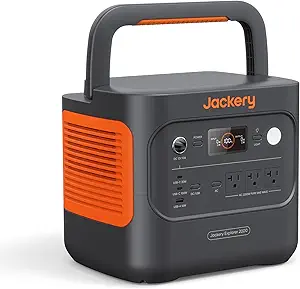 | Best for Long-Lasting Power and Portability | Wattage: 2200W | Battery Capacity: 2042Wh | Fast Charging: Yes | VIEW ON AMAZON | See Our Full Breakdown |
| portable power station 2000w | Battery Type | Capacity | Weight |
|---|---|---|---|
| Jackery Explorer 1000 v2 Porta | LFP (Lithium Iron Phosphate) | 1070Wh | 23.8 lbs |
| Anker SOLIX S2000 Portable Pow | LiFePO4 | — | 35.7 pounds |
| 1000W Portable Power Station 1 | LiFePO4 | 1024Wh | 27.7 lbs |
| 1000W Portable Power Station 1 | LiFePO4 | 1024Wh | 27.73 lbs |
| OUPES Mega 1 Portable Power St | LiFePO4 | 1024Wh | — |
| BLUETTI AC180 Portable Power S | LiFePO4 | — | — |
| Jackery Explorer 2000 v2 Porta | — | — | — |
More Details on Our Top Picks
Jackery Explorer 1000 v2 Portable Power Station, 1070Wh, 1500W
The Jackery Explorer 1000 v2 stands out for its impressive 1070Wh capacity and 1500W AC output, making it capable of powering a range of devices during outdoor adventures or emergencies. Compared with the OUPES Mega 1, it offers comparable power but with a slightly lower surge capacity and fewer expansion options. Its fast one-hour charging technology accelerates setup times, though the weight of 23.8 lbs can be a drawback for those seeking ultra-light portability. The durable Lithium Iron Phosphate (LFP) battery ensures over 4,000 charge cycles, promising longevity, but the solar charging capability is limited to Jackery panels, which could restrict flexibility. Overall, this model appeals to users who want balanced performance, portability, and reliable battery life—though it’s less suitable for those needing solar flexibility or ultra-lightweight gear.
Pros:- High capacity of 1070Wh for extended power needs
- Fast charging in just one hour
- Long-lasting battery with over 4,000 charge cycles
- Multiple ports for diverse device connectivity
Cons:- Heavy at nearly 24 lbs, less ideal for frequent carrying
- Limited to Jackery solar panels for solar charging
Best for: Outdoor enthusiasts and campers who need a dependable, versatile power source with fast charging and high cycle life.
Not ideal for: Light travelers or ultra-portable users who prioritize minimal weight over capacity and durability.
- Capacity:1070Wh
- AC Output:1500W
- Surge Peak:3000W
- Weight:23.8 lbs
- Charging Time:1 hour (fast charging), 1.7 hours (full charge)
- Battery Type:LFP (Lithium Iron Phosphate)
- Charge Cycles:Over 4,000
- Ports:2 USB-C, 1 USB-A, 1 DC car port, 3 AC ports
Our verdict“This power station offers a solid balance of capacity, speed, and durability ideal for outdoor and emergency use, though its weight and solar limitations might be drawbacks for ultra-portable needs.”
Anker SOLIX S2000 Portable Power Station, 2010Wh, 3000W Peak, Home Backup
The Anker SOLIX S2000 provides a substantial 2010Wh capacity with a peak output of 3000W, positioning it as an excellent choice for home backup, especially during outages. Unlike the Jackery Explorer 1000 v2, which is more suited for portable outdoor use, the SOLIX S2000 emphasizes high capacity and sustained power, supporting multiple devices simultaneously with eight outlets. Its lightweight design at 35.7 pounds offers portability but less so than smaller units, making it better suited for stationary backup rather than frequent hauling. It supports solar input and multiple charging options, yet lacks a dedicated 12V DC port, limiting some device compatibility. This model suits homeowners needing reliable backup power or those who want to run multiple appliances during outages, but it may be too bulky for frequent outdoor trips.
Pros:- Extensive 2010Wh capacity for prolonged backup
- Supports solar input and multiple charging methods
- Multiple outlets for simultaneous device use
- Lightweight and compact relative to capacity
Cons:- Lacks a 12V DC port for certain devices
- Heavier than smaller portable units, less mobile for outdoor trips
- Limited runtime for high-wattage loads
Best for: Homeowners seeking a robust backup system with ample outlets for multiple appliances and long runtime.
Not ideal for: Travelers or outdoor users who prioritize ultra-lightweight portable power that can go off-grid easily.
- Watt-hours:2010Wh
- Peak Power:3000W
- Continuous Power:1500W
- Weight:35.7 pounds
- Runtime:35 hours
- Battery Type:LiFePO4
- Dimensions:8.19″L x 11.1″W x 12.7″H
- Solar Compatibility:up to 300W
Our verdict“This power station is ideal for home backup or emergency power with high capacity and multiple outlets, though its weight and size limit portability for outdoor adventures.”
1000W Portable Power Station 1024Wh LiFePO4 for Outdoor & Home
The 1024Wh LiFePO4 model offers a balanced mix of portability and power with a 1000W continuous output, making it well-suited for outdoor activities and emergency backup. Compared to the OUPES Mega 1, it provides similar capacity but with a slightly lower surge capacity and fewer expansion options, making it more straightforward for casual users. Its lightweight design at 27.7 pounds and built-in safety features enhance its appeal for backpackers or those needing a compact power solution. However, the runtime at full load is only about 2 minutes, which limits its effectiveness for sustained use. Solar compatibility up to 300W adds flexibility, yet reliance on sunlight can reduce its reliability in overcast conditions. This is a good pick for users prioritizing portability over prolonged high-power demands.
Pros:- Lightweight at 27.7 lbs and highly portable
- Supports fast charging and multiple device ports
- Long cycle life with LiFePO4 chemistry
- Solar compatible up to 300W
Cons:- Runtime limited to 2 minutes at full load
- Heavy for some users at nearly 28 lbs
- Requires sunlight for effective solar charging
Best for: Campers and emergency kit owners who need a lightweight, safe power source with decent capacity and fast charging.
Not ideal for: Power users requiring long runtime or high surge capacity for demanding appliances or prolonged use.
- Capacity:1024Wh
- Wattage:1000W
- Battery Type:LiFePO4
- Weight:27.7 lbs
- Run Time:2 minutes at full load
- Solar Input:up to 300W
- Dimensions:18″L x 12″W x 16″H
Our verdict“This model is best suited for outdoor use and emergency preparedness where portability and safety are priorities, despite limited runtime at maximum load.”
1000W Portable Power Station 1024Wh LiFePO4 for Outdoor & Home
The 1024Wh LiFePO4 power station is designed for users who need reliable, safe power for outdoor or emergency use, with a continuous 1000W output and fast multi-port charging. Its design closely resembles the previous model but emphasizes safety features and slightly improved portability. Compared to the Anker SOLIX S2000, it offers less overall capacity but is more lightweight and easier to handle. Its 2-minute runtime at full load is similar, which limits its suitability for prolonged high-demand applications. Solar compatibility up to 300W and fast charging make it versatile, but the limited runtime and weight (27.73 lbs) might be concerns for users who need extended off-grid power or ultra-light portability. It’s a solid choice for those balancing safety, portability, and quick charging.
Pros:- Long-lasting LiFePO4 battery with safety features
- Supports fast multi-port charging
- Solar compatible for off-grid use
- Lightweight at 27.73 lbs for its capacity
Cons:- Limited runtime of 2 minutes at full load
- Relatively heavy compared to smaller units
- Solar input dependent on sunlight availability
Best for: Backyard campers and emergency kits needing quick, safe, portable power with fast recharge features.
Not ideal for: High-demand users or those requiring long-lasting runtime for heavy appliances or sustained loads.
- Capacity:1024Wh
- Wattage:1000W
- Battery Type:LiFePO4
- Weight:27.73 lbs
- Run Time:2 minutes at full load
- Solar Input:up to 300W
- Dimensions:18″L x 12″W x 16″H
Our verdict“This power station offers fast charging and safety for short-term, portable power needs, but its limited runtime constrains prolonged use.”
OUPES Mega 1 Portable Power Station 1024Wh 2000W (4500W Surge)
The OUPES Mega 1 distinguishes itself with a 1024Wh capacity and a robust 2000W continuous output, capable of powering sensitive electronics and demanding appliances. Its modular design, supporting expansion up to 5120Wh, offers scalability rarely seen in portable units. Compared to the Jackery Explorer 1000 v2, it delivers higher surge capacity and professional-grade pure sine wave output, making it suitable for critical applications. The rapid recharge times—AC recharge in 36 minutes and even faster with solar—are industry-leading, but the setup for expansion can be complex for casual users. Its higher price point reflects its advanced capabilities, making it better suited for professionals or serious off-grid users who need scalable, reliable power for demanding environments.
Pros:- Fast recharge with industry-leading speed
- Modular design allows capacity expansion
- Pure sine wave output for sensitive electronics
- Reliable UPS technology for critical loads
Cons:- Higher price reflecting advanced features
- Complex setup for expansion for non-experts
Best for: Professionals and serious off-grid users requiring scalable, high-demand power with fast recharge and sensitive electronics protection.
Not ideal for: Casual campers or users on a tight budget who do not need expandable capacity or professional-grade features.
- Capacity:1024Wh
- Continuous Power:2000W
- Surge Power:4500W
- Recharge Time (AC):36 minutes
- Recharge Time (AC + Solar):26 minutes
- Battery Type:LiFePO4
- Expansion Capacity:up to 5120Wh
- Outputs:dual 100W USB-C PD, four QC3.0 USB-A, 12V DC, AC outlets
Our verdict“This model caters to professionals and power users needing scalable, high-demand, portable power with rapid recharge capabilities, albeit at a premium price.”
BLUETTI AC180 Portable Power Station 1152Wh LiFePO4 Solar Generator
The BLUETTI AC180 stands out for its rapid 1-hour charging time, making it an excellent choice for those who need quick power replenishment during emergencies or on-the-fly setups. Compared with the Jackery Explorer 2000 v2, which takes about an hour and 7 minutes to charge, the AC180 offers a slight edge in speed, though it comes with a heavier weight at 37.4 pounds. Its 1152Wh capacity supports a wide range of devices, and the boost mode furthers its appeal for higher power needs, especially in off-grid or camping scenarios. The multiple outlets (11 total) and quick recharge make this a reliable backup, but the limited details on solar efficiency leave some questions for solar-focused users. Its higher weight could be a barrier for frequent portage, and the price remains unspecified, which might influence value perception.
Pros:- Fast charging in just 1 hour
- High capacity supports multiple devices simultaneously
- Multiple outlets and boost mode for high power demands
- Reliable as an emergency backup power source
Cons:- Relatively heavy at 37.4 pounds, challenging for portability
- Limited information on solar charging efficiency
Best for: Preppers and emergency responders who prioritize rapid recharge and high capacity for diverse device support
Not ideal for: Light outdoor enthusiasts or frequent travelers who prefer ultra-lightweight gear and detailed solar performance info
- Battery Capacity:1152 Wh
- Battery Type:LiFePO4
- Output Power:1800W (up to 2700W with boost)
- Charging Time:1 hour
- Solar Input:500W
- Item Weight:37.4 pounds
- Number of Outlets:11
- Voltage:120 volts
Our verdict“This power station is ideal for users needing high capacity and rapid recharge in emergency or backup scenarios, accepting some weight tradeoffs.”
Jackery Explorer 2000 v2 Portable Power Station, 2042Wh, 2200W AC Output
The Jackery Explorer 2000 v2 offers a substantial 2042Wh capacity paired with a 2200W continuous AC output, making it well-suited for extended backup needs, camping, or small business use. Compared to the BLUETTI AC180, which has a slightly smaller capacity and faster recharge, the Jackery emphasizes durability with a 10-year battery lifespan and a more portable design at 39.5 pounds. Its three AC outlets are fewer, but the unit’s lightweight profile and fast charging options—via AC or solar—highlight its user-friendly, long-term reliability. The absence of built-in wheels might limit mobility for some, but its overall design supports longer, more sustained power needs, especially for users who prioritize longevity and ease of transport over maximum outlet count.
Pros:- High-capacity 2042Wh battery supports extended use
- Lightweight and compact for portability
- Fast charging via AC and solar options
- Durable LiFePo4 battery with 10-year lifespan
Cons:- Limited to 3 AC outlets, fewer than some competitors
- No built-in wheels, making transport less effortless
Best for: Campers, small business operators, and homeowners seeking durable, long-lasting power with easy portability
Not ideal for: Outdoor users who need maximum outlets or ultra-lightweight equipment for frequent hikes or backpacking
- Wattage:2200W
- Battery Capacity:2042Wh
- Fast Charging:Yes
- Item Weight:39.5 pounds
- Item Dimensions:13.2″L x 10.4″W x 11.5″H
- Number of Outlets:3
- Cell to Body Technology:Yes
Our verdict“This model is best for users demanding high capacity and long-term reliability, accepting some limitations in outlet count and portability features.”

How We Picked
To evaluate these portable power stations, I focused on performance metrics like continuous wattage, battery capacity, and surge power to ensure they meet a 2000W threshold. Usability factors such as size, weight, and user interface were also considered, as these influence portability and ease of use. Build quality and battery chemistry, especially the inclusion of LiFePO4 cells, were prioritized for safety and longevity. I also looked at value propositions, including price, warranty, and additional features like fast charging or multiple outputs. The ranking reflects a balance of these factors, favoring models that deliver consistent power, durability, and versatility for various use cases, from outdoor adventures to backup power at home.| portable power station 2000w | Battery Type |
|---|---|
| Jackery Explorer 1000 v2 Porta | LFP (Lithium Iron Phosphate) |
| Anker SOLIX S2000 Portable Pow | LiFePO4 |
| 1000W Portable Power Station 1 | LiFePO4 |
| 1000W Portable Power Station 1 | LiFePO4 |
| OUPES Mega 1 Portable Power St | LiFePO4 |
| BLUETTI AC180 Portable Power S | LiFePO4 |
| Jackery Explorer 2000 v2 Porta | — |
Factors to Consider When Choosing Portable Power Station 2000w
Choosing the right portable power station 2000W involves understanding your specific needs and balancing key features. Capacity and wattage ratings determine how much power you can draw and for how long. Portability is essential if you plan to move the unit frequently, but often comes with tradeoffs in size and weight. Battery chemistry impacts longevity and safety, with LiFePO4 offering longer cycle life. Compatibility with solar panels can enable off-grid recharging, important for outdoor or emergency use. Finally, consider the number and type of outlets, as well as charging speed, to ensure the station fits your device array and usage patterns.Power and Capacity
Matching a power station’s wattage and capacity to your needs is critical. A 2000W unit should comfortably handle common appliances like mini-fridges, laptops, and lights. Higher surge capacity ensures the station can start demanding devices without issues. Think about the runtime: larger capacities like 2000Wh or more allow longer operation, especially if you plan to use it for extended periods or multiple devices simultaneously. Overestimating your needs can lead to unnecessary weight and cost, so evaluate your typical power consumption carefully.
Portability and Weight
While a 2000W power station offers substantial power, it often comes with increased weight and size. Lighter models tend to sacrifice some capacity or output power but improve portability—ideal for outdoor use or frequent transport. Conversely, heavier units might provide more features or longer runtime but can be cumbersome to carry. Consider how you’ll use the station: if it’s mainly for home backup, weight might be less of an issue, but for camping or RV trips, portability becomes a priority. Balance these factors based on your primary use case.
Battery Chemistry and Longevity
Battery chemistry influences lifespan, safety, and charging cycles. LiFePO4 batteries are increasingly popular because they last longer—often over 2000 cycles—and are thermally stable, reducing safety risks. However, they tend to come at a higher upfront cost. Traditional lithium-ion batteries might be cheaper but degrade faster, reducing long-term value. When investing in a 2000W station, consider how many years and cycles you expect to use it, especially if you plan to rely heavily on it for emergency power or frequent use.
Charging Options and Speed
Fast and versatile charging options help maximize uptime. Look for units with multiple input methods, such as AC wall charging, solar input, and car adapters. Solar compatibility, in particular, allows for off-grid recharging, which is vital for outdoor or emergency scenarios. Pay attention to charging speeds: some models can recharge to full in a few hours, while others may take much longer, impacting usability. Also, check if the station supports pass-through charging, so it can power devices while recharging itself.
Outputs and Compatibility
The type and number of outlets determine what devices you can run simultaneously. Ensure the station has sufficient AC outlets, USB ports, and DC car ports for your needs. Some models include advanced features like USB-C Power Delivery or fast-charging ports, which can significantly improve usability. Compatibility with solar panels and other power sources adds flexibility, especially for outdoor or off-grid use. Always verify that the outlet wattages meet your device requirements to prevent overloads or insufficient power delivery.
Frequently Asked Questions
Can I run my refrigerator with a 2000W portable power station?
Most standard mini-fridges or small household refrigerators can run on a 2000W power station, provided their startup surge is within the station’s peak wattage capacity. Many models specify their surge wattage, which is critical during compressor startup. It’s advisable to check your refrigerator’s startup wattage and compare it with the surge capacity of the station. Using a power station with at least 20-30% higher surge capacity than your appliance’s startup wattage can improve reliability and prevent shutdowns.
How long will a 2000Wh power station run my devices?
The runtime depends on your device’s power draw. For example, a device consuming 100W can run roughly 20 hours on a 2000Wh capacity (2000Wh/100W). If your devices draw more power, runtime decreases proportionally. Keep in mind that surge power and efficiency losses also impact actual runtime. For multiple devices or higher power appliances, expect shorter durations. It’s helpful to list your devices’ wattages and do a simple calculation to estimate total runtime before purchasing.
Is solar recharging practical with a 2000W portable power station?
Yes, many 2000W stations support solar input, enabling off-grid recharging. The practicality depends on your solar panel setup, sunlight conditions, and the station’s input capacity. Most units specify their maximum solar input wattage; exceeding this limit won’t increase charging speed and can damage the system. Solar recharging is especially useful for extended outdoor use or emergency preparedness, but it requires investment in compatible panels and patience for full recharging—often several hours or a day, depending on sunlight and panel size.
What safety features should I look for in a portable power station?
Safety features such as overvoltage, overcurrent, short circuit, and thermal protection are essential for reliable operation. Many reputable models include built-in protection circuits to prevent damage to both the station and connected devices. Battery management systems (BMS) are standard in higher-quality units, ensuring safe charging and discharging cycles. Consider units with clear indicator lights or app connectivity to monitor real-time status, which can help prevent overloads or overheating, especially during heavy use or in extreme conditions.
Is it worth paying extra for a LiFePO4 battery in a 2000W power station?
Investing in a LiFePO4 battery generally offers better long-term value, as these batteries last significantly longer—often over 2000 cycles—compared to traditional lithium-ion batteries. They are also more thermally stable and safer, reducing risks of overheating or fire. While the initial cost is higher, the extended lifespan means fewer replacements and lower total ownership costs over time. If you plan to rely heavily on your power station for years or need a safer, more durable option, paying extra for LiFePO4 is often justified.
Conclusion
For most users, the Jackery Explorer 2000 v2 provides a reliable and well-rounded option, making it the best overall choice. Those with high power demands or seeking maximum peak wattage might prefer the Anker SOLIX S2000 for its superior surge capacity. If budget-conscious shoppers want solid performance without breaking the bank, the OUPES Mega 1 offers excellent value. Beginners or occasional users should consider lighter, simpler models, while outdoor enthusiasts will benefit from units with solar compatibility and rugged build. By considering your specific needs—whether for home backup, outdoor adventures, or emergency power—you can select the station that balances capacity, portability, and features effectively.