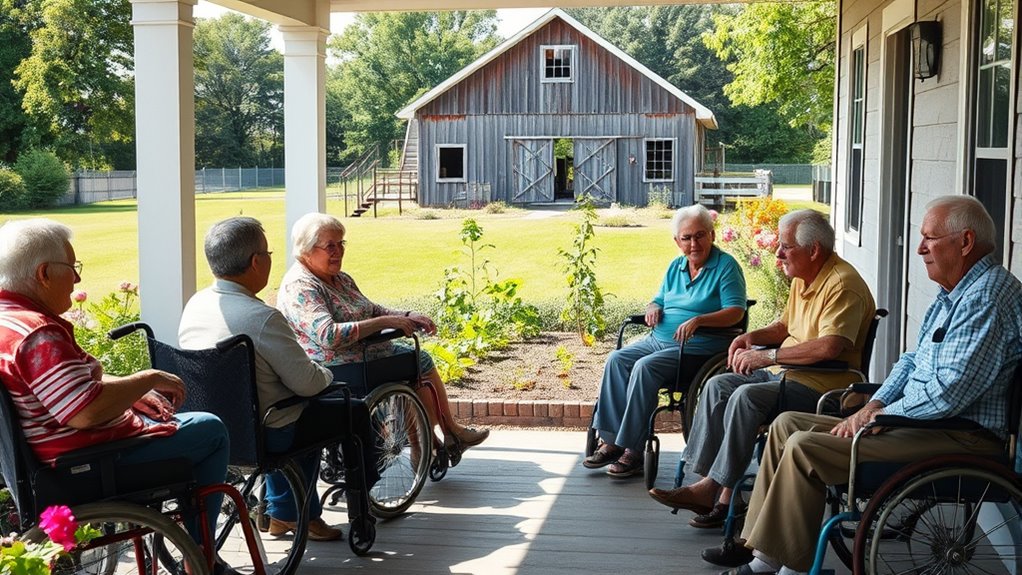

As Missouri’s population ages, you’ll notice more demand for senior healthcare, accessible transportation, and supportive living options. Communities are responding by expanding healthcare services, developing retirement communities, and improving infrastructure for better mobility. These efforts aim to keep seniors active, independent, and connected. If you want to explore how these community solutions are shaping the future for Missouri’s seniors, there’s a lot more to discover beyond this overview.
Key Takeaways
- Missouri’s growing senior population increases demand for specialized healthcare and accessible community resources.
- Expansion of retirement communities and senior-focused services promote independence and social engagement.
- Infrastructure improvements, like accessible transportation, support aging in place and enhance quality of life.
- Local policies focus on affordable housing, healthcare access, and recreational programs for seniors.
- Community collaborations address challenges and create supportive environments for Missouri’s aging residents.
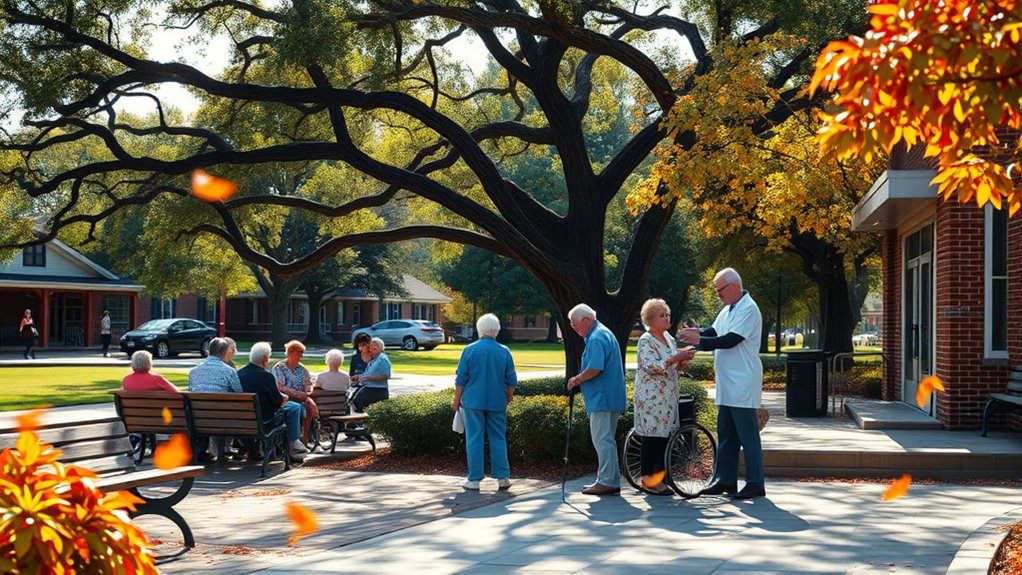
Missouri is experiencing a significant shift as its population ages, with the number of residents aged 65 and older steadily increasing. This demographic change brings both opportunities and challenges, particularly in how you access senior healthcare and choose living arrangements. As more seniors remain active and independent longer, the demand for specialized healthcare services grows. You’ll find that local healthcare providers are expanding their senior healthcare offerings, focusing on managing chronic conditions, mobility issues, and mental health needs. These services are critical because they help you maintain your quality of life and independence. However, charting this landscape can feel overwhelming, especially with the variety of options and the need for tailored care plans.
Retirement communities are becoming an increasingly popular choice among seniors in Missouri. These communities aren’t just about aging in place but offer a vibrant, community-focused environment designed to meet your unique needs. Whether you prefer a maintenance-free apartment, assisted living facilities, or memory care units, retirement communities provide a range of services that promote safety, social interaction, and wellness. You benefit from on-site healthcare support, social activities, and amenities that foster a sense of belonging. Moving into a retirement community can ease your worries about home upkeep and healthcare management, allowing you to focus on enjoying your retirement years.
As the population continues to age, the importance of accessible transportation and community resources becomes clear. You’ll want to contemplate how easy it is to reach healthcare providers, grocery stores, and social activities. Many communities are adapting by offering transportation services and developing senior-friendly infrastructure. These enhancements improve your ability to stay connected and independent. Additionally, local governments and organizations are increasingly collaborating to create programs that support aging in place, which helps you remain in your familiar environment longer.
The rising senior population also prompts a need for policy and community planning. You may see initiatives aimed at improving senior healthcare access and expanding retirement community options. These efforts can directly benefit you by ensuring better healthcare coverage, more affordable housing options, and increased social and recreational opportunities. Staying informed and engaged with local resources empowers you to make choices that best suit your lifestyle and health needs. Furthermore, understanding the diverse environments available for senior living, including lesser-known hidden gems for camping, highlights the importance of exploring all options for a fulfilling lifestyle.

Mobility Scooter for Adults, Senior, 4 Wheels Electric Powered Chargeable Device for Travel, Lightweight Mobility Scooter, with LED Headlights and Basket, Charger Included
Long Range :The mobility scooter has a compact and convenient design and can support up to 300lbs. With…
As an affiliate, we earn on qualifying purchases.
As an affiliate, we earn on qualifying purchases.
Frequently Asked Questions
How Does Missouri Compare to Other States in Aging Population Growth?
You’ll find that Missouri’s aging population growth is slower than some states but still significant. Demographic trends show that the state’s senior population is increasing, reflecting national patterns, but at a more moderate pace. Compared to states with large retirement communities, Missouri’s growth is steady, and you’ll need to watch how this impacts healthcare and community services. Overall, Missouri’s population growth among seniors is notable but less rapid than in other regions.
What Are the Economic Impacts of Missouri’s Aging Demographic?
You’ll feel the financial fallout as Missouri’s aging demographic drives up healthcare costs and strains social services. Retirement savings dwindle, and workforce shortages worsen, hampering economic growth. As more seniors slow down, the economy faces a slowdown, while taxes rise to fund increased support. This demographic dilemma demands dynamic solutions to balance budgets, bolster workforce numbers, and stabilize the state’s economic engine for the future.
Are There Specific Regions Within Missouri More Affected by Aging?
You’ll notice that rural communities in Missouri are more affected by aging than urban areas, which often have younger populations and more resources. Rural regions face greater challenges with healthcare access, transportation, and social services for seniors. Urban areas, while still impacted, tend to have better infrastructure and support networks. This regional disparity requires tailored solutions to guarantee all seniors receive the care and support they need.
How Are Local Governments Planning for Increased Healthcare Needs?
You see local governments actively planning for increased healthcare needs by prioritizing community health and developing thorough policy planning. They’re expanding senior services, investing in healthcare infrastructure, and forging partnerships with local organizations. These efforts aim to guarantee accessible, high-quality care as the aging population grows. Visualize community health initiatives and policy planning working together to create a supportive environment, helping seniors stay healthy and engaged while easing the strain on healthcare systems.
What Role Do Families and Caregivers Play in Supporting Seniors?
You play a crucial role in supporting seniors through family involvement and caregiver support. Your active participation helps manage daily needs, provides emotional comfort, and guarantees safety. By staying informed, offering assistance, and coordinating with healthcare providers, you improve their quality of life. Your commitment makes a significant difference, fostering independence and dignity for seniors while also easing the burden on professional caregivers.

Moving to a Care Home: A Passport to Your New Way of Life
As an affiliate, we earn on qualifying purchases.
As an affiliate, we earn on qualifying purchases.
Conclusion
As you see, Missouri’s aging population presents real challenges, but community solutions can make a difference. Remember, “It takes a village,” and by working together, you can help support older residents’ needs. Whether through volunteering, advocating, or simply being there, your involvement matters. Stay engaged and proactive—because when everyone pitches in, you turn challenges into opportunities for a stronger, more compassionate community.

Accessible USA: Inclusive Travel Across the United States for Seniors and Disabled Travelers (Accessible Travel Adventures: Exploring the World Without Limits)
As an affiliate, we earn on qualifying purchases.
As an affiliate, we earn on qualifying purchases.
So Alive After 55: Your Guide To The Finer Points Of Active Adult Living
As an affiliate, we earn on qualifying purchases.
As an affiliate, we earn on qualifying purchases.