Missouri cities are strengthening trust by implementing community policing strategies that focus on neighborhood engagement and open communication. Police officers become familiar faces, attend local events, and work closely with residents to address quality-of-life concerns. They also undergo training in cultural competence and effective communication, fostering a respectful approach. These ongoing efforts build genuine relationships and proactive partnerships, making communities safer and more trusting. Keep exploring how these strategies are making a real difference.
Key Takeaways
- Missouri cities implement neighborhood engagement strategies, encouraging officers to participate in community events and build familiarity with residents.
- Police training emphasizes de-escalation, cultural competence, and effective communication to foster respectful interactions.
- Community policing shifts focus from reactive enforcement to proactive partnerships, addressing local concerns directly.
- Consistent, genuine engagement by officers helps build trust and strengthens relationships with diverse populations.
- Long-term commitment to education and relationship-building in Missouri communities promotes safety, mutual respect, and ongoing collaboration.
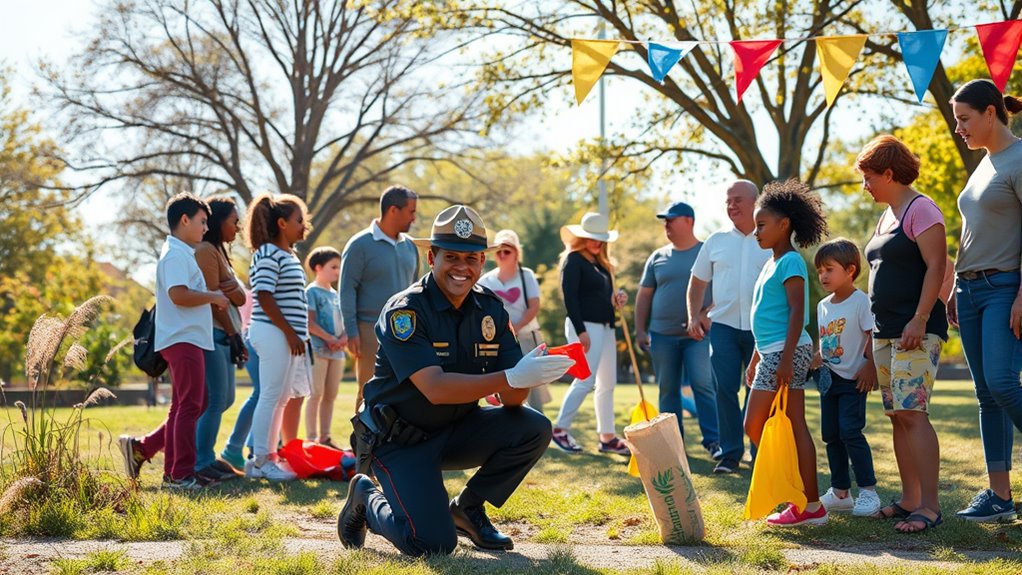
Have you ever wondered how police can better serve communities? It all starts with building trust, and that’s where community policing makes a real difference. In Missouri cities, law enforcement agencies are turning to neighborhood engagement and targeted officer training to strengthen bonds with residents. By actively involving community members in safety efforts, police can better understand local needs, address concerns directly, and foster a sense of shared responsibility. This approach shifts the focus from merely responding to crimes to working collaboratively with residents to prevent them, creating safer environments for everyone.
Neighborhood engagement is at the heart of community policing. Officers don’t just patrol from afar; they become familiar faces in the neighborhoods they serve. This means attending community meetings, participating in local events, and establishing open lines of communication with residents. When officers listen to concerns about quality-of-life issues, such as drug activity or traffic safety, they can tailor their responses more effectively. These efforts demonstrate that police genuinely care about the community’s well-being, encouraging residents to trust and cooperate with law enforcement. The result is a more unified effort to solve problems, rather than a one-sided approach that can alienate residents.
Equally important is officer training that emphasizes community-oriented skills. Police officers aren’t just trained to enforce laws—they’re also taught how to de-escalate tense situations, communicate effectively, and show cultural competence. This training equips officers with the tools to handle diverse populations respectfully and empathetically, which is crucial in neighborhoods that may have historically experienced strained relationships with law enforcement. When officers understand the social and cultural dynamics at play, they can respond more thoughtfully and reduce misunderstandings or conflicts. This approach not only improves daily interactions but also contributes to long-term trust-building.
Missouri’s efforts in community policing demonstrate that investing in neighborhood engagement and extensive officer training pays off. It transforms policing from a reactive service into a proactive partnership. Citizens feel more comfortable approaching officers, sharing concerns, and participating in neighborhood initiatives. Officers, in turn, gain better insights into the communities they serve, making their efforts more effective and meaningful. As these strategies continue to evolve, Missouri cities are proving that building trust isn’t a quick fix—it requires consistent, genuine engagement and ongoing education. In the end, community policing isn’t just about reducing crime; it’s about creating partnerships that promote safety, respect, and mutual understanding. Additionally, emphasizing community engagement helps law enforcement build stronger relationships with diverse populations, fostering more effective and respectful interactions.

Community Policing: Partnerships for Problem Solving (MindTap Course List)
As an affiliate, we earn on qualifying purchases.
As an affiliate, we earn on qualifying purchases.
Frequently Asked Questions
How Do Community Policing Programs Measure Success?
You measure success in community policing programs through increased community engagement and crime reduction. When residents actively participate in neighborhood meetings, patrols, and feedback sessions, it shows trust is growing. Additionally, a decline in crime rates indicates the program’s effectiveness. Tracking these metrics over time helps you see if your efforts foster stronger relationships and safer neighborhoods. Successful programs create a sense of partnership between officers and residents.
What Challenges Do Missouri Cities Face in Implementing Community Policing?
You face challenges like fostering neighborhood engagement and developing cultural competence. Building trust requires overcoming mistrust, managing diverse community needs, and ensuring officers understand various cultural backgrounds. Limited resources and resistance to change can hinder efforts. To succeed, you must prioritize open communication, invest in community relationships, and train officers to be culturally aware. Overcoming these challenges helps create safer, more connected neighborhoods where everyone feels valued and heard.
How Is Community Feedback Incorporated Into Policing Strategies?
You see that police transparency and community engagement are key to incorporating feedback into strategies. Officers actively seek public input through town halls, surveys, and social media, ensuring your voice influences policing practices. Your feedback helps departments identify concerns, build trust, and improve transparency. By participating, you contribute to shaping policies that reflect community needs, fostering a collaborative environment where everyone feels heard and respected.
Are Community Policing Initiatives Cost-Effective?
Think of community policing as planting a garden; with proper funding sources and dedicated officer training, it’s cost-effective. You’ll see fewer issues needing costly fixes later, making it a smart investment. By nurturing relationships and building trust, police can prevent problems before they grow, saving resources. So, yes, these initiatives are worth the effort and expense, fostering safer, more connected neighborhoods that flourish over time.
How Do Officers Build Trust With Diverse Community Groups?
You build trust with diverse community groups by practicing cultural competence, showing you understand and respect their unique backgrounds. Engage actively in neighborhoods by attending local events, listening to concerns, and collaborating on solutions. When you demonstrate genuine interest and openness, community members feel valued and respected, fostering stronger relationships. Consistent neighborhood engagement and cultural awareness help break down barriers, making trust grow naturally over time.

Beyond Verbal Judo: The Next Evolution in Police De-Escalation
As an affiliate, we earn on qualifying purchases.
As an affiliate, we earn on qualifying purchases.
Conclusion
You see, community policing creates connection, comfort, and trust in towns and cities. By building bonds, boosting safety, and breaking barriers, Missouri cities demonstrate dedication and determination. As neighborhoods nurture new norms, noise levels lower, and neighborhoods flourish. Remember, real relationships foster respect, resolve, and resilience. So, stay supportive, stay engaged, and support the steady, sincere shift toward stronger, safer communities where everyone’s voice is valued and victory is visible.

Policing Humanity: Thinking sociologically for critical reasoning and cultural competence
As an affiliate, we earn on qualifying purchases.
As an affiliate, we earn on qualifying purchases.

Pocket Neighborhoods: Creating Small-Scale Community in a Large-Scale World
As an affiliate, we earn on qualifying purchases.
As an affiliate, we earn on qualifying purchases.