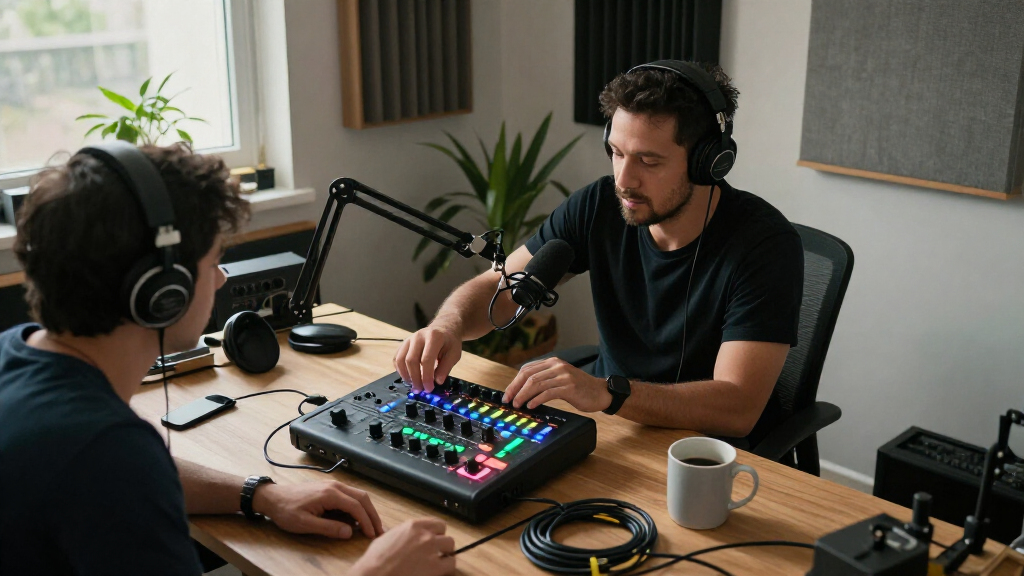
Finding the right portable podcast mixers means balancing power with packability, a tradeoff that defines this entire category. My top recommendation is the Zoom PodTrak P4, which stands out for its intuitive interface and reliable SD card recording that eliminates computer dependency. For those needing more production features, the RØDECaster Pro II offers a superior tactile experience and advanced processing, though it demands more space and power. Meanwhile, budget-conscious creators will appreciate the MAONO E2 Gen2 for its straightforward USB integration and clean preamps. The main challenge here is choosing between standalone recorders that work without a laptop and interfaces that require one, a decision that dictates your entire workflow. Continue reading to see how these options stack up against each other in real-world scenarios.

Get everyday essentials delivered free with Prime
- Fast, free delivery on millions of items
- Prime Video, Amazon Music and more included
- Member-only deals all year
Key Takeaways
- Standalone recorders like the Zoom PodTrak P4 offer greater reliability by removing computer crashes from the equation, whereas USB interfaces like the Focusrite Vocaster Two require a connected laptop or tablet.
- The RØDECaster Pro II dominates the premium segment due to its integrated sound pads and touchscreen controls, which reduce post-production editing time compared to basic mixers.
- Battery-powered options such as the Zoom LiveTrak L-8 are rare but critical for field recording, distinguishing them from the majority of mixers that rely on USB power or wall outlets.
- Bundle kits like the TENLAMP G10 often include lower-quality microphones that bottleneck audio performance, making it smarter to buy a dedicated mixer and upgrade mics separately.
- Latency monitoring capabilities vary widely; only higher-end units provide zero-latency direct monitoring, a feature essential for remote guests using software like Zoom or Riverside.
| FIFINE AmpliGame SC3 Gaming Audio Mixer |  | Best for Compact Streaming Controls | Channels: 4 | Connectivity: USB; XLR microphone input | Power: USB-C | VIEW LATEST PRICE | See Our Full Breakdown |
| MAONO E2 Gen2 Podcast Audio Interface and Mixer |  | Best for Battery-Powered Two-Mic Sessions | Channels: 10 | XLR inputs: 2 | Maximum sample rate: 48 kHz | VIEW LATEST PRICE | See Our Full Breakdown |
| TENLAMP G10 Creator Audio Mixer Bundle with Microphone |  | Best Starter Bundle | Channels: 2 | Connectivity: Auxiliary, Bluetooth, USB | Power: Battery powered | VIEW LATEST PRICE | See Our Full Breakdown |
| Focusrite Vocaster Two Podcasting Interface | 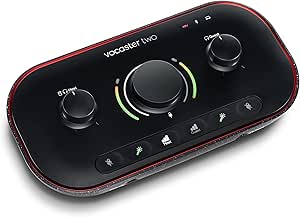 | Best for Simple Host-and-Guest Recording | Microphone inputs: 2 | Headphone outputs: 2 | Connectivity: USB | VIEW LATEST PRICE | See Our Full Breakdown |
| Zoom PodTrak P4next Podcast Recorder |  | Best for Portable Multi-Mic Recording | Microphone inputs: 4 XLR | Headphone outputs: 4 with separate volume controls | Maximum gain: +70 dB | VIEW LATEST PRICE | See Our Full Breakdown |
| Zoom PodTrak P4 Portable Podcast Recorder |  | Best Compact Recorder for Call-In Podcasts | Microphone inputs: 4 XLR inputs with phantom power | Headphone outputs: 4, each with individual volume control | Recording format: WAV multitrack recording | VIEW LATEST PRICE | See Our Full Breakdown |
| Zoom LiveTrak L-8 Battery-Powered Mixer and Recorder |  | Best for Multitrack Field Sessions | Channels: 8 | Simultaneous recording: Up to 12 tracks | Recording resolution: 24-bit/96 kHz | VIEW LATEST PRICE | See Our Full Breakdown |
| BM-800 Podcast Equipment Bundle with Voice Changer and Live Sound Card (AM100-V8) |  | Best Starter Bundle for a Single Creator | Microphone: BM-800 condenser microphone | Channels: 1 | Connectivity: USB | VIEW LATEST PRICE | See Our Full Breakdown |
| G10 Podcast Equipment Bundle with Audio Mixer and Microphone |  | Best for Voice Effects on a Budget Setup | Channels: 2 | Connectivity: 3.5 mm, 6.35 mm, XLR/48V, Bluetooth, and Type-C | Power source: Battery powered | VIEW LATEST PRICE | See Our Full Breakdown |
| RØDE RØDECaster Pro II All-in-One Audio Production Studio |  | Best Premium All-in-One Studio | Channels: 9 | Inputs: 4 combo inputs for microphone, line, and instrument | USB interfaces: Dual USB-C | VIEW LATEST PRICE | See Our Full Breakdown |
| SINWE F988 Live Sound Card Audio Mixer for Podcasting and Streaming |  | Best Compact Mixer for Effects | Model: F988 | Channels: 4 | Connectivity: USB | VIEW LATEST PRICE | See Our Full Breakdown |
| Podcast Equipment Bundle for 2 – Audio Interface with Voice Changer Condenser Microphones and All‑In‑One Mixer |  | Best Two-Person Starter Bundle | Channels: 2 | Connectivity: Bluetooth, USB | Connector type: XLR | VIEW LATEST PRICE | See Our Full Breakdown |
| MAONO Podcast Equipment Bundle with Audio Mixer and 3.5 mm Microphone |  | Best for Built-In Sound Effects | Channels: 9 | Connectivity: USB Type-C, 3.5 mm, auxiliary, Bluetooth | Audio inputs: Microphone, AUX, Bluetooth | VIEW LATEST PRICE | See Our Full Breakdown |
| M100 Podcast Equipment Bundle for 4 – Audio Mixer with Dynamic Microphones |  | Best Portable Kit for Four-Person Shows | Channels: 4 | Connectivity: Bluetooth, USB, XLR | Included microphones: 4 dynamic microphones | VIEW LATEST PRICE | See Our Full Breakdown |
| portable podcast mixer | Channels | Connectivity | Weight |
|---|---|---|---|
| FIFINE AmpliGame SC3 Gaming Au | 4 | USB; XLR microphone input | 0.5 kg |
| MAONO E2 Gen2 Podcast Audio In | 10 | AUX, Bluetooth, USB-C | 0.89 kg |
| TENLAMP G10 Creator Audio Mixe | 2 | Auxiliary, Bluetooth, USB | 4.2 pounds |
| Focusrite Vocaster Two Podcast | — | USB | 1.8 lb |
| Zoom PodTrak P4next Podcast Re | — | — | 10.56 ounces |
| Zoom PodTrak P4 Portable Podca | — | — | — |
| Zoom LiveTrak L-8 Battery-Powe | 8 | — | — |
| BM-800 Podcast Equipment Bundl | 1 | USB | 1.37 kg |
| G10 Podcast Equipment Bundle w | 2 | 3.5 mm, 6.35 mm, XLR/48V, Bluetooth, and Type-C | — |
| RØDE RØDECaster Pro II All-in- | 9 | Bluetooth, USB, and Wi-Fi | — |
| SINWE F988 Live Sound Card Aud | 4 | USB | 0.41 kg |
| Podcast Equipment Bundle for 2 | 2 | Bluetooth, USB | — |
| MAONO Podcast Equipment Bundle | 9 | USB Type-C, 3.5 mm, auxiliary, Bluetooth | 1.3 kg |
| M100 Podcast Equipment Bundle | 4 | Bluetooth, USB, XLR | — |
More Details on Our Top Picks
FIFINE AmpliGame SC3 Gaming Audio Mixer
The FIFINE AmpliGame SC3 makes the most sense for a solo creator who wants hands-on control of several audio sources without carrying a full recorder. Its four independent channel controls, mute button, and real-time monitoring make quick level changes easier during a live stream, while 48V phantom power supports an XLR condenser mic. Compared with the MAONO E2 Gen2, it is smaller and lighter, but gives up the MAONO’s two XLR inputs, battery operation, and broader connection options. The SC3’s sound and voice effects suit interactive streams, though they are less important for straightforward spoken-word recording. Its main limitation is clear: USB microphones are not supported, and an XLR cable is not included. I’d choose it for a compact desk setup, not for a multi-mic podcast that needs to record away from a computer.
Pros:- Independent volume controls for four audio channels
- 48V phantom power supports condenser microphones
- Mute and real-time monitoring buttons provide quick recording control
- Customizable sound and voice effects suit interactive streams
Cons:- Does not support USB microphones
- XLR cable is not included
- No built-in battery for untethered recording
Best for: Solo streamers and podcasters with an XLR microphone who want compact, direct control of multiple audio channels at a computer.
Not ideal for: Creators using USB microphones or recording multi-person shows away from a computer; it lacks USB-mic support and a built-in battery.
- Channels:4
- Connectivity:USB; XLR microphone input
- Power:USB-C
- Phantom power:48V
- Outputs:3.5 mm line out and headphone jacks
- Dimensions:4.44 × 6.45 × 1.6 in
- Weight:0.5 kg
- Compatibility:Mac OS and Windows
Our verdict“Choose the SC3 for compact, computer-based streaming with an XLR mic, but pick the MAONO E2 Gen2 for battery-powered, two-mic flexibility.”
MAONO E2 Gen2 Podcast Audio Interface and Mixer
The MAONO E2 Gen2 stands out for podcasters who need two XLR microphones and the freedom to record without staying beside a computer. Its built-in battery rated for up to 8 hours pairs with connections for computers, phones, and tablets, making remote interviews and mobile streaming more practical than with the USB-powered FIFINE SC3. Two XLR inputs and preamps offering up to 60 dB of gain also give it a stronger fit for host-and-guest setups. Loopback and eight customizable sound-effect buttons add options for live content, although they may be more controls than a simple interview needs. The tradeoff is its larger, heavier body, and it cannot charge a connected phone. I’d put it ahead of compact desktop mixers for mobile flexibility, but not for buyers prioritizing a very small rig.
Pros:- Two XLR inputs with preamps offering up to 60 dB of gain
- Built-in battery rated for up to 8 hours
- Supports connections to computers, phones, and tablets
- Loopback and eight customizable sound-effect buttons support live production
Cons:- Does not support phone charging or power delivery
- Larger and heavier than compact options such as the FIFINE SC3
- Its sound effects and extensive controls may be unnecessary for simple interview recording
Best for: Two-person podcast teams and mobile creators who need two XLR mic inputs, device flexibility, and battery-powered sessions.
Not ideal for: Buyers who need a pocketable mixer or want the mixer to charge a connected phone; it is relatively large and offers no phone power delivery.
- Channels:10
- XLR inputs:2
- Maximum sample rate:48 kHz
- Connectivity:AUX, Bluetooth, USB-C
- Battery life:Up to 8 hours
- Dimensions:9.64 × 6.18 × 2.16 in
- Weight:0.89 kg
- Compatible devices:Personal computer, smartphone, tablet
Our verdict“Pick the E2 Gen2 for portable two-mic recording and varied device connections, but choose a smaller USB mixer if you mainly record at a desk.”
TENLAMP G10 Creator Audio Mixer Bundle with Microphone
The TENLAMP G10 bundle is the straightforward entry point here for someone who needs a mixer and microphone in one package. Its included condenser mic and accessories reduce the need to assemble a starter setup piece by piece, while USB and OTG/Type-C connectivity make it usable with computers and mobile devices. Noise reduction, voice effects, and adjustable bass, treble, reverb, and pitch give new creators ways to shape a stream without separate processing gear. Compared with the FIFINE SC3, the G10 includes a microphone and lists phone and tablet compatibility, but it has only two channels and weighs considerably more. The bundled approach is convenient, yet its battery-powered operation means charging becomes part of the routine. I’d treat it as a starter content kit, not a scalable mixer for a growing multi-guest podcast.
Pros:- Includes a mixer, condenser microphone, and accessories
- Noise reduction and adjustable audio controls provide basic sound shaping
- Voice-changing and sound effects support interactive content
- Compatibility includes computers, phones, and tablets
Cons:- Only two channels, limiting multi-microphone growth
- Battery-powered operation requires charging
- At 4.2 pounds, it is less convenient to carry than compact mixers such as the FIFINE SC3
Best for: New creators who need a microphone and basic mixer together for casual streaming, podcasting, or mobile recording.
Not ideal for: Established podcast teams needing more than two channels or a lightweight mixer for frequent travel; the bundle is relatively heavy and battery-powered.
- Channels:2
- Connectivity:Auxiliary, Bluetooth, USB
- Power:Battery powered
- Audio input:TRS / XLR
- Outputs:3.5 mm TRS, 6.35 mm TRS, OTG/Type-C
- Dimensions:10.9 × 2.28 × 7.67 in
- Weight:4.2 pounds
- Compatibility:Windows, Mac, iOS, Android
Our verdict“Choose the G10 if you want a ready-to-start microphone-and-mixer bundle, but choose the MAONO E2 Gen2 for a more capable two-XLR setup.”
Focusrite Vocaster Two Podcasting Interface
The Focusrite Vocaster Two favors clean, uncomplicated host-and-guest recording over the effects-heavy approach of the FIFINE SC3 or TENLAMP G10. Two microphone inputs are matched with separate headphone outputs, so both people can monitor without sharing a listen. Auto Gain helps set mic levels quickly, and the stated gain of over 70 dB gives the interface room to work with microphones that need more input amplification. Bluetooth or a cable connection can bring phone audio into a session, a useful option for call-ins. This is a USB interface rather than a battery-powered field recorder, so it is best for a laptop-based setup. The included product data also lists an unusually stated maximum sample rate of 24,000 kHz, which I would verify with the manufacturer before relying on it. Compared with the Zoom PodTrak P4next, it offers fewer mic inputs and headphone outputs, but a simpler interface for two speakers.
Pros:- Two microphone inputs and separate headphone outputs suit host-and-guest recording
- Auto Gain helps set microphone levels quickly
- Over 70 dB of gain supports microphones needing substantial amplification
- Bluetooth and cable connections allow phone audio capture
Cons:- USB connectivity makes it less suited to battery-powered field recording
- Only two microphone inputs and two headphone outputs, fewer than the Zoom PodTrak P4next
- The listed maximum sample rate of 24,000 kHz is unusually stated and should be verified
Best for: Two-person podcast hosts recording at a computer who want separate headphone monitoring and quick microphone-level setup.
Not ideal for: Mobile field-recording teams or groups with more than two microphones; it is USB-powered and offers only two mic inputs and headphone outputs.
- Microphone inputs:2
- Headphone outputs:2
- Connectivity:USB
- Gain:Over 70 dB
- Maximum sample rate:24,000 kHz (as listed)
- Dimensions:4.45 × 8.84 × 1.99 in
- Weight:1.8 lb
- Compatible operating systems:Mac OS, Windows OS, iOS
- Included components:Vocaster Two, USB-A to USB-C cable
Our verdict“Choose the Vocaster Two for straightforward, computer-based recording with one host and one guest, but opt for the PodTrak P4next when you need four mic and headphone channels.”
Zoom PodTrak P4next Podcast Recorder
The Zoom PodTrak P4next is the strongest fit in this group for recording a small panel away from a studio: it supports four XLR microphones, four headphone outputs with individual level controls, and multitrack WAV recording to an SD card. That standalone recording workflow separates it from the computer-focused Focusrite Vocaster Two, which has two mic inputs and two headphone outputs. Phone connectivity also supports call-in audio and recording sound directly into phone video, while AI noise reduction and tone processing offer useful cleanup tools. The portability comes with a few practical limits: it runs on two AA batteries, and standalone recording requires an SD card. Its 10.56-ounce weight makes it easier to carry than the heavier TENLAMP G10 bundle, but buyers wanting an all-in-one microphone kit will need to supply their own mics and storage.
Pros:- Supports four XLR microphones and multitrack WAV recording
- Four headphone outputs have separate volume controls
- AI noise reduction and audio enhancement effects aid spoken-word recording
- Phone connectivity supports call-ins and audio capture for phone video
Cons:- Requires two AA batteries for power
- An SD card is required for standalone recording
- Microphones and recording storage are not included
Best for: Mobile podcast hosts and small panels who need four XLR microphones, individual headphone levels, and multitrack recording without a computer.
Not ideal for: Beginners seeking a complete mic-and-accessory bundle or anyone who wants recording without buying and managing SD-card storage and AA batteries.
- Microphone inputs:4 XLR
- Headphone outputs:4 with separate volume controls
- Maximum gain:+70 dB
- Recording format:WAV
- Storage:SD card, up to 2 TB
- Power:2 AA batteries
- Weight:10.56 ounces
- Audio interface mode:USB
Our verdict“Choose the PodTrak P4next for portable four-mic sessions and SD-card recording, but pick the Vocaster Two for a simpler two-person computer setup.”
Zoom PodTrak P4 Portable Podcast Recorder
The Zoom PodTrak P4 is the most travel-friendly choice here for small podcast teams that need separate mic inputs and straightforward remote interviews. Its four XLR inputs and four individually controlled headphone outputs let a group record together without relying on a separate headphone amp, while automatic mix-minus helps prevent callers from hearing their own audio returned. Compared with the larger Zoom LiveTrak L-8, the P4 is far smaller and simpler to carry, but it gives up the L-8’s higher track count, monitor mixes, and richer recording setup. Sound pads add quick access to cues, and multitrack WAV recording suits later editing. The tradeoff is endurance: its two AA batteries last up to 3.5 hours, so longer sessions call for spare batteries or a planned power setup.
Pros:- Four XLR mic inputs with phantom power accommodate a small group using condenser microphones.
- Four headphone outputs have individual volume controls, simplifying shared monitoring.
- Automatic mix-minus supports cleaner phone and USB call-in interviews.
- Programmable sound pads and multitrack WAV recording support a portable production workflow.
Cons:- Battery life is limited to up to 3.5 hours, which can constrain longer field sessions.
- It requires two AA batteries, adding spare-battery planning to mobile recording.
- Its USB interface is limited to 2-in/2-out, less capable for computer-based multitrack routing than the LiveTrak L-8.
Best for: Small podcast teams recording on location who need four mic inputs, individual headphone control, and easy phone or USB call-ins.
Not ideal for: Producers recording long sessions or needing extensive routing and high-resolution multitrack capture; the L-8 offers more recording capacity and monitor mixes.
- Microphone inputs:4 XLR inputs with phantom power
- Headphone outputs:4, each with individual volume control
- Recording format:WAV multitrack recording
- USB interface:USB 2.0, 2-in/2-out
- Remote interview connections:TRRS phone jack and USB
- Sound pads:4 programmable
- Power and battery life:2 AA batteries; up to 3.5 hours
- Dimensions and weight:6.1 × 4.41 × 1.85 inches; 130 g
Our verdict“Choose the PodTrak P4 for compact, four-person podcast recording with call-ins, but pick the LiveTrak L-8 for longer or more routing-intensive sessions.”
Zoom LiveTrak L-8 Battery-Powered Mixer and Recorder
The Zoom LiveTrak L-8 earns its place for podcasters who want a more capable recording hub that can still leave the studio. It records up to 12 tracks at 24-bit/96 kHz to an SD card and a computer at the same time, giving editors a standalone backup and a computer workflow in one session. Three independent monitor mixes and four headphone outputs suit guests who need different listening levels. Compared with the smaller PodTrak P4, the L-8 is far more flexible for routing and recording, but its larger footprint and 1,500 g weight make it less convenient to toss into a small kit. It also has only eight channels, so it is not a limitless live-production console. This is the stronger fit for multi-source sessions, not the lightest option for simple interviews.
Pros:- Records up to 12 tracks to an SD card and computer simultaneously.
- 24-bit/96 kHz recording gives editors detailed source tracks for post-production.
- Four headphone outputs and three independent monitor mixes accommodate different listening needs.
- Battery-powered design, onboard effects, and USB interface functions support varied recording locations.
Cons:- At 1,500 g and over 11 inches wide, it is less compact than the PodTrak P4.
- Eight channels may limit larger productions with many simultaneous sources.
- The listed software update support date is unknown.
Best for: Mobile podcast producers and small performance teams who need SD-card backup, computer recording, and separate monitor mixes.
Not ideal for: Solo hosts or small teams prioritizing the lightest possible call-in recorder; the PodTrak P4 is substantially smaller and simpler to carry.
- Channels:8
- Simultaneous recording:Up to 12 tracks
- Recording resolution:24-bit/96 kHz
- Inputs and preamps:6 combo inputs, 2 stereo inputs, and 6 preamps
- Headphone outputs:4
- Independent monitor mixes:3
- Recording media and connectivity:SD card and USB
- Dimensions and weight:11.1 × 10.55 × 2.91 inches; 1,500 g
Our verdict“Pick the LiveTrak L-8 when multitrack recording and separate monitor mixes matter more than minimizing your portable kit.”
BM-800 Podcast Equipment Bundle with Voice Changer and Live Sound Card (AM100-V8)
This BM-800 bundle is aimed at a beginner who wants a microphone, basic live sound card, and mounting accessories in one package rather than a standalone mixer for a multi-mic show. The included scissor arm, shock mount, pop filter, and windscreen help establish a desk recording setup without sourcing each part separately, while voice effects target streaming and calls. Its one-channel design is the key limitation: unlike the Zoom PodTrak P4, it is not built to record several XLR microphones or manage multiple headphone feeds. The listed USB connection and broad device compatibility make it approachable, but the specifications also list Windows as the operating system and no supported software, leaving the exact setup experience less clear. I’d choose it for a single voice on a modest desk, not for a growing podcast team.
Pros:- Bundles a BM-800 microphone with an arm, shock mount, pop filter, and windscreen.
- Cardioid pickup pattern is suited to capturing a single voice in a desk setup.
- Voice effects add live options for streaming, calls, and recording.
- USB connectivity is listed for computers and mobile devices.
Cons:- One channel does not support a multi-microphone podcast setup.
- It lacks the multiple headphone outputs and recorder features of the PodTrak P4.
- The listed Windows compatibility and lack of required software details leave setup requirements unclear.
Best for: New solo streamers or podcasters who want a basic microphone, desk arm, and voice-effect sound card in a single bundle.
Not ideal for: Interview shows, multi-host podcasts, and creators needing several mic inputs or independent headphone monitoring; the PodTrak P4 is designed for those workflows.
- Microphone:BM-800 condenser microphone
- Channels:1
- Connectivity:USB
- Audio input:3.5 mm jack
- Maximum sample rate:192 kHz
- Included accessories:Scissor arm, shock mount, pop filter, foam windscreen, sound card, and cables
- Compatible devices:Laptop, personal computer, and mobile phone
- Weight:1.37 kg
Our verdict“Choose this bundle for an accessory-rich, single-person starter setup, not for a portable mixer workflow with multiple hosts.”
G10 Podcast Equipment Bundle with Audio Mixer and Microphone
The G10 bundle suits creators who want hands-on voice effects and a bundled microphone for streaming or casual podcasting. Its two-channel mixer offers noise reduction, EQ, reverb, and 12 built-in sound effects, with Bluetooth and Type-C among its listed connections. That gives it more effects-oriented controls than the streamlined BM-800 bundle, while the BM-800 package includes a fuller set of microphone accessories. Against the Zoom PodTrak P4, however, the G10 is not a substitute for a multitrack field recorder: its included microphone uses a 3.5 mm connection, and its specs do not describe separate headphone outputs or standalone recording. The conflicting reverb preset counts in the listing also make that feature difficult to pin down. I’d treat it as a feature-rich desktop creator bundle, not a dependable choice for a multi-person mobile show.
Pros:- Includes a two-channel mixer, 3.5 mm condenser microphone, and boom arm.
- Provides noise reduction, EQ, voice effects, and built-in sound effects.
- Lists Bluetooth, Type-C, 3.5 mm, 6.35 mm, and XLR/48V connectivity.
- Battery-powered design supports use away from a fixed AC setup.
Cons:- The included microphone uses a 3.5 mm connection rather than XLR.
- The listing gives conflicting counts for reverb presets.
- The provided specifications do not establish standalone recording or multi-host headphone monitoring.
Best for: Solo streamers and casual podcasters who want an included mic, desktop boom arm, and built-in voice effects for computer or mobile use.
Not ideal for: Podcast teams needing multiple XLR mics, independent headphone mixes, or standalone multitrack recording; the Zoom PodTrak P4 is better suited to those jobs.
- Channels:2
- Connectivity:3.5 mm, 6.35 mm, XLR/48V, Bluetooth, and Type-C
- Power source:Battery powered
- Included microphone:3.5 mm condenser microphone
- Sound effects:12 built-in effects
- Outputs:TRS, USB Type-C, and XLR
- Dimensions and weight:11.73 × 5.51 × 8.58 inches; 4.6 lb
Our verdict“Choose the G10 for a compact creator-style effects setup, but choose the PodTrak P4 for structured multi-host podcast recording.”
RØDE RØDECaster Pro II All-in-One Audio Production Studio
The RØDECaster Pro II is the most production-focused option in this group, combining mixing, processing, recording, and multiple connection paths in one unit. Its four combo inputs, Revolution preamps, and APHEX processing give hosts more control over voice capture than the bundled G10 or BM-800 setups, while dual USB-C interfaces and Bluetooth make it easier to bring in computers and remote audio. Eight programmable SMART pads add room for cues and effects, and recording can go to a computer, microSD card, or USB drive. Compared with the Zoom LiveTrak L-8, the RØDECaster emphasizes an integrated creator workflow and processing rather than the L-8’s specified 12-track simultaneous recording and three monitor mixes. The tradeoffs are its larger, 2 kg body, AC/DC power requirement, and the need to supply microphones separately.
Pros:- Four combo inputs with Revolution preamps support microphone, line, and instrument sources.
- APHEX processing offers integrated tools for shaping podcast voices.
- Dual USB-C interfaces and Bluetooth provide several ways to connect remote or computer audio.
- Records multitrack to a computer, microSD card, or USB drive.
Cons:- Microphones are not included, so a complete recording setup requires separate purchases.
- At 2 kg with AC/DC power, it is less convenient for battery-powered field recording than the PodTrak P4 or LiveTrak L-8.
- The listed software update support date is unknown.
Best for: Established podcast teams and creators who want integrated voice processing, multiple USB sources, programmable pads, and several recording destinations.
Not ideal for: Travel-first podcasters who need a lightweight battery-powered recorder, or beginners who want microphones included; the PodTrak P4 is lighter, while the L-8 is specified for battery operation and more simultaneous tracks.
- Channels:9
- Inputs:4 combo inputs for microphone, line, and instrument
- USB interfaces:Dual USB-C
- Connectivity:Bluetooth, USB, and Wi-Fi
- SMART pads:8 programmable
- Recording destinations:Computer, microSD card, or USB drive
- Power source:AC/DC
- Dimensions and weight:12.01 × 10.63 × 2.36 inches; 2 kg
Our verdict“Pick the RØDECaster Pro II for a feature-rich, integrated podcast studio, but choose a Zoom recorder if battery operation and field portability come first.”
SINWE F988 Live Sound Card Audio Mixer for Podcasting and Streaming
The SINWE F988 packs four channels and a broad set of live effects into a mixer weighing just 0.41 kg, making it a more portable choice than larger, multi-microphone bundles such as the M100. Its dual DSP noise-reduction chips, voice-changing modes, and Bluetooth accompaniment suit creators who want to shape a stream without relying on desktop software. It also accepts XLR, 3.5 mm, and Bluetooth inputs, with support for up to three connected phones described in the product information.
The tradeoff is that its effects-focused workflow is less straightforward than a basic podcast interface, and some phones or iPads may need adapters. The listing also gives no known software-support end date. I’d choose it for a compact, mobile-friendly sound-effects setup, but not for a plug-in-and-record kit with microphones included.
Pros:- Lightweight 0.41 kg body is easier to carry than the four-person M100 bundle.
- Dual DSP chips provide built-in noise reduction.
- Voice-changing modes, podcast modes, and background effects support live sound shaping.
- Accepts XLR, 3.5 mm, and Bluetooth audio, with compatibility across computers, tablets, and phones.
Cons:- Adapters may be needed for some iPads and smartphones.
- Software update support date is unknown.
- The effects-heavy feature set may take longer to learn than a simpler podcast interface.
Best for: Solo streamers and mobile podcasters who want a lightweight mixer with voice effects, Bluetooth accompaniment, and several input options.
Not ideal for: Buyers who need microphones included, a simple recorder-first workflow, or confirmed long-term software update support.
- Model:F988
- Channels:4
- Connectivity:USB
- Audio inputs:XLR, 3.5 mm, Bluetooth
- Output connector:3.5 mm headphone jack
- Power source:Corded electric
- Dimensions:4.72 × 7.67 × 1.96 in
- Weight:0.41 kg
Our verdict“Choose the F988 if portability and live effects matter more to you than an included microphone kit or a recorder-focused design.”
Podcast Equipment Bundle for 2 – Audio Interface with Voice Changer Condenser Microphones and All‑In‑One Mixer
This bundle is aimed at two people who want to start recording or streaming without buying microphones and a mixer separately. It includes two condenser microphones and boom arms, plus a dual-channel interface with voice-changing effects and noise reduction. That gives it a more ready-to-set-up feel than the SINWE F988, which supplies the mixer but not a microphone kit. Broad compatibility with computers, smartphones, consoles, and instruments also suits mixed-use setups, from a two-host show to gaming streams.
The all-in-one approach brings a learning curve: the product notes that its controls and driver installation can confuse complete beginners. Its battery-powered operation may also limit longer sessions, so I wouldn’t pick it over a mains-powered setup for extended studio recording. It makes sense for two users who value bundled gear and effects more than a minimal control layout.
Pros:- Includes two condenser microphones, boom arms, cables, and the mixer.
- Dual-channel design supports two users at once.
- Noise reduction and DSP presets add sound-shaping options for live use.
- Supports computers, smartphones, consoles, and instruments.
Cons:- Controls and driver installation may be confusing for complete beginners.
- Battery-powered operation may constrain long recording sessions.
- A two-channel setup is less suited to larger panels than the four-channel M100.
Best for: Two-person podcast or streaming teams who need microphones, boom arms, and a dual-channel mixer in one compatible kit.
Not ideal for: First-time users who want the simplest possible setup, or hosts planning long sessions where battery operation could be limiting.
- Channels:2
- Connectivity:Bluetooth, USB
- Connector type:XLR
- Microphone polar pattern:Unidirectional
- Microphone form factor:Handheld
- Power source:Battery powered
- Signal-to-noise ratio:78 dB
- Enclosure material:Metal
Our verdict“Pick this bundle if two hosts need a broad-compatibility kit in one purchase and can handle a more involved setup.”
MAONO Podcast Equipment Bundle with Audio Mixer and 3.5 mm Microphone
The MAONO bundle combines a mixer and 3.5 mm condenser microphone with built-in and recordable sound effects, voice effects, reverb, and real-time monitoring. Its nine listed channels and support for up to two people and four devices or platforms give it more routing and live-play options than the two-channel Podcast Equipment Bundle for 2. That can be useful for creators who switch between a call, music, and a live show rather than recording only a straightforward conversation.
Those extra options come with compatibility limits to check before buying: the microphone input does not support phantom power, and some phone or instrument connections need adapters that are not included. At 1.3 kg, it is also less of a grab-and-go mixer than the SINWE F988. I’d favor it when bundled sound effects and multi-device support matter more than a lightweight body or conventional mic expansion.
Pros:- Includes a mixer, 3.5 mm microphone, mic cable, tripod, and windscreen.
- Built-in and recordable effects, voice effects, and reverb support live production.
- Supports up to two people and four devices or platforms.
- USB-C, 3.5 mm, auxiliary, and Bluetooth connections offer several ways to bring in audio.
Cons:- The microphone input does not support phantom power.
- Some phone and instrument connections require adapters that are not included.
- At 1.3 kg, it is heavier than the 0.41 kg SINWE F988.
Best for: Creators who want an included microphone, live sound effects, and the ability to connect multiple devices or platforms for a two-person show.
Not ideal for: Podcasters planning to use phantom-powered microphones, or mobile creators who need a lightweight kit with all adapters supplied.
- Channels:9
- Connectivity:USB Type-C, 3.5 mm, auxiliary, Bluetooth
- Audio inputs:Microphone, AUX, Bluetooth
- Microphone input:3.5 mm; phantom power not supported
- Power source:Battery powered
- Voltage:5 V
- Dimensions:9.44 × 5.11 × 1.65 in
- Weight:1.3 kg
- Included accessories:Microphone, mic cable, tripod, windscreen, mixer, charging cable, two 3.5 mm TRRS audio cables, user manual
Our verdict“Choose the MAONO bundle for a multi-device, effects-rich setup with an included mic, provided its 3.5 mm input suits your microphone needs.”
M100 Podcast Equipment Bundle for 4 – Audio Mixer with Dynamic Microphones
Among these four picks, the M100 is the clearest choice for a group: it bundles four dynamic microphones with stands, headphones, cables, and a four-channel USB mixer. That avoids piecing together a multi-host rig, while the 4000 mAh rechargeable battery supports portable use away from a fixed desk. Its stated plug-and-play compatibility across Windows, iOS, and Android also makes it more broadly ready for different devices than the two-channel Podcast Equipment Bundle for 2.
The scale of the kit is both its advantage and its burden. Four microphones and accessories take more setup and packing than the compact SINWE F988, and the product notes that its many accessories can overwhelm beginners. RGB lighting and Bluetooth add complexity without being necessary for basic spoken-word recording. I’d choose this for a mobile panel that needs a full group kit, not for a solo podcaster seeking a compact, simple mixer.
Pros:- Bundles four dynamic microphones, stands, headphones, and cables for a group setup.
- Four channels match the needs of a four-person show.
- A 4000 mAh rechargeable battery supports portable use.
- Plug-and-play USB compatibility is listed for Windows, iOS, and Android.
Cons:- The number of accessories may make setup and packing overwhelming for beginners.
- RGB lighting and Bluetooth add complexity that basic podcasting does not require.
- The larger group kit is less convenient to carry than the SINWE F988.
Best for: Four-person podcast or streaming teams who need a bundled microphone setup and rechargeable power for recording away from a studio desk.
Not ideal for: Solo creators, minimalists, and beginners who want a small mixer with few accessories and controls to manage.
- Channels:4
- Connectivity:Bluetooth, USB, XLR
- Included microphones:4 dynamic microphones
- Battery capacity:4000 mAh
- Battery type:Lithium-ion, 1 included
- Hardware platforms:Laptop, PC, smartphone, tablet
- Item dimensions:3 × 5 × 6 in
- Color:Yellow
Our verdict“Choose the M100 when four speakers and rechargeable portability matter more than a compact, beginner-simple setup.”
How We Picked
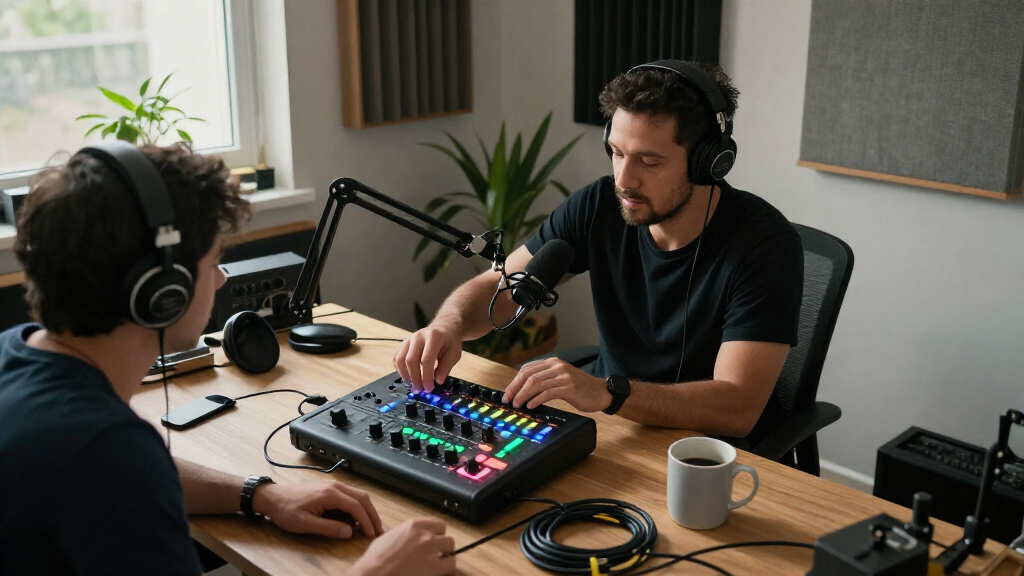
I evaluated these portable podcast mixers based on their ability to simplify mobile production workflows without sacrificing audio integrity. The primary criteria included input versatility (supporting both XLR and dynamic mics), recording reliability (internal SD card support versus external computer dependency), and physical portability (size, weight, and power source options). I prioritized units that offer clear gain staging controls, as poor preamp quality is the most common failure point in budget portable gear.
Ranking logic favored devices that reduce technical friction for solo creators and small teams. Products that required complex driver installations or lacked direct monitoring were ranked lower than those with plug-and-play simplicity. I also weighed the value proposition of bundles against standalone units, discounting kits that paired high-end mixers with low-fidelity accessories, as this often misleads buyers about the true cost of a professional setup.
Factors to Consider When Choosing Portable Podcast Mixers
Choosing a portable mixer isn’t just about picking the brand with the best logo; it is about matching the hardware to your specific recording environment. Many buyers make the mistake of prioritizing channel count over preamp quality or ignoring power requirements, leading to frustration during live sessions.
Standalone vs. Computer-Dependent Workflows
The first major fork in the road is deciding whether your mixer needs to record audio itself or simply pass it to a computer. Standalone recorders like the Zoom PodTrak P4 save audio directly to an SD card, meaning if your laptop crashes, your episode is safe. This is vital for field recordings or interviews where reliability is paramount. In contrast, USB interfaces like the Focusrite Vocaster Two rely entirely on your computer’s DAW (Digital Audio Workstation) to capture audio. While this allows for more complex editing during the session, it introduces a single point of failure. If you are recording in a location with unstable power or limited desk space, the standalone option is generally the safer bet. However, if you are comfortable managing software and backups, a USB interface often provides better integration with streaming platforms and remote guest software.
Power Source and Battery Life Realities
Most portable mixers are not truly portable if they require a wall outlet or a constant USB connection to a laptop. I looked closely at battery-powered capabilities, which are surprisingly rare in this category. The Zoom LiveTrak L-8 stands out here, but many other options, including the RØDECaster Pro II, require external power sources that drain quickly when using phantom power for condenser microphones. If you plan to record outdoors or in locations without reliable electricity, you must account for the power draw of your microphones. Dynamic microphones generally consume less power than condensers, making them a better pairing for battery-operated mixers. Always check the manufacturer’s stated battery life under load, as idle times are often misleadingly long. Carrying a high-capacity power bank is a practical workaround for units that lack internal batteries.
Input Types and Microphone Compatibility
Not all mixers handle all microphone types equally well. Combo jacks that accept both XLR and 1/4-inch cables are the most versatile, allowing you to switch between professional dynamic mics and consumer-grade condenser mics. However, some budget mixers only offer 3.5mm inputs, which often result in lower signal-to-noise ratios and higher floor noise. When evaluating options like the MAONO E2 Gen2, check if it provides sufficient gain for dynamic microphones, which typically require more amplification than condensers. A mixer with weak preamps will force you to turn the gain up so high that it introduces hiss, ruining the recording before you even start editing. For professional results, prioritize units with dedicated XLR inputs and clearly labeled phantom power switches.
The Hidden Cost of Bundle Kits
Bundles that promise everything you need in one box often hide significant compromises. I found that kits like the TENLAMP G10 Creator Audio Mixer Bundle or the BM-800 Podcast Equipment Bundle frequently pair decent mixers with entry-level microphones that lack the clarity needed for professional audio. While the upfront savings look attractive, you will likely replace the included microphones within months, negating the initial discount. It is usually more cost-effective in the long run to purchase a high-quality standalone mixer and pair it with a reputable microphone like the Shure SM7B or RØDE PodMic. This approach lets you upgrade components individually as your budget allows. Be wary of bundles that emphasize accessories like pop filters and boom arms over the core audio engine’s specifications.
Latency and Remote Guest Integration
If your podcast format involves remote guests via Zoom, Teams, or Riverside, latency monitoring becomes a critical factor. Many portable mixers introduce a slight delay between when you speak and when you hear yourself in your headphones. This latency can be disorienting and lead to overlapping speech or unnatural pacing. High-end units like the RØDECaster Pro II offer zero-latency direct monitoring, allowing you to hear your voice instantly as it is being processed. Budget options often lack this feature, forcing you to rely on software monitoring, which adds processing delay. For remote interviews, look for mixers with dedicated USB outputs that allow you to send a clean mix to your computer while sending a separate mix to your headphones. This separation prevents you from hearing your own voice delayed by the software loop.
Ergonomics and Tactile Control
Podcasting is a performance art, and fumbling with menu screens during a live recording breaks your flow. Tactile controls—physical faders, knobs, and buttons—are superior to touchscreens for live adjustments. The RØDECaster Pro II excels here with its large, responsive faders that allow you to ride levels in real-time, adding dynamic energy to your conversation. In contrast, smaller mixers like the Zoom PodTrak P4 rely on smaller knobs or digital menus, which are less intuitive for quick changes. Consider how much desk space you have; larger mixers offer better separation between channels, reducing the chance of accidental bumps. If you are recording on the go in tight spaces, a compact unit with simple controls is often more practical than a feature-rich studio console. Prioritize ease of use over feature density if you are a solo host managing multiple tasks simultaneously.
Frequently Asked Questions
Do I need a mixer if I only have one microphone?
Technically, no. A single microphone can connect directly to a USB interface or a standalone recorder without a mixer. However, a mixer provides significant advantages even for solo hosts, such as the ability to trigger sound effects, adjust levels on the fly, and integrate remote guests via a USB connection. If you plan to add a co-host or remote guest later, investing in a mixer now saves you from replacing your setup entirely. For strictly solo, in-person recordings with no sound effects, a simple USB microphone or interface is more cost-effective and less complex.
Can I use a portable podcast mixer for live streaming?
Yes, but you must verify the mixer’s USB audio routing capabilities. Not all mixers allow you to send a separate mix to your streaming software (like OBS) and your recording software (like Audition) simultaneously. Look for units with ‘multitrack USB output’ or ‘loopback’ features, which let you send a clean, processed mix to your stream while recording a raw, uncompressed version locally. The RØDECaster Pro II and Zoom LiveTrak L-8 are particularly strong in this area, offering flexible routing options that prevent feedback loops and ensure your stream audio matches your recording quality.
Is phantom power necessary for dynamic microphones?
No, dynamic microphones do not require phantom power. In fact, sending phantom power to most dynamic mics can damage them, although many modern interfaces have protection circuits. Phantom power is only required for condenser microphones and active ribbon microphones. When choosing a portable mixer, ensure it has a dedicated phantom power switch for each channel so you can turn it off for dynamic mics to save battery and avoid potential issues. If you plan to use condenser mics outdoors, be aware that they are more sensitive to wind noise and may require additional accessories like blimpies or windshields, which add bulk to your portable kit.
How many input channels do I actually need?
This depends on your typical guest count and equipment needs. For a solo host with one remote guest, a two-channel mixer is sufficient. If you have a co-host and a remote guest, you need at least three inputs (two for local mics, one for the remote guest via USB or 3.5mm). However, I recommend adding an extra channel for backup or for connecting a music source or phone for call-in guests. The Zoom PodTrak P4 offers four inputs, which is a sweet spot for most small teams. Avoid over-buying channels if you don’t need them, as each additional input increases the size, weight, and power consumption of the unit.
Why is my portable mixer making a buzzing noise?
Buzzing is usually caused by a ground loop or electromagnetic interference (EMI). Ground loops occur when multiple devices (like a laptop, mixer, and microphone) are plugged into different outlets with slightly different ground potentials. To fix this, try plugging all equipment into the same power strip or using a battery-powered mixer to isolate the audio chain. EMI can be caused by nearby electronics like phone chargers or Wi-Fi routers; moving these away from your audio cables often resolves the issue. Using balanced XLR cables instead of unbalanced 1/4-inch or 3.5mm cables also helps reject noise over longer distances, which is critical for portable setups where cable routing might be messy.
Conclusion
Choosing the right portable podcast mixers comes down to identifying your primary recording environment and technical comfort level. For most solo creators and small teams who value reliability and simplicity, the Zoom PodTrak P4 remains the Best Overall pick due to its standalone recording capability and intuitive design. If you are a professional seeking maximum control and production features, the RØDECaster Pro II is the Best Premium option, offering unmatched tactile feedback and integrated processing. For those on a tight budget who already have a computer setup, the MAONO E2 Gen2 serves as the Best Value entry point, providing clean audio without the bulk. Beginners should avoid complex bundles and instead start with a dedicated interface like the Focusrite Vocaster Two to learn the fundamentals of gain staging. Field recorders and outdoor podcasters will find the Zoom LiveTrak L-8 indispensable as the Best for Mobile/Field use thanks to its battery operation. Match the mixer to your workflow, not just your budget, and you will avoid the most common pitfalls in portable audio production.