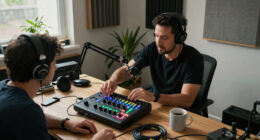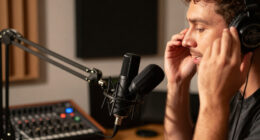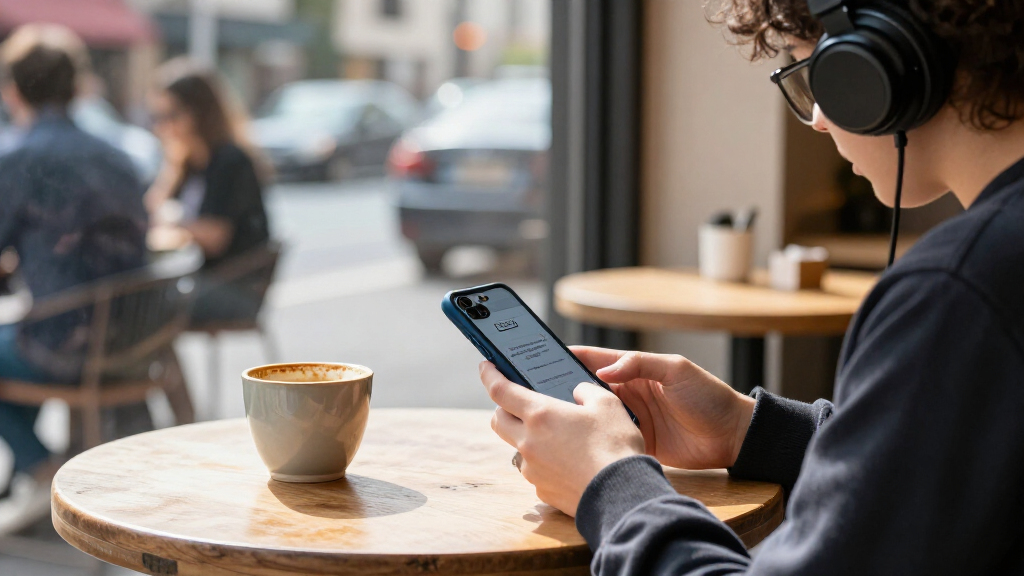
For portable podcast headphones, I rank the Audio-Technica ATH-M50x first for its foldable design, detachable cables, and versatility across recording and editing. The Sony MDR-7506 is a strong alternative for clear monitoring and a compact fold-flat build, while the OneOdio Pro-10 offers a practical, budget-minded DJ-style design with useful cable flexibility. The main tradeoffs are portability versus long-session comfort, compact on-ear fit versus over-ear isolation, and wired simplicity versus the freedom of wireless listening. All nine picks here are wired, so they avoid battery concerns but require a compatible headphone output or adapter. Read on for the full breakdown and the best match for your recording setup.

Get everyday essentials delivered free with Prime
- Fast, free delivery on millions of items
- Prime Video, Amazon Music and more included
- Member-only deals all year
Complete the kit


Key Takeaways
- ATH-M50x leads for all-around portability: Folding earcups and detachable cables make it easier to pack and adapt than many fixed-cable studio models.
- Sony MDR-7506 favors working monitors over extra features: Its fold-flat design and established studio-oriented role suit listeners who value a straightforward wired setup.
- OneOdio models emphasize cable flexibility: A71D and Pro-10 are DJ-style options, but their shared category does not make them interchangeable; compare included cable arrangements and fit before choosing.
- Portability does not always mean smallest: The Koss KPH7 is the clear lightweight on-ear choice, while over-ear models offer more coverage but occupy more bag space.
- Every pick is wired: This lineup suits laptops, interfaces, and other headphone outputs, but buyers seeking Bluetooth or active noise cancellation will need to look beyond it.
| OneOdio A71D Wired Over-Ear DJ Headphones |  | Best for Single-Ear Monitoring | Brand and model: OneOdio A71D | Type: Wired over-ear headphones | Driver: 40 mm dynamic | VIEW LATEST PRICE | See Our Full Breakdown |
| OneOdio Pro-10 Wired Over-Ear DJ Headphones |  | Best for Bass-Forward Monitoring | Brand and model: OneOdio Pro-10 | Type: Wired over-ear DJ headphones | Driver size: 50 mm | VIEW LATEST PRICE | See Our Full Breakdown |
| FIFINE H8 Wired Studio Monitor Headphones |  | Best for Cable Flexibility | Brand and model: FIFINE H8 | Design: Over-ear, closed-back | Driver size: 50 mm | VIEW LATEST PRICE | See Our Full Breakdown |
| TASCAM TH-02 Wired Over-Ear Studio Monitor Headphones |  | Best Compact Foldable Pick | Brand and model: TASCAM TH-02 | Design: Closed-back, over-ear | Driver type and size: Dynamic, 50 mm | VIEW LATEST PRICE | See Our Full Breakdown |
| Audio-Technica ATH-M20x Professional Studio Monitor Headphones |  | Best for Studio Tracking | Brand and model: Audio-Technica ATH-M20x | Type: Over-ear studio monitor headphones | Driver size: 40 mm | VIEW LATEST PRICE | See Our Full Breakdown |
| New Bee DH81 Wired Studio Headphones with 50 mm Drivers |  | Best Lightweight Over-Ear Pick | Driver size and type: 50 mm dynamic | Frequency range: 10 Hz–40,000 Hz | Weight: 210 g | VIEW LATEST PRICE | See Our Full Breakdown |
| Audio-Technica ATH-M50x Professional Studio Monitor Headphones | 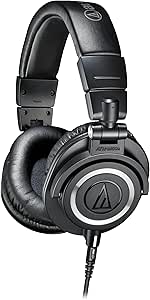 | Best for Serious Studio Monitoring | Driver size: 45 mm | Frequency response: 20 Hz–28,000 Hz | Impedance: 38 ohms | VIEW LATEST PRICE | See Our Full Breakdown |
| Sony MDR-7506 Professional Over-Ear Headphones | 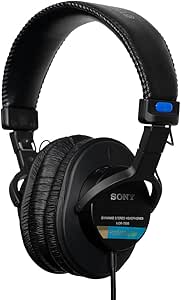 | Best Foldable Studio Pair | Driver size: 40 mm | Frequency response: 10 Hz–20 kHz | Design: Closed-ear, over-ear, foldable | VIEW LATEST PRICE | See Our Full Breakdown |
| Koss KPH7 Lightweight On-Ear Headphones, Black |  | Best Compact, Simple Pick | Type: Wired on-ear headphones | Weight: 2.88 ounces | Cable length: 4 feet | VIEW LATEST PRICE | See Our Full Breakdown |
| portable podcast headphone | Impedance | Sensitivity | Weight | Frequency response |
|---|---|---|---|---|
| OneOdio A71D Wired Over-Ear DJ | 32 ohms | 110 dB | — | — |
| OneOdio Pro-10 Wired Over-Ear | 32 ohms | 110 dB | 415 g | — |
| FIFINE H8 Wired Studio Monitor | — | — | 265 g | 20 Hz–20 kHz |
| TASCAM TH-02 Wired Over-Ear St | 32 ohms | 98 dB | 0.3 kg | 18 Hz–22 kHz |
| Audio-Technica ATH-M20x Profes | 47 ohms | 96 dB | — | 15–20,000 Hz |
| New Bee DH81 Wired Studio Head | — | — | 210 g | — |
| Audio-Technica ATH-M50x Profes | 38 ohms | 99 dB | — | 20 Hz–28,000 Hz |
| Sony MDR-7506 Professional Ove | — | — | 8 oz | 10 Hz–20 kHz |
| Koss KPH7 Lightweight On-Ear H | 32 ohms | 91 dB SPL | 2.88 ounces | 80 Hz–18,000 Hz |
More Details on Our Top Picks
OneOdio A71D Wired Over-Ear DJ Headphones
The OneOdio A71D earns its place for podcast hosts who want to monitor with one ear while keeping the other free for conversation or studio cues. Its 90° swiveling ear cups make that setup straightforward, and the foldable frame is easier to pack than a fixed studio design. The 3.5 mm and 6.35 mm connections also cover common computer, mixer, and interface jacks without requiring a separate adapter. Compared with the FIFINE H8, the A71D has a longer listed cable and swiveling cups, while the H8 offers detachable cables and a stated full-range response. The tradeoff is the A71D’s non-detachable cable, which is less convenient to replace or stow, and its wired connection keeps movement tethered to the recording setup.
Pros:- 90° swiveling ear cups support single-ear monitoring
- Foldable design is convenient for carrying between recording locations
- Includes 3.5 mm and 6.35 mm connectivity
- Padded ear cups and adjustable headband support longer sessions
Cons:- The audio cable is non-detachable, limiting replacement options
- Wired-only listening restricts movement away from the recording device
Best for: Podcast hosts and co-hosts who monitor one ear at a time and need both 3.5 mm and 6.35 mm connections for different recording setups
Not ideal for: Traveling creators who want a replaceable cable or freedom to move around while recording
- Brand and model:OneOdio A71D
- Type:Wired over-ear headphones
- Driver:40 mm dynamic
- Impedance:32 ohms
- Sensitivity:110 dB
- Cable:2.2 m (7.2 ft), non-detachable
- Connectors:3.5 mm and 6.35 mm
- Monitoring and design:90° swiveling ear cups; foldable
Our verdict“Choose the A71D if single-ear monitoring and flexible jack compatibility matter more than a detachable cable.”
OneOdio Pro-10 Wired Over-Ear DJ Headphones
For podcasters who want a fuller, bass-forward presentation for editing and general listening, the OneOdio Pro-10 pairs 50 mm drivers with padded cups and 90° swiveling ear cups. That rotation gives it a practical monitoring advantage over the Audio-Technica ATH-M20x, whose supplied details emphasize circumaural isolation rather than single-ear use. The Pro-10 also comes with a protective case and supports both 3.5 mm and 6.35 mm jacks, useful when moving between a laptop and studio gear. Its listed 415 g weight, however, makes it the heaviest of these five options with a stated weight, so it is less appealing for long commutes or all-day wear. It is wired only, and its bass emphasis may suit casual listening better than buyers seeking a more neutral reference sound.
Pros:- 50 mm drivers are described as delivering powerful bass and clear vocals
- 90° swiveling ear cups make single-ear monitoring practical
- Works with 3.5 mm and 6.35 mm audio jacks
- Includes a protective case for carrying the headphones
Cons:- Listed weight of 415 g is comparatively substantial for portable use
- Wired-only operation limits movement
- Bass-forward tuning may be less suitable for neutral mix decisions
Best for: Podcast editors and hosts who prefer a bass-forward sound, need single-ear monitoring, and regularly connect to both computers and studio equipment
Not ideal for: Commuting creators who prioritize low carry weight or listeners who want a neutral-sounding reference headphone
- Brand and model:OneOdio Pro-10
- Type:Wired over-ear DJ headphones
- Driver size:50 mm
- Impedance:32 ohms
- Sensitivity:110 dB
- Weight:415 g
- Ear cup rotation:90°
- Audio jacks:3.5 mm and 6.35 mm
- Included items:Media cable, protective case, and user manual
Our verdict“Pick the Pro-10 for portable DJ-style monitoring and fuller bass, but look elsewhere if low weight or neutral tuning is your priority.”
FIFINE H8 Wired Studio Monitor Headphones
The FIFINE H8 is the most serviceable pick here for creators who want to pack a spare cable or replace one that gets damaged. It includes two detachable coiled cables with 3.5 mm and 6.35 mm connectors, unlike the OneOdio A71D’s non-detachable cable. Its closed-back design provides passive isolation, which can help keep nearby room sound out of a recording session, though it will not remove every environmental noise. At a listed 265 g, it is also lighter than the OneOdio Pro-10, making it a more appealing carry for mobile setups. The compromise is that it lacks the supplied descriptions’ 90° swiveling monitoring feature, so hosts who routinely listen with one ear may prefer the A71D or Pro-10. The H8 remains wired, and its coiled cables can feel less tidy in a small bag than a short straight lead.
Pros:- Two detachable coiled cables provide a spare and simplify cable replacement
- Includes 3.5 mm and 6.35 mm connectors
- Closed-back construction provides passive noise isolation
- Listed weight of 265 g is lighter than the OneOdio Pro-10
Cons:- Passive isolation may not block all room or environmental noise
- Wired operation still tethers the listener to the audio source
- Coiled cables can take up more space than a short straight cable
Best for: Mobile podcasters who want replaceable cables, passive isolation, and a lighter pair for travel between recording spaces
Not ideal for: Hosts who rely on swiveling ear cups for one-ear monitoring or need wireless movement during a session
- Brand and model:FIFINE H8
- Design:Over-ear, closed-back
- Driver size:50 mm
- Frequency response:20 Hz–20 kHz
- Weight:265 g
- Noise isolation:Passive
- Cables:Two detachable 9.8 ft coiled cables
- Connectors:3.5 mm and 6.35 mm
Our verdict“Choose the H8 if replaceable cables and a lighter closed-back build matter more than swiveling cups.”
TASCAM TH-02 Wired Over-Ear Studio Monitor Headphones
The TASCAM TH-02 centers portability on a foldable design and simple wired compatibility. Its closed-back, over-ear construction is suited to recording and podcast monitoring, while the included 6.3 mm adapter lets the same headphones connect to larger studio jacks as well as a standard 3.5 mm output. Compared with the FIFINE H8, the TH-02 is explicitly listed as foldable, whereas the H8’s stronger travel argument is its lower stated weight and detachable cables. The TASCAM weighs 0.3 kg and has a fixed wired connection, so it is not the lightest or most flexible option for frequent travel. Its 98 dB sensitivity is also lower than the OneOdio A71D’s listed 110 dB, a difference that may call for more output from some sources. This is a straightforward choice for a compact, adaptable wired kit, not a wireless one.
Pros:- Foldable construction makes it easier to pack than a fixed-frame design
- Closed-back over-ear design suits recording and monitoring
- Includes a 6.3 mm adapter for studio equipment
- Padded headband and ear pads support longer listening sessions
Cons:- Wired-only connectivity restricts movement
- Listed weight is 0.3 kg, heavier than the FIFINE H8
- Listed 98 dB sensitivity is lower than the OneOdio A71D’s 110 dB
Best for: Podcast beginners who want foldable closed-back headphones and need to connect to both standard and larger audio jacks
Not ideal for: Frequent travelers seeking the lightest setup, detachable cables, or wireless freedom
- Brand and model:TASCAM TH-02
- Design:Closed-back, over-ear
- Driver type and size:Dynamic, 50 mm
- Frequency response:18 Hz–22 kHz
- Impedance:32 ohms
- Sensitivity:98 dB
- Weight:0.3 kg
- Connectivity:Wired 3.5 mm jack with included 6.3 mm adapter
- Portability features:Foldable design; padded headband and ear pads
Our verdict“Choose the TH-02 for foldable, adaptable wired monitoring when compact storage matters more than low weight or cable replacement.”
Audio-Technica ATH-M20x Professional Studio Monitor Headphones
The Audio-Technica ATH-M20x is the studio-focused choice for podcasters who want circumaural isolation and a headphone built around tracking and mixing. Its 40 mm drivers are tuned for enhanced low-frequency performance, while the 9.8 ft single-side cable exits from one ear cup, which can reduce cable clutter across a desk compared with a two-sided lead. Against the TASCAM TH-02, the ATH-M20x has a longer listed cable and a stated 2-year warranty, but TASCAM calls out a foldable design that is more convenient for packing. The Audio-Technica’s cable is wired and nearly 3 m long, so it can be awkward in a compact travel bag and limits movement. At 47 ohms, it also has higher impedance than the 32-ohm OneOdio options. This makes it a stronger fit for a stationary recording setup than for the most mobile podcast kit.
Pros:- Designed for studio tracking and mixing
- Circumaural earcups provide sound isolation
- Single-side cable exit can keep desk cabling less cluttered
- 40 mm drivers are tuned for enhanced low-frequency performance
Cons:- The 9.8 ft cable can be cumbersome in a small travel setup
- Wired connection limits movement
- The listed 47-ohm impedance is higher than the 32-ohm OneOdio models
Best for: Podcast creators who mainly record or edit at a desk and value circumaural isolation and a single-side cable
Not ideal for: Creators who need a foldable travel design, a short cable, or frequent movement away from the recording device
- Brand and model:Audio-Technica ATH-M20x
- Type:Over-ear studio monitor headphones
- Driver size:40 mm
- Frequency response:15–20,000 Hz
- Sensitivity:96 dB
- Impedance:47 ohms
- Cable:9.8 ft (2.99 m), single-side exit
- Noise control:Sound isolation
- Warranty:2 years
Our verdict“Pick the ATH-M20x for desk-based podcast tracking and isolation, not for the most compact mobile recording kit.”
New Bee DH81 Wired Studio Headphones with 50 mm Drivers
The New Bee DH81 pairs a low 210 g weight with over-ear padding, making it a practical choice for podcast sessions that involve moving between a desk, recorder, and instrument. Its 90-degree swiveling cups also allow one-ear monitoring, a useful option for hosts who need to hear the room or speak with a guest between takes. Compared with the Audio-Technica ATH-M50x, it has larger stated drivers and a wider frequency range, but those figures alone don’t establish greater accuracy; the ATH-M50x offers a detachable cable and sound-isolating earcups. The DH81’s passive noise reduction can soften surrounding sound, though it may not block a noisy room. Its included 3.5 mm and 6.35 mm plugs suit different gear, while the wired connection keeps movement tethered.
Pros:- Light 210 g design with memory foam and protein leather padding
- 90-degree swiveling cups support one-ear monitoring
- Includes 3.5 mm and 6.35 mm connectors for different audio equipment
- 50 mm dynamic drivers and a stated 10 Hz–40,000 Hz frequency range
Cons:- Wired connection limits movement during recording
- Passive noise reduction may not block distracting ambient sound
- The wide stated frequency range does not by itself confirm neutral monitoring
Best for: Podcast hosts and home-recording hobbyists who want lightweight over-ear headphones with one-ear monitoring and both common plug sizes.
Not ideal for: People recording in loud spaces or moving freely around a studio, since passive isolation is limited and the cable restricts movement.
- Driver size and type:50 mm dynamic
- Frequency range:10 Hz–40,000 Hz
- Weight:210 g
- Connectivity:Wired; 3.5 mm and 6.35 mm plugs
- Fit:Over-ear
- Ear cup rotation:90 degrees
- Noise control:Passive noise reduction
- Warranty:2 years
Our verdict“Choose the DH81 if low weight, swivel cups, and versatile plugs matter more than strong isolation or a detachable cable.”
Audio-Technica ATH-M50x Professional Studio Monitor Headphones
For podcasters who prioritize monitoring detail and studio-ready construction, the Audio-Technica ATH-M50x is the strongest fit in this group. Its sound-isolating earcups help keep outside noise from competing with a voice track, and the 90-degree swivels make one-ear cueing straightforward. Unlike the New Bee DH81, which emphasizes low weight and includes both plug sizes, the ATH-M50x has a detachable cable and stated 38-ohm impedance, useful details for a setup that needs a replaceable lead or compatibility across common monitoring sources. The listed 45 mm drivers and 20 Hz–28,000 Hz response describe its range, but don’t guarantee a particular tonal preference. Its drawbacks are practical: it is wired, not water resistant, and may be more headphone than a casual, compact recording kit needs.
Pros:- Sound-isolating over-ear cups help reduce competing room noise
- 90-degree swiveling earcups support one-ear monitoring
- Detachable cable can be replaced if damaged or matched to a setup
- Durable earpads and headband are suited to frequent studio use
Cons:- Wired design limits movement away from the recording setup
- Not water resistant
- Bulkier and more studio-focused than the lightweight Koss KPH7
Best for: Regular podcast producers and home-studio operators who need isolating over-ear monitoring, one-ear cueing, and a replaceable cable.
Not ideal for: Casual mobile recordists who want a very light, simple headset or need water resistance for outdoor use.
- Driver size:45 mm
- Frequency response:20 Hz–28,000 Hz
- Impedance:38 ohms
- Sensitivity:99 dB
- Fit:Over-ear
- Cable:Detachable
- Earcup rotation:90 degrees
- Noise control:Sound isolation
- Warranty:2 years on parts and labor
Our verdict“Pick the ATH-M50x for repeat studio work where isolation, durable construction, and a detachable cable outweigh portability and simplicity.”
Sony MDR-7506 Professional Over-Ear Headphones
The Sony MDR-7506 earns its place for podcasters who need monitoring headphones that pack away between sessions. Its foldable closed-ear design, included soft case, and 8-ounce weight make storage and transport more convenient than the less travel-focused Audio-Technica ATH-M50x. The 40 mm drivers, closed-ear construction, and long 9.8-foot cord suit a fixed recording position, while the included 1/4-inch adapter helps connect to different studio equipment. That long lead can also become a tangle when recording from a compact mobile setup, and it is not detachable, unlike the ATH-M50x cable. The MDR-7506’s 10 Hz–20 kHz response gives a stated range, but buyers who wear headphones for long sessions should account for the possibility that its closed-ear fit may feel less comfortable over time.
Pros:- Foldable design and included soft case ease storage and transport
- Closed-ear construction helps reduce external sound
- Long 9.8-foot cord supports a seated recording position away from equipment
- Includes a 1/4-inch adapter for compatible studio connections
Cons:- Non-detachable 9.8-foot cord can be cumbersome in a portable setup
- Closed-ear fit may feel less comfortable during extended use
- Warranty is 90 days, shorter than the two-year coverage listed for the ATH-M50x and DH81
Best for: Traveling podcasters and home recordists who want closed-ear monitoring, a foldable design, and a case for storage.
Not ideal for: People who need a detachable or short cable, or who prioritize comfort for especially long, uninterrupted sessions.
- Driver size:40 mm
- Frequency response:10 Hz–20 kHz
- Design:Closed-ear, over-ear, foldable
- Cable:9.8-foot non-detachable OFC cord
- Plug:Gold-plated connector; 1/4-inch adapter included
- Weight:8 oz
- Included accessories:Soft case and Unimatch plug
- Warranty:90 days
Our verdict“Choose the MDR-7506 if foldability and closed-ear monitoring matter most, and its fixed long cord suits your recording space.”
Koss KPH7 Lightweight On-Ear Headphones, Black
The Koss KPH7 is the simplest option here to carry: at 2.88 ounces, it is much lighter and less enclosing than the over-ear Sony MDR-7506 or Audio-Technica ATH-M50x. An adjustable headband and four-foot cable suit casual podcast monitoring with a phone, laptop, or recorder that has a 3.5 mm jack. That compact on-ear format also means less bulk in a bag, but it provides less physical isolation than the closed-ear Sony, so it is better suited to a quiet room than a busy recording space. Its 80 Hz–18,000 Hz stated response is narrower than the studio-focused ranges listed for the other models, and no adapter or carrying case is listed. This is a practical basic headset, not the pick for detailed, isolated studio monitoring.
Pros:- Very light at 2.88 ounces for easy carrying
- Adjustable headband helps accommodate different fits
- Four-foot cable is shorter and easier to manage than the Sony MDR-7506 cord
- 3.5 mm plug works with compatible audio devices
Cons:- On-ear design offers less isolation than the over-ear Sony MDR-7506
- 80 Hz–18,000 Hz stated frequency response is narrower than the other reviewed models
- No water resistance or detachable cable
Best for: Mobile podcasters and beginners who want a very light wired headset for casual monitoring with a 3.5 mm device.
Not ideal for: Producers recording in noisy rooms or requiring stronger isolation, wider listed frequency response, or studio connection adapters.
- Type:Wired on-ear headphones
- Weight:2.88 ounces
- Cable length:4 feet
- Connector:3.5 mm plug
- Frequency response:80 Hz–18,000 Hz
- Sensitivity:91 dB SPL
- Impedance:32 ohms
- Driver type:Dynamic
- Water resistance:Not water resistant
Our verdict“Pick the KPH7 for lightweight, casual monitoring in quiet spaces, but choose an over-ear model for stronger isolation and studio use.”
How We Picked
I ranked these headphones for portable podcast work, not just general listening. The main criteria were how readily each design can travel, how useful it is for monitoring speech and editing, whether its cable and connection arrangement fits common recording setups, and how practical the fit and build appear for repeated sessions. I also weighed tradeoffs such as on-ear versus over-ear coverage, foldability, detachable cables, and whether a model is aimed more at DJ-style flexibility or studio monitoring.
The ATH-M50x ranks first because its combination of folding construction, detachable cables, and broad studio use makes it the most adaptable pick in this group. The MDR-7506 follows for buyers who prioritize compact storage and straightforward monitoring, while the OneOdio Pro-10 earns a value-oriented place for its DJ-style utility. The other models rank according to their more specific strengths: entry-level wired simplicity, studio-focused use, or very low carrying weight. No wireless headphone appears in this lineup, so battery-free wired use is a shared advantage rather than a differentiator.
| portable podcast headphone | Brand and model |
|---|---|
| OneOdio A71D Wired Over-Ear DJ | OneOdio A71D |
| OneOdio Pro-10 Wired Over-Ear | OneOdio Pro-10 |
| FIFINE H8 Wired Studio Monitor | FIFINE H8 |
| TASCAM TH-02 Wired Over-Ear St | TASCAM TH-02 |
| Audio-Technica ATH-M20x Profes | Audio-Technica ATH-M20x |
| New Bee DH81 Wired Studio Head | — |
| Audio-Technica ATH-M50x Profes | — |
| Sony MDR-7506 Professional Ove | — |
| Koss KPH7 Lightweight On-Ear H | — |
Factors to Consider When Choosing Portable Podcast Headphones
Portable podcast headphones need to work across a recording desk, a laptop bag, and long editing sessions. I would choose by matching the headphones to the way you record, rather than assuming the smallest or most studio-branded model is automatically best. These factors help separate practical travel features from details that matter less once the mic is on.
Match the connection to your recording gear
Start with the headphone output you actually use: an audio interface, USB microphone, laptop, or portable recorder. A standard wired plug may connect directly to some devices, while others require an adapter, so check the jack type and included accessories before buying. Adapters add little weight, but an overlooked connection can leave you unable to monitor during a session. Wired headphones avoid charging and Bluetooth delay, which is useful when monitoring live speech. If your main need is listening from a phone without a headphone jack, confirm the adapter works with that device rather than assuming every adapter supports every function.
Choose foldability and cable design for your travel routine
Think about where the headphones go between sessions: a padded case, a crowded backpack, or a desk drawer. Folding earcups can reduce bulk, but they do not replace a protective case if the headphones share space with equipment. A detachable cable is convenient if you want to pack a shorter lead or replace a damaged one; a fixed cable can be simpler, but it is harder to swap when it fails. Long coiled cables may help at a stationary desk yet snag or add weight while commuting. Avoid judging portability by the word “foldable” alone: cable length, hinge design, and protection matter too.
Prioritize a seal that suits your recording environment
Over-ear headphones usually cover more of the ear, while on-ear designs can be lighter and easier to carry. Neither format guarantees isolation, so fit and seal matter more than the label. A poor seal can make room noise harder to ignore and may tempt you to turn up playback, while an overly tight fit can become tiring during edits. For a shared office or untreated room, prioritize stable coverage and a comfortable seal; for short mobile checks, low weight may matter more. If you wear glasses, try to assess how the ear cushions press against the frames before committing to long sessions.
Separate tracking needs from editing needs
During recording, the main job is hearing your voice and the other speakers clearly without sound leaking into open microphones. During editing, you may spend longer listening for clicks, room noise, and uneven levels. A headphone described for studio monitoring can be useful for both, but its intended category alone does not prove it will suit your ears or workflow. Do not confuse extra bass with clearer speech: a strong low end can make voice balance harder to judge. If you can, compare headphones using familiar spoken audio at a moderate volume and check whether voices remain easy to follow.
Decide how much comfort you need for long sessions
Podcast editing often involves repeated listening, so headband pressure, earcup space, and heat buildup can matter more than a brief comfort check suggests. Lightweight headphones can reduce neck fatigue, but a very light on-ear fit may press directly on the ears. Larger over-ear cups can spread pressure yet feel warm or bulky on a commute. Consider the longest uninterrupted session you expect, not just the few minutes needed to record an episode. If your work includes extended edits, comfort is a reason to prioritize fit over extra cable features.
Pay for features you will use, not a studio label
A higher-tier model may make sense if you record and edit often, travel with your headphones, and benefit from folding parts or replaceable cables. For occasional interviews, a straightforward wired model can cover the basics without adding features your workflow never uses. Check whether a case, adapter, or spare cable is included if those items would otherwise be separate purchases. The cheapest-looking option can be a poor fit if it lacks the connection or comfort your setup needs, while a more capable model may be unnecessary for short, casual sessions. Make the final choice around your recording frequency and gear, not branding alone.
Frequently Asked Questions
Can I use these headphones directly with a phone or laptop?
It depends on the device’s headphone output and the plug supplied with the headphones. Some laptops have a compatible headphone jack, while many newer phones need a separate adapter. Check whether your phone adapter supports audio output, and confirm that the headphones’ plug fits the adapter. For recording, a laptop or audio interface can be a more convenient monitoring source than a phone. Since all picks here are wired, you will not need to pair them or keep a battery charged.
Do I need closed-back headphones to record a podcast?
Closed-back designs are often preferred when you monitor near an open microphone because they can reduce sound escaping from the earcups. The amount of leakage depends on fit and listening volume, so no design should be treated as completely silent. If you record alone with speakers muted, leakage may be less of a concern than comfort or portability. For interviews with multiple live microphones, keep headphone volume moderate and check for bleed in a test recording. This lineup is made up of over-ear or on-ear wired models rather than wireless noise-canceling sets.
Is a foldable model worth choosing over a lighter one?
Choose folding construction if bag space and protecting the earcups matter more than having the least weight on your head. A lightweight on-ear model can be easier to carry, but it may not offer the same coverage or feel as an over-ear pair. Folding earcups reduce storage bulk but do not guarantee a durable hinge or a protected carry; a case still helps. For frequent commuting, compare the packed size and cable management as well as the weight. For desk-based recording with occasional travel, comfort may deserve more priority.
Will these headphones work with an audio interface or USB microphone?
They can work if the interface or microphone provides a headphone output that matches the headphones’ plug, directly or through an appropriate adapter. A microphone’s USB connection alone does not provide a headphone jack, so check the model’s actual monitoring ports. If you use an interface, plug the headphones into its headphone output rather than a mic input. Also check whether the cable reaches your recording position without pulling or catching. Confirming these details before purchase avoids finding out at setup time that you need an extra accessory.
Should I choose the ATH-M50x or the lighter Koss KPH7 for travel podcasting?
Choose the ATH-M50x if you want a more adaptable over-ear option for recording and editing, along with folding construction and detachable cables. The KPH7 makes more sense when carrying weight and simple mobile listening matter more than over-ear coverage. An on-ear fit may feel less comfortable over a long edit, while a larger over-ear pair takes more room in a bag. Neither replaces a good connection check or a listening test with your own voice material. For one pair that handles desk work and travel, the ATH-M50x is the broader fit; for the lightest, simplest carry, the KPH7 has the clearer role.
Conclusion
For best overall, I recommend the Audio-Technica ATH-M50x: its folding design and detachable cables give it the strongest mix of travel practicality and podcast versatility here. The best value pick is the OneOdio Pro-10 for buyers who want a wired, DJ-style option and cable flexibility without requiring a premium studio model. For best premium, the ATH-M50x is also the most complete choice in this lineup, while the Sony MDR-7506 is a strong alternative for buyers who prefer a straightforward, fold-flat studio monitor. Beginners who want simple wired monitoring can compare the TASCAM TH-02 and FIFINE H8 against their gear and comfort needs. For specific needs, choose the Koss KPH7 when low carry weight comes first, or consider the OneOdio A71D for a DJ-style setup; if your priority is an all-purpose travel pair, start with the ATH-M50x and confirm its fit and connection suit your equipment.